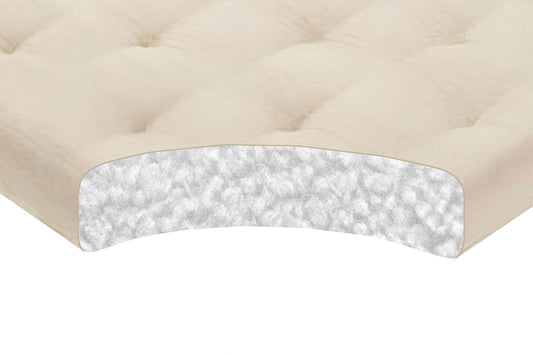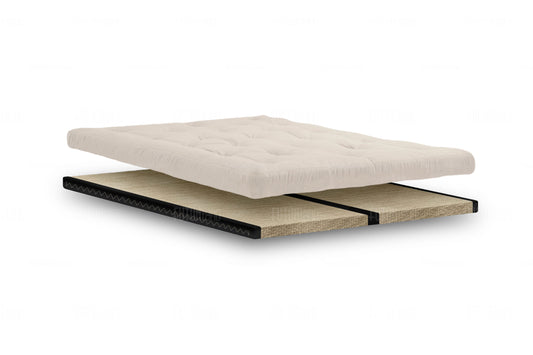

Beds with Storage: Captain's Beds, Platform Beds with Drawers, and How to Choose
If you have ever looked at the dead space under your bed and thought about what you could do with it, you are already thinking about a storage bed. The category covers a wide range of approaches — from a captain's bed with up to twelve built-in drawers to a simple platform bed with freestanding underbed drawers — and the right choice depends less on how much storage you want in the abstract and more on your room, your budget, and how you actually use what you store.
This guide covers how storage beds work, the difference between built-in and freestanding drawer systems, what a captain's bed actually gives you that a standard platform bed does not, and how to figure out which configuration makes sense for your setup.
What Makes a Bed a "Storage Bed"
The term covers two distinct approaches that look similar from the outside but work very differently in practice.
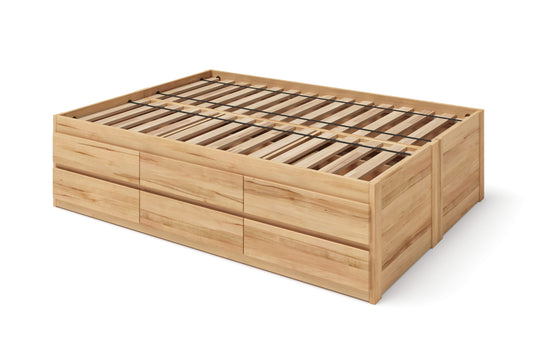
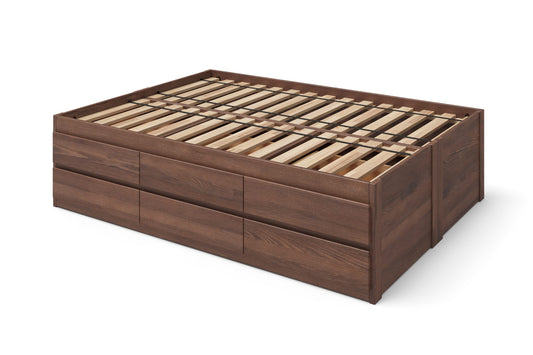
Built-in storage beds — the classic captain's bed — have drawers integrated directly into the frame structure. The drawers are engineered as part of the bed, not added afterward. The frame is built taller than a standard platform to accommodate the drawer depth, and the storage is accessible from the side of the bed without moving anything.
Platform beds with freestanding underbed drawers use a standard-height platform frame with enough clearance underneath to accept matching storage units on rollers. The drawers roll out from under the bed independently. The frame and the storage are separate products that are designed to work together, but each can stand alone.
Both approaches eliminate the dead space under a mattress. They differ in how much storage they provide, how they affect bed height, what they cost, and what happens if your needs change.

Captain's Beds: Maximum Storage, But Know the Trade-offs First
A captain's bed is the right choice when storage is the primary requirement and you have thought through what the built-in drawer system actually commits you to. Depending on size and configuration, a captain's bed can have anywhere from 3 to 12 drawers — a twin with a single row might have three, while a king with two full rows can have twelve. That upper end replaces not just a dresser but most of the freestanding storage a bedroom would otherwise need.
The height is non-negotiable. Built-in drawers require frame depth, and that depth raises the sleep surface. Most captain's beds sit noticeably higher off the ground than a standard platform, which some people find uncomfortable to get in and out of and which can feel imposing in a smaller room. It also makes the bed less accessible for children and older adults. If bed height matters to you, measure the frame height with a mattress before committing.
Bottom-row drawers are less convenient than they look. In a double-row configuration, the lower drawers sit close to the floor. Accessing them requires crouching or kneeling, which makes them better suited for seasonal or occasional storage than daily use. If you plan to use all six drawers regularly, think about whether the access ergonomics work for you.
The storage is permanent. Unlike freestanding underbed drawers, built-in drawers cannot be removed if your needs change. If you move to a larger home, reconfigure a room, or want to repurpose the frame, the storage comes with it. That is a feature or a limitation depending on your situation.
With those trade-offs understood, a well-built captain's bed is hard to beat for sheer storage efficiency in a bedroom. What separates a frame that holds up from one that does not comes down to a few specific details worth checking before you buy.
Drawer mechanism. Soft-close drawers are the clearest quality signal. They indicate hardware specified for daily use — slides rated for weight, closing mechanisms that absorb impact, and a system designed for thousands of cycles. Standard drawer slides in lower-end storage beds develop resistance and binding within a year or two of regular use. If a listing does not specify soft-close, assume it does not have it.
Frame material. A captain's bed carries more structural load than a standard platform — the drawer boxes add weight, and the taller frame has more lateral leverage. Solid hardwood handles that load over years of use in a way that MDF and particleboard do not. Engineered wood under a storage bed degrades faster than the same material in a simple platform, because the combined weight and humidity cycling attack it from more directions simultaneously.
Center support. Taller frames are more susceptible to racking — the gradual lateral shift that produces squeaking and misalignment. A frame without adequate center support will show this within the first year or two. This detail is frequently omitted in lower-cost production and rarely mentioned in product listings, so it is worth asking about directly.
Assembly. Captain's beds typically ship as knock-down flat-pack and require substantial assembly — more so than a simple platform frame, because you are putting together multiple drawer housings, slides, and structural components in addition to the frame itself. Getting the frame properly leveled during assembly matters too; a captain's bed that is not level will have drawers that do not close properly. If you are not comfortable with a major assembly project, white glove delivery service is worth considering — it takes the work off your hands and ensures the frame is set up correctly from the start. Once a captain's bed is properly assembled and leveled, it is very steady; the integrated construction that makes assembly complex is the same thing that makes the finished frame solid.
If you want to see what a well-specified captain's bed looks like in practice, our solid beechwood captain's bed — part of the Beechwood Collection — is a useful reference point: European-made, oil-finished, soft-close drawers, extra center support. It is available in configurations from 3 to 12 drawers depending on size, and pairs with a matching headboard, nightstand, and bedroom chest if you want a coordinated room.
-
Columbus Natural Eco Platform Bed
Regular price From $469.99Regular price $799.99 Sale price From $469.99Sale -
Lakewood Natural Eco Platform Bed
Regular price From $679.99Regular price $899.99 Sale price From $679.99Sale -
Sacramento Natural Eco Platform Bed
Regular price From $599.99Regular price $829.99 Sale price From $599.99Sale -
Plainfield Natural Eco Platform Bed
Regular price From $409.99Regular price $739.99 Sale price From $409.99Sale -
Anchorage Platform Bed
Regular price From $549.99Regular price $799.99 Sale price From $549.99Sale -
Japanese Tatami Platform Bed
Regular price From $729.99Regular price $929.99 Sale price From $729.99Sale -
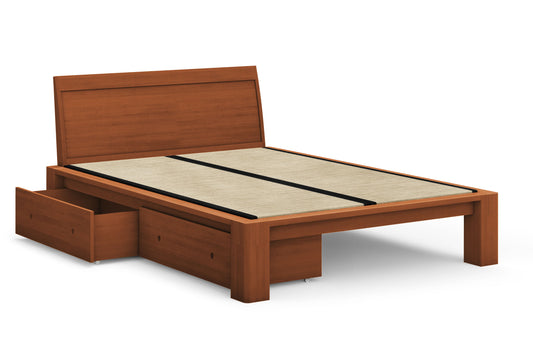
Japanese Tatami Platform Bed with Solid Headboard
Regular price From $929.99Regular price $1,129.99 Sale price From $929.99Sale -
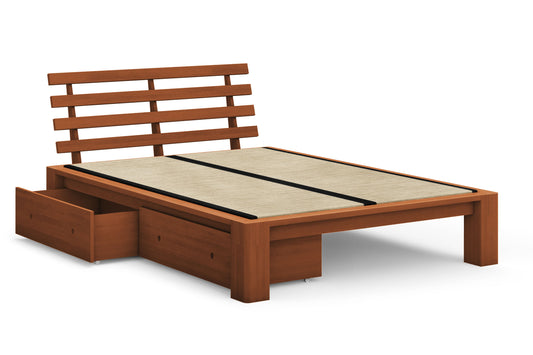
Japanese Tatami Platform Bed with Slatted Headboard
Regular price From $819.99Regular price $1,019.99 Sale price From $819.99Sale -
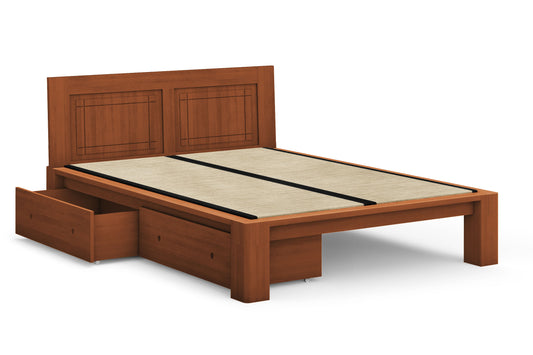
Japanese Tatami Platform Bed with Grooved Headboard
Regular price From $899.99Regular price $1,099.99 Sale price From $899.99Sale -
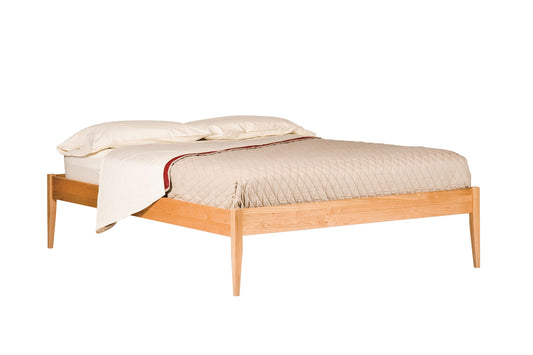
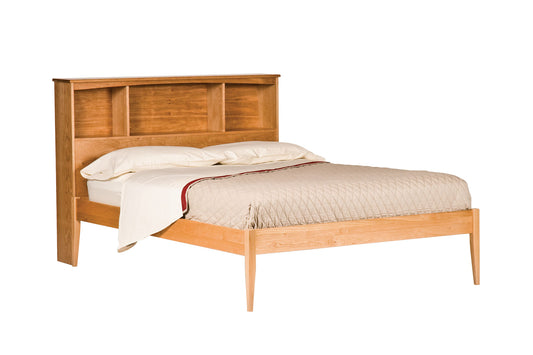 Sale
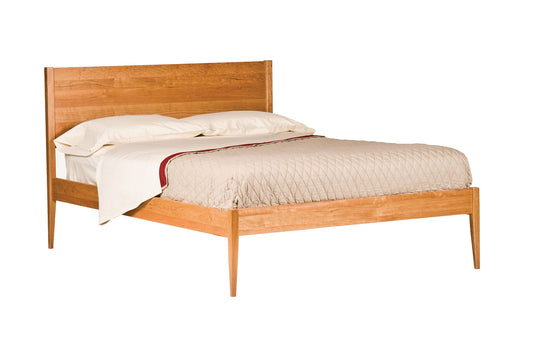
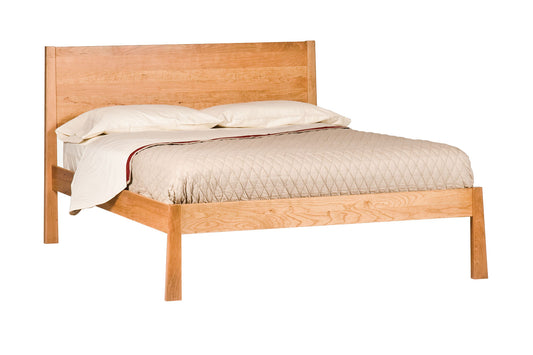
SaleBasic Platform Bed
Regular price From $799.99Regular price $999.99 Sale price From $799.99Sale -
 Sale
SaleEclipse Platform Bed
Regular price From $1,149.99Regular price $1,439.99 Sale price From $1,149.99Sale -
Moondance Platform Bed
Regular price From $1,159.99Regular price $1,459.99 Sale price From $1,159.99Sale








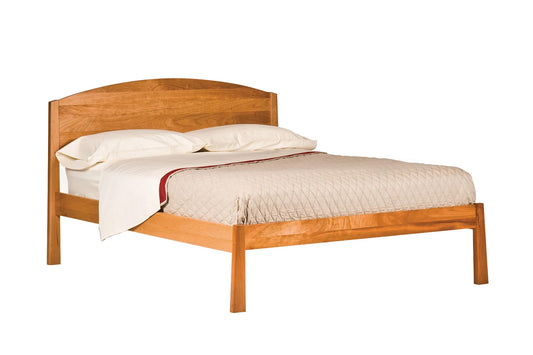
Platform Beds with Storage Drawers: More Flexible, Lower Profile
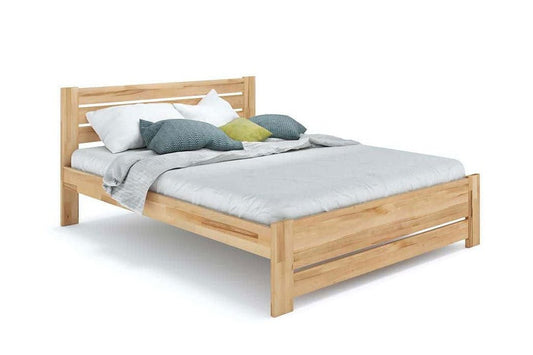
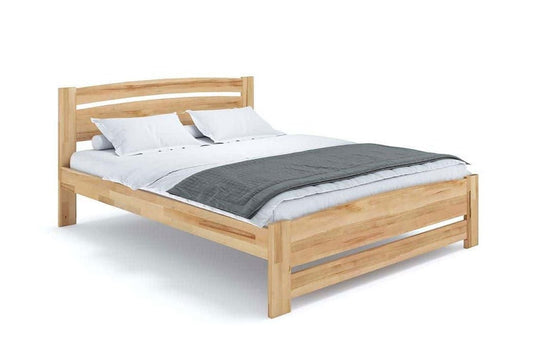
The freestanding drawer approach starts from a different set of priorities. Instead of building storage into the frame, you choose a platform bed with enough clearance underneath to accept matching drawer units on rollers. The bed height stays low — or at whatever the frame naturally sits — and the storage is additive rather than structural. You can start with two drawers, add two more later, remove them entirely if the room changes, or take them out independently when you move.
The trade-off is capacity and integration. Freestanding drawers are not soft-close and do not have the same built-in feel as integrated drawers in a captain's bed. They also require some floor clearance on the sides to roll out, which means a bed pushed tight into a corner on two sides limits drawer access. And because the drawers are freestanding rather than fixed, they can shift slightly on very smooth floors unless the rollers have adequate resistance or there is a rug underneath.
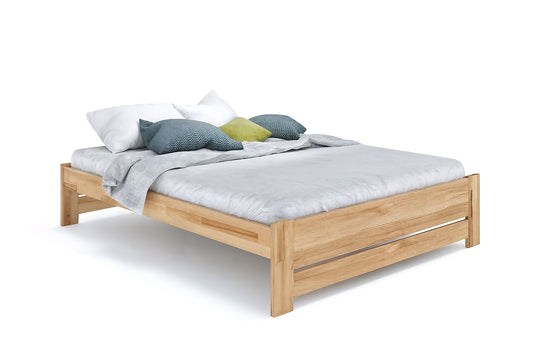
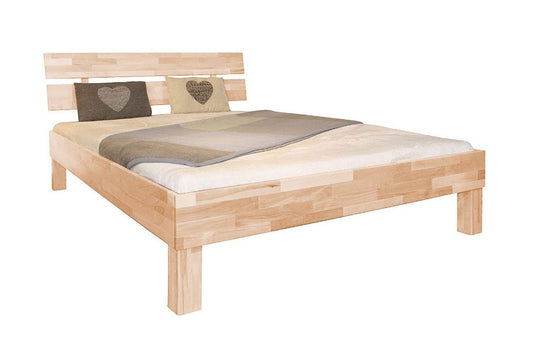
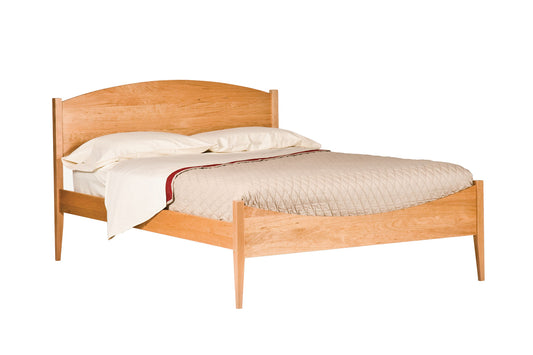
What makes the approach genuinely useful is the range of frames it works with. Solid hardwood platform beds in the Beechwood Collection — the Plainfield, Columbus, Lakewood, and Sacramento — are each designed to accept two or four matching freestanding underbed drawers. The frames sit at a standard platform height with enough clearance for a full-depth drawer, and the drawer dimensions are matched specifically to each frame's footprint so there is no guesswork about fit.
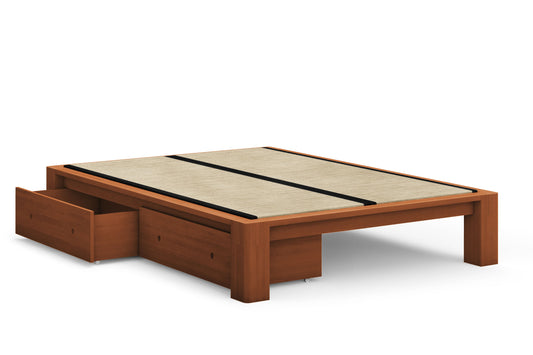
The same approach works with the 16" tatami beds, built from solid Indonesian mahogany with precision joinery. The 16-inch frame height gives enough clearance for matching freestanding drawers while keeping the sleep surface considerably lower than a captain's bed. For someone who wants the grounded, low-profile aesthetic of a Japanese-style frame without giving up underbed storage entirely, the tatami bed with two or four drawers is the configuration that makes that possible. The combination is less common than a beechwood platform with drawers, but it solves a specific problem — floor-bed look, practical storage — that most storage bed options do not address.

Captain's Bed vs. Platform Bed with Drawers: How to Decide
| Captain's Bed | Platform Bed + Freestanding Drawers | |
|---|---|---|
| Storage capacity | High — 3 to 12 drawers depending on size and configuration | Moderate — 2 or 4 drawers depending on config |
| Bed height | Higher — drawer depth raises sleep surface significantly | Low to standard — frame height unaffected by storage |
| Drawer mechanism | Integrated, soft-close — better for daily use | Freestanding on rollers — functional but less refined |
| Flexibility | Storage is fixed — cannot be removed or reconfigured | Drawers can be removed, repositioned, or added over time |
| Floor clearance needed | Yes — drawers pull from the frame sides and need clear floor space | Yes — same requirement; drawers must have clear floor to roll out |
| Price | Higher — integrated construction costs more | Lower — platform bed with drawers is the more affordable option |
| Best for | Replacing a dresser entirely, maximizing storage in a small room | Adding storage without raising bed height or committing to a fixed layout |
The practical decision usually comes down to two questions. First, how much storage do you actually need? If the goal is to eliminate a standalone dresser entirely, a captain's bed has the capacity to do that. If you just want to stop using bins and boxes under the bed, two or four freestanding drawers under a platform frame will handle it. Second, how important is bed height? Captain's beds sit noticeably higher off the ground than a standard platform. If you prefer a lower sleep surface — or if the bed is for a child — the platform-plus-drawers approach keeps the height manageable.
What to Look for in Any Storage Bed
Whether you are looking at a captain's bed or a platform bed with underbed drawers, a few details separate storage beds that hold up from ones that do not.
Frame material. The frame carries both sleep load and storage load. Solid hardwood — beech for its density and stability, mahogany for its tight grain and resistance to movement — handles the combined demand over years of use. Engineered wood degrades faster under storage weight and humidity cycling than it does as a simple platform.
Drawer depth and access. Measure the actual internal drawer dimensions against what you plan to store. A drawer that is 6 inches deep stores folded t-shirts well but not folded sweaters. Freestanding underbed drawers under a 16-inch frame have more vertical clearance than most built-in drawers in lower-end captain's beds, which is worth checking against your actual storage needs.
Clearance on the sides. Both captain's beds and freestanding underbed drawers require open floor space on the side the drawers pull from — neither works against a wall on the drawer side. Captain's bed drawers pull from the frame sides; freestanding rollers need room to extend fully. Think about your room layout and which sides of the bed have floor access before choosing a configuration. A bed in a corner with only one open side limits your drawer layout regardless of the storage type.
Floor protection. Freestanding drawers on rollers will eventually scratch an unprotected hardwood floor if moved repeatedly. Felt pads on the roller bases or a thin rug under the bed solves this. Worth thinking about before the floor shows it.
Weight distribution. Storage adds significant weight concentration to specific areas of the frame. A solid wood slat system distributes that load across the full frame width. Thin or widely spaced slats under a loaded storage bed will show deflection faster than the same slats without weight underneath.
Storage Bed FAQ
Can I add drawers to a bed I already own?
Only if the frame has enough clearance and the drawer dimensions fit the available space. Generic underbed storage bins are always an option, but they are not the same as matched freestanding drawers — they tend to be shorter, harder to access from the side, and not designed to stay in a fixed position. If your current frame has less than about 8 inches of clearance, freestanding drawers will not fit. If you are buying new, choosing a frame specifically designed to accept matching drawers is the cleaner solution.
How much storage does a captain's bed actually provide?
It depends on the size and configuration. A twin with a single row of drawers might have three drawers; a king with two full rows can have twelve. In practice, a fully configured king captain's bed provides more storage volume than most standalone dressers. The advantage over a dresser is that the storage occupies floor space the bed was already using. The drawback is access — bottom-row drawers sit close to the floor and require crouching, which makes them better for seasonal storage than daily use.
Are storage beds harder to move than regular beds?
Captain's beds require more disassembly and reassembly than a standard platform frame — the drawer housings and slides add complexity. The upside is that once disassembled, the pieces are manageable. Freestanding underbed drawers separate from the frame entirely, keeping individual piece weights reasonable. In both cases, moving a storage bed is not dramatically more difficult than moving a bed plus a dresser separately — and if the storage bed has replaced a dresser, you have one fewer large piece to deal with regardless.
Is a captain's bed good for kids?
The storage capacity is ideal for a child's room. The height can be a consideration — a captain's bed sits higher off the ground than a standard platform, which matters for younger children getting in and out independently. Single-row captain's beds sit lower than double-row configurations and are more appropriate for younger kids. For older children who can manage the height, the storage replaces the need for a separate dresser, which simplifies the room considerably.
Do the freestanding drawers stay in place, or do they slide around?
Freestanding underbed drawers on rollers stay in position during normal use because the roller resistance and the close fit under the frame keep them stable. They are designed to roll out for access and return to position afterward. On very smooth hardwood floors, the rollers move more freely — floor protection pads under the bed keep the drawers from drifting if the floor is particularly slick.