Collection: Japanese-Style Futon Mattresses
Our Japanese-style handmade mattress collection brings the time-honored tradition of handcrafted bedding into the modern home. Using "old-fashioned" techniques to create authentic Japanese floor mattresses, we hand-layer generous amounts of dense cotton and wool, then compress them under high tension to create a firm, flat, and exceptionally supportive sleep surface. Free from springs and synthetic foams, these mattresses offer the grounded stability of a traditional futon with the comfort required for everyday use on platform beds and tatami mats.
In this collection, you will find our most artisanal designs. Because we build these by hand-compressing natural fibers, they offer a distinctively dense feel that resists sagging and eliminates the "bouncy" sensation of modern mattresses. This makes them the ultimate choice for sleepers who require a rigid, flat surface for spinal alignment or those who simply prefer the stable, "held" feeling of a true cotton-bed construction.
If you prefer a mattress with more "give" or contouring pressure relief, we suggest looking at our Natural Futon Mattresses or Organic Mattresses. Those collections incorporate materials like natural latex and coconut coir to provide a more resilient, Western-style comfort profile while maintaining our high standards of purity.
This collection is the thicker, frame-ready sibling to our minimalist traditional Shikibuton floor mattresses. If you love the idea of Japanese-style firmness but find the surface slightly too firm, you can customize your comfort with one of our plush Natural Mattress Toppers to add softness without sacrificing the supportive foundation.
We believe natural sleep should be available for every stage of life. Browse our chemical-free Baby Mattresses collection for your nursery. Or, if you are looking for a standard Western bed profile rather than a futon style, visit our Bed Mattresses collection.
To compare the firmness and height of these handmade options against our other lines, check our Mattress Comparison page. For more tips on maintaining hand-made natural bedding, visit our Learning Center.
-
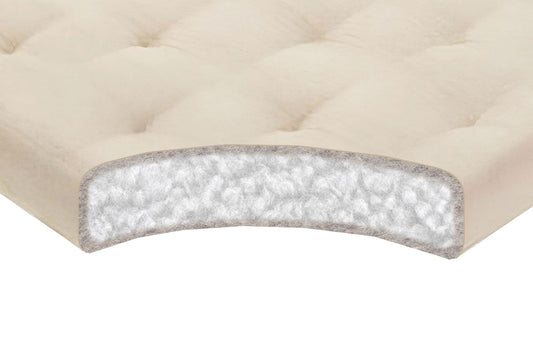
Natural All Cotton Japanese-Style Firm Futon Mattress
Regular price From $429.99Regular price $539.99$539.99Sale price From $429.99Sale -
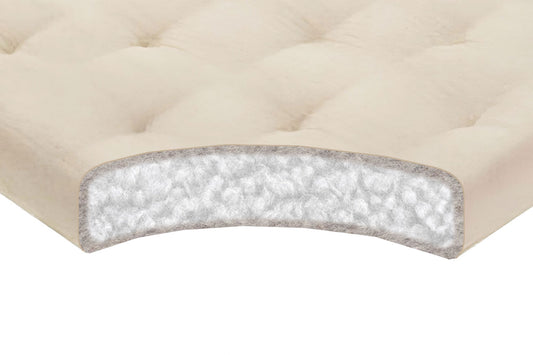
Natural Cotton and Wool Japanese-Style Firm Futon Mattress
Regular price From $529.99Regular price $669.99$669.99Sale price From $529.99Sale -
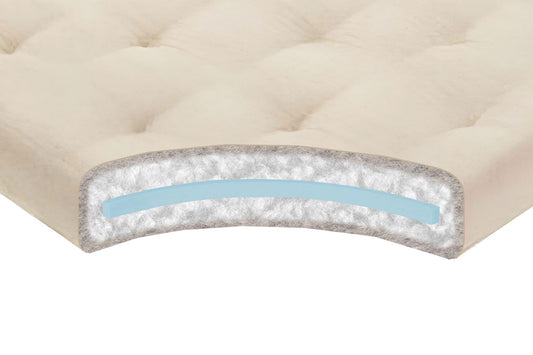
Natural Cotton, Wool and Foam Japanese-Style Medium-Firm Futon Mattress
Regular price From $659.99Regular price $829.99$829.99Sale price From $659.99Sale -
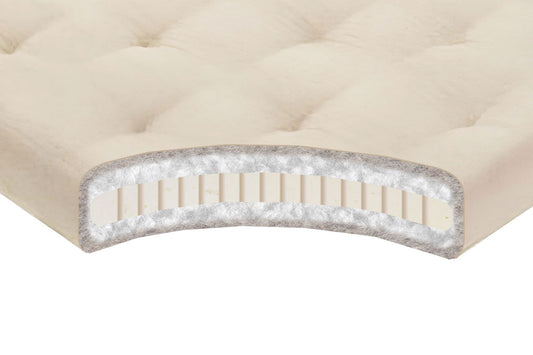
Natural Cotton, Wool and Latex Japanese-Style Medium-Firm Futon Mattress
Regular price From $839.99Regular price $1,049.99$1,049.99Sale price From $839.99Sale -
Organic All Cotton Japanese-Style Firm Futon Mattress
Regular price From $749.99Regular price $939.99$939.99Sale price From $749.99Sale -
Organic Cotton and Wool Japanese-Style Firm Futon Mattress
Regular price From $909.99Regular price $1,139.99$1,139.99Sale price From $909.99Sale -
Organic Cotton, Wool and Foam Japanese-Style Medium-Firm Futon Mattress
Regular price From $999.99Regular price $1,249.99$1,249.99Sale price From $999.99Sale -
Organic Cotton, Wool and Latex Japanese-Style Medium-Firm Futon Mattress
Regular price From $1,179.99Regular price $1,479.99$1,479.99Sale price From $1,179.99Sale
The Art of Hand-Tufting & Compression
A true Japanese-style mattress is defined by its density. Unlike mass-produced foam beds that are light and airy, our mattresses are heavy and substantial. We utilize a process called "compression loading," where we stuff significantly more cotton and wool into the casing than it naturally holds. Skilled craftsmen then hand-tuft the mattress, locking the fibers in place under tension. This creates a dense, durable slab that provides consistent support without the chemical off-gassing or heat retention of memory foam.
Designed for Platform Beds
While our thinner shikibutons are made for the floor, these thick Japanese-style futons (typically 6 to 8 inches) are engineered to be the permanent centerpiece of your bedroom. Their added thickness and structural rigidity make them perfect for slatted platform beds or tatami bed frames, as they are dense enough to bridge the gaps between slats without sagging. If you are transitioning from a standard coil mattress but want the health benefits of natural fibers and firm support, this is the ideal entry point.
Frequently Asked Questions: Japanese-Style Mattresses
How is this different from a Shikibuton?
The main difference is thickness and weight. A shikibuton is a thin (3-4"), flexible mat designed to be rolled up and stored daily. These Japanese-style mattresses are thicker (usually 6-8"+) and much heavier. They are designed to stay in place on a bed frame or platform and are generally too heavy to be rolled up every morning.
Is this mattress firm?
Yes. Because these mattresses rely on compressed cotton and wool rather than metal springs, they have a very firm, "dead" feel. There is little bounce. This provides exceptional stability for spinal alignment, but it feels very different from a standard "plush" store-bought mattress.
Can I use this on a slatted bed frame?
Yes. Unlike the thinner shikibuton, these mattresses are substantial enough to be used on standard platform bed frames with slats. However, for the best performance and to prevent any ridges from forming over time, we still recommend keeping slat spacing narrow (under 3 inches) or using a tatami mat as a base.
Does it require maintenance?
Yes. All natural fiber mattresses settle over time. To ensure it wears evenly and avoids body impressions, you should rotate the mattress (head-to-foot) once a month. Unlike the shikibuton, you do not need to fold it daily, but occasional flipping helps refresh the loft of the cotton.
Why are they so heavy?
Quality equals density. To create a supportive mattress without springs or hard foams, we have to use a massive amount of cotton and wool. A Queen size handmade futon mattress can weigh between 50 and 90 lbs depending on the core. This weight is a sign of durability—it means there is enough material to support you for years.
Do these mattresses contain flame retardants?
No. We use a thick layer of natural wool as our fire barrier. Wool is naturally flame-resistant and allows us to meet federal safety standards without using chemical sprays, borate powders, or fiberglass socks.
What is inside the mattress?
Our core construction typically consists of layers of unbleached, undyed cotton surrounded by a layer of natural wool. Some models may include a core of natural latex foam for added resilience and longevity, but the primary feel comes from the dense cotton batting.
Editor’s Picks about Mattresses
View all-
Camper Van Mattress: How to Get the Right Size,...
Camper van mattresses need to fit non-standard platforms, stay low-profile enough for headroom, and handle moisture and off-gassing better than home mattresses do. Here's how to get all three right.
Camper Van Mattress: How to Get the Right Size,...
Camper van mattresses need to fit non-standard platforms, stay low-profile enough for headroom, and handle moisture and off-gassing better than home mattresses do. Here's how to get all three right.
-
RV Mattress Replacement: Why Size, Materials, a...
RV mattresses need to fit non-standard platforms and handle an enclosed, low-ventilation environment. Here's how size, materials, and air quality all factor into choosing the right replacement.
RV Mattress Replacement: Why Size, Materials, a...
RV mattresses need to fit non-standard platforms and handle an enclosed, low-ventilation environment. Here's how size, materials, and air quality all factor into choosing the right replacement.
-
Is a Latex Mattress Toxic? The Chemical and All...
Is a latex mattress toxic? The answer depends on what kind of latex is inside — and whether "latex" on the label means natural, blended, or synthetic. Here's how to...
Is a Latex Mattress Toxic? The Chemical and All...
Is a latex mattress toxic? The answer depends on what kind of latex is inside — and whether "latex" on the label means natural, blended, or synthetic. Here's how to...