
Storage Bed vs. Dresser: Do You Actually Need Both?
Most bedrooms come with an unexamined assumption: you need a bed, and you need a dresser. The bed is for sleeping, the dresser is for clothing, and both occupy their assigned positions in the room. Nobody questions this arrangement because it has always been the arrangement.
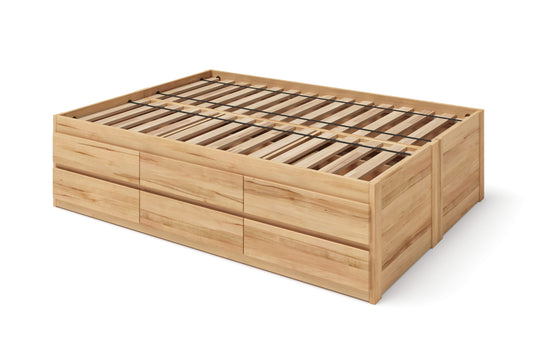
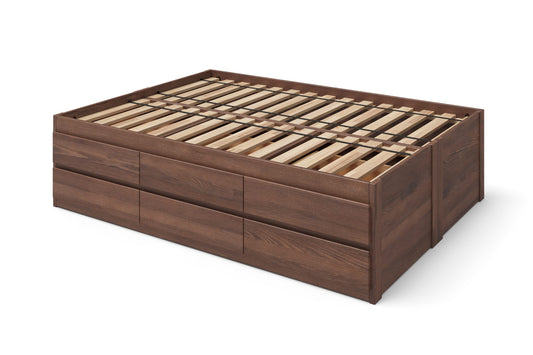
A storage bed challenges that assumption. The category covers everything from platform beds with a pair of rolling underbed drawers to captain's beds with up to twelve built-in drawers — but the most capable storage bed, and the one that most directly competes with a dresser, is the captain's bed. It is essentially a bed frame that functions like a bedroom storage piece: deep, integrated drawers running the full width of the frame, completely hidden under the mattress, taking up no additional floor space. If you are not familiar with what a captain's bed is, that is a useful starting point. But if you already know the category, the more interesting question is this: if the storage bed is handling the storage, what exactly is the dresser doing?
The honest answer is: not nothing. A dresser does specific things a captain's bed cannot. But it may be doing less than you think, and a smaller, better-placed bedroom chest might cover everything the storage bed leaves out — without a full dresser taking up a wall.
What a Dresser Actually Does in a Bedroom
Before deciding whether to replace it, it helps to be specific about what a dresser actually contributes.
Accessible daily storage at standing height. This is the core function. Socks, underwear, t-shirts — the things you reach for every morning without thinking. A dresser puts those items at a comfortable height, with drawers that open fully and let you see the contents at a glance. No bending, no crouching.
A visible surface. The top of a dresser holds things: a lamp, a mirror, a tray for jewelry or a watch, a few small items you want to see. This surface function is real and often underestimated until it disappears.
A visual presence in the room. A dresser occupies wall space and contributes to how the room looks. This is sometimes an advantage (it fills a blank wall, anchors a corner) and sometimes a liability (it makes the room feel smaller, it demands visual attention).
Floor footprint. A dresser is often 48 to 60 inches wide and 18 to 20 inches deep. It is claiming floor space that could otherwise be open.
A captain's bed addresses the first of these — accessible storage — but not at standing height, and not for the items you reach for every morning. It addresses none of the others.

What a Captain's Bed Does That a Dresser Cannot
It makes storage disappear. This is the most underappreciated quality of a storage bed with built-in drawers. A captain's bed can hold the equivalent of a full dresser's worth of clothing — and none of it is visible. The room reads as a bedroom, not as a storage unit. There is no piece of furniture competing with the bed for visual attention. In a small room, this changes how the space feels more than almost any other single decision.
It adds storage without adding footprint. The bed occupies floor space regardless of whether it has drawers. A storage bed uses that space twice — once for sleeping, once for storage. A dresser adds footprint that the room was not otherwise using. In a room where every square foot matters, that distinction is significant. A queen captain's bed in a double-row configuration — twelve drawers, six on each side — and no dresser in the room leaves more usable floor area than the same room with a standard platform bed and a six-drawer dresser against the wall.
It scales with configuration, not just bed size. Drawer count in a captain's bed is determined by frame height (low or tall) and which sides have drawers (one side or both). A low frame with drawers on one side holds three drawers regardless of bed size. A tall frame doubles the rows, bringing that to six on one side. On full-size beds and larger, drawers can run on both sides — a tall frame with both sides gives you twelve. Twin beds max out at six drawers on one side; full and larger can reach twelve. The larger the bed and the taller the frame, the more total storage is available without any additional floor impact.
It handles bulk and seasonal items particularly well. Extra bedding, seasonal clothing, spare pillows — the things you do not need daily but need to store somewhere. These go into lower drawers and stay out of the way without occupying a closet shelf or a separate bin. A dresser handles these items less naturally because its drawers are optimized for folded clothing, not bulk storage. For a broader look at how storage beds fit into a bedroom that is short on space, our storage bed guide covers the range of use cases.
What a Captain's Bed Does Not Replace
Honesty here matters, because the gap is real.
Bottom-row drawers are not for daily use. The lower drawers in a captain's bed sit close to the floor. Accessing them means crouching or kneeling. That works fine for the spare duvet you retrieve twice a year. It does not work well for socks and underwear you reach for every morning. If a storage bed's lower drawers become your primary daily storage, you will find the ergonomics wearing within a few weeks.
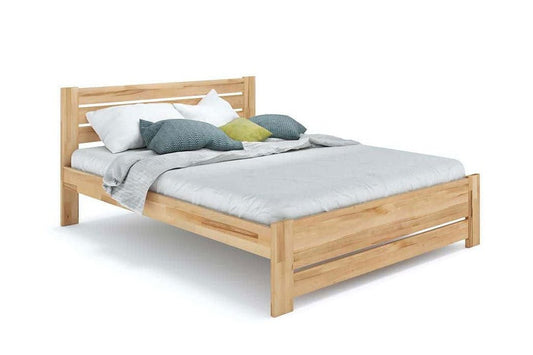
There is no surface. The top of a captain's bed is a mattress. There is nowhere to put a lamp, a phone charging station, a jewelry tray, or anything else you would normally rest on a dresser top. A nightstand handles some of this, but a nightstand surface is small and positioned for the person in bed, not for getting dressed.
Getting dressed is a standing activity. Most people dress standing up, opening drawers, looking at options, making decisions. A dresser at standing height accommodates this naturally. Drawers at knee height or floor level do not. For daily-wear clothing — anything you select each morning — the ergonomics of standing-height storage matter in a way that is easy to underestimate when planning a bedroom on paper. This is also why most people get the most out of a captain's bed when it is paired with at least some standing-height storage — see our captain's bed storage guide for how the combination works in practice.

Where a Bedroom Chest Fits
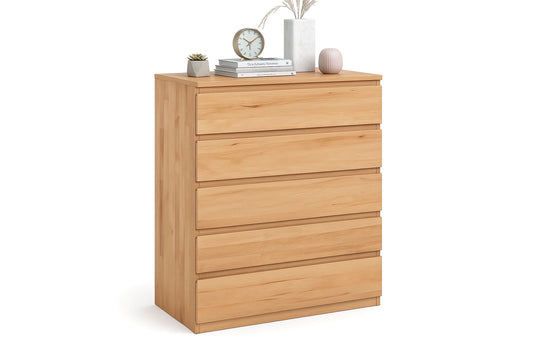
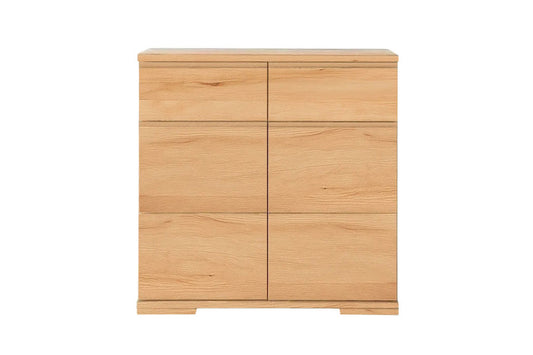
Before getting into specifics: a chest of drawers and a dresser are not identical pieces, but they fill the same role — standing-height drawer storage for daily-use clothing. The difference is geometry. A dresser spreads wide and low, typically 48 to 60 inches across. A chest stacks narrow and tall, typically 30 to 36 inches wide. Both put your clothing at a comfortable standing height with drawers that open fully. The chest just does it in a smaller wall footprint, which makes it a better fit alongside a storage bed — where the bed is already handling the bulk storage and you do not need a full dresser's worth of standing-height capacity, just enough for daily essentials. It is also why we compare the Comfort Pure bedroom chest directly against dressers from other brands: functionally, it occupies the same position in a bedroom. It is the dresser-equivalent in the beechwood lineup, sized more efficiently.
The chest is not the only standing-height option worth considering. A nightstand with drawers handles the very small daily items — phone, watch, reading glasses — that you reach for without getting out of bed. An armoire or wardrobe adds hanging storage if the closet is genuinely insufficient. A media cabinet along one wall can double as clothing storage in a room that needs to serve multiple purposes. The point is not that the chest is the only answer, but that a full-width dresser is rarely the most efficient one when a storage bed is already absorbing the bulk of the storage load. For a broader look at how these pieces can work together, this guide to natural storage furniture covers the range of options.
Paired with a captain's bed, the chest's division of function becomes clean:
The storage bed handles volume — seasonal items, spare bedding, bulk clothing, anything accessed occasionally. These go into the bed's drawers and stay invisible and out of the way.
The chest handles daily access — the clothing you select every morning, stored at standing height with drawers that open fully at a comfortable level. A four-drawer chest is sufficient for most people's everyday clothing once the storage bed is absorbing the rest.
The total footprint of this combination — captain's bed plus a 35.5-inch chest — is typically smaller than a standard platform bed plus a 54-inch dresser. You get more total storage in less total floor space, with the daily-use items at the right height and everything else hidden under the bed.
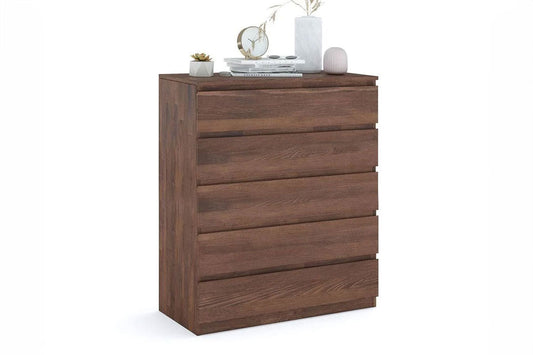
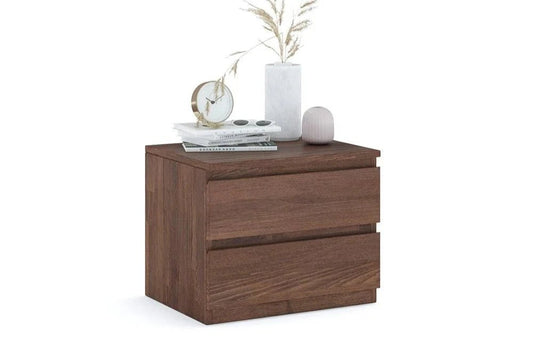
Both pieces come from the same factory, built from the same solid beechwood with the same hand-rubbed linseed oil finish and soft-close drawers. The chest is available in Natural, Walnut, Wenge, and Beige — the same finish options as the captain's bed collection — so the room stays visually coherent without effort. If you want to see how the chest compares to other well-regarded bedroom storage options, our Comfort Pure chest vs. Thuma Nest Dresser comparison covers materials, dimensions, and price in detail.
-
Natural Eco Bedroom Chest
Regular price From $579.99Regular price $799.99 Sale price From $579.99Sale -
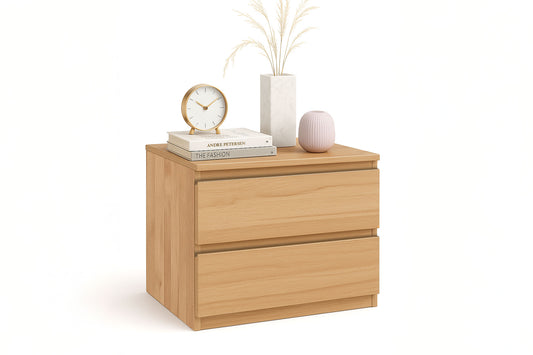
Natural Eco Nightstand
Regular price $279.99Regular price $369.99 Sale price $279.99Sale -
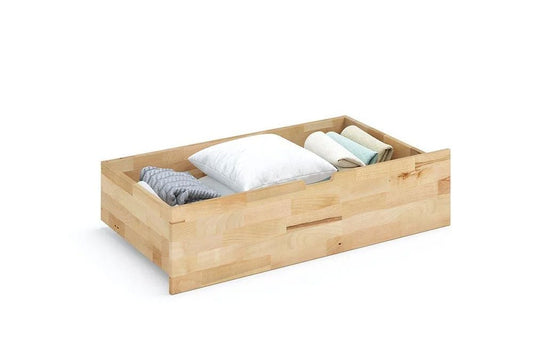
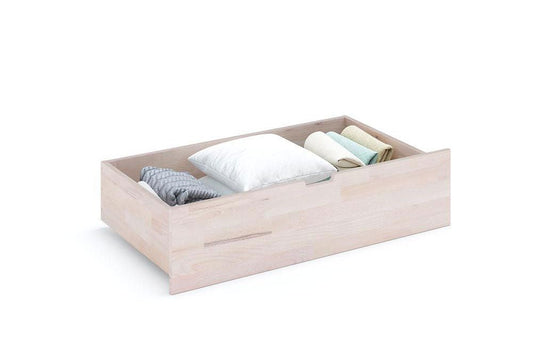
Storage Drawers for Platform Bed (Set of 2)
Regular price From $299.99Regular price Sale price From $299.99 -
 Sale
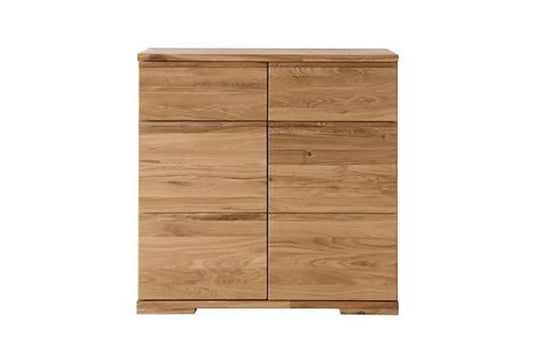
SaleAnchorage Chest
Regular price From $999.99Regular price $1,199.99 Sale price From $999.99Sale -
 Sale
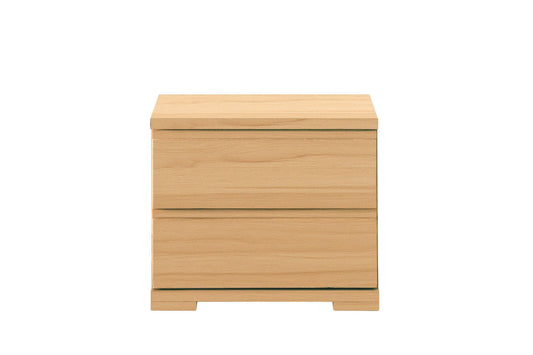
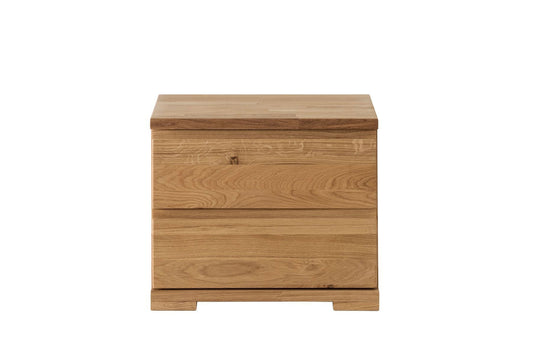
SaleAnchorage Nightstand
Regular price From $339.99Regular price $399.99 Sale price From $339.99Sale -
 Sale
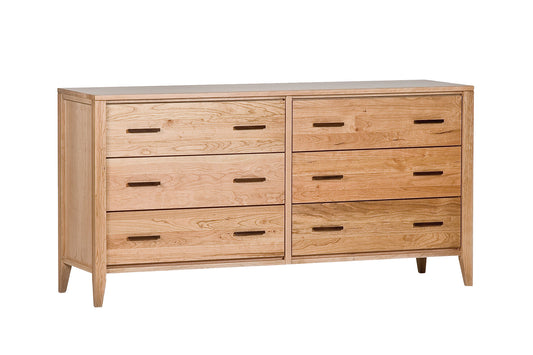
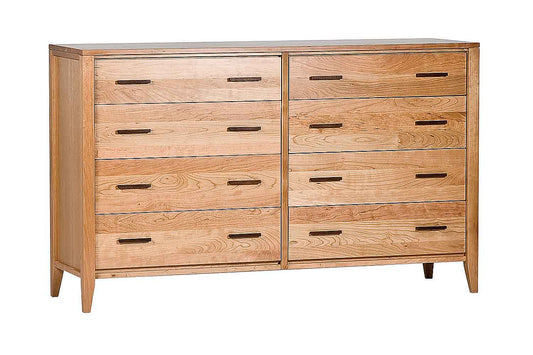
SaleLuna Dresser
Regular price From $1,999.99Regular price $2,499.99 Sale price From $1,999.99Sale -
 Sale
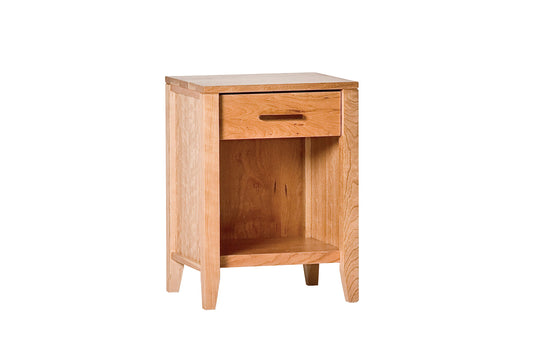
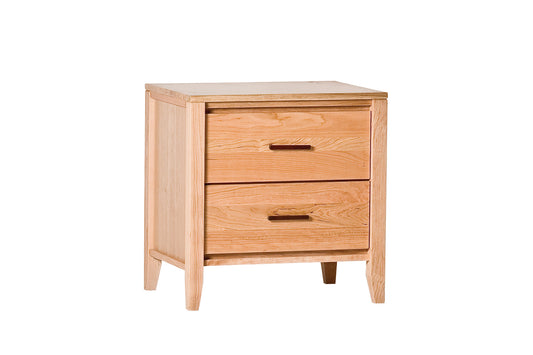
SaleLuna Nightstand
Regular price From $819.99Regular price $1,029.99 Sale price From $819.99Sale -
 Sale
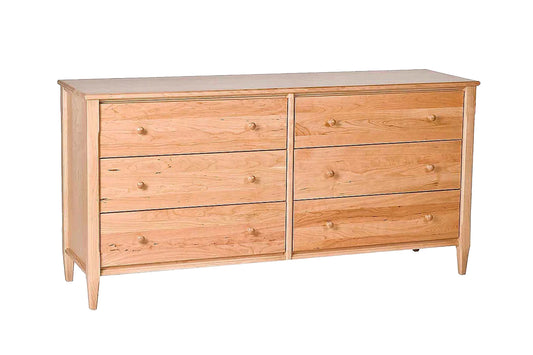
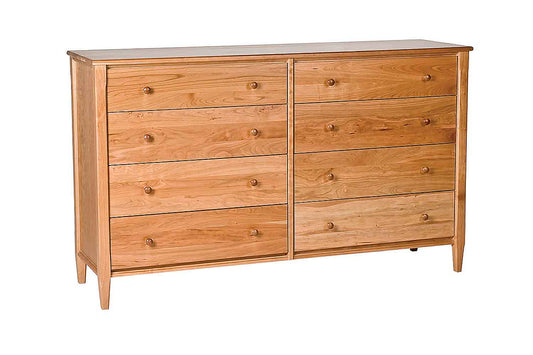
SaleShaker Dresser
Regular price From $1,879.99Regular price $2,359.99 Sale price From $1,879.99Sale -
 Sale
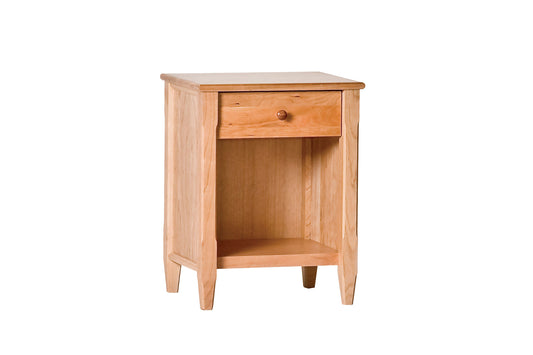
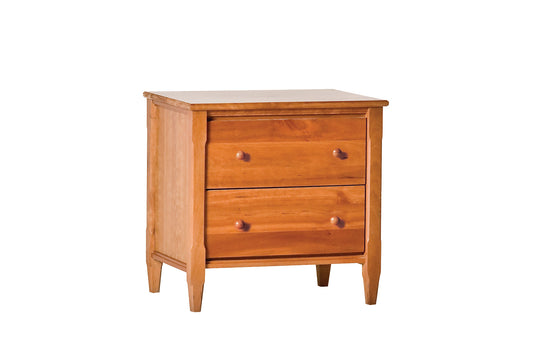
SaleShaker Nightstand
Regular price From $789.99Regular price $989.99 Sale price From $789.99Sale -
 Sale
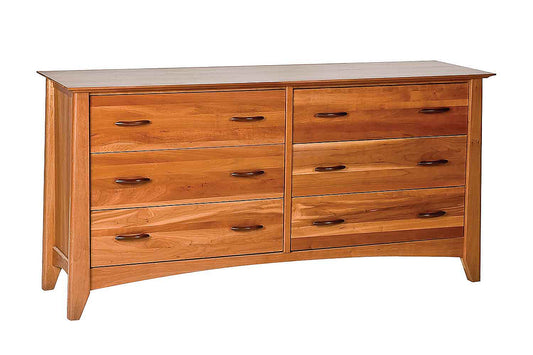
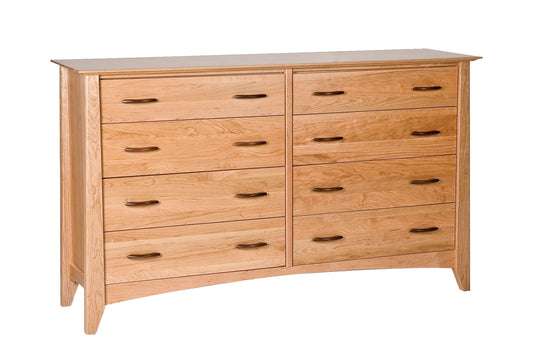
SaleWillow Dresser
Regular price From $2,199.99Regular price $2,749.99 Sale price From $2,199.99Sale -
 Sale
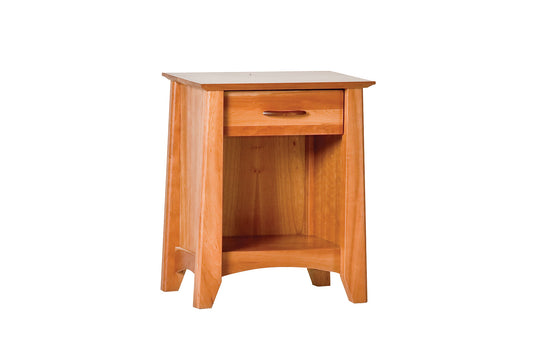
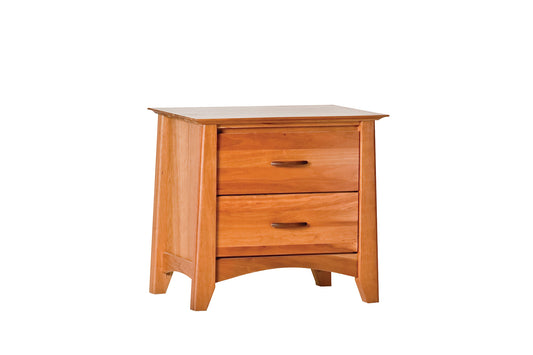
SaleWillow Nightstand
Regular price From $969.99Regular price $1,209.99 Sale price From $969.99Sale -
 Sale
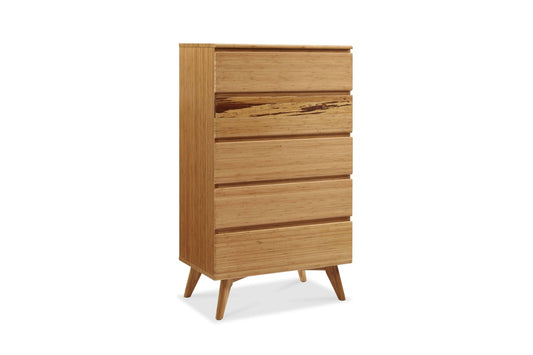
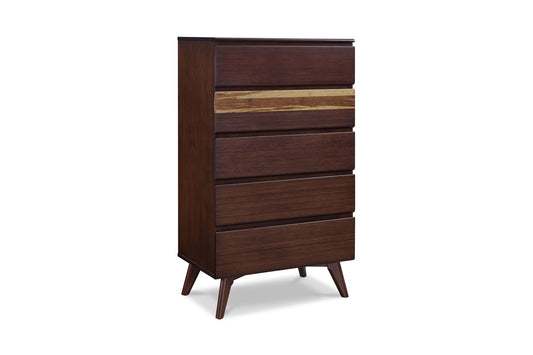
SaleAzara Chest
Regular price $2,759.00Regular price $3,309.00 Sale price $2,759.00Sale