
Tatami Mat Sizes and Dimensions: The Complete Guide
Tatami mat sizing confuses a lot of people, and for good reason — there is no single universal standard. Traditional Japanese mats come in several regional sizes with different dimensions, and most of that information is written for people furnishing Japanese-style rooms using Japanese architectural conventions. If you are setting up a floor bed, a platform base, or a sleeping area in a Western bedroom, most of that context does not apply to you.
This guide covers what you actually need to know: what the traditional sizes are and why they differ, how Western mattress-sized tatami mats work, when split and folding options make sense, and how to figure out which configuration fits your setup before you order something that weighs 60 pounds and ships in a crate.
Traditional Japanese Tatami Sizes (And Why There Are Four of Them)
Tatami developed as part of Japanese architecture, not as a standalone product. Mat dimensions were tied to regional building methods — specifically, the spacing between structural pillars — which is why different parts of Japan ended up with slightly different sizes. All four follow a 1:2 width-to-length ratio, which is what makes them work as a modular flooring system rather than just individual mats.
| Name | Region | Dimensions (cm) | Dimensions (inches) |
|---|---|---|---|
| Kyoma | Kyoto, Kansai, western Japan | 191 × 95.5 cm | ~75.2" × 37.6" |
| Chukyoma | Nagoya, Aichi, Gifu | 182 × 91 cm | ~71.7" × 35.8" |
| Edoma | Tokyo, Kanto, northern Japan | 176 × 88 cm | ~69.3" × 34.6" |
| Danchima | Modern apartments nationwide | 170 × 85 cm | ~66.9" × 33.5" |
For most Western buyers, these regional sizes are useful as reference — they explain why there is no single universal answer to "how big is a tatami mat" — but they are not what you will be ordering. The mats available to buy in the US are standardized products based on these traditions, not region-specific architectural dimensions. The two sections below cover what is actually available.

Standard and Half Japanese Sizes — For Room Setups and Platform Bases
Comfort Pure's 2.25" tatami mats come in Standard Japanese (35.5" × 71", approximately 90 × 180 cm) and Half Japanese (35.5" × 35.5", approximately 90 × 90 cm) sizes — sometimes called a hanjō in Japanese — the same full-depth rice straw and igusa construction as the rest of the line, sized around a standardized traditional module.
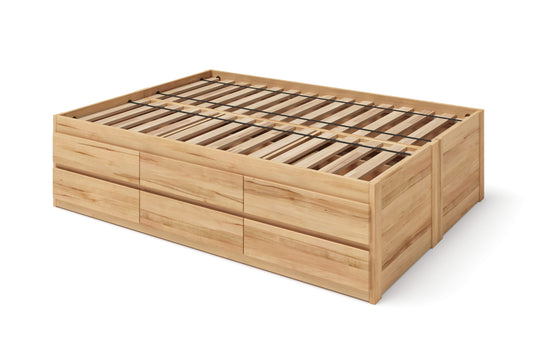
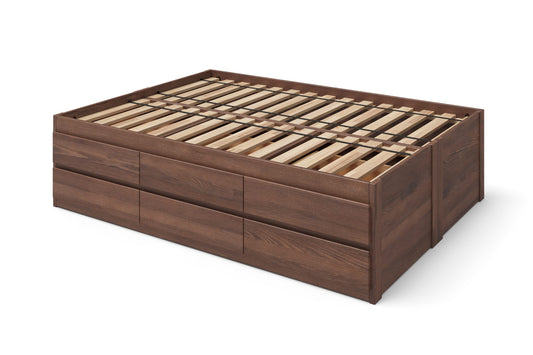
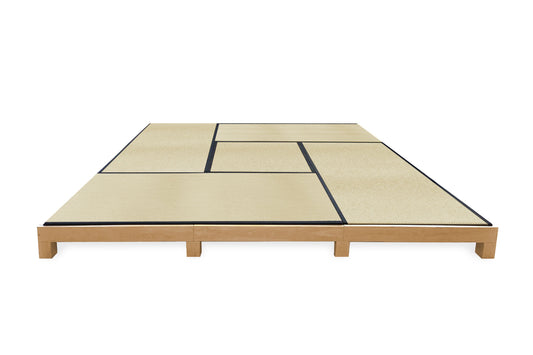
A Standard Japanese mat is approximately 3' × 6'. A Half Japanese mat is approximately 3' × 3'. Because both are built on the same 35.5" base unit, they tile together in the classic Japanese room layouts. The most common example is the 4.5-jo arrangement: four standard mats placed in a pinwheel pattern around a central half mat, forming a square roughly 106" × 106" (about 8.9ft × 8.9ft). This modularity is what makes them the right choice for the Tatami Room Kit, for covering floor area beyond just the sleep surface, and for platform bases sized around Japanese module dimensions. Both the low tatami platform base and the tall tatami platform base are designed around Standard Japanese mat dimensions — check the product pages for the exact mat configuration each base requires.
| Name | Dimensions (inches) | Dimensions (cm) | Weight | Best for |
|---|---|---|---|---|
| Standard Japanese | 35.5" × 71" × 2.25" | ~90 × 180 × 5.7 cm | ~58 lbs | Platform bases, room kits, floor coverage grids |
| Half Japanese (hanjō) | 35.5" × 35.5" × 2.25" | ~90 × 90 × 5.7 cm | ~29 lbs | Filling perimeter gaps, completing room kit layouts |
Western Mattress-Sized Tatami Mats
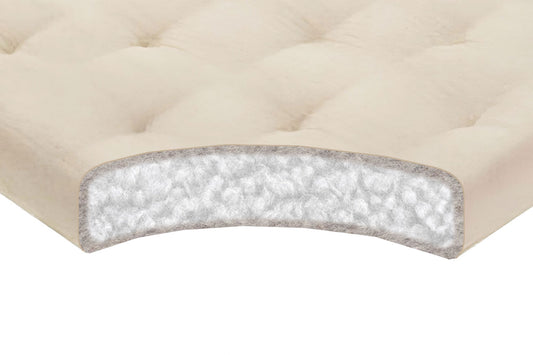
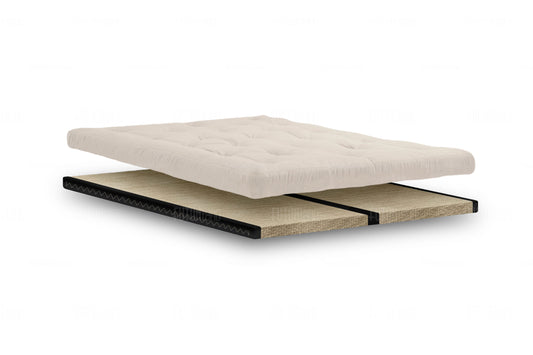
For a straightforward floor bed or mattress foundation, Western mattress-sized mats remove most of the guesswork — if you have a queen mattress, you order a queen tatami. The mat covers the same footprint, creates a clean visible border around the mattress when used on the floor, and fits inside a platform base designed to the same dimensions.
All are 2.25 inches thick with the same dense rice straw core and woven igusa surface as the Japanese sizes above.
| Size | Configuration | Dimensions (inches) | Dimensions (cm) | Weight |
|---|---|---|---|---|
| Twin | 1 piece | 39" × 75" × 2.25" | ~99 × 191 × 5.7 cm | ~60 lbs |
| Twin XL | 1 piece | 38" × 80" × 2.25" | ~97 × 203 × 5.7 cm | ~70 lbs |
| Full | 2 pieces, each | 27" × 75" × 2.25" | ~69 × 191 × 5.7 cm | ~54 lbs each |
| Queen | 2 pieces, each | 30" × 80" × 2.25" | ~76 × 203 × 5.7 cm | ~60 lbs each |
| King | 2 pieces, each | 38" × 80" × 2.25" | ~97 × 203 × 5.7 cm | ~70 lbs each |
| California King | 2 pieces, each | 36" × 84" × 2.25" | ~91 × 213 × 5.7 cm | ~72 lbs each |
Full size and larger come as two pieces rather than one. A queen tatami at 60" × 80" as a single mat would be unwieldy to ship, move, and position — it would arrive in a crate and require two people just to place it. Two narrower panels that together match the full mattress size are much easier to handle and behave identically underfoot and under a mattress.
-

 Sale
SaleTatami Mat
Regular price From $169.99Regular price $219.99 Sale price From $169.99Sale -

 Sale
SaleFolding Tatami Mat
Regular price From $179.99Regular price $269.99 Sale price From $179.99Sale -
 Sale
SaleGoza Tatami Mat
Regular price $79.99Regular price $129.99 Sale price $79.99Sale -

 Sale
SaleTatami Room Kit
Regular price From $779.99Regular price $1,289.99 Sale price From $779.99Sale -
Tatami Daybed Sofa Sleeper
Regular price From $1,349.99Regular price $2,099.99 Sale price From $1,349.99Sale -
Tatami Platform Base 9'x9' (Low Profile)
Regular price From $749.99Regular price Sale price From $749.99 -
Tatami Platform Base 9'x9'
Regular price From $1,199.99Regular price Sale price From $1,199.99 -
Floor Bed – Shikifuton Tatami Mat Bundle
Regular price From $729.99Regular price $1,009.99 Sale price From $729.99Sale -
Flip & Roll – Shikifuton Tatami Mat Bundle
Regular price From $369.99Regular price $519.99 Sale price From $369.99Sale -
Japanese Tatami Platform Bed
Regular price From $729.99Regular price $929.99 Sale price From $729.99Sale -
Japanese Tatami Platform Bed with Grooved Headboard
Regular price From $899.99Regular price $1,099.99 Sale price From $899.99Sale -
Japanese Tatami Platform Bed with Slatted Headboard
Regular price From $819.99Regular price $1,019.99 Sale price From $819.99Sale


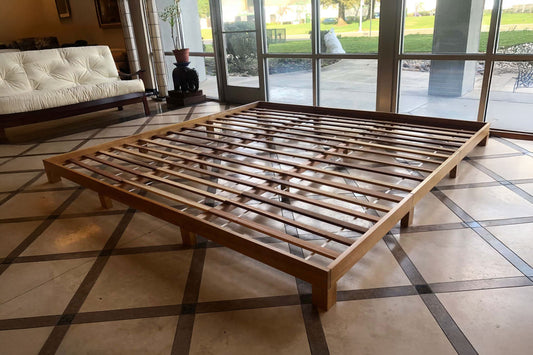

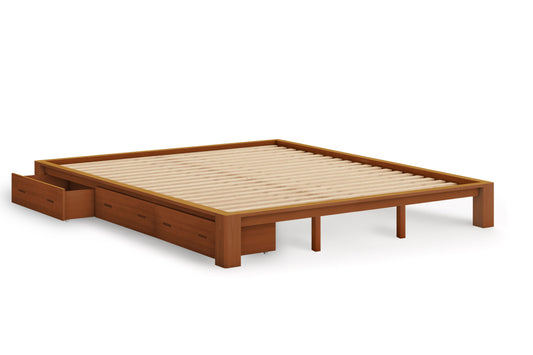

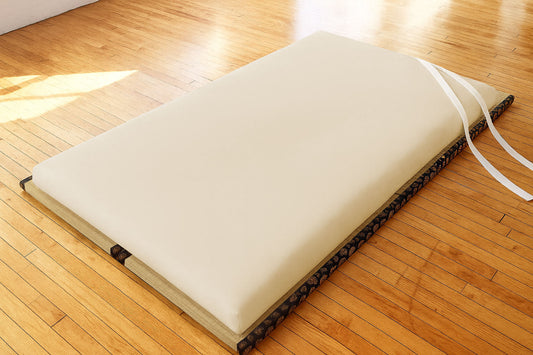
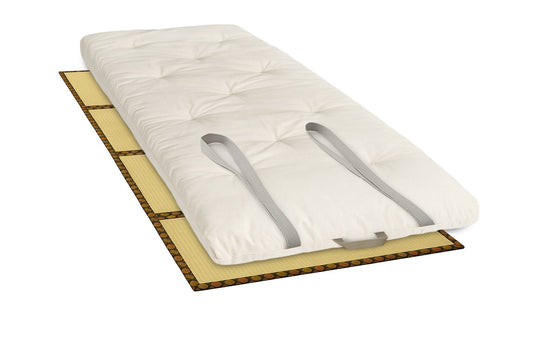

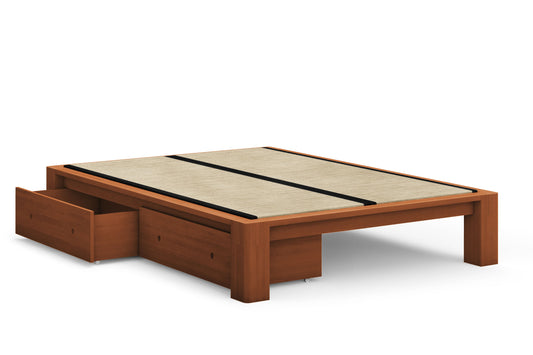

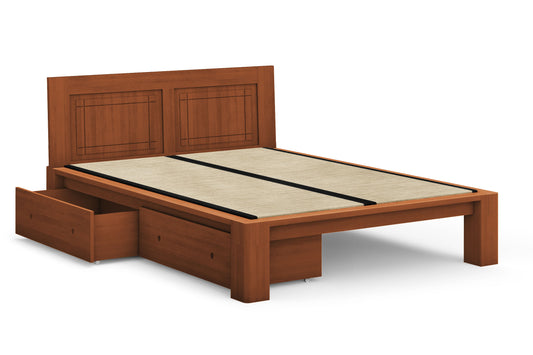

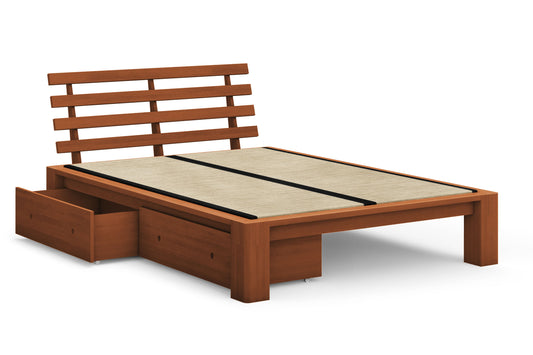
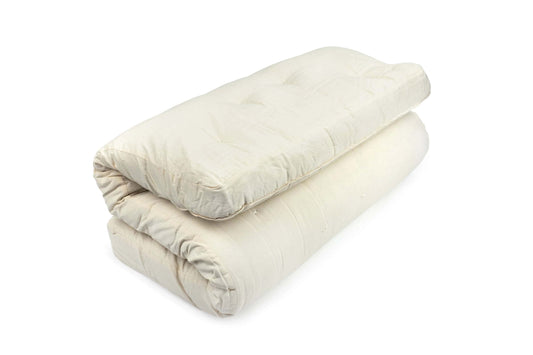
One practical detail that affects how your setup looks: futon mattresses and Western-made shikibutons are typically manufactured 1 to 2 inches shorter than the standard size name implies, which means a matching-size tatami mat will already show a small natural border of mat around the mattress edges. If you want the more pronounced look of a traditional Japanese floor bed — where the tatami extends visibly beyond the mattress on all sides — you can intentionally size up. The simplest version is going one size larger: a queen tatami (60" × 80") under a full mattress (54" × 75") leaves about 3 inches of exposed mat on each long side and 2.5 inches at the ends. For a more dramatic, washitsu-style effect, three queen panels arranged under a queen mattress creates roughly 10 inches of visible tatami on each side and 5 inches at the head and foot — the mattress sits as an island in a field of tatami rather than filling it edge to edge. This kind of custom configuration is not a standard option in our product listing, but if you have a specific setup in mind, contact us and we will work out the right combination with you.
Split Tatami Mats — Same Size, Easier to Handle
Split mats divide each panel in half again — so a twin becomes two pieces instead of one, and a queen becomes four pieces instead of two. The combined assembled dimensions are identical to the standard western sizes above; only the individual piece size changes. Same mat, smaller packages.
| Size | Configuration | Each piece (inches) | Each piece (cm) | Weight per piece |
|---|---|---|---|---|
| Twin | 2 pieces | 39" × 37.5" × 2.25" | ~99 × 95 × 5.7 cm | ~30 lbs |
| Twin XL | 2 pieces | 38" × 40" × 2.25" | ~97 × 102 × 5.7 cm | ~35 lbs |
| Full | 4 pieces | 27" × 37.5" × 2.25" | ~69 × 95 × 5.7 cm | ~27 lbs |
| Queen | 4 pieces | 30" × 40" × 2.25" | ~76 × 102 × 5.7 cm | ~30 lbs |
| King | 4 pieces | 38" × 40" × 2.25" | ~97 × 102 × 5.7 cm | ~35 lbs |
| California King | 4 pieces | 36" × 42" × 2.25" | ~91 × 107 × 5.7 cm | ~36 lbs |
Split mats are worth choosing if: you are above the ground floor and need to navigate stairs, your delivery access is tight, you want to store mats seasonally without dedicated floor space, or you are likely to move. A 30-pound piece is manageable alone. A 70-pound single-piece twin is not.
The only practical consideration with split mats is that the seam between pieces will sit somewhere under your mattress. This is not a structural issue — a mattress distributes weight evenly across the surface — but it is worth knowing that the seam will be visible before the mattress goes down. Positioning the seam at the center or offsetting it slightly is common practice.

Folding Tatami Mats: For Flexible and Portable Setups
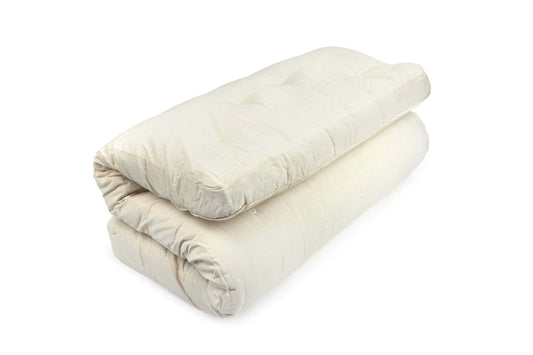
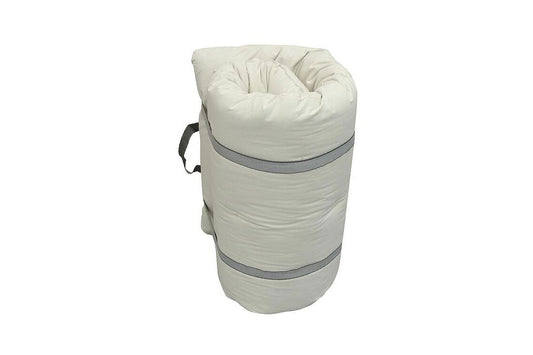
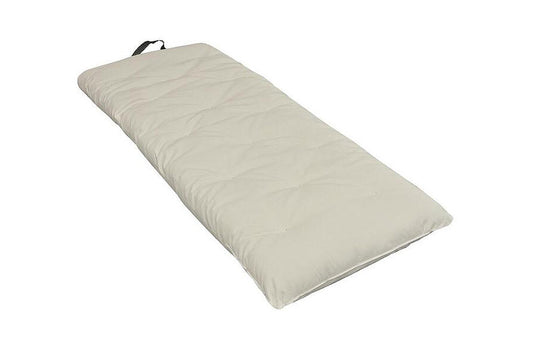
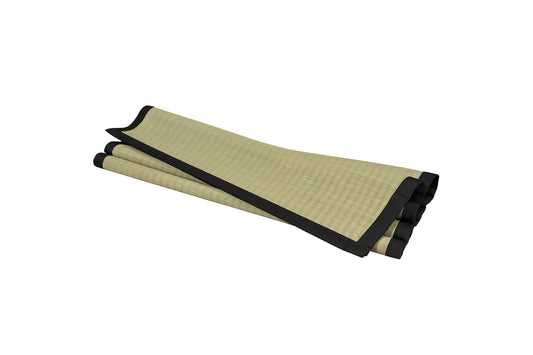
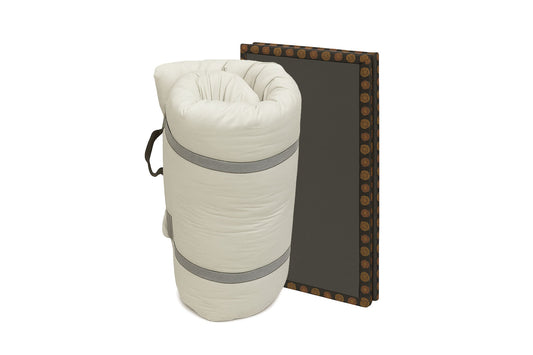
The mats above are all 2.25 inches thick — full-depth traditional tatami designed for permanent or semi-permanent floor sleeping setups. The folding tatami mat is a different product for a different purpose: a 0.5-inch slim mat that folds flat for storage or travel, built for portable sleeping arrangements, guest setups, and situations where the mat needs to disappear when it is not in use.
| Size | Fold | Dimensions (open) | Shipping box | Weight |
|---|---|---|---|---|
| Cot | 3-fold | 30" × 75" × 0.5" | 31" × 26" × 2.5" | ~8.5 lbs |
| Twin | 3-fold | 37.5" × 75" × 0.5" | 38.5" × 26" × 2.5" | ~10 lbs |
| Twin XL | 4-fold | 39" × 80" × 0.5" | 40" × 22" × 2.5" | ~12 lbs |
| Full | 4-fold | 54" × 75" × 0.5" | 55" × 20" × 2.5" | ~14 lbs |
| Queen | 4-fold | 60" × 80" × 0.5" | 61" × 21" × 2.5" | ~17 lbs |
At 0.5 inches, folding mats are not a substitute for 2.25" traditional mats under a permanent floor sleeping setup. They are a surface layer — adding the igusa texture, the natural scent, and the slight give of rush grass to a camping cot, a guest air mattress, or a futon that is brought out occasionally. They also work as a breathable layer over a hard floor when you want the tatami aesthetic without committing to a full-depth mat.
The cot size (30" × 75") is worth noting specifically: it is the only tatami mat sized for a standard camping cot, which makes it useful for outdoor sleeping setups, cabin beds, and bunk configurations where a twin mat would overhang.
Goza Mats: The Thinnest Option
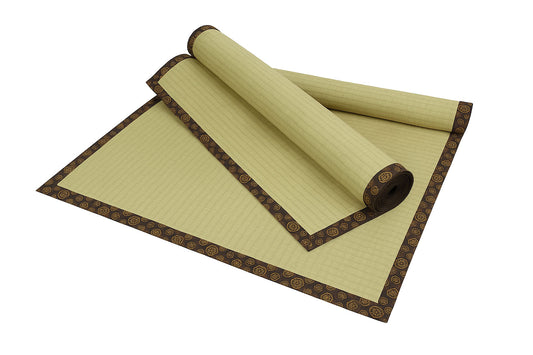
The goza mat (35.4" × 78.7" × 0.125", approximately 90 × 200 cm) is a traditional woven rush grass mat without a core — essentially a flat weave of igusa that rolls up completely. At one-eighth of an inch thick it is not a sleeping surface or a foundation layer, and it is not a direct substitute for a 2.25" tatami mat under a shikibuton.
Goza is used as a surface covering: placed over hardwood floors, finished tatami, or other flat surfaces to add the natural texture, breathability, and scent of igusa where a full-depth mat is not practical. Common uses include covering an existing tatami mat that has worn on the surface, adding tatami character to a room without installing full mats, or as a sitting and meditation surface. At 35.4" × 78.7" it is close to the width of a Standard Japanese mat but somewhat longer — worth measuring against your existing setup before ordering if a precise fit matters.
Choosing the Right Type for Your Setup
With five types covering very different use cases, the decision usually comes down to what the mat is actually doing in your setup:
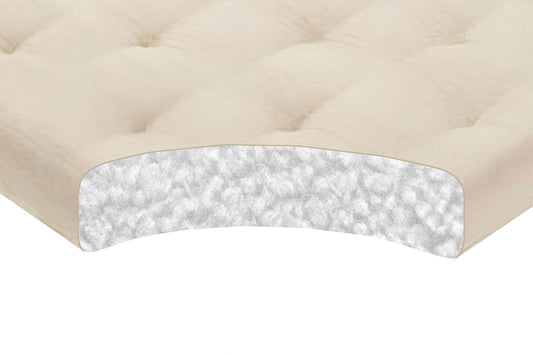
For a permanent floor bed or mattress foundation: Standard or split 2.25" mats in your Western mattress size. The rice straw core provides the airflow and firm support a shikibuton or futon mattress needs underneath. For anything full size or larger, split mats are worth choosing for the handling difference alone.
For a tatami room or floor coverage beyond the mattress footprint: Standard Japanese and Half Japanese sizes, configured in a grid using the Tatami Room Kit. Four standard mats in the classic 4.5-jo pinwheel layout with one half mat at the center creates an ~8.9ft × 8.9ft square — a natural starting point for a dedicated tatami sleeping area or meditation space.
For a platform base: Both the low and tall tatami platform bases are designed around Standard Japanese mat dimensions. Check the product pages for the specific mat count and configuration each base requires before ordering.
For guest setups, cots, or portable use: Folding mats. Lightweight, foldable to the size of a small suitcase, and easy to bring out and put away without a storage plan.
For surface texture and scent over an existing floor or worn tatami: Goza. Rolls flat, adds igusa character to a space without installation, and stores in almost no space.
Tatami Mat Size FAQ
Should the tatami mat be the same size as the mattress, or slightly larger?
For Western mattress-sized mats, the tatami and mattress dimensions are closely matched by design — a queen tatami pairs with a queen mattress. In this setup, a small amount of mat may be visible around the perimeter depending on the mattress brand's exact dimensions, but the fit is intentionally close rather than dramatically bordered. If you want a more pronounced visible tatami border — the look common in Japanese-style floor setups — pairing a Standard Japanese mat with a slightly smaller shikibuton achieves that effect, since shikibutons are typically sized a few inches smaller than the mat they sit on.
Does the tatami go inside or outside the platform base frame?
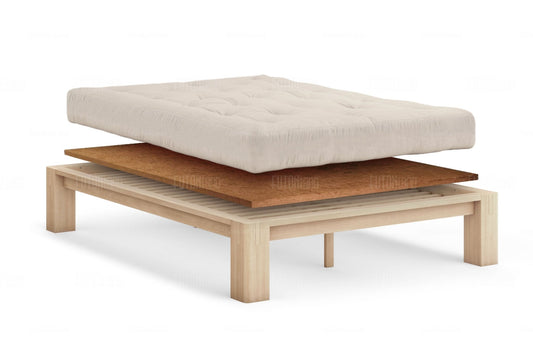
Inside. The frame contains the mat, which sits in the base and supports the mattress on top. The mat dimensions should match the interior dimensions of the base, not the exterior. Comfort Pure's platform bases are sized to accept the corresponding mattress-sized tatami mats — a queen base takes queen tatami mats.
What happens at the seam between two-piece or split mats?
Nothing, in normal use. A mattress on top holds the panels in position and distributes weight across both. The seam is not a structural weak point. In a platform base, the frame walls keep the mats from shifting. On an open floor, placing a thin non-slip pad beneath the mats keeps them from separating.
Can I use a twin tatami mat under a full mattress?
A twin mat (39" × 75") is narrower than a full mattress (54" wide), so the mattress would overhang on both sides. This undermines both the ventilation benefit of the mat and the visual intention. If you have a full mattress, use full-sized mats.
How heavy are tatami mats to move and position?
Standard single-piece mats range from about 60 to 72 pounds. They are manageable for two people but heavy for one, especially up stairs or through tight doorways. Split mats reduce each piece to 27–36 pounds, which most adults can move without help. If you are above ground floor or have a narrow staircase, split is the practical default.