Collection: Kumiko & Shoji Lamps
Japanese-style Kumiko lamps and shoji lanterns made from natural, unpainted Hinoki wood and rice paper. The lattice is assembled from precisely cut, interlocking pieces without nails, and it diffuses the bulb into a warm, patterned glow for bedside tables, living rooms and Japandi interiors.
Kumiko is a centuries-old Japanese woodworking technique in which small, precisely cut pieces of wood are fitted into geometric patterns without nails. Our shoji lamps apply it to modern lighting: thin wooden lattices set in a frame, the way shoji screens hold their panels, which cast patterned shadows on nearby walls when lit.
The lamps come in several sizes, from compact lanterns for a nightstand or shelf to taller pieces that work as statement table lamps on a console or dresser. Check each product page for exact dimensions. Natural wood and clean geometry suit Japandi, minimalist and contemporary interiors.
-
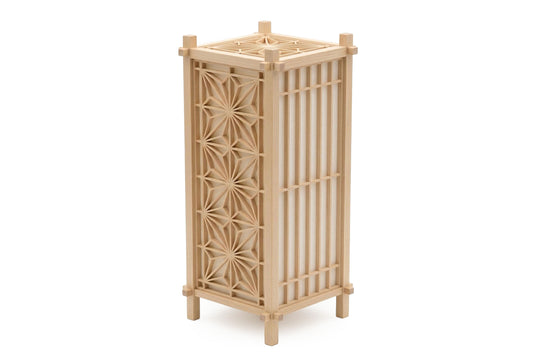
Japanese-Style Shoji Kumiko Lamp - Tall
Regular price $179.99Regular priceSale price $179.99 -
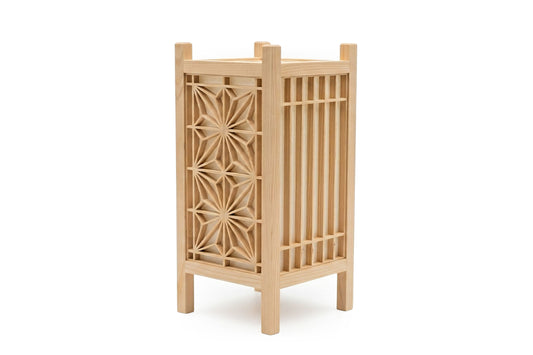
Japanese-Style Shoji Kumiko Lamp - Short
Regular price $179.99Regular priceSale price $179.99 -
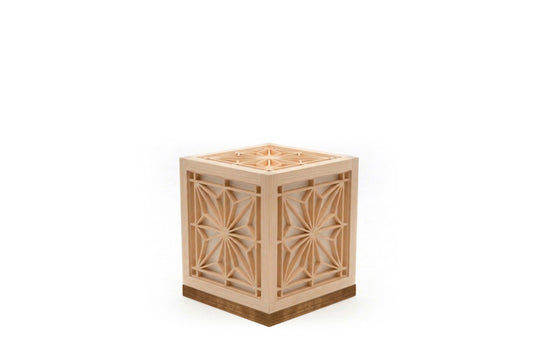
Japanese-Style Shoji Kumiko Lamp - Mini
Regular price $179.99Regular priceSale price $179.99 -
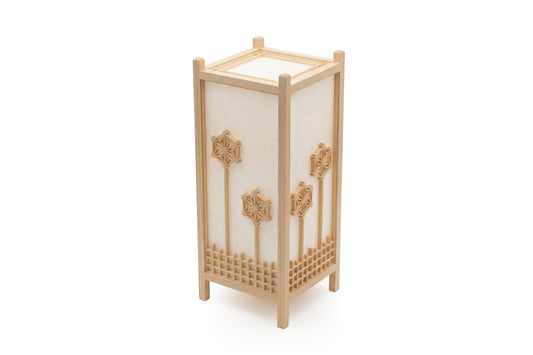
Japanese-Style Shoji Kumiko Lamp - Flowers
Regular price $179.99Regular priceSale price $179.99
Hinoki Wood and Rice Paper Kumiko Lamps
Each lamp is made from natural, unpainted Hinoki wood (Japanese cypress) with traditional rice paper behind the lattice. The Kumiko panels are held together by friction and exact angles rather than nails, the same way the lattice in a shoji screen is built. With no paint or heavy varnish, the pale grain stays visible, and the rice paper softens the light before it passes through the pattern.
Choosing the Right Size and Pattern
Height decides where a lamp works best. Compact lanterns suit a nightstand, shelf or windowsill; mid-height lamps fit a side table, desk or entryway console; the tallest pieces read as statement lamps on a dresser or sideboard. Lattice patterns range from floral to geometric, and the pattern shapes the shadows the lamp casts on nearby walls. For a low, floor-level setting, a smaller lamp sits well beside a futon or next to a shoji screen room divider.
Bulbs, Light and Placement
The lamps use standard bulbs, and most come with a warm white LED; see each product page for the socket and included bulb. For replacements, a warm white LED between 2700K and 3000K keeps the wood's glow warm and runs cool. These are accent lights: the lattice casts patterned shadows on nearby walls, which works best as a second light source alongside overhead lighting. Pair them with the rest of our Japanese-style furniture for a cohesive room.
Frequently Asked Questions: Kumiko Lamps
What's the difference between Kumiko and shoji lamps?
Kumiko is a Japanese woodworking technique: small pieces of wood fitted into geometric lattice patterns without nails. Shoji are Japanese screens and doors built around Kumiko lattices. A shoji lamp is a lamp built the same way as a shoji panel. Our Japanese-style lamps are shoji-style frames with Kumiko lattice panels.
What is the Kumiko woodworking technique?
Kumiko is a traditional Japanese woodworking technique that originated centuries ago. It involves precisely cutting and interlocking small wooden pieces to form complex geometric patterns without the use of nails, relying on the precise fit of the wood.
Can I use these lamps on the floor?
They're sized as table lamps. You can place one on the floor as a low accent lantern beside a futon, floor bed or meditation cushion, but they aren't full-height floor lamps.
Are these lamps sturdy without the use of nails?
Yes, they are highly durable. The structural integrity of our Kumiko lamps comes from the precise tension and interlocking nature of the design. Because the pieces are crafted to fit together tightly, the resulting framework is both stable and long-lasting.
What kind of decor styles do these lamps suit?
Our Kumiko lamps are incredibly versatile. While the patterns are inspired by historical design, their clean lines make them a perfect fit for contemporary aesthetics. They are especially popular in minimalist, Zen, and Japandi interior styles as a natural, grounding focal point.
How do I clean a Kumiko lamp?
Maintaining the intricate latticework requires a gentle approach. We recommend using a soft, dry dusting brush—such as a clean makeup brush—or a light burst of compressed air to safely remove dust. Avoid using water, damp cloths, or chemical cleaners, which can damage the natural wood.
Do these lamps require a special type of lightbulb?
No special bulb is needed. Most of our Kumiko lamps use a standard E27 screw-in socket and come with a warm white LED bulb with 60 LED chips. For replacements, choose a warm white LED (2700K–3000K): it gives the wood a warm glow and runs cool enough for long use. See each product page for the exact socket and bulb details.
Can these be used as the primary light source in a room?
These lamps are designed primarily for ambient and accent lighting. The intricate wooden patterns beautifully diffuse the light to create a calming, shadow-rich environment. For a fully illuminated room, we recommend pairing them with other primary lighting sources like ceiling fixtures.
Editor's Picks about Accessories
View all-
Light Wood Nightstand: A Guide to Species, Fini...
A light wood nightstand can get its color from a pale species, a clear finish, a white-wash, or a printed laminate. They look alike on day one and diverge completely...
Light Wood Nightstand: A Guide to Species, Fini...
A light wood nightstand can get its color from a pale species, a clear finish, a white-wash, or a printed laminate. They look alike on day one and diverge completely...
-
Minimalist Bedroom Furniture: How to Spot Real ...
Minimalist bedroom furniture is sold on a look that's easy to fake. Here's how to tell furniture that's designed simple from furniture that's merely stripped simple — before the corner...
Minimalist Bedroom Furniture: How to Spot Real ...
Minimalist bedroom furniture is sold on a look that's easy to fake. Here's how to tell furniture that's designed simple from furniture that's merely stripped simple — before the corner...
-
King vs. California King
A California King is longer; a King is wider — and they cover almost exactly the same area. Here's which shape suits your height, your room, and your bedding, plus...
King vs. California King
A California King is longer; a King is wider — and they cover almost exactly the same area. Here's which shape suits your height, your room, and your bedding, plus...