
Why Your Couch is Toxic (And How to Build an Organic Sofa Instead)
The living room sofa is the anchor of the home. It is where families gather, guests sleep, and children play. Despite the amount of time people spend in direct contact with their couches, very few stop to consider what is inside them. The modern furniture industry relies heavily on synthetic petroleum-based foams, synthetic fabrics, and complex chemical treatments. If you were to cut open a standard mass-market sofa, you would not find wood, cotton, or wool. You would find polyurethane foam, oriented strand board (OSB), formaldehyde-based adhesives, and a cocktail of flame retardants and stain repellents.
As consumers become more aware of indoor air quality, the demand for non-toxic home goods has skyrocketed. People buy organic food and natural skincare, yet they continue to sleep and sit on chemical-laden upholstery. The alternative to this problem is not to spend ten thousand dollars on a custom-upholstered piece. The solution is to rethink the structure of the couch entirely. By combining a solid hardwood frame with a natural mattress and a removable cover, you can create a convertible sofa bed that is entirely free of harmful chemicals. This system, often associated with high-end Japanese and Scandinavian design, offers a modular, washable, and organic approach to living room seating.

What Makes a Traditional Couch "Toxic"?
To understand why a natural alternative is necessary, it helps to examine the materials used in standard furniture manufacturing. The "toxic couch" is not an exaggeration; it is a byproduct of prioritizing cheap manufacturing and shipping over human health and longevity. There are three primary components in standard sofas that degrade indoor air quality.
Polyurethane Foam and VOC Off-Gassing
Almost all conventional sofas use polyurethane foam for their cushions. Polyurethane is a petroleum derivative. When it is manufactured, it traps volatile organic compounds (VOCs) within its cellular structure. Once the furniture is unboxed in a home, these gases slowly leak into the surrounding air—a process known as off-gassing. Common VOCs released by synthetic foam include toluene, benzene, and formaldehyde. These compounds are known respiratory irritants and have been linked to headaches, asthma exacerbation, and long-term health risks.
Beyond off-gassing, polyurethane foam is highly unstable. Over a few years of regular use, the foam breaks down mechanically. As it degrades, it leaves a fine dust of microplastics that settles into the floor and is kicked up into the air. This is why older synthetic couches often feel flat and hollow; the internal structure has literally turned to dust.
Chemical Flame Retardants
Because polyurethane foam is highly flammable—often compared to solid gasoline by fire safety experts—manufacturers traditionally saturated it with chemical flame retardants to pass flammability tests (most notably California's outdated TB 117 standard). Chemicals like PBDEs (polybrominated diphenyl ethers) were used for decades. When PBDEs were phased out due to their toxic buildup in the environment and human bloodstream, manufacturers replaced them with organophosphate flame retardants, which present their own set of health concerns.
These chemicals do not stay inside the foam. They migrate out of the couch and bind to household dust. Toddlers and pets, who spend significant time near the floor and frequently put things in their mouths, ingest these chemicals at higher rates than adults.
Stain-Resistant "Performance" Fabrics
In recent years, "performance fabrics" have become a major selling point for modern couches. These fabrics promise to repel wine, coffee, and mud. However, this magical stain resistance is usually achieved through the application of PFAS (per- and polyfluoroalkyl substances). PFAS are widely known as "forever chemicals" because they do not break down in the environment or the human body. Sitting on these fabrics day after day creates friction, which releases microscopic particles of the chemical finish into the living environment.
The Alternative: Building a Chemical-Free Sofa
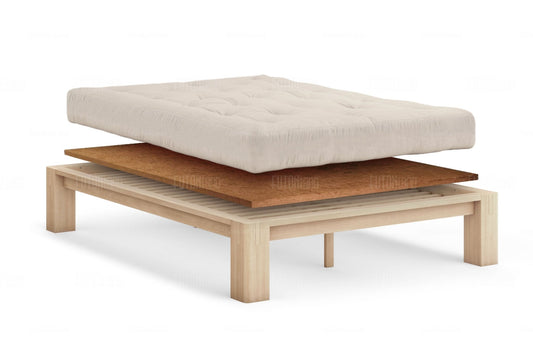
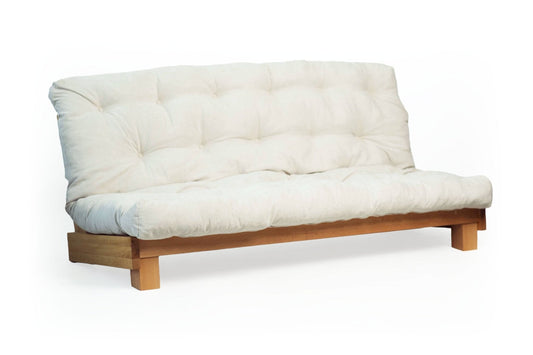
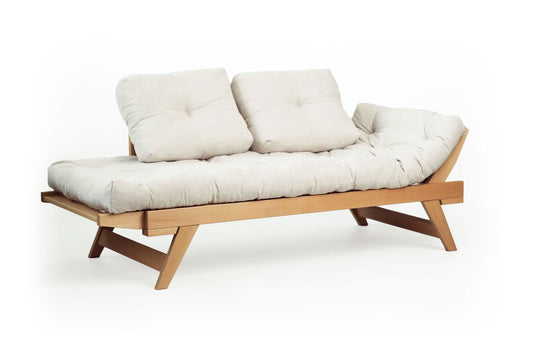
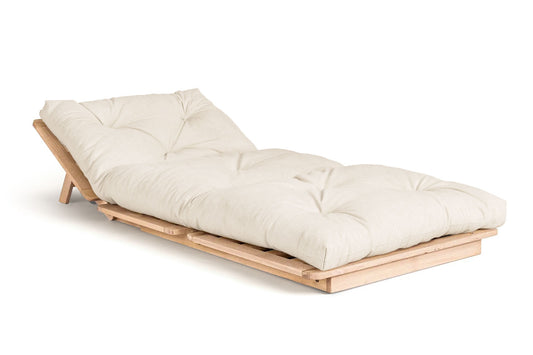
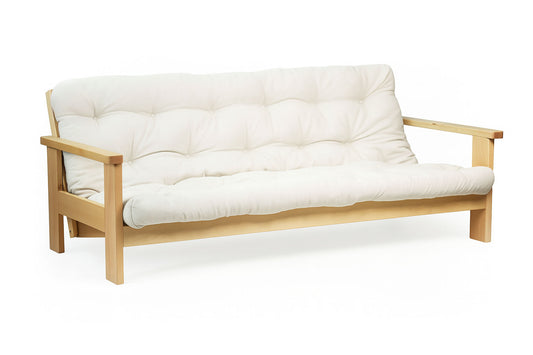
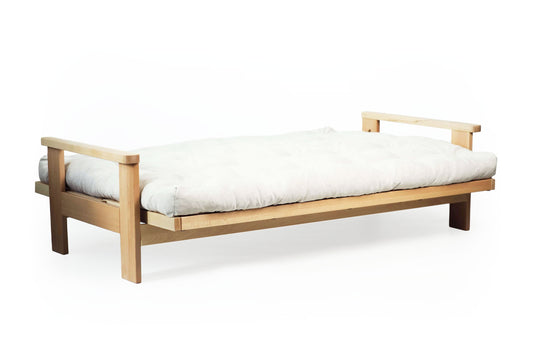
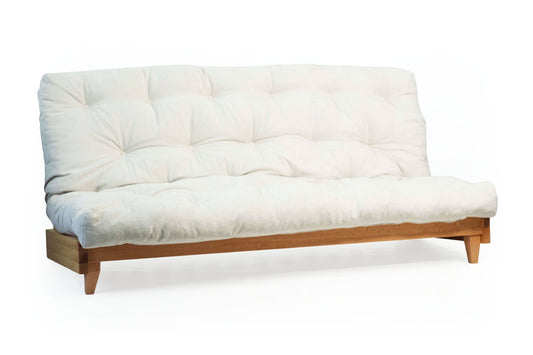
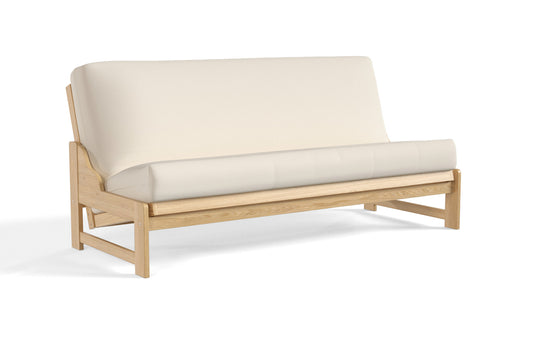
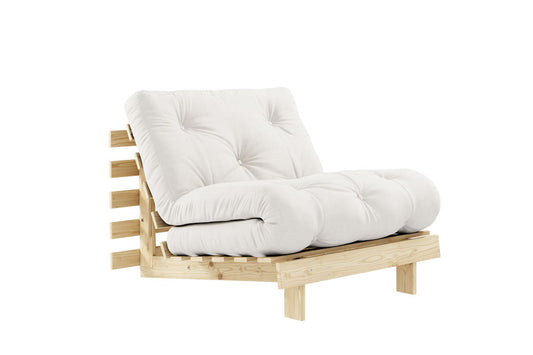
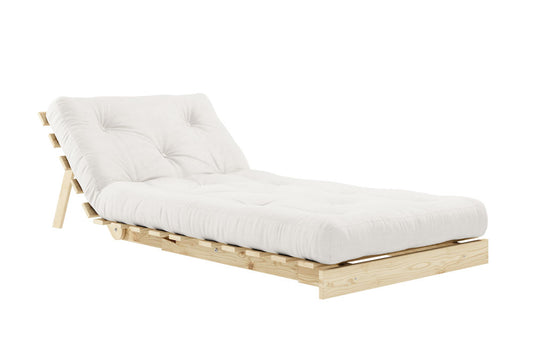
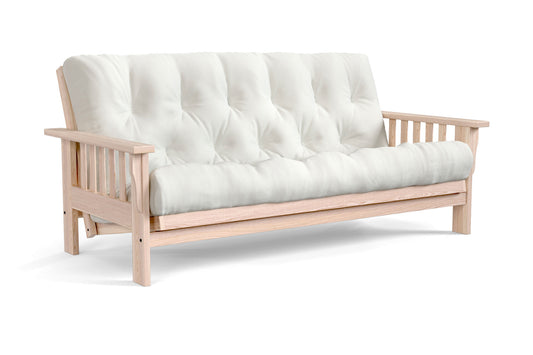
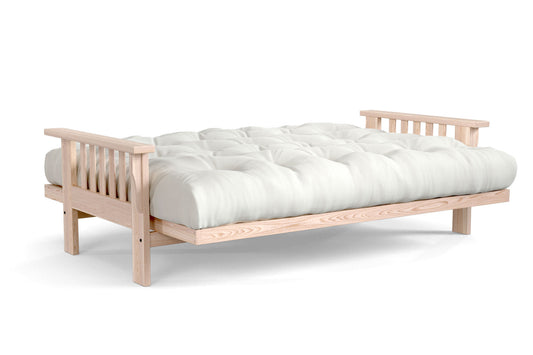
To escape the cycle of toxic furniture, buyers must look outside the standard upholstery model. A traditional upholstered sofa is a sealed unit; you cannot remove the foam, you cannot wash the core, and you cannot easily replace broken internal springs. A modular organic sofa separates the couch into three distinct, easily manageable parts: a wooden frame, a natural cushion core, and a protective cover.
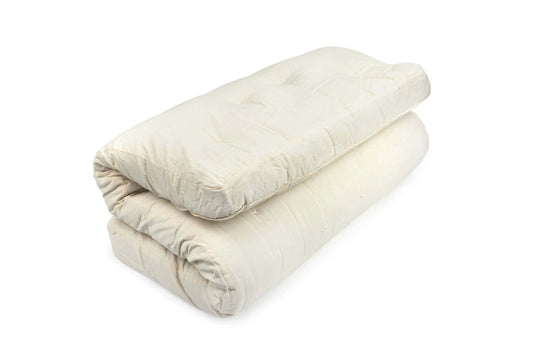
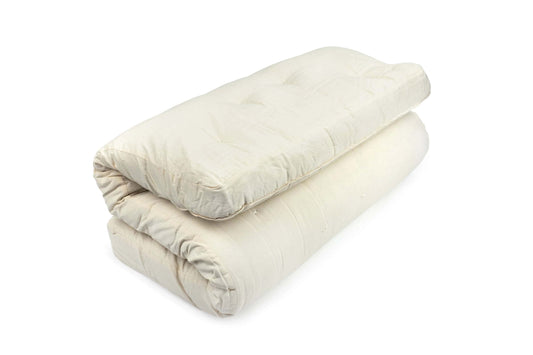
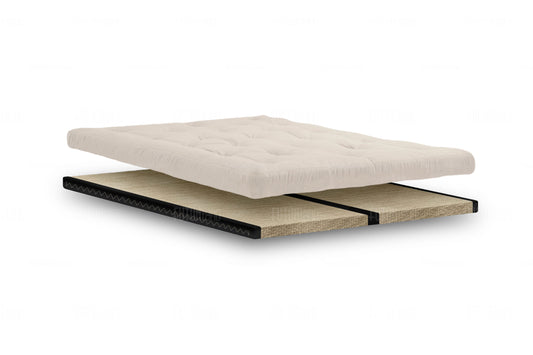
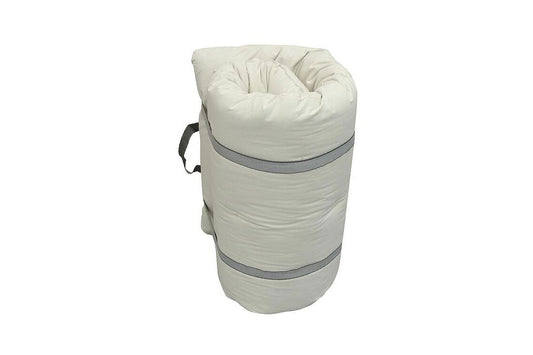
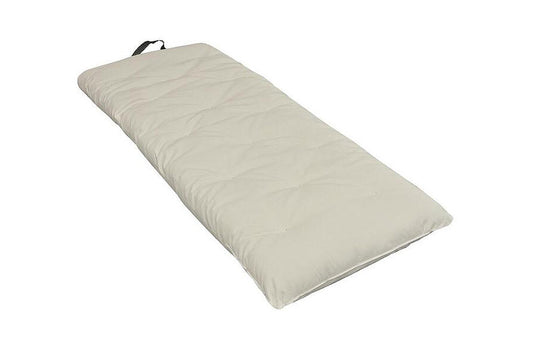
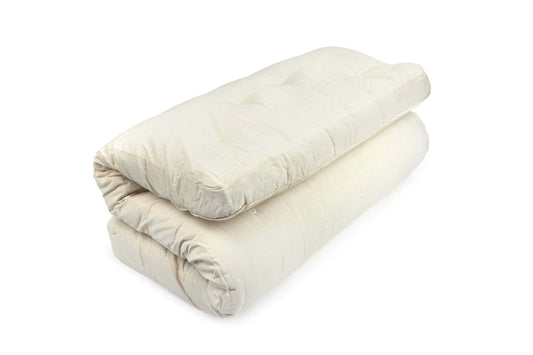
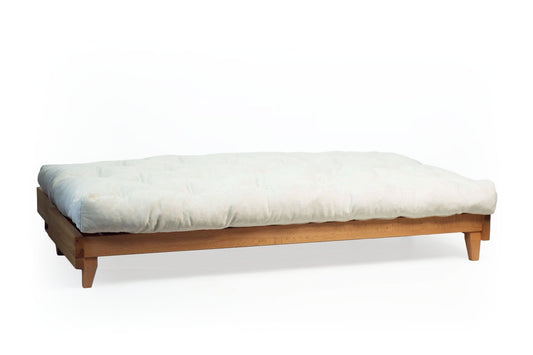
This is exactly the mechanics of a high-quality futon, but divorced from the cheap metal frames of college dorms. By utilizing thick, hand-tufted organic mattresses acting as the seating cushion, you get the deep, supportive comfort of a premium couch without the synthetic off-gassing. When built correctly, this setup rivals the comfort of the trendiest "cloud sofas" on the market, while remaining fully breathable and biodegradable.
-
El Paso Eco Futon Sofa Bed
Regular price From $689.99Regular price $819.99 Sale price From $689.99Sale -
Taurus Eco Futon Sofa Bed
Regular price From $519.99Regular price $699.99 Sale price From $519.99Sale -
Long Beach Daybed Sofa Bed
Regular price From $659.99Regular price $739.99 Sale price From $659.99Sale -
Hitachi Tri-Fold Futon Sofa Bed
Regular price From $249.99Regular price $599.99 Sale price From $249.99Sale -
Elk Grove Eco Futon Sofa Bed
Regular price From $759.99Regular price $869.99 Sale price From $759.99Sale -
Aries Eco Futon Sofa Bed
Regular price From $569.99Regular price $699.99 Sale price From $569.99Sale -
Akron Eco Futon Sofa Bed
Regular price From $689.99Regular price $819.99 Sale price From $689.99Sale -
Virgo Eco Futon Sofa Bed
Regular price From $589.99Regular price $699.99 Sale price From $589.99Sale -
Sendai Tri-Fold Futon Sofa Bed
Regular price From $299.99Regular price $349.99 Sale price From $299.99Sale -
Mission Flat Arm Amish-Made American Oak Futon Sofa Bed
Regular price From $959.99Regular price $1,199.99 Sale price From $959.99Sale -
Libra Eco Futon Sofa Bed
Regular price From $619.99Regular price $699.99 Sale price From $619.99Sale -
Mission Bent Arm Amish-Made American Oak Futon Sofa Bed
Regular price From $1,019.99Regular price $1,299.99 Sale price From $1,019.99Sale
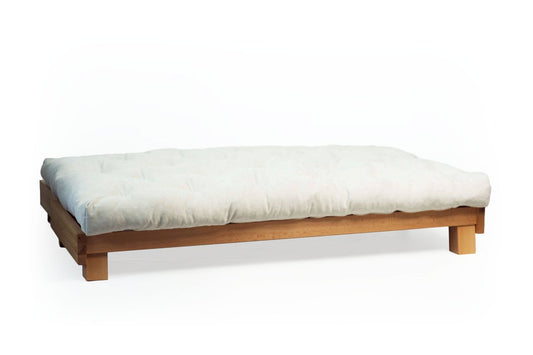
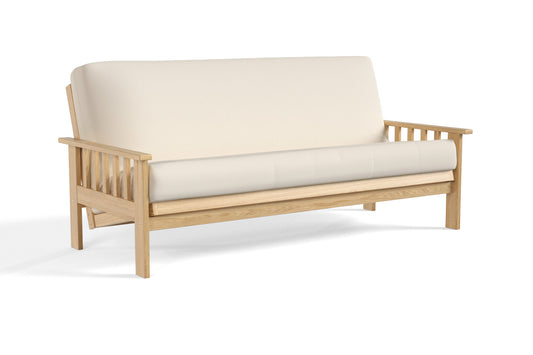
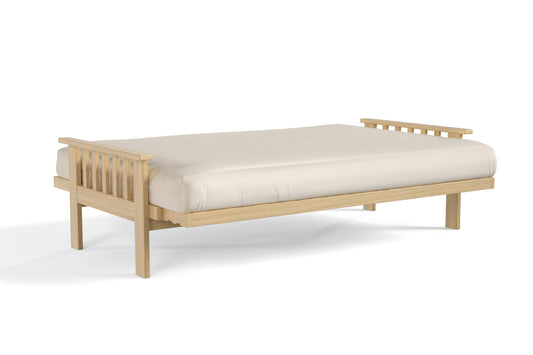
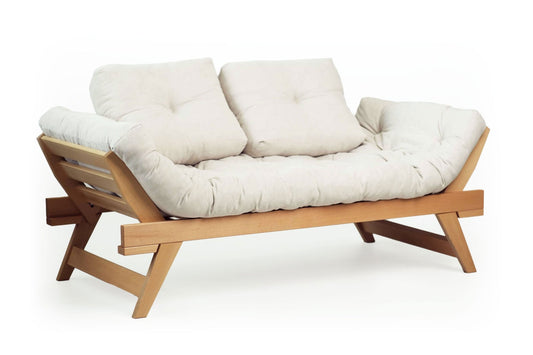



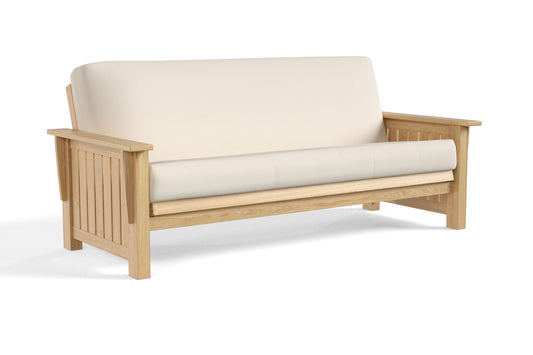
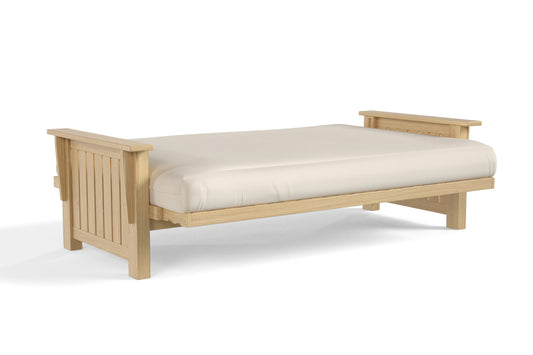
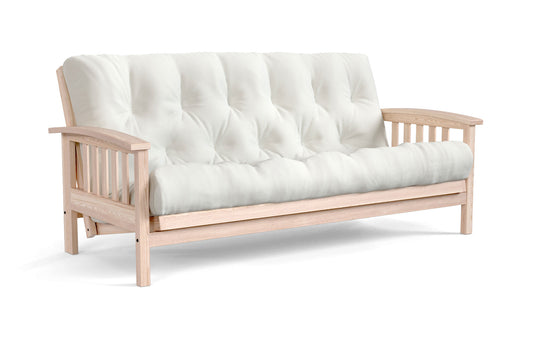
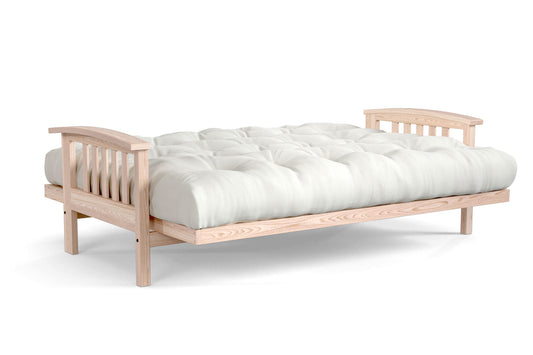
Anatomy of a Truly Natural Couch
Building a non-toxic seating area requires transparency in every layer of the product. Here is how the three-part modular system works to provide a cleaner home environment.
1. The Solid Wood Frame
Standard couches use engineered woods like MDF (Medium Density Fiberboard) or plywood for their internal skeletons. These materials are essentially wood chips held together by strong, formaldehyde-based glues. They are heavy, prone to cracking, and contribute heavily to VOC emissions.
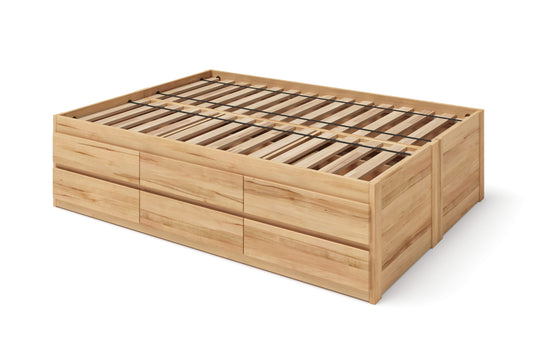
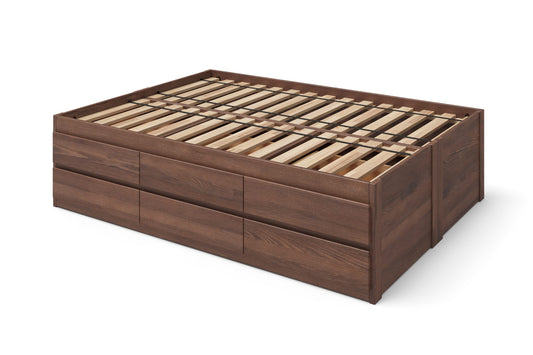
An organic sofa begins with solid wood frames. Hardwoods like oak, cherry, and maple offer incredible tensile strength. Traditional woodworking techniques, such as mortise and tenon joinery, eliminate the need for toxic industrial glues. Because the frame is exposed, it acts as a visual anchor in the room, showcasing natural wood grain rather than hiding cheap materials under synthetic fabric. When it is time to move, a solid wood interlocking frame can be disassembled easily, whereas an upholstered couch often gets jammed in narrow stairwells or abandoned on the curb.
2. The Organic Mattress Core (The Cushion)
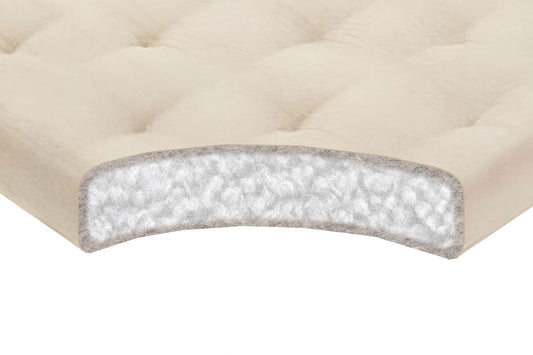
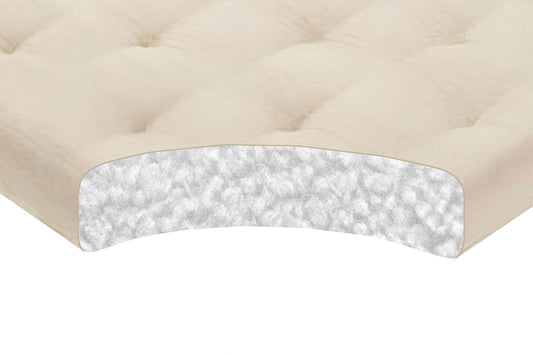
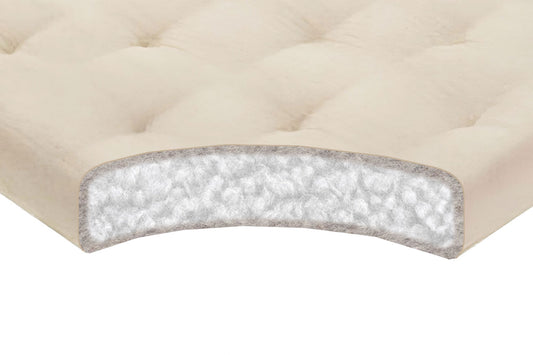
Instead of polyurethane foam, an organic sofa uses a flexible mattress made from agricultural materials. The specific blend of materials determines how firm or plush the sofa feels.
- Organic Cotton: Cotton batting provides dense, firm support. It is breathable and does not trap body heat the way synthetic foam does. Choosing organic cotton ensures that no harsh pesticides or defoliants were used in the farming process.
- Natural Wool: Wool is a natural climate regulator. It wicks moisture away from the body, keeping you cool in the summer and warm in the winter. More importantly, wool is naturally flame-resistant. By wrapping the inner core of the cushion in thick layers of organic wool, the sofa can pass federal flammability standards naturally, without a single drop of chemical fire retardant.
- Natural Latex: For those who prefer a bouncier, more resilient feel (similar to memory foam but without the toxins), natural latex is the answer. Harvested from the sap of the rubber tree (Hevea brasiliensis), natural latex is baked into supportive layers that bounce back instantly. It is naturally resistant to dust mites and mold.

3. Removable, Natural Fabric Covers
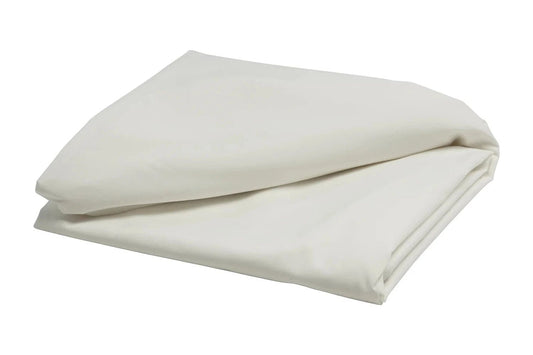
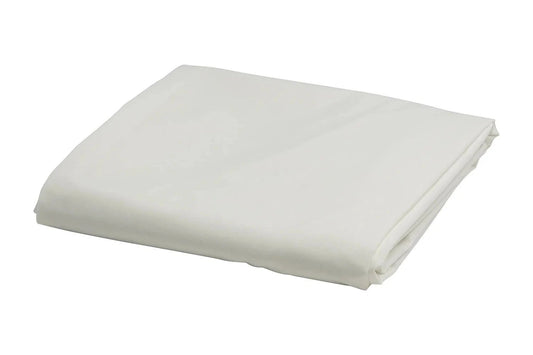
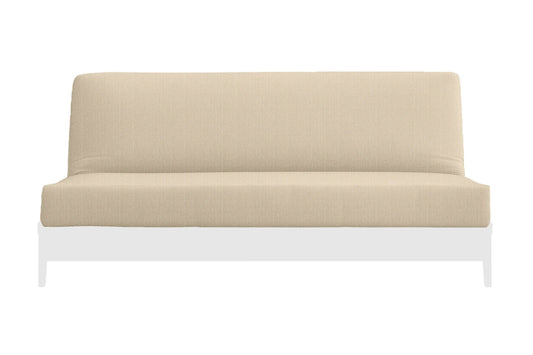
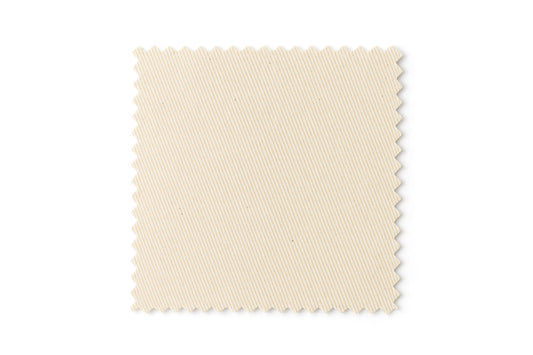
The final layer is the visual and tactile surface of the sofa. Instead of PFAS-coated synthetic blends, an organic sofa utilizes heavy-duty natural textiles like cotton duck canvas, linen, or woven wool. Because the cover zips entirely off the core, it functions as a highly durable slipcover. This completely changes the way you maintain your living room furniture.
Comparing Traditional Couches vs. Modular Organic Sofas
To summarize the stark differences between conventional manufacturing and natural modular systems, review the breakdown below.
| Feature | Traditional Upholstered Couch | Modular Organic Sofa (Wood & Futon) |
|---|---|---|
| Core Material | Polyurethane foam (petroleum-based) | Organic cotton, wool, and natural latex |
| Flame Retardants | Chemical sprays or additives (often toxic) | Naturally flame-resistant wool batting |
| Frame Construction | MDF, plywood, formaldehyde glues, staples | Solid hardwood with traditional joinery |
| Cleaning Method | Chemical spot-cleaning only; difficult to maintain | Machine-washable or dry-cleanable removable covers |
| End of Life | Landfill (takes centuries to decompose) | Biodegradable cushion, reusable heirloom frame |
A Design Choice: Japandi and Minimalist Aesthetics
Switching to a natural sofa does not mean sacrificing style. In fact, the modular wood-and-cushion design is at the forefront of contemporary interior design trends. The "Japandi" aesthetic—a hybrid of Japanese minimalism and Scandinavian functionality—relies heavily on low-profile wood furniture, neutral color palettes, and natural textures. A solid oak frame paired with a thick, unbleached cotton cushion fits perfectly into this design ethos.
Furthermore, because the cover is entirely separate from the cushion, you are never locked into a single color. If you paint your walls, change your rugs, or simply grow tired of a beige couch, you can buy a new cover in olive green, navy blue, or charcoal. You are updating the look of the room for a fraction of the cost of replacing the entire piece of furniture. This modularity is the ultimate expression of sustainable design.
The "Washable Sofa" Benefit for Families and Pets
One of the most highly sought-after features in modern furniture is washability. Parents and pet owners constantly search for "washable sofas," only to be pushed toward synthetic microfiber couches that still absorb odors deeply into their foam cores. The organic modular sofa solves this problem definitively.
When you use washable sofa covers made from durable cotton or linen, dealing with spills, pet hair, and dirt becomes a routine laundry task rather than a panicked scrubbing session. If a dog tracks mud onto the couch, you simply unzip the cover and throw it in the washing machine. If a major spill permeates the cover and hits the mattress underneath, the natural materials (especially wool and latex) are far less prone to harboring mold and mildew than polyurethane sponges. You can spot clean the cotton casing of the mattress and let it air dry.
This system vastly extends the lifespan of the furniture. A traditional couch usually looks worn and stained within five to seven years. A modular wood frame lasts a lifetime, and the covers can be rotated, washed, and replaced as needed.
How to Transition to a Healthier Living Room
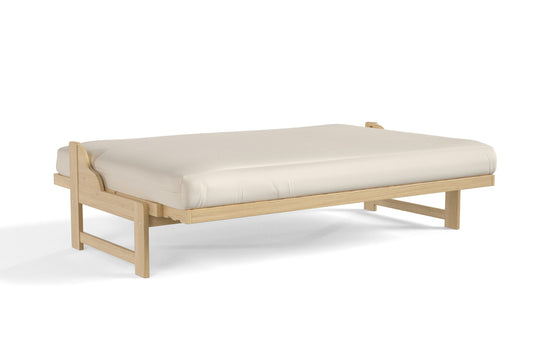
If you are ready to remove toxic furniture from your home, the transition is straightforward. Start by evaluating your space and determining whether you want a piece that acts strictly as a sofa, or one that doubles as a guest bed. The inherent advantage of this system is that the cushion is quite literally a mattress.
- Select Your Frame: Look for solid, untreated woods. Maple and oak provide lighter, airy aesthetics, while cherry and mahogany offer rich, traditional warmth. Ensure the mechanism (whether bi-fold or tri-fold) operates smoothly without pinching.
- Choose Your Comfort Level: If you prefer a firm seat that mimics traditional upholstery, an all-cotton or cotton-and-wool blend is ideal. If you want the deep, sinking comfort of a "cloud sofa," opt for a core that incorporates thick layers of natural latex wrapped in plush wool.
- Pick a Protective Layer: Always use a barrier between the mattress and the decorative cover to protect against body oils and minor spills. Then, choose a heavy-duty decorative cover that fits the color scheme of your room.
By prioritizing raw, agricultural materials over synthetic chemistry, you create a living room that smells like natural wood and fresh cotton, rather than an industrial factory.
Frequently Asked Questions
What exactly is an organic couch?
An organic couch is a seating system made without petroleum-based foams, synthetic fabrics, or chemical flame retardants. It typically consists of a solid wood frame, a cushion core made from natural latex, organic cotton, and wool, and a removable natural fabric cover. It functions as a standard sofa but is entirely biodegradable and chemical-free.
Do natural latex mattresses smell?
Natural latex has a mild, earthy scent when it is first unboxed, often compared to the smell of vanilla or baked goods. Unlike the sharp, chemical odor of polyurethane foam off-gassing, the scent of natural latex is harmless and typically dissipates within a few days in a well-ventilated room.
Are convertible sofa beds comfortable for everyday sleeping?
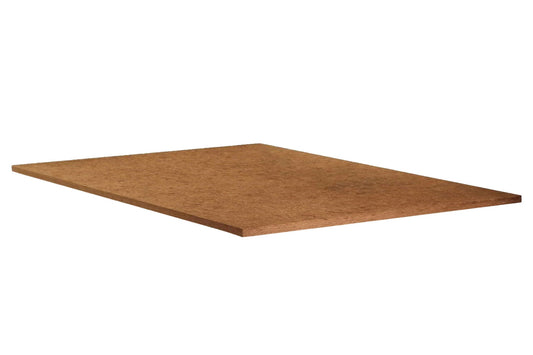
Yes, provided you choose the right materials. Traditional sofa beds are notoriously uncomfortable because they rely on thin mattresses folded over sharp metal bars. A modular organic sofa uses a full-thickness mattress (often 6 to 8 inches thick) that rests on flat wooden slats. Because the cushion itself is built to mattress standards, it provides excellent, ergonomic support for everyday sleeping.
How do you clean an organic sofa cushion?
The best way to maintain the sofa is to wash the removable outer cover regularly. If the actual mattress core needs cleaning, you should spot-clean the area with a mild detergent and minimal water, then let it air dry completely. Wool and latex are naturally antimicrobial, so they resist odors and dust mites better than synthetic foams. Placing the cushion in direct sunlight for a few hours also naturally refreshes the cotton and wool.
To learn more about maximizing the comfort of natural sleep systems, read our guide on why you need a mattress topper. For further design inspiration, explore our article on Japandi styling ideas to see how natural wood frames transform a space.