
Transitioning to a Toddler Floor Bed: The Natural, Non-Toxic Approach to Montessori Sleep
At some point, every parent gets the crib-escape wake-up call. Maybe you heard a thud at 6 AM. Maybe you walked in to find your toddler standing on the rail, grinning at you. Either way, the message is clear: the crib's days are numbered.
The standard advice is to buy a toddler bed. But a growing number of parents are skipping it entirely and going straight to a floor bed—a mattress on the floor, or just a few inches above it on a low platform like a tatami mat. The idea comes from the Montessori philosophy, which holds that children do better in spaces designed around their size and autonomy rather than around adult convenience. A floor bed lets a toddler get in and out independently, play quietly if they wake before you do, and sleep without the fall risk that comes with a raised frame.
It's a genuinely good idea. The problem is what happens when parents search for a "Montessori floor mattress" online and end up with a rolled-up foam slab from a big-box retailer. That's where things go wrong.
What Makes a Floor Bed Different from a Regular Toddler Bed
Dr. Maria Montessori's approach to the bedroom was straightforward: the room should work for the child, not just for the parents. A crib does the opposite. The child wakes up, they're stuck, they cry, and they wait. A floor bed removes that dynamic entirely. The child wakes up and has options—get up, look at books, play with the toys on the low shelf nearby, or just lie there watching the ceiling. No crisis, no screaming. Many parents report their toddlers sleeping later once they make the switch, simply because waking up is no longer an emergency.
There's a practical benefit for parents too. When a toddler wakes at 2 AM, lying down next to them on a floor bed is far easier on your back than contorting yourself over a crib rail. And when they eventually fall back asleep, you can slip away without the crib-creak performance most parents know well.

The Real Problem with Cheap Foam Floor Mattresses
Here's what the trend pieces on Montessori bedrooms tend to leave out: where you place the mattress matters less than what the mattress is made of.
Most budget foam mattresses—the kind sold in a box, rolled up, that expand when you open them—are made from polyurethane, a petroleum derivative. They're also legally required to meet federal flammability standards, which manufacturers typically achieve by treating the foam with synthetic chemical flame retardants. These chemicals off-gas over time, releasing VOCs (volatile organic compounds) into the air.
Now consider that toddlers sleep 11 to 14 hours a day, and that floor level is exactly where heavier airborne chemicals settle. A child on a floor mattress is breathing that air, face-down, for the better part of their day. That's a meaningful exposure difference compared to an adult sleeping on a raised bed in a ventilated room.
Foam also traps heat. Toddlers already run warm and struggle to regulate their body temperature; a dense, non-breathable foam surface makes that worse, leading to the restless, sweaty nights that parents sometimes chalk up to the child being "a bad sleeper."
Natural Materials: What to Look For
The alternative is to look at what people were sleeping on before the foam mattress industry existed. Organic cotton, wool, and natural latex have been used in bedding for centuries—not out of nostalgia, but because they work.
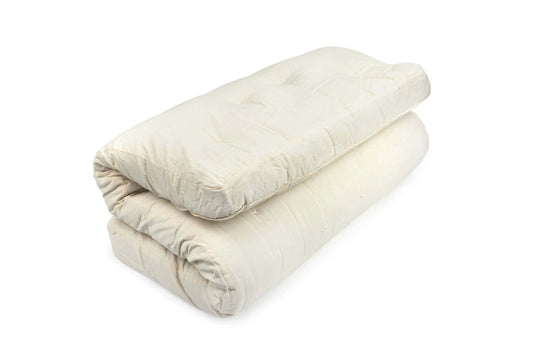
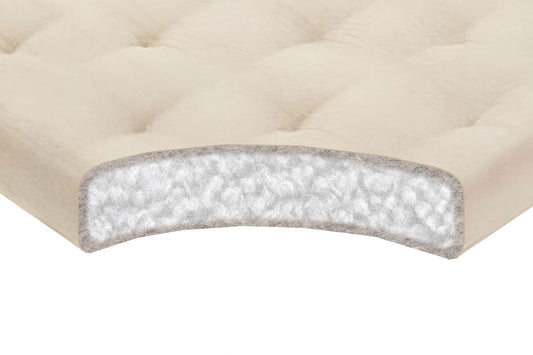
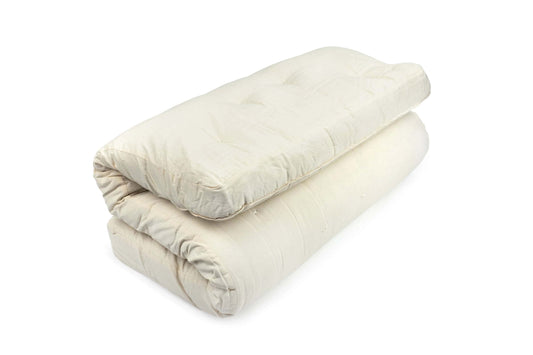
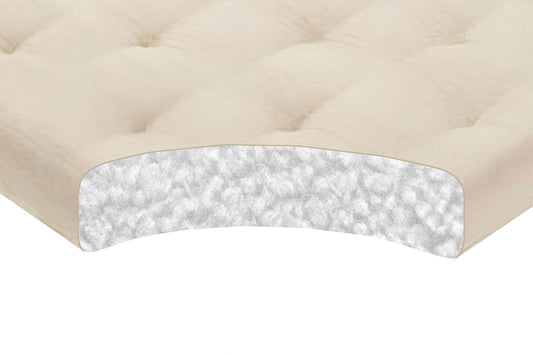
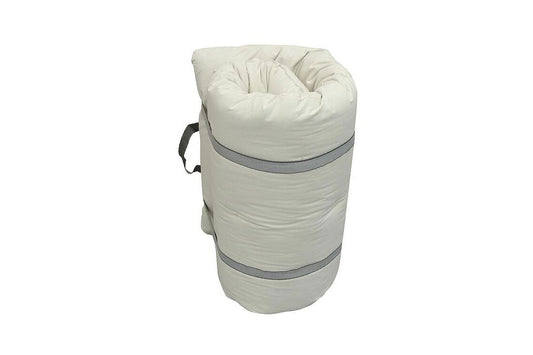
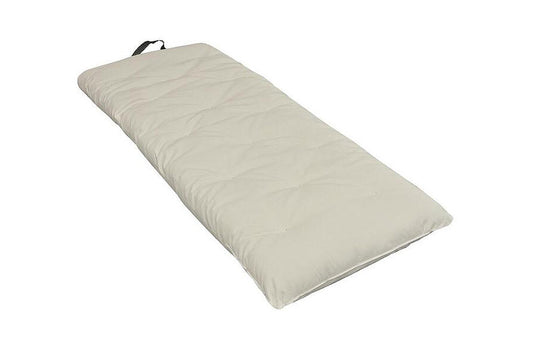
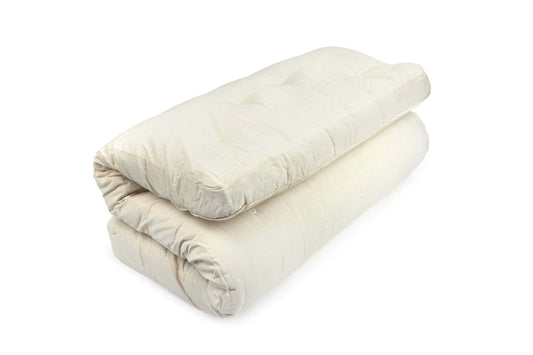
A low-profile shikibuton or an organic futon mattress filled with natural cotton and wool is a practical, well-tested solution for a toddler floor bed. The American Academy of Pediatrics recommends firm sleep surfaces for young children, and natural cotton-wool mattresses are inherently firm and dense—they don't have the "sinking" quality of memory foam, which can conform too closely to a child's face during sleep.
Wool, specifically, does something synthetic materials can't: it actively regulates temperature. The fiber wicks moisture away from the body and responds to changes in heat, keeping the sleeping surface drier and more comfortable throughout the night. It's also a natural flame retardant, which means a properly constructed wool-fill mattress doesn't require chemical treatment to meet fire safety standards.
When shopping, look for certifications that mean something. GOTS (Global Organic Textile Standard) certifies that the cotton or wool is genuinely organic from field to finished product. OEKO-TEX Standard 100 certifies that the finished material has been tested for harmful substances. These aren't marketing terms—they're third-party audited standards. A mattress with neither certification and a low price point is almost certainly made from conventional materials regardless of what the product description says.
-
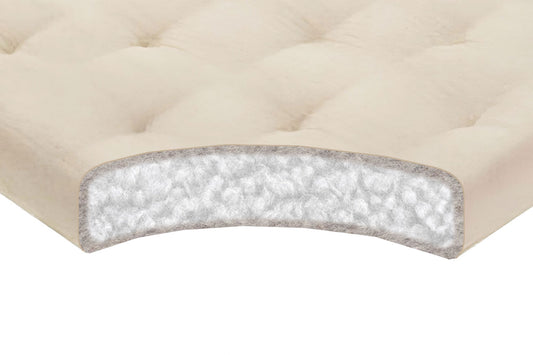
Natural All Cotton Japanese-Style Firm Futon Mattress
Regular price From $429.99Regular price $539.99 Sale price From $429.99Sale -
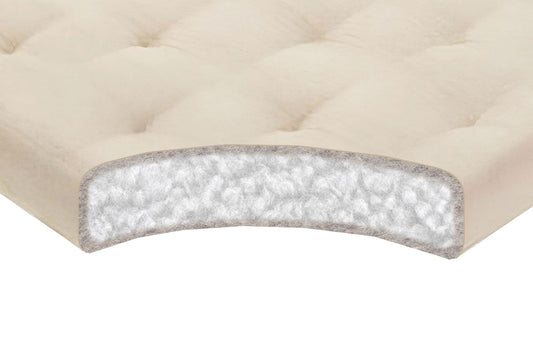
Natural Cotton and Wool Japanese-Style Firm Futon Mattress
Regular price From $529.99Regular price $669.99 Sale price From $529.99Sale -
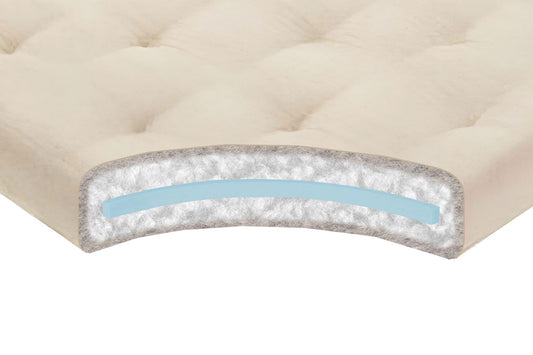
Natural Cotton, Wool and Foam Japanese-Style Medium-Firm Futon Mattress
Regular price From $659.99Regular price $829.99 Sale price From $659.99Sale -
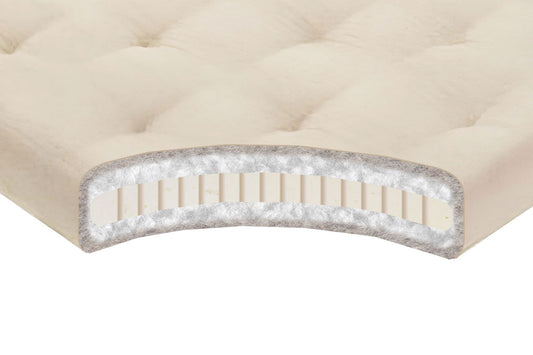
Natural Cotton, Wool and Latex Japanese-Style Medium-Firm Futon Mattress
Regular price From $839.99Regular price $1,049.99 Sale price From $839.99Sale -
Organic All Cotton Japanese-Style Firm Futon Mattress
Regular price From $749.99Regular price $939.99 Sale price From $749.99Sale -
Organic Cotton and Wool Japanese-Style Firm Futon Mattress
Regular price From $909.99Regular price $1,139.99 Sale price From $909.99Sale -
Organic Cotton, Wool and Foam Japanese-Style Medium-Firm Futon Mattress
Regular price From $999.99Regular price $1,249.99 Sale price From $999.99Sale -
Organic Cotton, Wool and Latex Japanese-Style Medium-Firm Futon Mattress
Regular price From $1,179.99Regular price $1,479.99 Sale price From $1,179.99Sale


-
Natural Cotton and Wool Japanese-Style Firm Baby Mattress
Regular price From $429.99Regular price $539.99 Sale price From $429.99Sale -
Natural All Cotton Japanese-Style Baby Mattress
Regular price From $319.99Regular price $399.99 Sale price From $319.99Sale -
Organic Cotton and Wool Japanese-Style Firm Baby Mattress
Regular price From $679.99Regular price $849.99 Sale price From $679.99Sale -
Organic All Cotton Japanese-Style Baby Mattress
Regular price From $549.99Regular price $689.99 Sale price From $549.99Sale

What to Avoid
A few things look great in nursery photos and work poorly in practice:
- Bed tents and canopies draped directly over the mattress. They're popular on Pinterest. They also trap heat and reduce airflow around a sleeping child. Skip them, or use a canopy mounted to the ceiling well above the bed rather than one that encloses it.
- Soft or pillow-top mattresses. A toddler does not need pressure relief. Soft surfaces can conform too closely to their face; firm is always the right choice here. If you can press your hand into the surface and leave a visible impression, it's too soft.
- Transitioning before 12 months, or before the child is ready. If your child is happy and safe in their crib, there's no deadline. The floor bed transition goes most smoothly when the child is walking confidently and showing signs of wanting independence—usually between 18 months and 3 years.
Size: Crib Mattress or Twin?
Two sizes work well for toddler floor beds. Which one makes sense depends on your space and how much you want the setup to grow with the child.
Crib size (28" × 52") works for younger toddlers making an early transition. The familiar dimensions can help with the adjustment, and it leaves more floor space in a small nursery for play. The downside: you'll likely replace it within a year or two.
Twin size (39" × 75") is the more practical long-term choice. There's enough room for a restless sleeper to roll without going over the edge, and—critically—enough room for a parent to lie down beside them. Reading a bedtime story flat on a crib mattress is awkward. On a Twin, it's comfortable enough that you might fall asleep yourself. A high-quality natural Twin mattress will last well into childhood and beyond.

The Mold Problem: Why the Floor Isn't Ideal Long-Term
The one real drawback of putting a mattress directly on the floor is ventilation. Bodies release moisture during sleep, and a mattress sitting flush against a solid surface has nowhere to send it. Over weeks and months, that moisture accumulates underneath, and mold follows. It's not a hypothetical risk—it's a common one, especially on hardwood or tile floors.
Two approaches solve it without sacrificing the low-to-the-ground Montessori aesthetic:
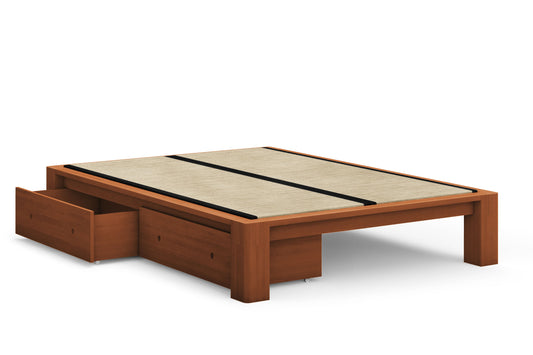
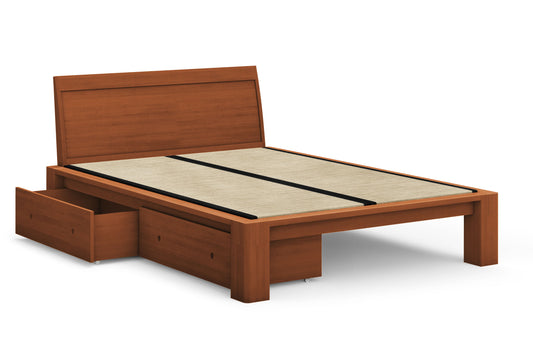
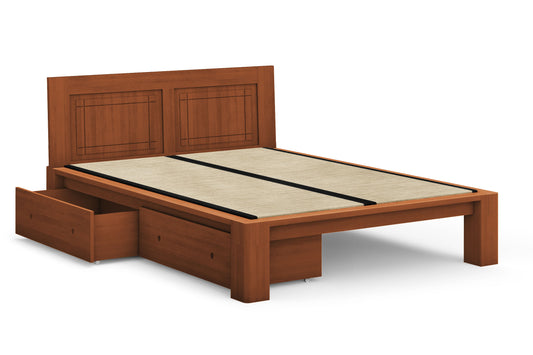
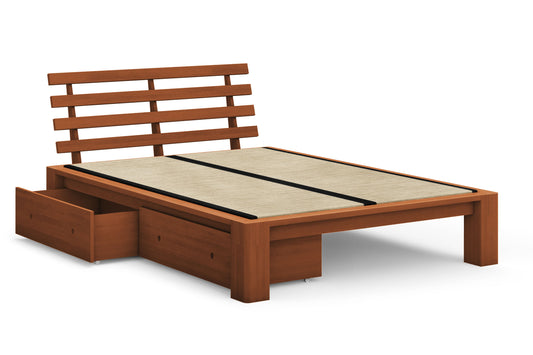
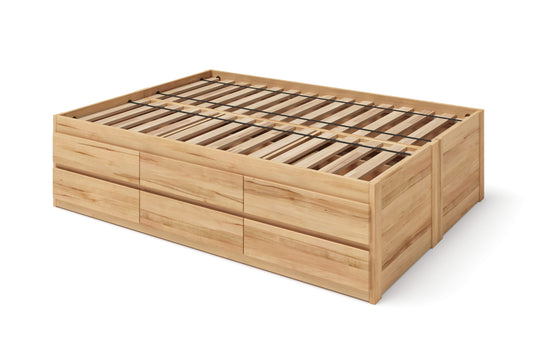
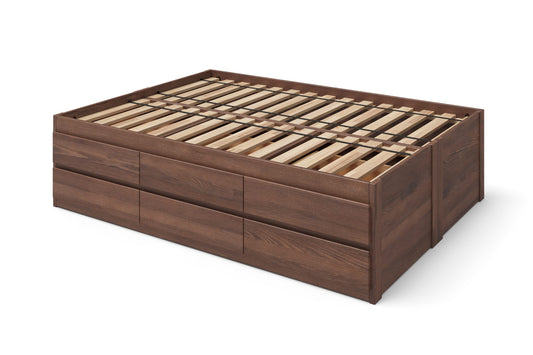
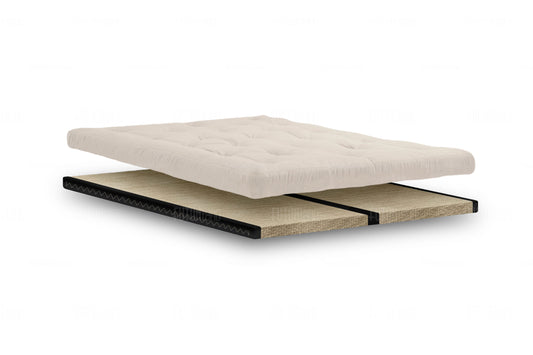
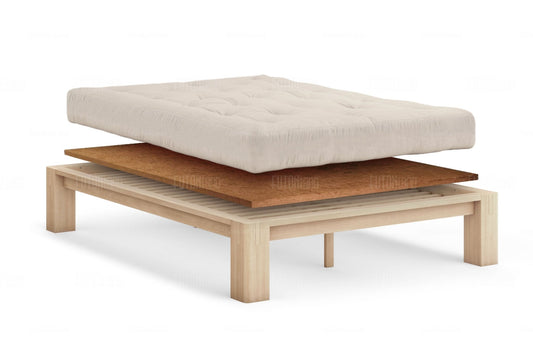
- A low solid-wood platform bed. Even a frame that raises the mattress a few inches gives enough air circulation to prevent condensation. Slatted platforms work best. Our low-profile tatami bed collection sits at 8 inches high — accessible for a toddler, while keeping the mattress clear of the floor.
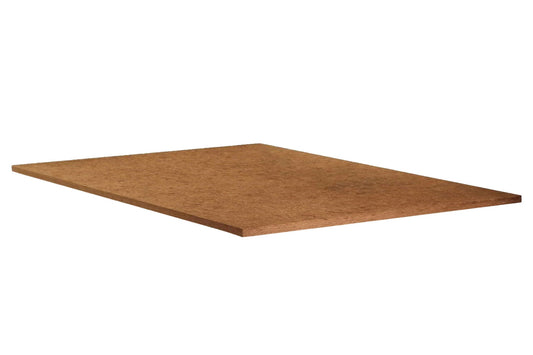
- A tatami mat or coconut coir pad. If you want the mattress on the floor, place a woven tatami mat or coir pad underneath. The natural weave creates a small but sufficient air gap and wicks moisture away from the underside of the mattress.
Whichever option you choose, lift the mattress and check the underside monthly, especially in humid climates.
-
Japanese Tatami Platform Bed
Regular price From $729.99Regular price $929.99 Sale price From $729.99Sale -
Japanese Tatami Platform Bed with Solid Headboard
Regular price From $929.99Regular price $1,129.99 Sale price From $929.99Sale -
Japanese Tatami Platform Bed with Grooved Headboard
Regular price From $899.99Regular price $1,099.99 Sale price From $899.99Sale -
Japanese Tatami Platform Bed with Slatted Headboard
Regular price From $819.99Regular price $1,019.99 Sale price From $819.99Sale -
Japanese Zen Platform Bed
Regular price From $869.99Regular price Sale price From $869.99 -
Japanese Daichi Platform Bed
Regular price From $499.99Regular price Sale price From $499.99 -
Headboard for a Tatami Bed
Regular price From $159.99Regular price Sale price From $159.99