
Minimalist Wood Bed Frames: Why Simple Platform Designs Are Stronger Than They Look
There's a common assumption in furniture shopping: the more a bed frame does — storage drawers, hydraulic lift, padded headboard, adjustable base — the more substantial it must be. A low platform bed with clean lines and no headboard reads as understated by comparison, maybe even fragile.
In practice, it tends to work the other way. The best minimalist wood platform bed frames feel more solid than complicated designs — not because they're heavier or more engineered, but because the parts that are there carry load directly without relying on volume to cover for them.
Why Fewer Parts Means Fewer Failure Points
Most long-term bed frame problems aren't caused by wood snapping. They're caused by hardware loosening, brackets shifting, and the cumulative wobble that builds over thousands of small movements. A frame with twenty mechanical connections has twenty places where that process can start. A minimalist platform frame with half that many has half the exposure.
The structural logic runs counter to intuition. A simple platform typically uses wider hardwood rails and tighter corner geometry to resist racking — the side-to-side drift that eventually turns into squeaks and wobble. A well-engineered minimalist frame puts material where load actually travels: the rails, the corner joints, the slat deck. Nothing is hiding behind extra brackets or secondary supports, which means the joints that are there need to be — and usually are — fitted properly.
Larger sizes like Kings usually require a central support beam for span integrity, but a well-designed minimalist frame minimizes ground contact points so the bed settles firmly and evenly rather than rocking on an uneven surface.

How It Compares to Other Frame Types
The tradeoffs between frame architectures are worth understanding before buying, particularly if you're choosing between styles for a bedroom that sees daily use.
| Frame type | Structural advantage | Where it tends to fail | Best suited for |
|---|---|---|---|
| Solid hardwood platform (minimalist) | Direct load paths; high torsional rigidity; surface is repairable | Requires precise assembly; no padding if you sit up to read | Long-term ownership; small rooms; allergy-sensitive bedrooms |
| Upholstered composite frame | Acoustic dampening; soft edges; visual warmth | Fabric degrades over time; internal structure (usually plywood) is hidden and hard to inspect | Master suites where lounging in bed is a priority over longevity |
| Storage base (drawers or hydraulic) | Efficient use of dead space | Moving parts wear or fail; restricts mattress airflow | Studios or rooms with severe storage constraints |
| Standard metal frame | High strength-to-weight ratio; portable | Joint loosening leads to squeaking; metal fatigue at weld points | Guest rooms; temporary setups; budget-focused purchases |
Solid Wood vs. Everything Marketed as Wood
"Real wood" gets used loosely in furniture listings, but the distinction matters for a bed frame. A solid hardwood frame behaves differently than engineered panels or thin veneers — not just aesthetically, but mechanically. Hardwood resists fastener pull-out better, which means screws and bolts stay tight longer. It also has natural resilience: small impacts and vibrations don't degrade the structure the way they do with particleboard.
Wood is an engineering material with direction-dependent properties — mechanical performance varies with species, grain orientation, and how the piece was cut and dried. The USDA Forest Service Wood Handbook covers this in detail for anyone who wants to go deeper. The practical upshot: a solid hardwood wood bed frame with well-fitted joints stays quieter over time because the core structure doesn't change. You feel that in the middle of the night when you shift positions — no creak, no give.
A minimalist design makes this difference more apparent, not less. There's no padding or extra structure to mask movement. The material is either good enough or it isn't.
-
Columbus Natural Eco Platform Bed
Regular price From $469.99Regular price $799.99 Sale price From $469.99Sale -
Lakewood Natural Eco Platform Bed
Regular price From $679.99Regular price $899.99 Sale price From $679.99Sale -
Sacramento Natural Eco Platform Bed
Regular price From $599.99Regular price $829.99 Sale price From $599.99Sale -
Plainfield Natural Eco Platform Bed
Regular price From $409.99Regular price $739.99 Sale price From $409.99Sale -
Anchorage Platform Bed
Regular price From $549.99Regular price $799.99 Sale price From $549.99Sale -
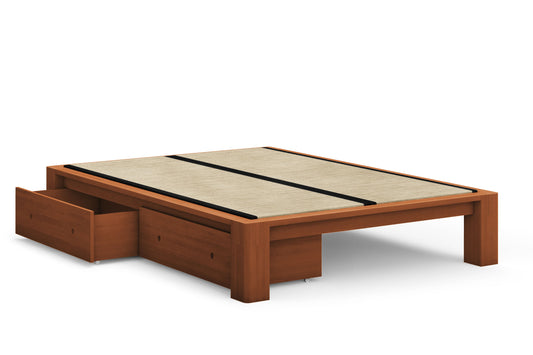
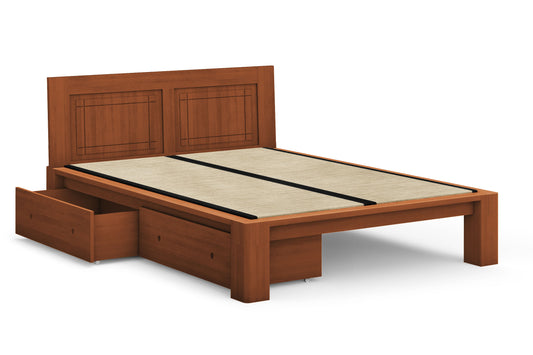
Japanese Tatami Platform Bed
Regular price From $729.99Regular price $929.99 Sale price From $729.99Sale -
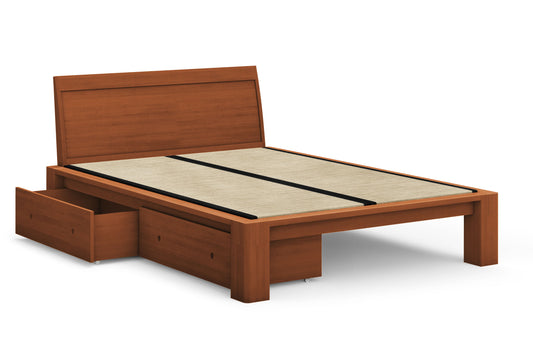
Japanese Tatami Platform Bed with Solid Headboard
Regular price From $929.99Regular price $1,129.99 Sale price From $929.99Sale -
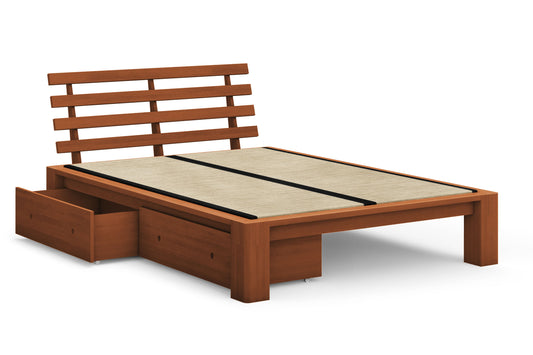
Japanese Tatami Platform Bed with Slatted Headboard
Regular price From $819.99Regular price $1,019.99 Sale price From $819.99Sale -
Japanese Tatami Platform Bed with Grooved Headboard
Regular price From $899.99Regular price $1,099.99 Sale price From $899.99Sale -
 Sale
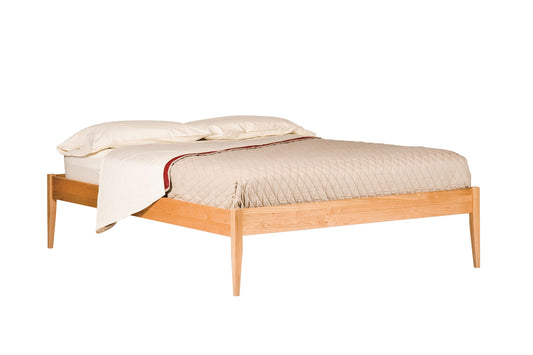
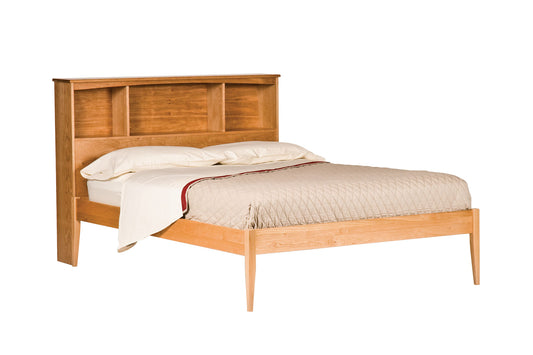
SaleBasic Platform Bed
Regular price From $719.99Regular price $999.99 Sale price From $719.99Sale -
 Sale
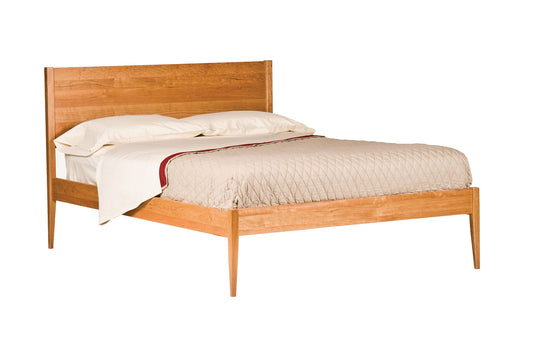
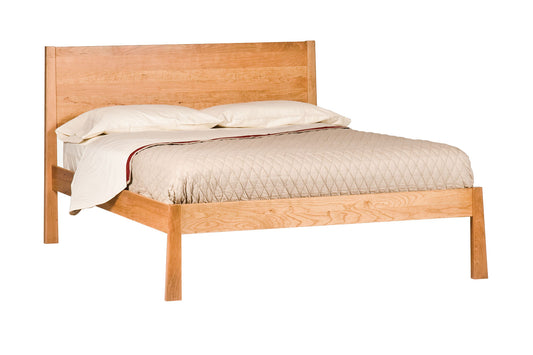
SaleEclipse Platform Bed
Regular price From $1,034.99Regular price $1,439.99 Sale price From $1,034.99Sale -
Moondance Platform Bed
Regular price From $1,043.99Regular price $1,459.99 Sale price From $1,043.99Sale
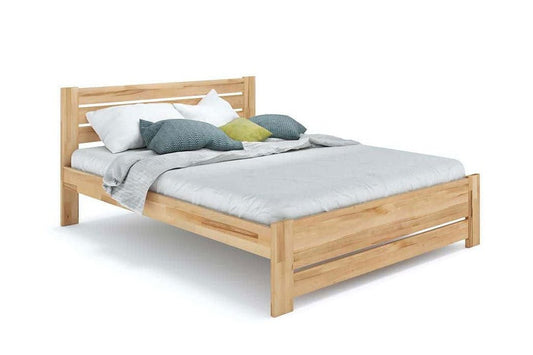


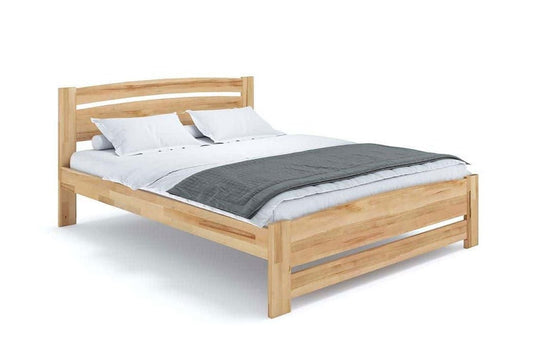

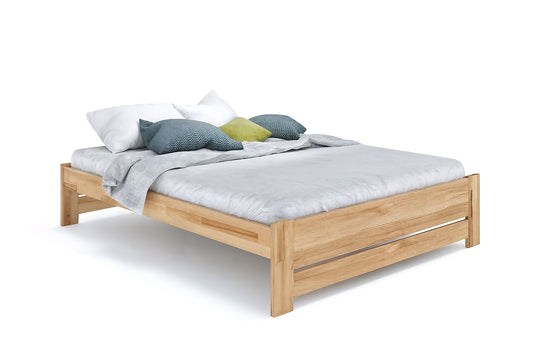

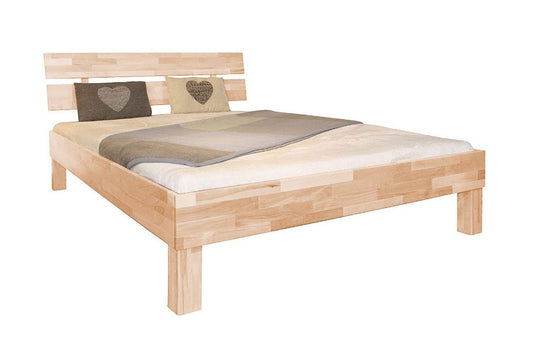




Low Profile Is a Structural Choice, Not Just an Aesthetic One
A lower bed sits with its center of gravity closer to the floor, which reduces the leverage on the joints when the frame moves. Less leverage means less sway under a restless sleeper, and fewer squeaks over time. The physics work against a tall frame every time someone sits down on the edge — there's simply more moment arm for the structure to fight.
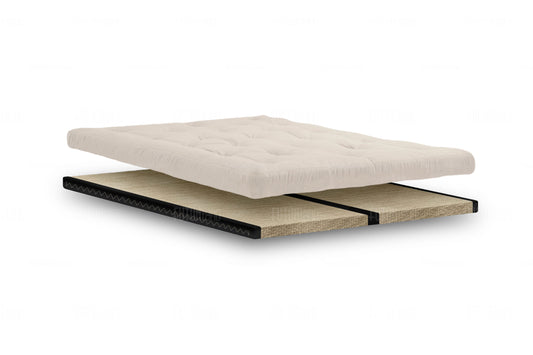
The tatami bed collection takes this further — frames built to Japanese proportions, sitting closer to the ground and proportioned to work with thick tatami mats rather than a standard mattress. The sleep surface ends up quieter and with less motion transfer than a raised frame, and visually the bed anchors a room without dominating it. Our guide on why low-profile interlocking frames work gets into the mechanics in more detail.
The Case for No Headboard
A headboard is often the most visually dominant element in a bedroom, and also one of the least structurally necessary. Removing it solves problems a headboard creates: in attic rooms with sloped ceilings, beds positioned in front of windows, or small rooms where a large vertical panel blocks light and makes the space feel smaller.
Without a headboard, the frame itself becomes the focal point — specifically the rails, the corner joinery, and the wood grain. This is why no-headboard platform beds in this collection lean toward woods with distinctive character: Cherry with its warm undertone that deepens over years, Beech with its tight, consistent grain. The wood is doing the decorative work that a fabric panel would otherwise cover up.

Slats as a Feature
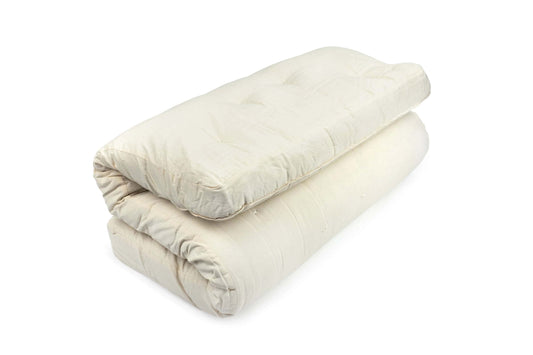
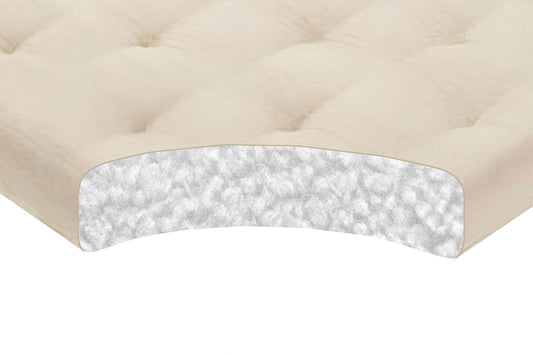
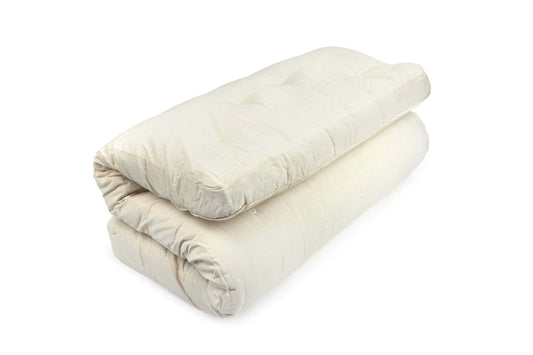
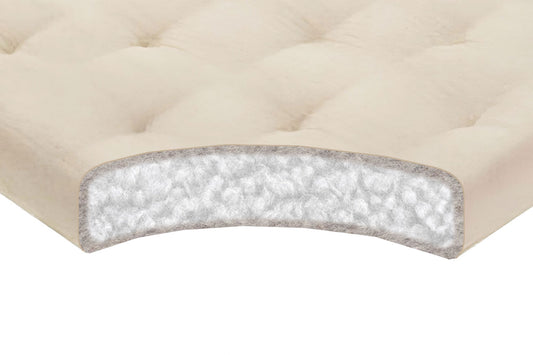
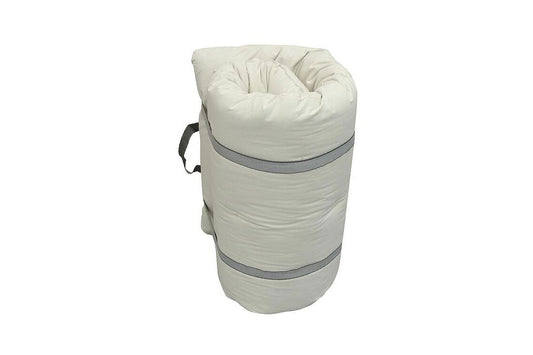
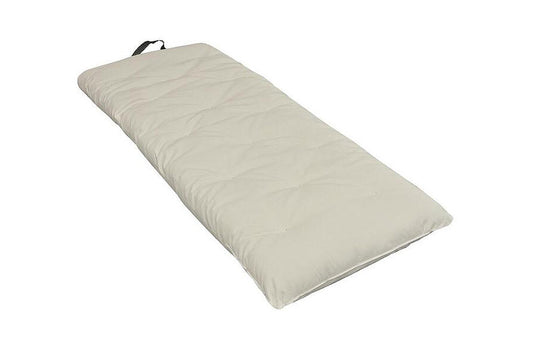
All Comfort Pure platform beds use a slatted base, and it's worth understanding why that's an advantage rather than a limitation. Slats provide airflow underneath the mattress, which matters for temperature regulation and moisture management — particularly relevant if you're sleeping on a denser natural mattress like a cotton futon or wool fill.
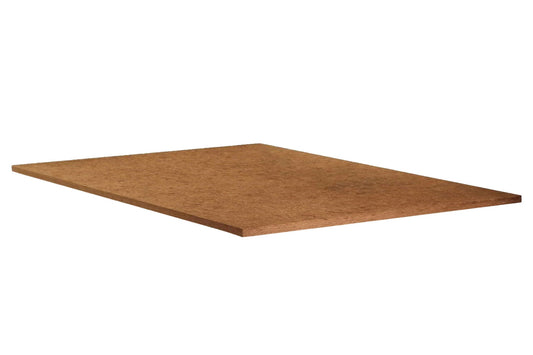
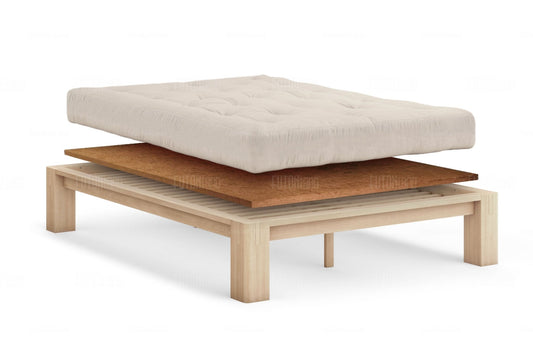
A slatted frame-only platform is also adaptable in a way a solid base isn't. The mattress can sit directly on the slats for maximum airflow. Or an intermediate layer — tatami mats, a bunkie board, a coconut coir pad — can be added to adjust firmness and weight distribution without replacing the frame. The geometry stays fixed; the sleep surface is adjustable.
Three Frames Worth Knowing
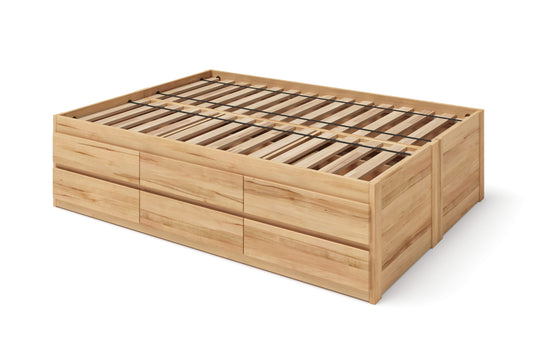
Plainfield Natural Platform Bed — Beech
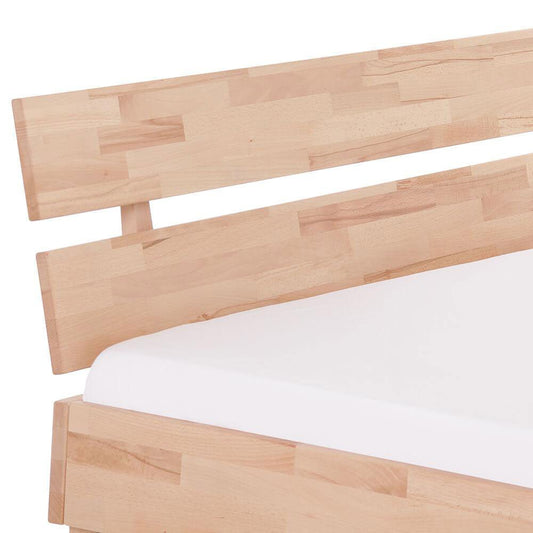
Beech is denser and more shock-resistant than most softwoods, and the Plainfield keeps its profile flat and low — no taper, no decorative rail profile, nothing competing with the grain. It's a good choice if you want a frame that reads as quiet in the room rather than making a statement. Works particularly well in Japandi interiors where the goal is to subtract rather than add.
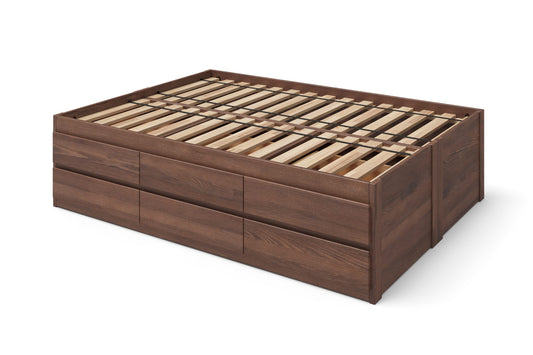
Japanese Tatami Bed Frame — Mahogany
Built to accommodate tatami mats at the right height, with proportions drawn from Japanese floor furniture rather than Western platform conventions. The broad, flat silhouette anchors a room without pushing into vertical space. Mahogany's density makes it one of the more structurally stable options in the collection.
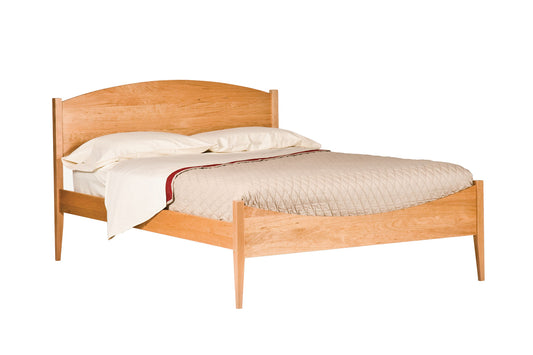
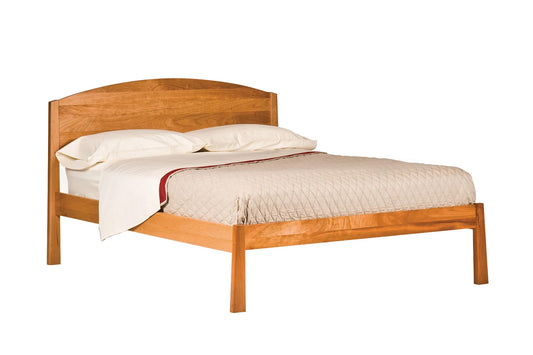
Basic Platform Bed — Cherry
Cherry starts with a warm reddish-brown tone and darkens with light exposure over years — a frame that looks better at five years than it did at one. The Basic keeps the silhouette clean so the wood does the visual work. For anyone who wants joinery they can see and a material that improves with age, this is the straightforward choice.
What Makes a Minimalist Frame Last
A minimalist platform bed lasts because there's nothing in it that doesn't need to be. The hardwood rails carry load directly to the floor. The joints stay square because they're fitted to the geometry of the frame, not held by hardware that can back out over time. The slats spread weight rather than concentrating it. Take away any of those elements and something has to compensate — which is exactly how more complicated frames get themselves into trouble.
If you want a bed that doesn't creak, doesn't need periodic reassembly, and gets better-looking rather than worse as the wood ages, a minimalist solid wood platform bed is the straightforward answer.
For a closer look at how traditional wood joinery achieves strength without metal hardware, see our guide to Japanese Joinery and Minimal Wood Bed Frames. If you're still weighing wood species before committing, the Wood Bed Frame Guide covers density, durability, and how different hardwoods age.
Frequently Asked Questions
Are minimalist platform bed frames less sturdy than bulkier designs?
Usually not — and often the reverse is true. A well-built minimalist frame has fewer mechanical connections, which gives hardware fewer opportunities to loosen over time. The structural work is done by the wood geometry and the joints, not by mass or volume. That said, the quality of the hardwood and the precision of the joinery matter more in a minimal frame than in a complicated one, since there's nothing else carrying the load if either is poor.
What wood species is best for a minimalist bed frame?
Beech and mahogany are both strong choices — beech for its density and shock resistance, mahogany for its dimensional stability (it moves less with seasonal humidity changes than most domestic species). Cherry is slightly softer but develops a richer color over years of use, which suits a frame where the wood is the main visual element. Pine is sometimes sold as "solid wood" and technically is, but it's a softwood that dents and compresses under daily load — not the same category.
Do I need a box spring with a platform bed?
No, and adding one usually causes problems. Box springs were designed as a support layer for metal frames that have no deck of their own. On a slatted wood platform, a box spring sits between the mattress and a rigid surface it was never intended for — the flex introduces movement the slats don't, which can create noise and accelerates wear on the mattress. The slats are the foundation; the mattress goes directly on them.
How far apart should slats be on a platform bed?
Three inches is about the practical maximum for most mattresses. Beyond that, a denser fill — latex, tightly packed cotton, or wool — can begin to deform slightly into the gaps under repeated load, which shortens mattress life and reduces support. Closer spacing distributes weight more evenly. On natural-fill futons and shikibutons especially, tighter slat spacing makes a noticeable difference in how the mattress holds up over years.
Can a minimalist platform bed work with a tatami mat?
Yes, but frame height needs to account for the mat thickness — typically 2 to 3 inches. A standard platform bed designed for a mattress alone will end up higher than intended if you add tatami on top. The Japanese Tatami Bed Frame in this collection is specifically proportioned for this combination, so the finished height stays reasonable rather than defeating the low-profile point of the setup.