
Natural Materials Home Decor: A Practical Guide to Choosing and Using Real Materials
A room can look finished and still feel wrong. The bed frame matches the nightstand, the rug fits the palette, and the lamp is soft enough. But the room still feels slightly flat, or faintly chemical, or harder than it should. You notice it most at night, when the house is quiet and the materials are all that's left.
That difference is why natural materials home decor matters — not because wood, wool, linen, or rush grass are fashionable, but because materials create the atmosphere of a home in the most literal sense. They shape the surfaces you touch, the air around you, the way sound moves, and the way a room settles over time. A veneered dresser can resemble solid wood from across the room. It doesn't feel the same when you open the drawer.

Why the Materials in Your Home Matter Beyond Style
Style is only the visible layer. The deeper layer is the material environment. This becomes clear when you replace one element at a time: swap a particleboard bed for solid wood, change polyester bedding for organic cotton, add a tatami mat underfoot. The room often changes before the styling does. It feels quieter, warmer, more grounded — not because of new decoration, but because the materials themselves are doing less harm to the atmosphere they're in.
A home is physical. You don't only look at it. You lean on it, walk across it, sleep in it, and breathe inside it for hours at a time. That changes what counts as good design.
- Touch matters: Real wood has grain, temperature variation, and weight that veneer can't fully replicate. A surface you touch daily communicates what it is.
- Air matters: Finishes, glues, and synthetic materials affect indoor air quality. Particleboard and composite furniture typically rely on adhesives that off-gas VOCs; solid wood and natural textiles don't carry the same chemistry.
- Sound matters: Hard synthetic surfaces make rooms feel sharper and more echo-prone. Natural materials — wood, wool, cotton, rush — absorb and diffuse sound differently.
- Aging matters: Solid wood, linen, and wool develop character with use. Much cheap synthetic furniture just wears out.
This shift in what buyers want from their homes is measurable. According to Persistence Market Research, the global sustainable home decor market is projected to grow from US$43.6 billion in 2026 to US$70.9 billion by 2033, driven by consumer preference for certified natural materials over disposable synthetics. Less surface appeal; more authenticity and durability.
The Practical Difference Between Natural and Synthetic
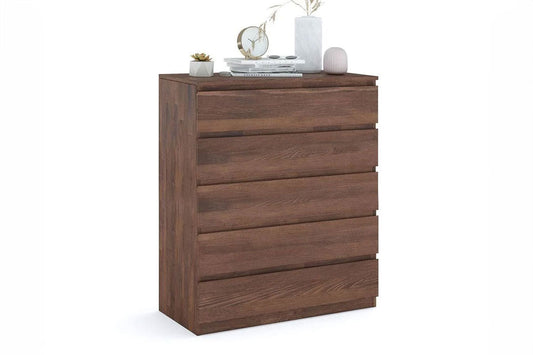
The difference between a solid oak table and a particleboard table isn't primarily visual — it's structural. Solid wood has grain, density, and a surface that can be sanded, oiled, or refinished when it marks. Particleboard and MDF rely on adhesive binders and surface treatments. Once that outer skin chips, swells, or peels, the piece declines quickly. That's why so much flat-pack furniture looks acceptable briefly and tired soon after.
The same applies to textiles. Wool, cotton, and linen handle moisture and temperature differently from polyester. The baseline experience — in skin contact, breathability, and the general feel of the air in a room — is often better when the materials aren't sealed-off and plastic in character. In bedrooms especially, where these materials are in contact with skin for long stretches, small differences in material quality become very obvious.
| Material choice | Daily use feel | Long-term reality |
|---|---|---|
| Solid oak or walnut | Warm, weighty, tactile | Can be maintained, repaired, and refinished |
| Particleboard or MDF with veneer | Smooth at first, often hollow in feel | Edges and surfaces usually fail first; not repairable |
| Wool, cotton, linen | Breathable, textured, less slick | Often softens with use; ages gracefully |
| Polyester-heavy textiles | Uniform, slick, less breathable | Often pills or traps heat; no improvement with age |
One practical shortcut: look at the pieces closest to your body and breathing zone first. Bed frame, mattress and foundation, bedding, rug, curtains. Replace one synthetic-heavy layer at a time and the room often gets noticeably quieter in feel before you've changed anything visible about the design.

Essential Natural Materials: What They Do and Where They Work
Structure and Foundation: Wood and Bamboo
If a piece supports your body or anchors the room, choose a material with real substance. For furniture that gets daily use — bed frames, dining tables, benches, shelving — solid material matters more than it does for decorative objects.
Oak is a reliable standard for bedrooms and living spaces. It balances strength, visible grain, and a clean look that works across traditional, modern, and Japandi interiors. Solid wood like oak also has useful thermal properties: oak's thermal conductivity is approximately 0.17 W/(m·K), which means it doesn't conduct heat quickly away from the body the way metal or stone surfaces do. Wood buffers humidity and moderates temperature variation in the room — a practical property, not just an aesthetic one.
Walnut brings a darker, richer tone and works well when a room needs visual depth without added ornament. The grain does the work; these pieces don't need much else around them.
Pine is lighter and more casual. It dents more easily than oak or walnut, but in the right room that softness reads as relaxed and honest rather than precious.
Solid bamboo furniture surprises many buyers who expect it to feel lightweight or temporary based on cheaper bamboo products. Furniture-grade solid bamboo is stable, refined, and visually clean. In minimalist interiors it reads as architectural rather than rustic, and its environmental credentials — rapid regrowth, no replanting needed — are genuine. The important caveat is to confirm you're buying solid bamboo construction, not a thin bamboo skin applied over a composite core.
For bedroom furniture specifically, a filtered selection of non-toxic furniture built from solid wood with low-VOC finishes shows what that standard looks like at the product level.
Softness and Textiles: Wool, Cotton, Linen
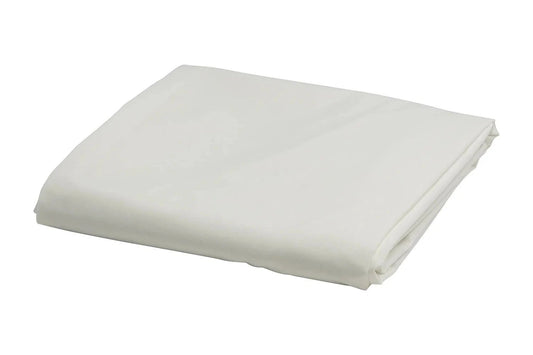
Organic cotton is often the easiest starting point for natural bedding. It feels familiar, washes well, and works across climates. In sheets, duvet covers, and blankets, it provides a practical baseline for reducing synthetic content around sleep without requiring adjustment to a very different material character.
Linen has a drier hand and more visible texture than cotton. Some people love it immediately; others need a few weeks to appreciate it. Linen doesn't give you a glossy or slick finish. What it offers instead is air movement, relaxed drape, and an appearance that improves when it isn't over-styled. It wrinkles more than cotton, which many people either accept as the material's character or dislike enough to make cotton the better choice.
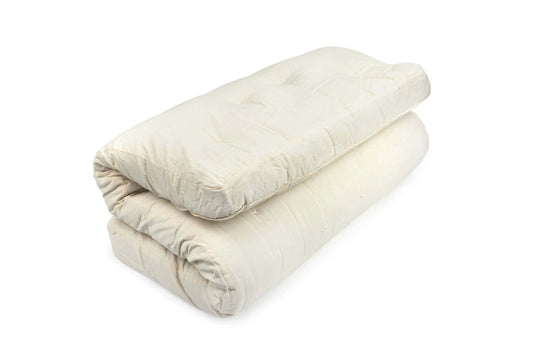
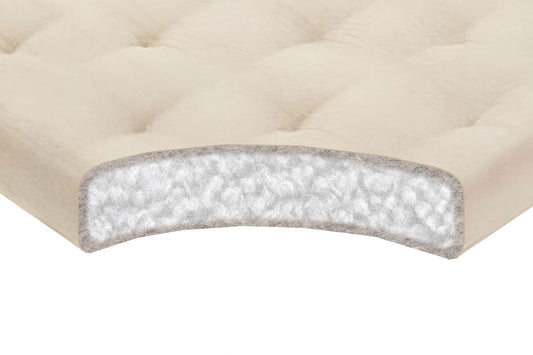
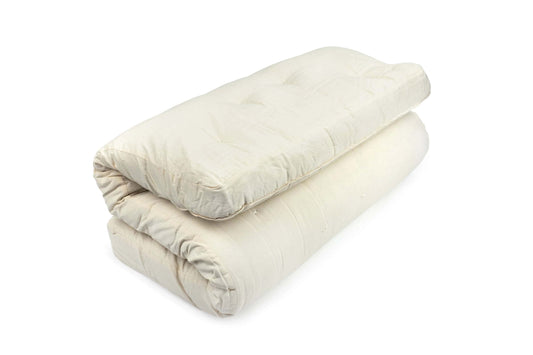
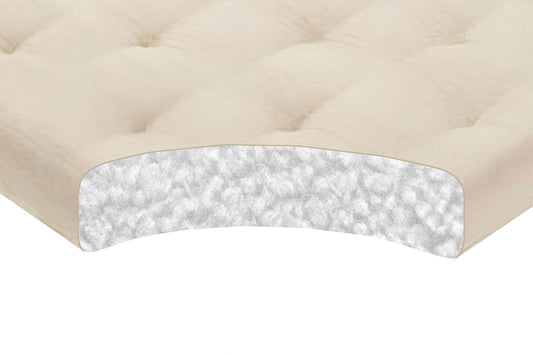
Wool is one of the most useful natural fibers in the home. It insulates without feeling sealed, adds softness that still feels grounded rather than synthetic, and manages moisture in a way that reduces the clammy buildup some polyester bedding creates. In blankets, rugs, and mattress toppers, wool gives a room depth without the static or sheen common in synthetic textiles. If someone has a direct sensitivity to wool fiber, it may not work against bare skin, but it remains excellent in layers that don't require constant skin contact.
Texture and Accents: Rattan, Cork, Stone, Tatami
Rattan and seagrass add airiness without visual noise. Good for baskets, chair panels, light shades, and storage details — they create texture without competing with quieter primary materials.
Cork is quiet underfoot and visually soft. It works well in spaces that need warmth without heaviness and has excellent thermal and acoustic buffering properties.
Stone and clay are best used sparingly as grounding accents. A ceramic lamp base, terracotta bowl, or stone tray can anchor lighter materials without crowding the room.
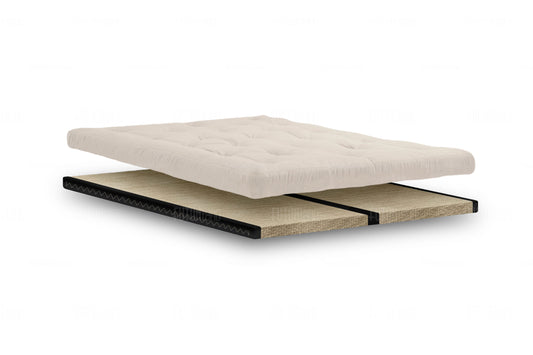
Igusa tatami is one of the most underrated materials in the home. Many first-time buyers expect something fragile or decorative. In use, igusa rush grass is firm, resilient, and highly practical. It works as a floor mat, a meditation surface, or a bed foundation depending on the construction. The scent of fresh igusa — clean and distinctly grassy — is part of the experience. Synthetic flooring never reproduces it. The scent fades over time but the first impression is distinctive, and the material's temperature-buffering quality stays. If you're exploring this category, the tatami collection shows the range of constructions and uses worth considering.
| Material | Best use | Worth knowing |
|---|---|---|
| Oak | Bed frames, tables, shelving, flooring | Can feel heavy in very small dark rooms; lighter tones help |
| Walnut | Statement furniture, nightstands, dining pieces | Can dominate if every piece is dark |
| Pine | Casual bedrooms, wall paneling, lighter furniture | Softer surface, marks more easily |
| Solid bamboo | Platform beds, storage, compact furniture | Verify it's solid construction, not a thin skin over composite |
| Organic cotton | Sheets, duvet covers, pillowcases | Quality varies by weave and certification |
| Linen | Bedding, curtains, upholstery accents | Wrinkles easily — either part of the appeal or a reason to choose cotton |
| Wool | Blankets, rugs, mattress toppers, pillows | May not suit every skin sensitivity at direct contact |
| Igusa tatami | Floor mats, bed foundations, calm zones | Needs dry conditions and basic ventilation care |
Sourcing Natural Materials Responsibly
Most material claims sound good in a product description. Words like natural, green, clean, and sustainable don't tell you much unless someone outside the brand has verified them. A certification-led approach is more reliable than a story-led one.
FSC (Forest Stewardship Council) for wood: Verifies that timber comes from responsibly managed forests with tracked supply chains. Relevant for any solid wood furniture.
GOTS (Global Organic Textile Standard) for textiles: Covers organic fiber sourcing and processing for cotton, wool, and other natural textiles. The most complete standard for certified organic bedding.
GOLS (Global Organic Latex Standard) for latex: Relevant when evaluating organic latex products in mattresses or toppers.
If a retailer says a piece is responsibly sourced, the useful follow-up question is: which certification body verified it, and can that be confirmed through a public database? Vague answers to that question suggest the claim is more marketing than substance.
The bamboo distinction that trips people up. Solid bamboo furniture can be a strong material choice. The plant grows quickly and regenerates without replanting. But bamboo viscose, bamboo rayon, and similar bamboo-derived textiles are a different category — the source plant may be bamboo, but the finished fiber is chemically processed into rayon. The "natural bamboo" story tells you about the feedstock, not the material you're buying. Don't treat bamboo-derived fabrics as equivalent to organic cotton, linen, or wool.
How to Design with Natural Materials
The easiest mistake with natural materials home decor is assuming that natural means you should add more of everything — more wood, more baskets, more woven texture, more beige. That usually creates visual clutter.
The better approach is restraint. Natural materials already carry depth: grain, weave, nap, variation, scent. You don't need many pieces if the materials are doing their job. A room often feels balanced with three categories working together:
| Layer | Examples | Effect |
|---|---|---|
| Hard structure | Wood bed frame, bench, shelf, side table | Gives shape and permanence |
| Soft surface | Cotton sheets, linen curtain, wool throw | Softens the room physically and visually |
| Grounding accent | Clay lamp, woven basket, tatami, stone tray | Adds character without crowding |
If every surface is smooth, the room feels flat. If every surface is textured, the room feels restless. One clean-grained wood, one or two natural textiles, and one rougher accent — that's a room that looks edited rather than assembled.
Bedrooms respond to material changes faster than most rooms because they're intimate and repetitive. You spend long stretches there with less distraction, so sensory details become obvious. A practical sequence for changing a bedroom with natural materials:
- Replace the bed frame first — a solid wood platform bed changes the visual and tactile center of the room
- Change the bedding next — organic cotton or wool in direct skin contact affects comfort every night
- Add a grounding floor layer — tatami, a wool rug, or a woven natural surface changes how the room sounds and feels underfoot
- Simplify the perimeter — removing synthetic storage bins, shiny surfaces, and decorative clutter often reveals how much the earlier changes have already done
For more on the design approach specifically, this guide to Japandi bedroom ideas and natural materials shows how low platform beds, natural textiles, and simple wood furniture combine in practice.
-
 Sale
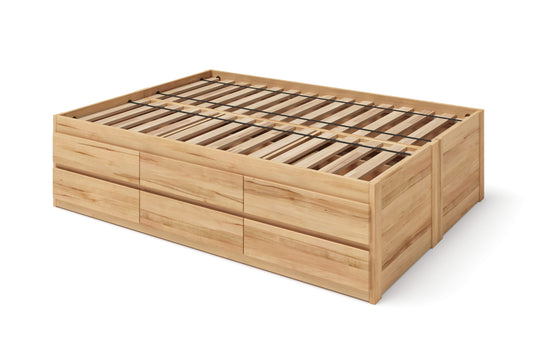
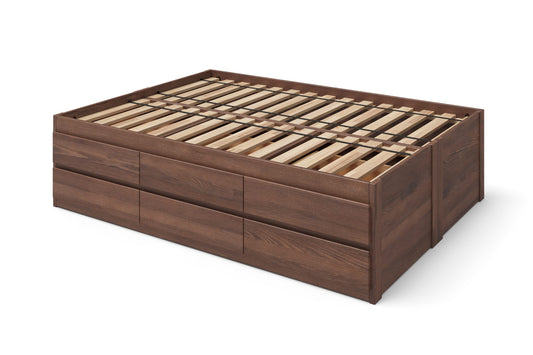
SaleCaptain's Bed
Regular price From $719.99Regular price $899.99 Sale price From $719.99Sale -
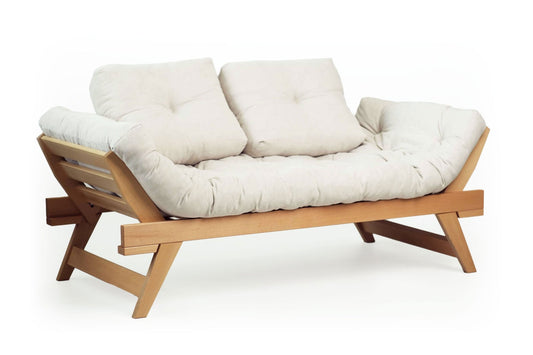
Hitachi Tri-Fold Futon Sofa Bed
Regular price From $249.99Regular price $599.99 Sale price From $249.99Sale -
Sendai Tri-Fold Futon Sofa Bed
Regular price From $299.99Regular price $349.99 Sale price From $299.99Sale -
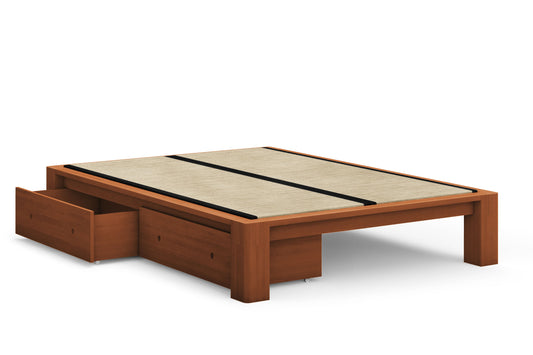
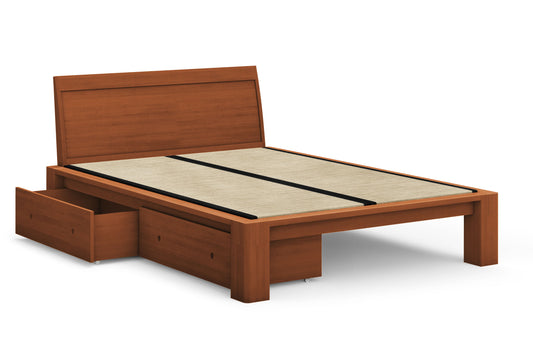
Japanese Tatami Platform Bed
Regular price From $729.99Regular price $929.99 Sale price From $729.99Sale -
Taurus Futon Sofa Bed
Regular price From $519.99Regular price $699.99 Sale price From $519.99Sale -
El Paso Futon Sofa Bed
Regular price From $689.99Regular price $819.99 Sale price From $689.99Sale -
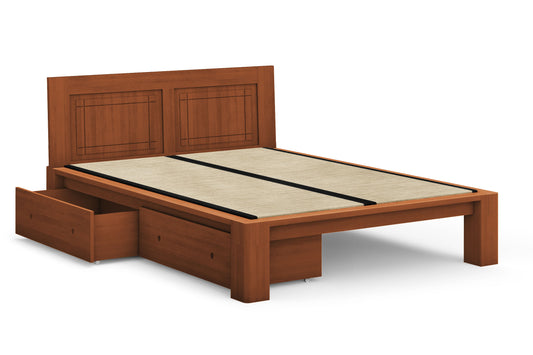
Japanese Tatami Platform Bed with Solid Headboard
Regular price From $929.99Regular price $1,129.99 Sale price From $929.99Sale -
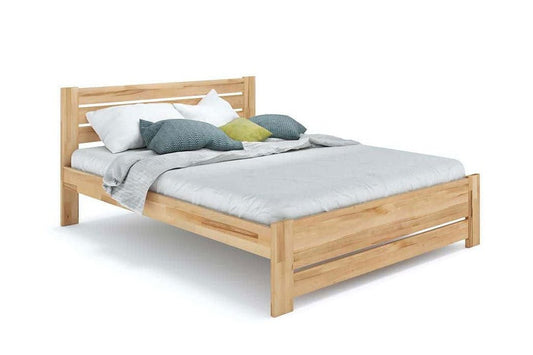
Columbus Natural Platform Bed
Regular price From $469.99Regular price $799.99 Sale price From $469.99Sale -

 Sale
SaleAries Futon Sofa Bed
Regular price From $569.99Regular price $699.99 Sale price From $569.99Sale -
Japanese Tatami Platform Bed with Grooved Headboard
Regular price From $899.99Regular price $1,099.99 Sale price From $899.99Sale -
Long Beach Daybed Sofa Bed
Regular price From $659.99Regular price $739.99 Sale price From $659.99Sale -

 Sale
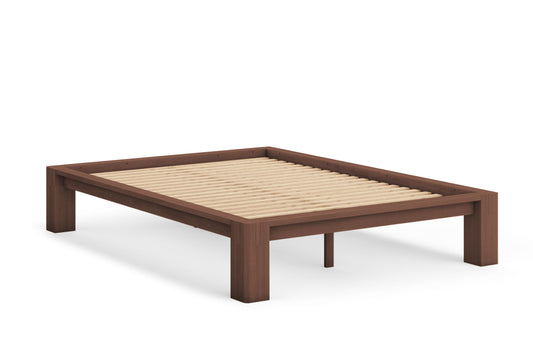
SaleKanso Tatami Bed
Regular price From $749.99Regular price $899.99 Sale price From $749.99Sale