
Why Solid Wood Matters for a Bunk Bed
Walk into most furniture stores and the bunk beds look, on the surface, similar. Wooden frames, similar profiles, similar prices in some cases. The difference between solid wood and engineered wood — particleboard, MDF, or veneer-over-fiberboard — isn't obvious from across the room. It becomes obvious over time, under load, and in the air of the room the bed occupies.
For a piece of furniture used by children, who sleep in it eight or more hours a night and also climb it, jump on it, and hang off its rails, the material choice is more consequential than it tends to be treated. Comfort Pure's solid wood bunk beds use two solid wood materials — kiln-dried pine and eco-rubberwood — and neither contains the adhesives, resins, or synthetic coatings that give engineered wood its off-gassing problem.

What Engineered Wood Actually Is
Particleboard and MDF (medium-density fiberboard) are manufactured by binding wood fibers or particles together with adhesive resins — typically urea-formaldehyde or similar compounds. The resulting material is consistent, easy to machine, and inexpensive to produce. It's also the dominant material in flat-pack and budget furniture globally.
The problem for a kids' sleeping environment is the adhesive. Urea-formaldehyde resins off-gas formaldehyde — a known irritant and recognized carcinogen at sustained exposure — particularly in the first months after manufacture. In an adult living room, the exposure levels from a single piece of furniture may be low enough to be negligible. In a child's bedroom, where the child spends a third of their life in close proximity to the off-gassing surface, the cumulative exposure is a more serious consideration.
Solid wood doesn't have this problem. The material is wood, held together by joinery and hardware rather than adhesive resins. It doesn't off-gas in the same way. When parents search for a bunk bed in wood or ask about wooden bunk beds specifically, this is usually the concern driving the search — even if they don't know how to articulate it yet.
Pine vs. Rubberwood: Two Honest Materials
The Comfort Pure bunk bed lineup uses two different solid wood species, and understanding the difference helps match the right bed to the right buyer.
Kiln-dried pine — used in the Phoenix, Sacramento, and Sacramento Staircase — is softwood, sustainably sourced from Brazilian plantation forests. Pine is lighter in weight and slightly softer than hardwood, which makes it easier to work with and gives it a warm, natural grain. Well-dried pine is structurally sound for a bunk bed application; the kiln-drying process removes moisture that would otherwise cause warping or movement over time. The Pecan finish on these models is applied with non-toxic, water-based coatings.
Eco-rubberwood — used in the Cinnamon, Cinnamon Futon, Ginger, and Peppermint models — is harvested from rubber trees at the end of their latex-producing lifespan. Rather than being burned or discarded, the wood is converted to furniture — a genuinely sustainable use of a material that would otherwise be waste. Rubberwood is a hardwood with a consistent, tight grain and good resistance to warping. It's denser and heavier than pine, which contributes to the more substantial feel of these models.
Neither material requires the addition of formaldehyde-based adhesives. The finishes on both lines are water-based rather than solvent-based, which means they cure without releasing the VOC load associated with conventional lacquers and polyurethane coatings.
-
Peppermint Solid Wood Bunk Bed with Storage Stairs
Regular price From $1,949.99Regular price Sale price From $1,949.99 -
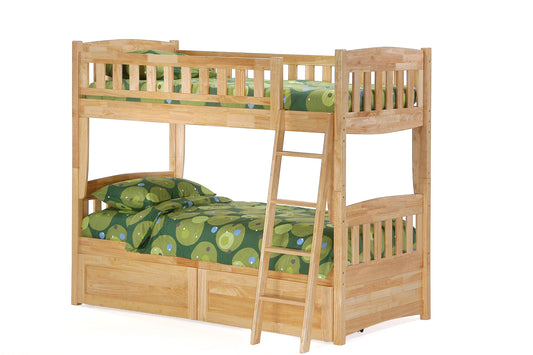
Cinnamon Solid Wood Bunk Bed
Regular price From $1,279.99Regular price Sale price From $1,279.99 -
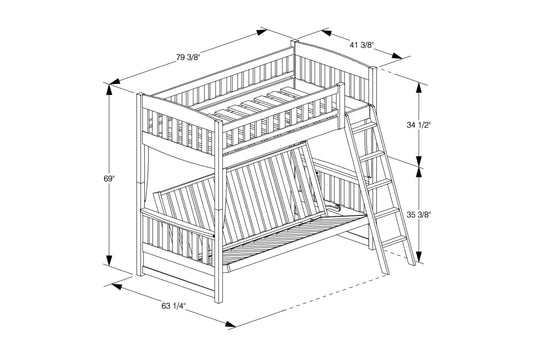
Cinnamon Solid Wood Futon Bunk Bed
Regular price From $1,629.00Regular price Sale price From $1,629.00 -
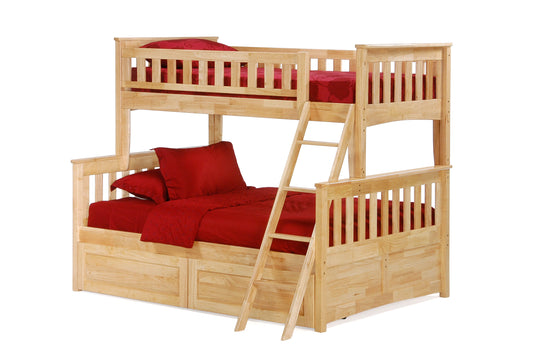
Ginger Solid Wood Bunk Bed
Regular price From $1,689.99Regular price Sale price From $1,689.99 -
Phoenix Solid Pine Bunk Bed
Regular price From $669.99Regular price Sale price From $669.99 -
Sacramento Solid Pine Bunk Bed
Regular price From $819.99Regular price Sale price From $819.99 -
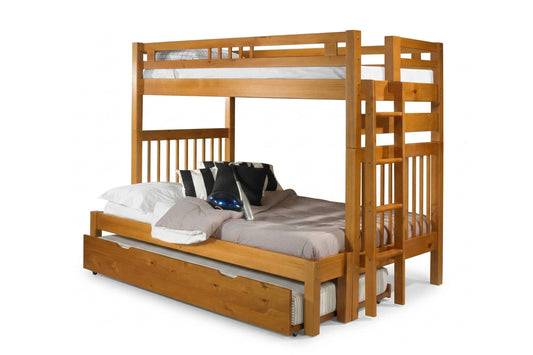
Sacramento Solid Pine Bunk Bed with Storage Stairs
Regular price From $1,349.99Regular price Sale price From $1,349.99







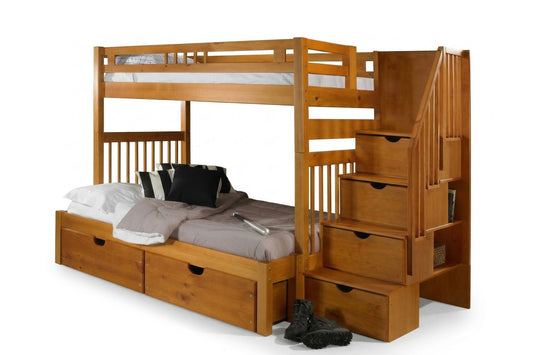
Joinery: What Holds It Together
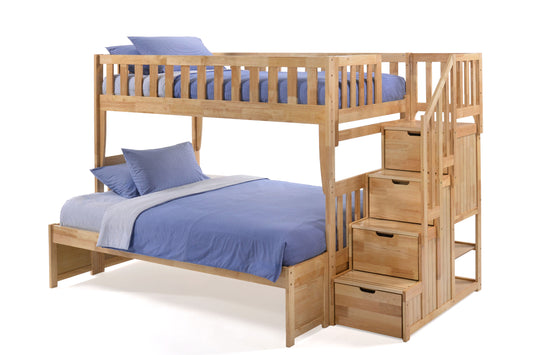
A solid wood frame is only as good as how its parts connect. Solid wood cut into pieces and held together with screws driven into end grain is marginally better than particleboard with the same hardware — the wood doesn't degrade the same way, but the connection still relies entirely on screw purchase in relatively soft material.
Mortise and Tenon joinery, used in the rubberwood models and throughout the pine models, creates a mechanical interlock between the pieces before any hardware is involved. The tenon — a projecting tab of wood — fits into the mortise — a precisely cut cavity — and the joint is then glued and reinforced with crescent nuts or screws. The result is a joint that distributes load across a larger surface area and resists lateral movement in a way that screw-only connections don't.
This matters for a bunk bed in wood because the frame experiences lateral forces constantly — children climbing, rolling over, shifting weight. Joints that rely solely on screws loosen over months and years of this. Mortise and Tenon joints don't loosen the same way because the mechanical interlock holds the relationship between the pieces even as hardware tolerances shift slightly.
Non-Toxic Doesn't Mean Certification Theater
The natural and organic furniture market has its share of greenwashing — materials described as eco-friendly that are only marginally better than conventional alternatives, or certifications that sound meaningful but require little substantive compliance.
Comfort Pure's approach is more direct: use solid wood, avoid adhesive-heavy engineered materials, use water-based finishes, and source wood from managed forests with documented sourcing standards. The result isn't a certified organic bunk bed — that certification doesn't exist in a meaningful form for furniture — but it is a piece of furniture that doesn't introduce unnecessary chemical exposure into a child's sleeping space.
For parents who have already invested in natural mattresses or organic bedding, a solid wood bunk bed is the consistent choice for the frame.

How Long It Actually Lasts
Solid hardwood furniture made with quality joinery lasts decades. Not because of any particular marketing claim, but because the material doesn't degrade the way engineered wood does. Particleboard swells when it contacts moisture, loses screw-holding ability as threads strip, and delaminates at edges and surfaces over time. Rubberwood and pine do none of these things under normal use conditions.
A bunk bed bought when children are five and seven may still be structurally sound when those children are fifteen and seventeen — or when it's been disassembled, moved to a different room, and used as two separate beds. The total cost of ownership on a solid wood frame, compared to replacing a cheaper frame every five to seven years, is generally favorable even before accounting for the material quality difference.
FAQs
What is the difference between solid wood and engineered wood in a bunk bed?
Solid wood is cut from timber and held together by joinery and hardware. Engineered wood — particleboard, MDF — is made from wood fibers bonded with adhesive resins that can off-gas formaldehyde. For a child's sleeping environment, solid wood is the cleaner choice.
What is rubberwood and why is it described as eco-friendly?
Rubberwood comes from rubber trees harvested at the end of their latex-producing lifespan — wood that would otherwise be burned or discarded. Converting it to furniture is a genuine reuse of an existing material rather than harvesting new timber.
Do solid wood bunk beds off-gas?
Not in the same way as engineered wood. Solid wood with water-based finishes introduces no formaldehyde-releasing adhesives and no solvent-based coatings. There may be a mild natural wood scent initially, which dissipates without lasting effect.
What is Mortise and Tenon joinery and why does it matter?
Mortise and Tenon is a woodworking joint in which a projecting tab of wood locks into a cavity, creating a mechanical connection before any hardware is added. It distributes load across a larger area than screw-only connections and resists loosening under repeated lateral stress.
Are the finishes on Comfort Pure bunk beds non-toxic?
Yes. Both the pine and rubberwood models use water-based coatings rather than solvent-based lacquers or polyurethane, reducing VOC content compared to conventional furniture finishes.
The material a bunk bed is made from is not a secondary consideration. It's the difference between a piece of furniture that introduces chemical exposure into a child's sleeping space and one that doesn't, between a frame that loosens over three years and one that stays solid for fifteen. For parents who are already thinking carefully about what goes into a child's bedroom, the wood is where that thinking starts.
For more on how Comfort Pure approaches non-toxic furniture, the article on choosing a truly non-toxic bed frame covers what certifications and material decisions are worth understanding before you buy. The bunk bed safety guide also addresses how construction quality relates to long-term structural safety.