
Feng Shui Bed Placement: Where to Put Your Bed and Why
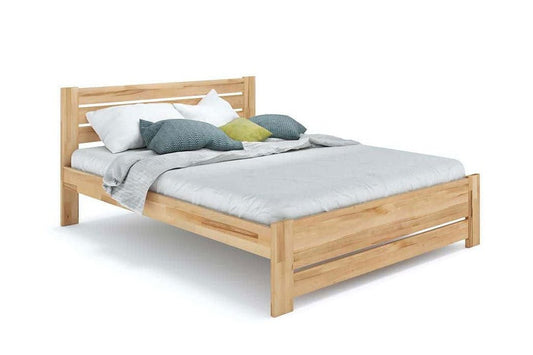
Feng shui bed placement is governed by one rule that outranks all the others: you should be able to see the bedroom door from your pillow without lying directly in line with it. Everything else — direction, mirrors, windows, what sits overhead — is secondary to getting that relationship right. If you are rearranging a bedroom or choosing a new frame, the placement decision should come before the furniture decision, because a bed that fights the room will fight it in any material. Once the position is settled, the frame itself matters mostly for height and visual weight, which is where a low-profile solid wood platform bed tends to suit the layout better than a tall, heavy one.
Feng shui is a traditional Chinese practice, not an empirically tested one, and this guide treats it that way. Some of its bedroom rules have a plainly practical basis that anyone can verify — sightlines, drafts, noise paths, walkway clearance. Others are symbolic. Both are covered below, and which is which is stated outright, so you can follow the whole system or take the parts that hold up on their own terms.

The commanding position, explained
The commanding position is the foundational concept. In feng shui, it means the bed is placed so the sleeper can see the entrance to the room while resting, but is not sitting in the direct path between the door and the opposite wall. In practice this usually puts the bed diagonally across the room from the doorway, with the headboard against a solid wall.
Practitioners describe this as the position of awareness — you see who enters without being exposed to what comes through the door. The practical reading is just as clear. A bed in the direct line of a doorway catches hallway light, foot traffic, and sound from the rest of the home. A bed set diagonally catches none of those while still giving you a view of the entrance, which is the thing that lets most people settle.
The position to avoid is the one directly in line with the door with your feet pointing out of it. Feng shui gives this an unambiguous name and treats it as the single worst arrangement in the room. Read symbolically, that is what it is — a symbolic objection. But shifting the bed two or three feet out of the doorway's path costs nothing and removes a real light and traffic problem at the same time.
The placement rules, and which ones hold up on their own
Feng shui bed placement carries a set of standard prohibitions. Here they are alongside what the practice holds and whether there is an independent reason to follow them.
| Rule | What feng shui holds | Practical rationale |
|---|---|---|
| Not in line with the door | Energy rushes straight through the sleeper; the position leaves you exposed | Real — a direct sightline from a hallway carries light, noise, and movement to the bed |
| Headboard against a solid wall | The wall is "mountain" support behind the head | Real — reduces sound transfer from open space and steadies the frame |
| Not under a window | Support is missing behind the sleeper | Real — windows are the coldest surface in the room and the main light and noise path |
| Clear space on both sides | Energy should circulate around the bed; each partner needs their own approach | Real — both people can get in and out, and the bed can be made and cleaned around |
| Not sharing a wall with a bathroom | Water drains the room's energy | Partly real — plumbing noise transmits through a shared wall |
| No mirror facing the bed | Reflection disturbs rest and bounces energy back at the sleeper | Partly real — mirrors redirect light from windows, screens, and hallways onto the bed |
| Nothing heavy overhead | Beams and sloped ceilings press down on the sleeper | Mostly symbolic — though a low slope does limit clearance for sitting up |
| Feet not pointing out the door | Associated with departure | Symbolic |
Five of the eight survive without any reference to energy at all. If you want a well-laid-out bedroom but have no interest in the metaphysics, you can follow most of this list for reasons you can measure.
Feng shui bed direction: two systems that sometimes disagree
Bed direction is where most people get stuck, because feng shui contains more than one method and they do not always agree.
The first method is the commanding position described above. It is relative to the room: what matters is where the bed sits in relation to the door and the walls, not which way a compass points. This is the approach most Western feng shui consultants lead with, and it is the one that produces a usable bedroom.
The second comes from the Eight Mansions system, which assigns each person a personal number derived from birth year and gender, sorting them into an East group or a West group. Each group has four favorable compass directions, and the practice holds that the head of the bed should point toward one of them. Because the number depends on personal details, there is no universal chart — two people sharing a bed can land in different groups, which is a common enough situation that practitioners have standard compromises for it.
When the two systems conflict — and in a small bedroom with one viable wall, they often do — most practitioners give priority to the commanding position. The room's layout is fixed; the compass direction is an optimization on top of it. If you can satisfy both, do. If you cannot, place the bed where it works in the room.
Headboards and the idea of support
Feng shui treats the area behind the head as the most important part of the bed. A solid headboard against a solid wall is the preferred arrangement, described as giving the sleeper backing. Slatted or open headboards are considered weaker, and no headboard at all is the least supported of the three.
The practical version is less mystical and points the same way. A headboard is a physical buffer between your head and a cold exterior wall, it stops pillows sliding into the gap, it gives you something to sit against, and on a shared wall it adds a small amount of sound dampening. If you prefer the look of a bed without one, the practice's usual suggestion is to compensate with a solid wall behind the bed and nothing hanging above it. Browsing headboard options alongside the frame rather than after it also avoids the common mistake of buying a bed and discovering the two do not pair.
-
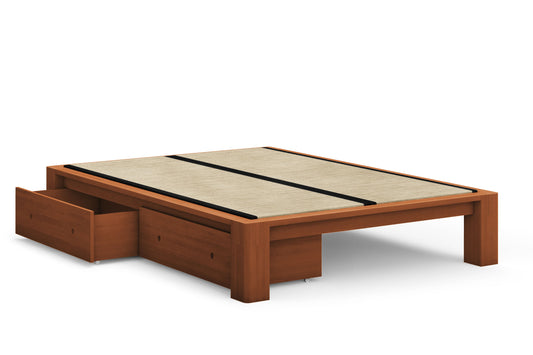
Japanese Tatami Platform Bed
Regular price From $729.99Regular price $929.99 Sale price From $729.99Sale -
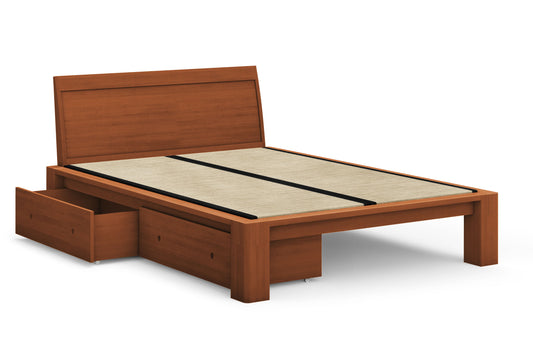
Japanese Tatami Platform Bed with Solid Headboard
Regular price From $929.99Regular price $1,129.99 Sale price From $929.99Sale -
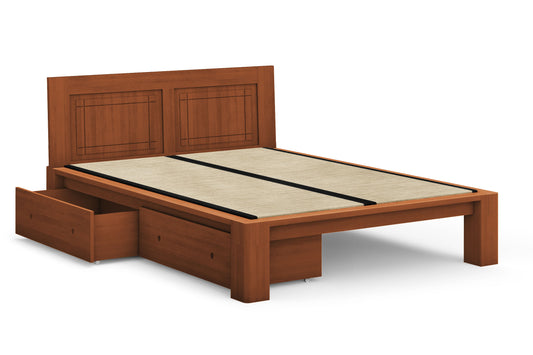
Japanese Tatami Platform Bed with Grooved Headboard
Regular price From $899.99Regular price $1,099.99 Sale price From $899.99Sale -
Japanese Daichi Tatami Platform Bed
Regular price From $499.99Regular price Sale price From $499.99 -
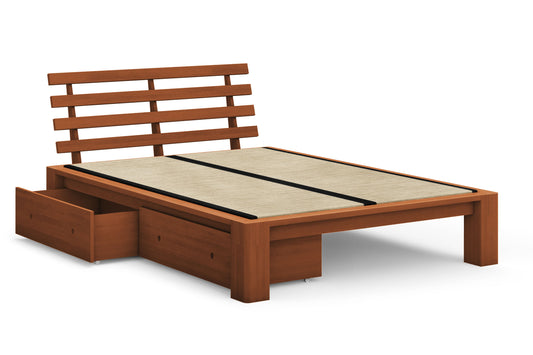
Japanese Tatami Platform Bed with Slatted Headboard
Regular price From $819.99Regular price $1,019.99 Sale price From $819.99Sale -
Japanese Zen Platform Bed
Regular price From $869.99Regular price $1,049.99 Sale price From $869.99Sale -
Headboard for a Tatami Bed
Regular price From $159.99Regular price Sale price From $159.99