
Why “Amish futon frame” shows up in so many searches
If you are typing “Amish futon frame” or “American-made futon” into a search bar, you are probably not just shopping for a place to sleep. You are looking for something that will not wobble in a year, sag in three, and end up on the curb in five. You want a futon frame that feels solid when you sit down, supports real weight, and uses honest materials you can actually pronounce.
That is exactly why Amish-crafted futon frames and bed frames stand out. They are intentionally slow to make, built from solid hardwood, and assembled by people who expect their work to last decades, not a single lease.
What “fast furniture” really looks like
Before talking about Amish quality, it helps to name what most people are trying to avoid. “Fast furniture” is not a brand; it is a pattern. You see it in low prices, flat-pack boxes, and frames that feel suspiciously light when you lift them.
- Frames made from MDF, particleboard, or thin metal tubing that flexes under everyday use.
- Connectors that rely on small bolts and cam locks instead of real joinery, so parts loosen over time.
- Veneers and printed “wood grain” that hide what is actually inside the panel.
- Heavy use of synthetic glues and finishes, which can add chemical odor to the bedroom.
These pieces often look fine in photos, but the lifespan tells the truth. Five years later, the frame squeaks, hardware is stripped, and the mattress is doing all the work because the structure underneath has started to give up.

What sets Amish-crafted frames apart
Amish furniture is slow on purpose. The pace of work allows for more careful joinery, better wood selection, and a different attitude toward how long a frame should last. You can see that philosophy up close in the behind-the-scenes story of how an Amish futon frame is built from forest to home.
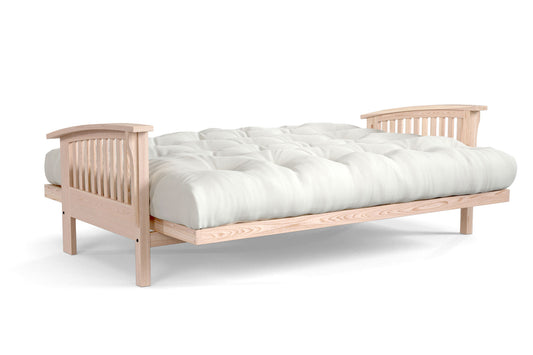
- Solid hardwood throughout. Instead of engineered panels, builders reach for maple, oak, cherry, or beech, with grain that runs the length of the rails and arms.
- Joinery that locks the frame together. Mortise-and-tenon joints, thicker stretchers, and well-placed dowels create a rigid structure that resists racking and wobble.
- Real load capacity. A solid wood lattice or slat system can support adult weight every day, not just occasional guests.
- Repairable over time. If something does go wrong, solid hardwood can be re-tightened, refinished, or even patched, instead of heading straight to the landfill.
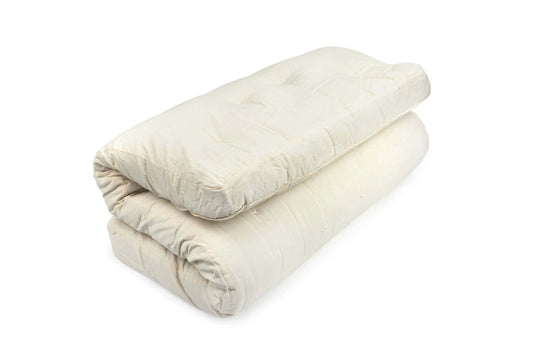
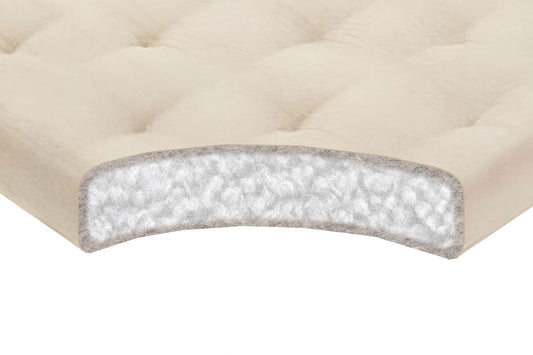
When you combine that craftsmanship with thoughtfully chosen futon mattresses, you get a sleep system that is closer to a traditional, long-lasting bed than to a temporary couch.
-
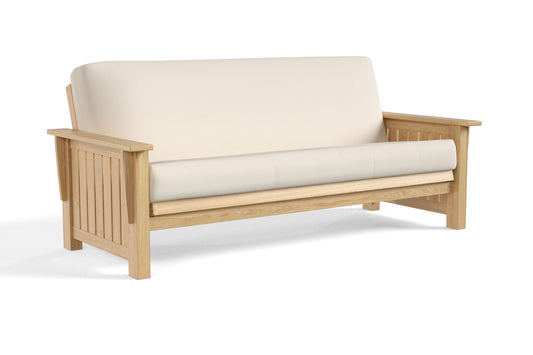
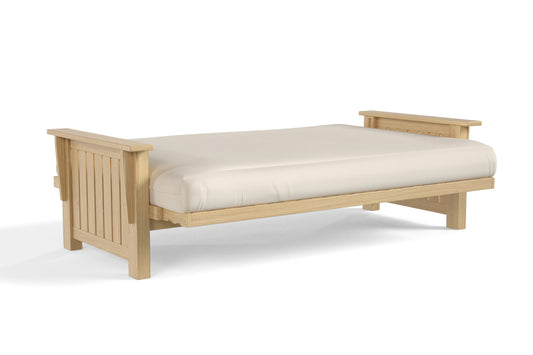
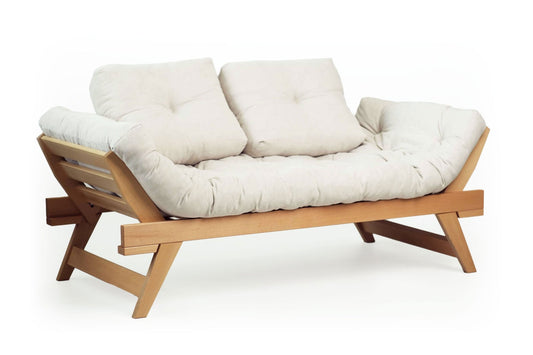
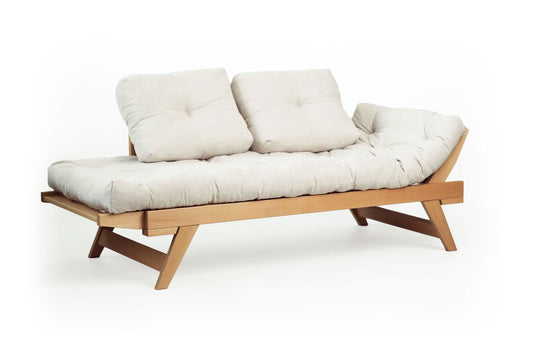
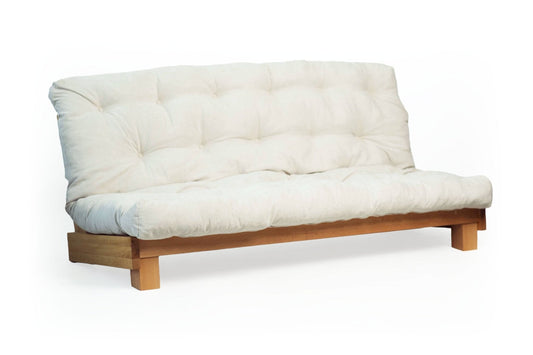
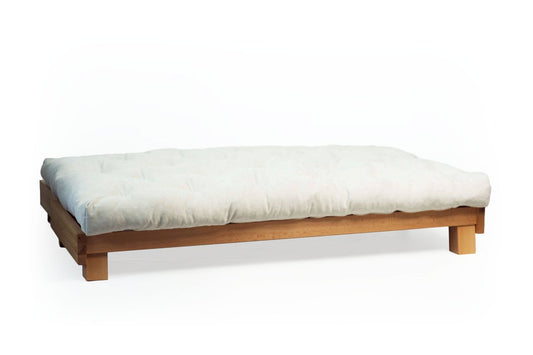
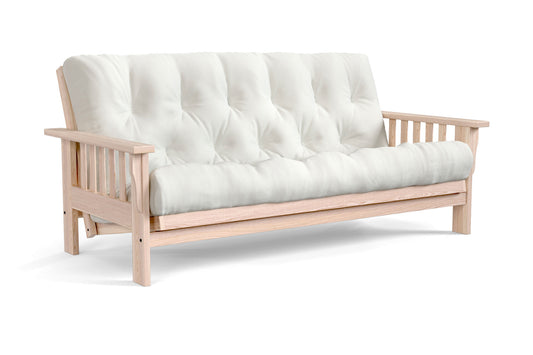
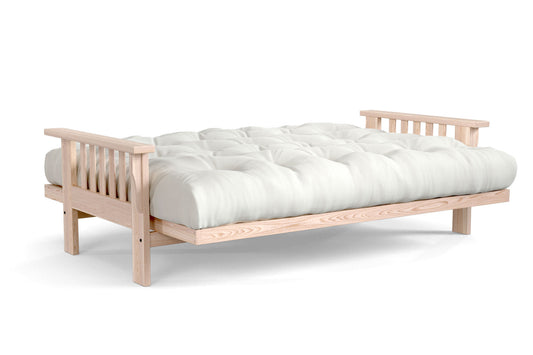
Mission Flat Arm Amish-Made American Oak Futon Sofa Bed
Regular price From $959.99Regular price $1,219.98 Sale price From $959.99Sale -
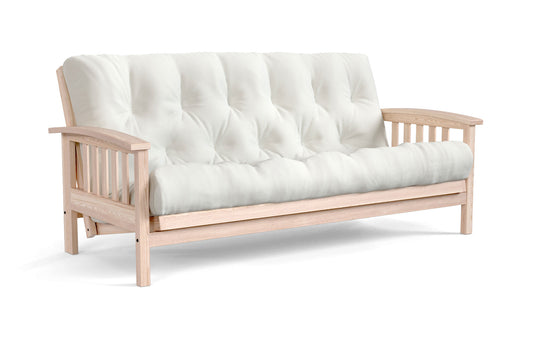
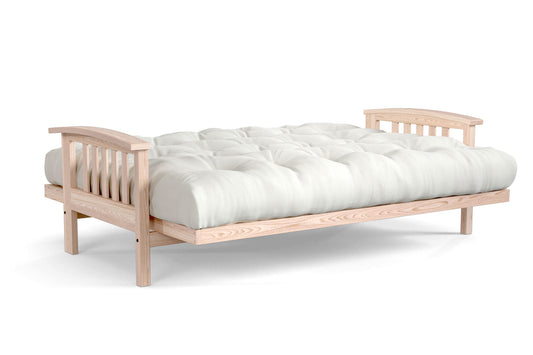
Mission Bent Arm Amish-Made American Oak Futon Sofa Bed
Regular price From $1,019.99Regular price $1,319.98 Sale price From $1,019.99Sale -
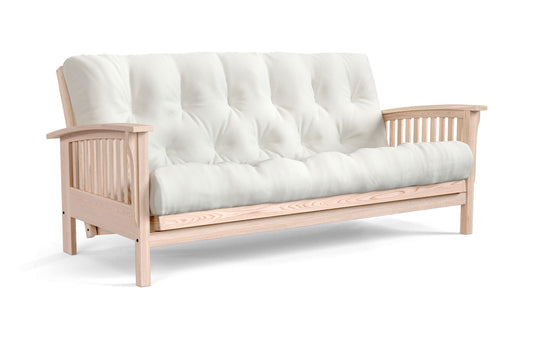
Classic Bent Arm Amish-Made American Oak Futon Sofa Bed
Regular price From $1,139.99Regular price $1,419.98 Sale price From $1,139.99Sale
Materials, finishes, and non-toxic choices
Many people searching for an Amish futon frame are also quietly asking another question: “Is this safe to sleep on every night?” Solid hardwood is already a win for durability, but it is also a better base for a low-tox bedroom. Fewer engineered panels usually means fewer industrial adhesives and fewer sources of unwanted emissions.
If you care about certifications and supply chains, you can go deeper into the topic with a dedicated guide to eco-certifications and safer furniture materials. That kind of background makes it easier to evaluate not only handcrafted pieces, but also any frame you are considering for a non-toxic bedroom.
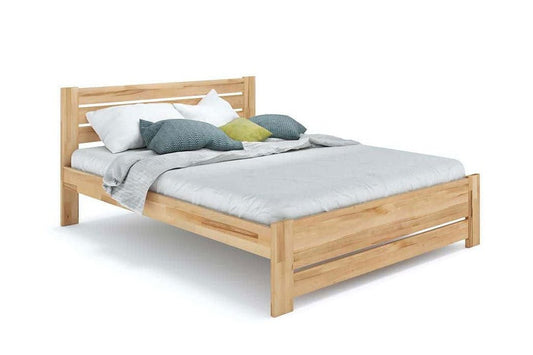
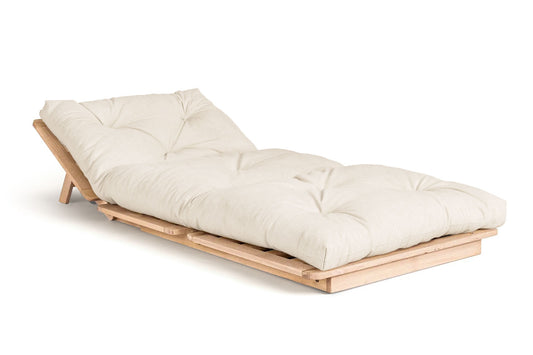
Once you know what to look for, it becomes easier to pair an Amish-built frame with the rest of your space. Solid wood futon frames that follow similar construction standards can be found in collections of hardwood futon frames, and there are also simple platform designs in curated selections of low platform beds that feel just as substantial.
For shoppers who want to extend that philosophy to every room, there are broader ranges focused on safer pieces, like a dedicated collection of non-toxic furniture for the home. When you want specifically Amish-made pieces, you can narrow the search to carefully chosen Amish furniture for the bedroom and living room, where the same standards for wood and finishes apply.

When is an Amish frame worth the investment?
An Amish futon frame usually costs more up front than a mass-market alternative, but the math changes once you factor in time. If you plan to use a futon or convertible bed as a daily sleeper, or you know you will move several times and want a frame that can survive each disassembly and reassembly, the “forever frame” starts to make more sense.
One way to decide is to look at the frame like you would any other major appliance: how many hours of use will it see, and how often do you want to replace it? A futon or daybed that doubles as a sofa, guest bed, and main bed gets more wear than a spare room mattress. In that context, a better built frame is not a luxury; it is a practical way to protect the mattress you put on top of it and to keep your space feeling solid and quiet.
If you want help choosing the right wood species or finish once you have decided on an Amish or American-made piece, it is worth reading a deeper guide to wood bed frames and futon construction. That background will make it much easier to pick a frame that matches your room, your values, and the amount of use it will see—so you really are choosing a forever frame, not just another piece of fast furniture.