
Wood vs Metal Futon Frames: Comfort, Durability, and Noise
When people shop for a futon, most of the attention goes to the mattress: how thick it is, what it is made of, and whether it will feel good for sitting and sleeping. But the frame underneath is just as important. The material of the frame, especially wood versus metal, plays a huge role in how comfortable the futon feels, how long it lasts, and even how noisy your nights are.
This guide walks through the real-world differences between wood and metal futon frames so you can choose a setup that works for everyday life, not just a stock photo. We will look at comfort, durability, noise, safety, and which type of frame makes sense in different rooms, from a studio apartment to a family guest room.
Why the frame material matters more than you think
A futon frame does more than hold the mattress off the floor. The material, joinery, and slat design all change how your body experiences the futon. A flexible, slightly forgiving frame will feel different from a rigid, rattling one even with the exact same mattress.
Wood and metal frames approach the job very differently:
- Wood frames rely on solid rails, slats, and joints to support weight and allow the mattress to bend between sofa and bed positions.
- Metal frames usually use tubular steel or similar materials with welded or bolted joints, sometimes with mesh or wire support instead of wooden slats.
That difference shows up in three areas that matter most to day-to-day comfort: how evenly the mattress is supported, how stable the frame feels when you move, and how much noise it makes when you sit down, shift, or roll over at night.

Comfort: how wood vs metal feels in daily use
Comfort on a futon is a blend of the mattress and the frame beneath it. Even a high quality mattress will feel disappointing if it is sagging between too-far-apart bars or bouncing on a springy support system.
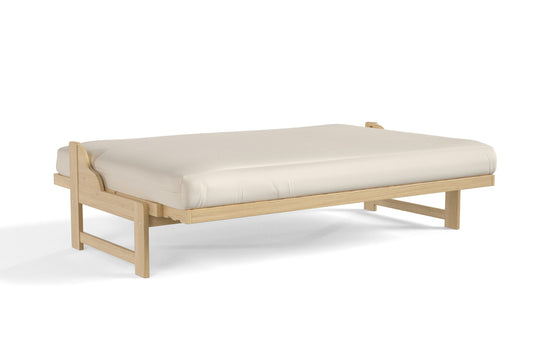
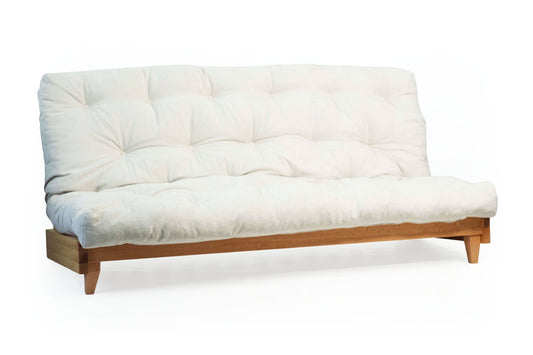
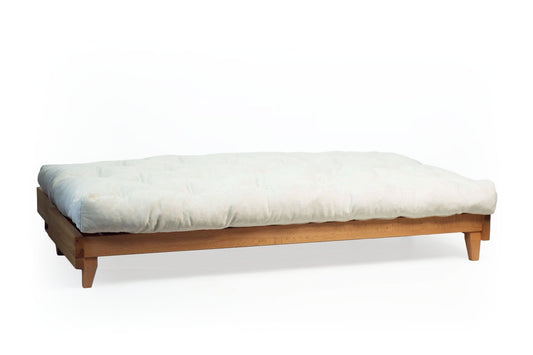
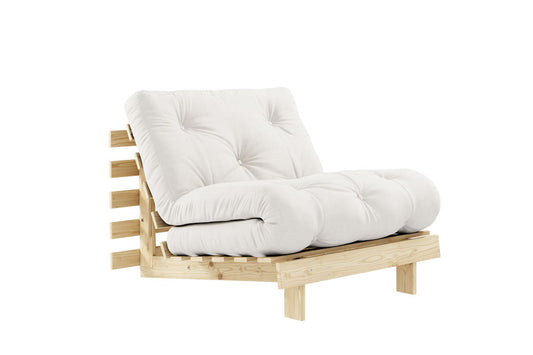
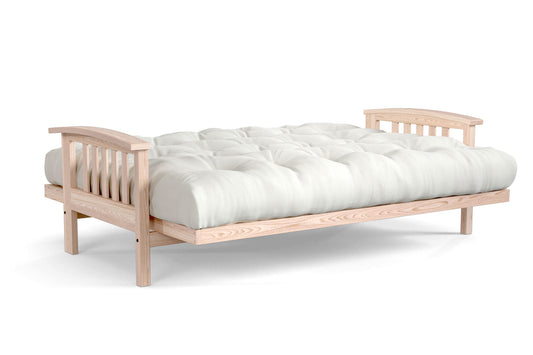
Well-designed wood frames, especially those built from solid hardwood, tend to offer:
- More even support: closely spaced wooden slats distribute weight across the whole mattress instead of letting sections droop.
- A stable, grounded feel: solid rails and thicker components flex less under load, so the seat and bed feel consistent over time.
- Better pairing with natural futon mattresses: firm cotton and wool futons sit nicely on flat, continuous slats without pressure points from thin metal bars.
Many metal frames are engineered for low cost and low weight, not long-term comfort. Common issues include:
- Pressure lines where thin bars run under the mattress, especially noticeable with thinner futons or shikibuton-style mattresses.
- A “bouncy” or springy feel when several people sit down on the futon at once.
- A sensation that the frame is twisting slightly when you shift from sitting to sleeping positions.
If you want a futon that feels close to a solid, supportive bed, your best bet is a sturdy wood frame paired with a well-made mattress. You can browse a range of solid-frame futon designs in the main futon frame collection, or focus on specific sizes like compact full-size futon frames for smaller rooms and larger frames suited for primary sleeping.
| Feature | Wood Frames | Metal Frames |
|---|---|---|
| Comfort | Provides even, stable support with closely spaced slats; minimizes "bounciness". | Often feels "springy" or bouncy; thin support bars can create uncomfortable pressure lines. |
| Durability | Built with thicker components and repairable joints (e.g., bolts can be tightened). | Prone to bending tubes and cracked welds; difficult to fix once hardware loosens or strips. |
| Noise | Generally quiet; occasional creaks can usually be fixed by tightening the frame. | Prone to squeaking (metal-on-metal rubbing) and rattling from loose cross-bars. |
| Health & Safety | Available with natural, low-VOC finishes (oil/wax); avoids hidden glues or synthetic panels. | Painted or powder-coated with varying chemical quality; harder to verify non-toxic composition. |
| Best Used For | Daily sleeping, primary living room sofas, and long-term use. | Guest rooms, temporary housing, or tight budgets where longevity isn't the priority. |
-
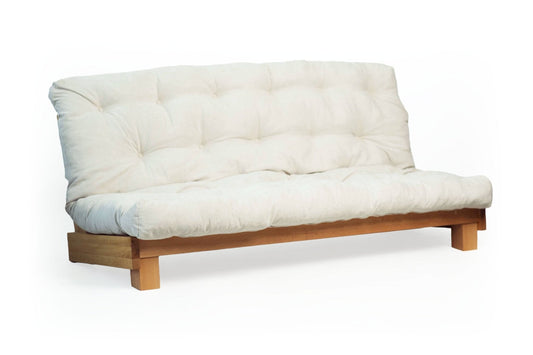
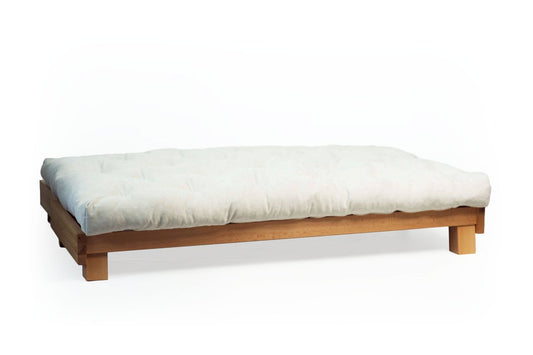
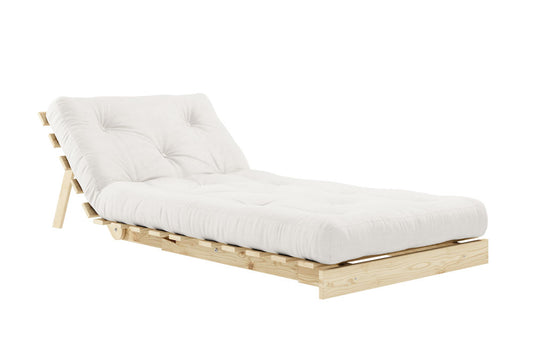
Taurus Eco Futon Sofa Bed
Regular price From $519.99Regular price $699.99 Sale price From $519.99Sale -
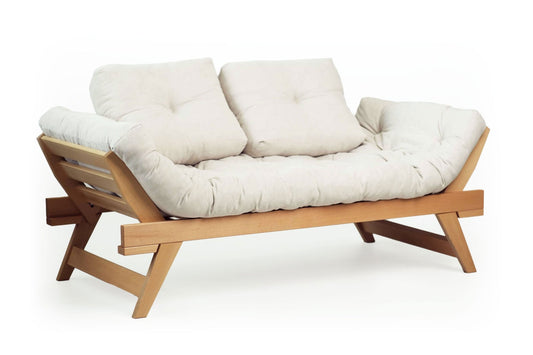
Hitachi Tri-Fold Futon Sofa Bed
Regular price From $249.99Regular price $599.99 Sale price From $249.99Sale -
El Paso Eco Futon Sofa Bed
Regular price From $689.99Regular price $819.99 Sale price From $689.99Sale -
Aries Eco Futon Sofa Bed
Regular price From $569.99Regular price $699.99 Sale price From $569.99Sale -
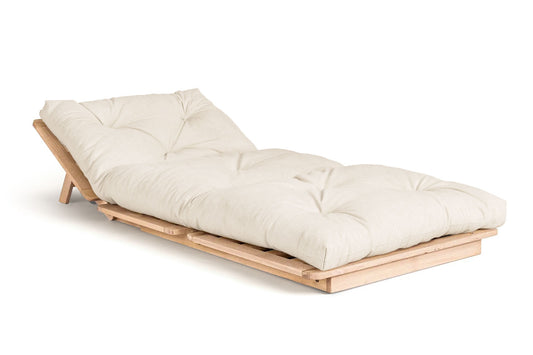
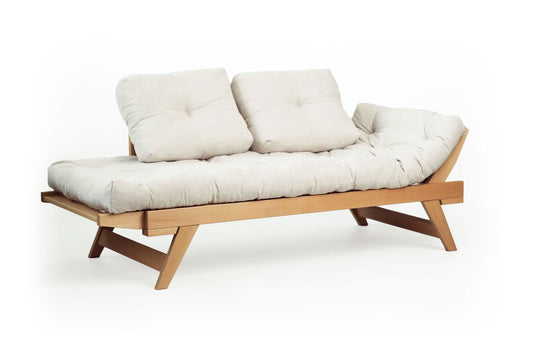
Long Beach Daybed Sofa Bed
Regular price From $659.99Regular price $739.99 Sale price From $659.99Sale -
Virgo Eco Futon Sofa Bed
Regular price From $589.99Regular price $699.99 Sale price From $589.99Sale -
Akron Eco Futon Sofa Bed
Regular price From $689.99Regular price $819.99 Sale price From $689.99Sale -
Sendai Tri-Fold Futon Sofa Bed
Regular price From $299.99Regular price $349.99 Sale price From $299.99Sale -
Libra Eco Futon Sofa Bed
Regular price From $619.99Regular price $699.99 Sale price From $619.99Sale -
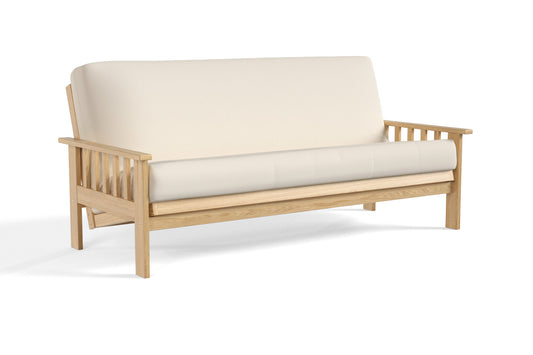
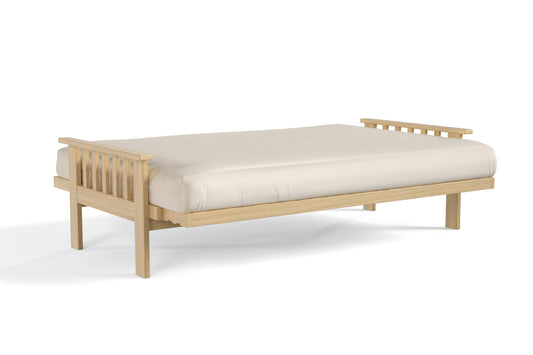
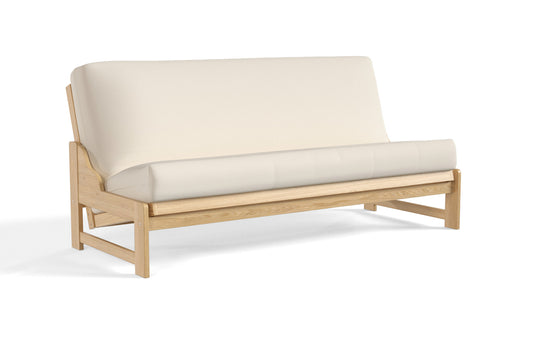
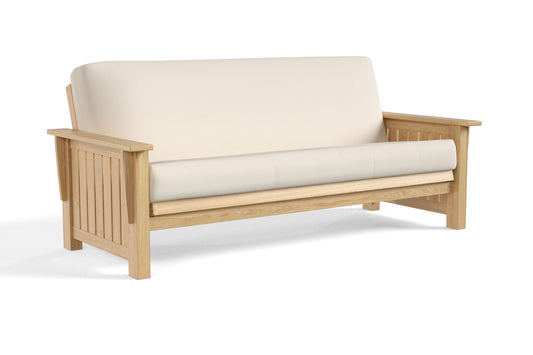
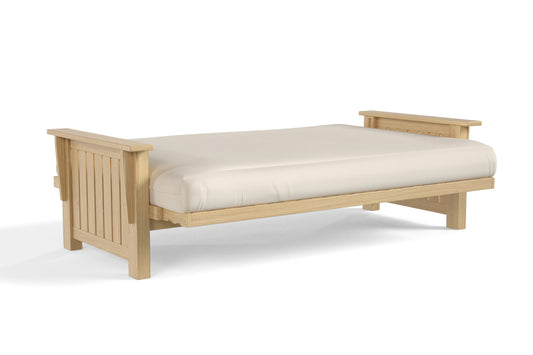
Mission Flat Arm Amish-Made American Oak Futon Sofa Bed
Regular price From $959.99Regular price $1,219.98 Sale price From $959.99Sale -
Elk Grove Eco Futon Sofa Bed
Regular price From $759.99Regular price $869.99 Sale price From $759.99Sale -
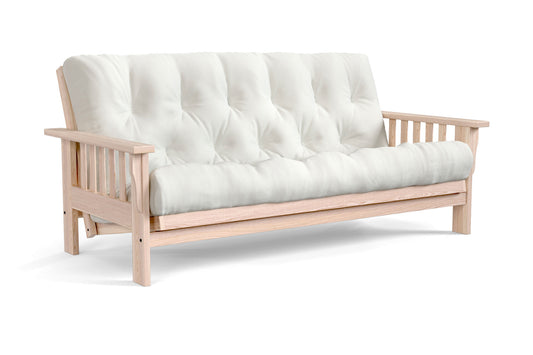
Mission Bent Arm Amish-Made American Oak Futon Sofa Bed
Regular price From $1,019.99Regular price $1,319.98 Sale price From $1,019.99Sale



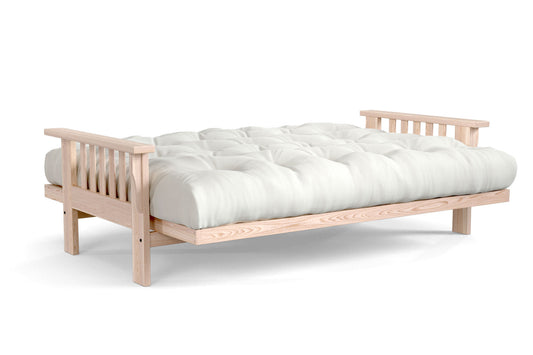
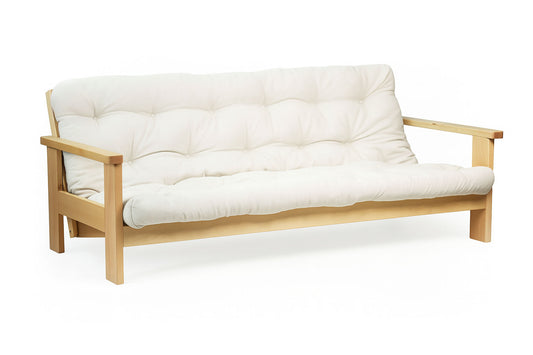
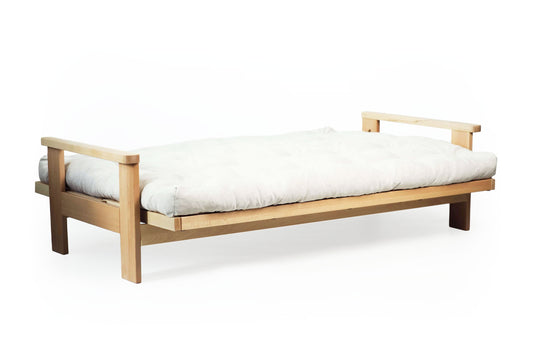
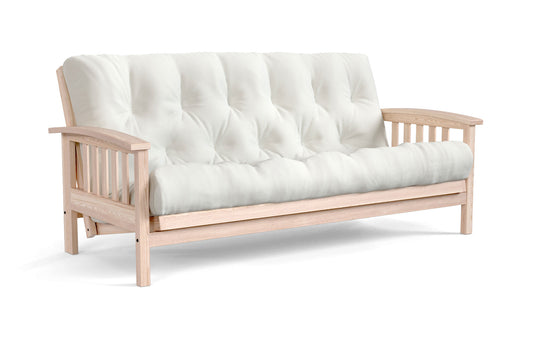
Durability and weight capacity over the long term
Durability is where wood and metal diverge even more sharply. A futon that will be used as a main bed, or as the primary sofa in a living room, needs to handle real life: kids climbing, guests visiting, nightly use, and years of folding between upright and flat positions.
Quality wood frames, especially those built from beech, oak, or similar hardwoods, have some clear advantages:
- Thicker components: solid wood rails and arms can be dimensioned generously, which helps resist bending and fatigue.
- Serviceable joints: if a bolt loosens over time, it can usually be tightened; in better designs, traditional joinery supports the weight instead of relying only on hardware.
- Predictable aging: wood may pick up a scratch or ding, but it rarely bends out of shape the way thinner metal tubing can.
By contrast, many budget metal frames are designed to hit a price point rather than survive a decade of daily use. Common problems include:
Thin tubular parts that slowly bow or twist under repeated load, welds that crack or fail at stress points such as the front rail or hinge mechanism, and hardware that loosens and is difficult to re-tighten once threads wear or deform.
If you are interested in what long-lasting hardwood construction looks like in practice, you can explore more detail in this deep dive on solid hardwood futon frames and in the broader guide to selecting a robust wood bed frame.
Noise: creaks, squeaks, and late-night movement
Noise is one of the most immediate differences people notice after they bring a futon home. A squeaky frame can make every small movement feel magnified, especially in a studio or shared space. Both wood and metal frames can be quiet or noisy depending on design, but they tend to fail in different ways.
Metal frames are prone to:
- Metal-on-metal contact at hinge points, especially where pins or bolts run through thin brackets.
- Squeaks that develop as hardware loosens and parts begin to rub against each other under load.
- Vibration and rattling from thin cross bars or mesh supports.
Wood frames can creak as well, but the sound is usually the result of wood expanding and contracting slightly around hardware or rubbing at tight joints. With a solid frame, a bit of periodic tightening is usually enough to keep things quiet.
If you live in a small space where every sound is noticeable, a well-built wood frame is often the safer bet. Choosing a design similar to a low platform bed with a futon mattress on top can be especially quiet and stable; you can see examples of this approach in the wider range of wood platform bed styles.

Safety, finishes, and indoor air quality
For people who care about non-toxic furniture and healthy indoor air, frame material is not just an aesthetic question. It also affects what finishes, coatings, and adhesives end up in your bedroom or living room.
With wood, you can choose frames that are built from solid boards and finished with low-VOC oils, waxes, or water-based finishes. That means no particleboard or MDF, no hidden glues, and fewer unknowns in terms of off-gassing. Many high-quality futon frames and beds are designed this way from the start.
Metal frames may arrive with powder coatings or paints of varying quality. While many coatings are stable once cured, it is harder to verify what was used and whether any underlying components (like composite panels or accessories) contain added formaldehyde or other chemicals.
For a fully holistic setup, pairing an organic mattress or futon with a solid wood frame and natural bedding helps keep the entire sleep system aligned with your health goals.
When a metal frame makes sense
Wood frames have many advantages, but there are still situations where a metal frame can make sense:
- Short-term or temporary housing where the futon may be used lightly and left behind.
- Very tight budgets, where the choice might be between a low-cost metal futon and no extra sleeping space at all.
- Occasional guest use in a room that is otherwise not under heavy daily wear.
In those scenarios, it is still worth choosing the sturdiest metal design you can find, with thicker tubing, solid welds, and as much continuous support under the mattress as possible. But if you expect to sit and sleep on the futon every day, the long-term cost of constantly replacing lightweight frames can easily exceed the price of a single solid wood frame that lasts for many years.
Questions to ask before you choose a futon frame
Before you decide between wood and metal, it helps to step back and think about how your futon will actually be used. A few practical questions can quickly reveal which direction is right for you.
- Will this be a primary bed, a daily sofa, or a guest-only piece?
- How often will you fold it from sofa to bed and back again?
- Do you have kids, pets, or frequent guests who might jump, climb, or put extra stress on the frame?
- Is squeaking or rattling going to be a big annoyance in your space?
- Are you trying to keep your bedroom as natural and low-chemical as possible?
If you said yes to frequent use, long-term durability, and quieter, more natural materials, a solid wood futon frame is almost always the better choice. For more occasional use or tight budgets, a carefully chosen metal frame might be acceptable, but it is rarely the most comfortable or future-proof option.
How to match your frame with the right mattress and size
Once you have decided on a wood frame, the next step is pairing it with the right mattress and size. Full-size futon frames are a common choice for small rooms and offices, while queen-size frames are better if the futon will double as a long-term bed for couples.
You can explore:
- Compact, apartment-friendly frames in the collection of full-size futon frames.
- Larger, more generous sleeping spaces in the assortment of queen-size futon frames.
- Broader sofa and lounger options, including tri-fold and loveseat designs, in the main futon frame selection.
For rooms where the futon is replacing a traditional bed entirely, a low platform bed paired with a futon mattress can offer the best of both worlds: the look and stability of a standard bed frame with the flexibility of a convertible or floor-style mattress. The mix of platform bed designs gives a good sense of what that setup can look like in a minimalist, natural bedroom.
Going deeper into solid wood construction
If you are curious about what distinguishes a truly robust wood frame from a basic one, it is worth looking at how the pieces are designed and joined. Arm posts, stretchers, seat rails, and slats all work together, and the best frames are built like fine furniture rather than disposable seating.
For a closer look at those details, you can read more in this article on the benefits of solid hardwood futon construction. If you are interested in craftsmanship and sourcing, the behind-the-scenes story of an Amish-crafted futon frame shows what careful material selection and joinery look like in practice.
Together with the broader wood bed frame guide, these articles can help you recognize quality when you see it, whether you are shopping online or comparing pieces in person.
Conclusion: choosing the frame that fits your life
Choosing between a wood and metal futon frame is really about choosing the kind of daily experience you want. If your futon will be used constantly, if you care about a stable, quiet place to sleep, and if you are trying to build a healthy, long-lasting home, a solid wood frame is usually the better investment. It will support your mattress more evenly, age more gracefully, and keep your space calmer and quieter.
Metal frames can work in limited, light-use situations, but they are often the “cheap now, expensive later” option once you factor in replacements and frustration. Taking a little extra time to choose a solid, well-designed frame now will pay you back every time you sit down, stretch out, or welcome a guest to stay the night.