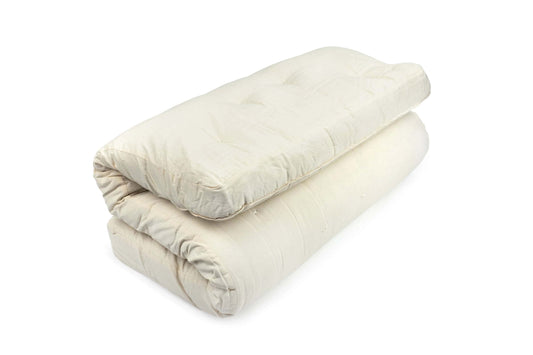

What Is a Hand-Tufted Mattress (and Is It Better for Futons and Platform Beds?)
-
Natural Cotton and Wool Japanese-Style Firm Futon Mattress
Regular price From $529.99Regular price $669.99 Sale price From $529.99Sale -
Organic Cotton and Wool Japanese-Style Firm Futon Mattress
Regular price From $909.99Regular price $1,139.99 Sale price From $909.99Sale -
Natural Cotton, Wool and Foam Japanese-Style Medium-Firm Futon Mattress
Regular price From $659.99Regular price $829.99 Sale price From $659.99Sale -
Natural All Cotton Japanese-Style Firm Futon Mattress
Regular price From $429.99Regular price $539.99 Sale price From $429.99Sale -
Natural Cotton, Wool and Latex Japanese-Style Medium-Firm Futon Mattress
Regular price From $839.99Regular price $1,049.99 Sale price From $839.99Sale -
Organic Cotton, Wool and Latex Japanese-Style Medium-Firm Futon Mattress
Regular price From $1,179.99Regular price $1,479.99 Sale price From $1,179.99Sale -
Organic All Cotton Japanese-Style Firm Futon Mattress
Regular price From $749.99Regular price $939.99 Sale price From $749.99Sale -
Organic Cotton, Wool and Foam Japanese-Style Medium-Firm Futon Mattress
Regular price From $999.99Regular price $1,249.99 Sale price From $999.99Sale

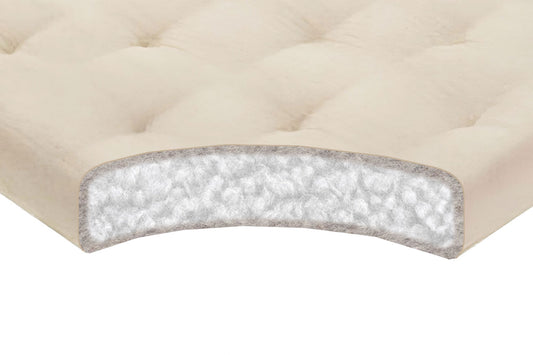
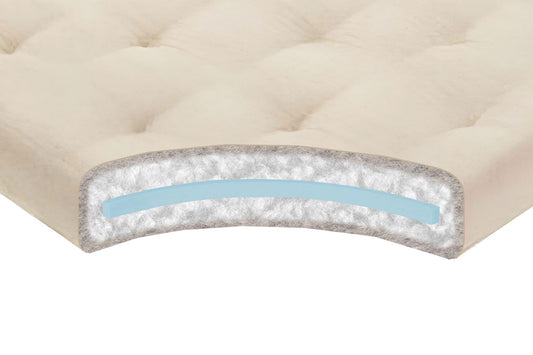

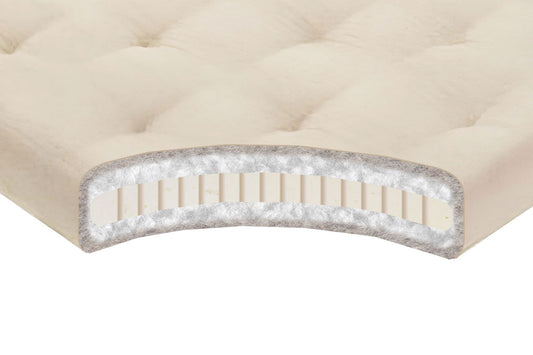
What Tufting Looks Like From the Outside
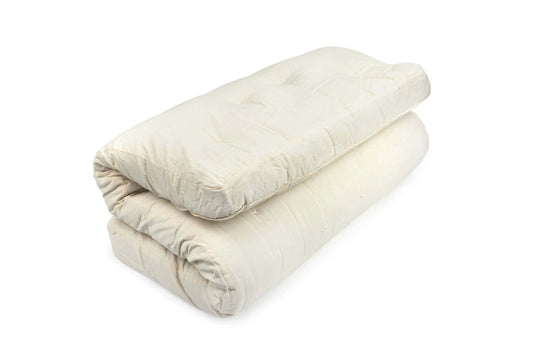
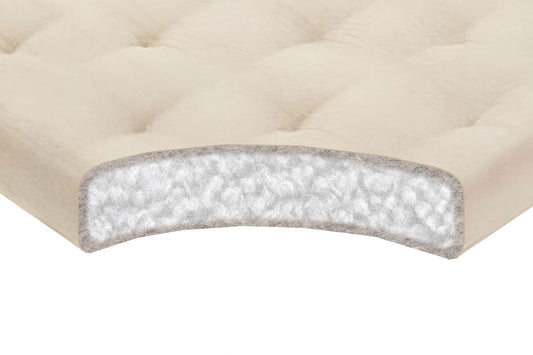
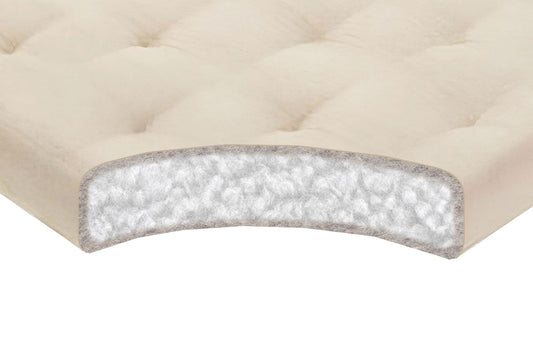
When you first open a hand-tufted mattress, you may notice small stress marks, slight pulling, or minor fraying around each tuft point on the cover fabric. This is normal. The tufting needle passes through the full thickness of the mattress — fabric, cotton, wool, and all — and the path it leaves is visible on the surface.
What looks like damage at first glance is actually confirmation that the tufting is structural. The thread is anchored deep through every layer, not just stitching the surface. The stress around each hole is the cover fabric under compression, which is what keeps the internal layers from shifting over time.
These marks do not weaken the cover or mean the mattress will tear with use. If you notice large open tears, broken seam stitching, or filling coming through the fabric, contact us. Small puncture marks and surface stress around the tuft holes are not a defect.
Inside a Hand-Tufted Natural Mattress
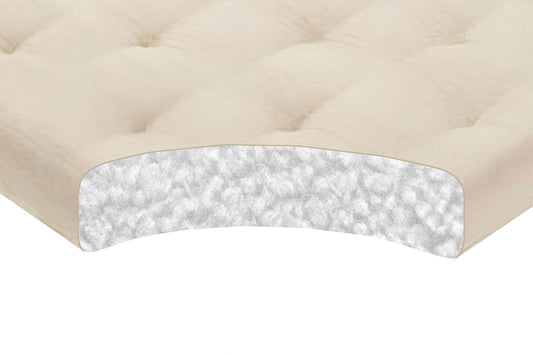
While every model has its own mix of fibers, most hand-tufted futon and shikibuton mattresses share a simple, honest core:
- A dense foundation of cotton batting, often minimally processed to keep the feel grounded and supportive.
- One or more layers of natural wool to improve temperature regulation and help manage moisture near the sleep surface.
- In some designs, a supportive layer of natural latex to add resilience while keeping the build mostly fiber-based.
Because these mattresses are hand-layered, the maker can “overfill” them slightly, knowing that natural fibers compress during the first months of use. That initial extra loft is intentional. The tufting holds the overstuffed layers under gentle tension so they settle into a dense, even surface rather than flattening in random spots.
If you want to see how this idea translates into a more “bed-height” build, explore thicker, hand-built options in the old-fashioned handmade mattresses collection.
For general background on tufting as a construction method (and why those dimples matter), you can read the overview of tufting. If you are also thinking about indoor air and materials choices, this overview of VOCs can help explain why some people prefer simpler, lower-glue builds.
Why Tufting Matters for Futons and Platform Beds
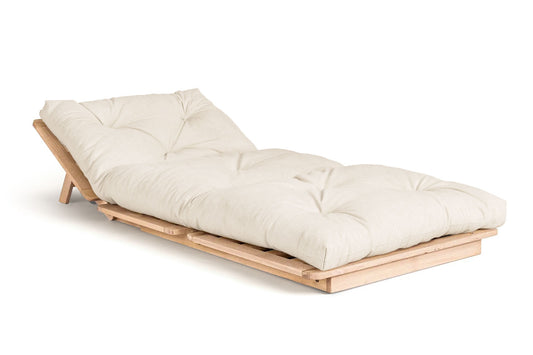
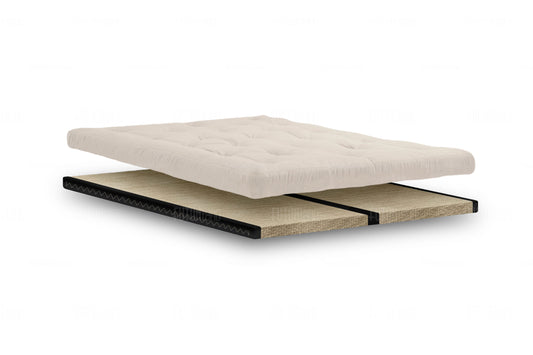
Futons and platform beds put different demands on a mattress than a tall box-spring setup. Instead of being cradled by a spring foundation, the mattress sits directly on a firm base, such as a slatted platform, tatami mats, or a coir layer. That means the internal structure of the mattress has to do more of the work of support and stability.
Hand tufting makes a big difference here, especially for natural fiber builds:
- Even support across the surface. Because the tufts pass through every layer, the cotton and wool stay evenly distributed instead of slumping toward the center or the spot you sleep on most.
- Better performance on firm bases. A tufted mattress is less likely to develop ridges or hollows when used on a hardwood platform or tightly spaced slats.
- More predictable aging. Natural fibers will always compress over time, but tufting encourages them to compact uniformly, so the mattress becomes more settled rather than lumpy.
If you want a low-profile setup that is designed to work well on firm, breathable foundations, start with the shikibuton collection. If you are pairing your mattress with a bed frame, a slatted foundation from the platform beds collection helps keep airflow moving under the sleep surface.

Hand-Tufted vs Non-Tufted (or Lightly Quilted) Mattresses
So why not skip tufting and rely on quilting or a single thick foam core? There are real trade-offs between tufted and non-tufted designs, especially when you are trying to keep a mattress stable on a firmer base.
Non-tufted or lightly quilted mattresses often:
- Rely more heavily on foam or spring systems to retain their shape.
- Use quilting patterns or stitched channels near the surface rather than structural stitching through the entire thickness.
- Offer a softer, more pillowy feel at first, with more pronounced body impressions over time.
By contrast, a hand-tufted cotton and wool mattress:
- Holds layers together without relying on heavy adhesive between fiber stacks.
- Often starts out firm, then gradually relaxes as cotton and wool compress into a dense, even pad.
- Typically stays more stable for futon and platform use because support comes from the full fiber stack, not only a surface layer.
If you want a focused comparison with “who should choose what,” read this guide to tufted versus non-tufted mattresses.
How Hand-Tufted Shikibutons Age Over Time
Hand-tufted shikibutons and futon mattresses are meant to change as you use them. Cotton and wool slowly compress, becoming denser and slightly lower in profile. This is not a defect; it is the normal break-in behavior of natural fiber bedding.
With regular rotation and occasional airing, tufting helps that compression happen evenly instead of creating random soft spots. Over time, many people find a hand-tufted mattress feels “broken in” the way a good pair of shoes does: still supportive, but more closely adapted to the body.
A simple care routine helps a hand-tufted mattress age gracefully:
- Rotate (and flip, if your model is two-sided) on a consistent schedule.
- Air the mattress in a well-ventilated room; if you floor-sleep, giving the underside time to breathe is especially important.
- Use a breathable protector and bedding so moisture does not stay trapped against cotton and wool.

For a deeper look at traditional construction and why makers choose hand layering and tufting, you may also enjoy this article on Japanese-style futon craftsmanship.
Is a Hand-Tufted Mattress “Better” for You?
Whether a hand-tufted mattress is “better” depends on what you want from your sleep surface and how you plan to use it.
A hand-tufted natural mattress is usually a strong fit if you:
- Prefer a firm, grounded feel that supports neutral alignment.
- Use a slatted platform, tatami, coir, or a futon-style foundation rather than a spring box.
- Want cotton, wool, and latex to do more of the work instead of thick foam and complex builds.
- Are comfortable with natural compression and a gradual break-in period.
You might lean toward a non-tufted or more conventional design if you:
- Want a very plush, pillow-top feel from day one.
- Prefer a bouncier surface and do not mind more complex internal components.
- Are optimizing for a specific softness level more than long-term fiber stability.

FAQ: Hand-Tufted Mattresses for Futons and Platform Beds
What is a hand-tufted mattress?
A hand-tufted mattress is built by stacking and compressing layers (often cotton and wool), then stitching through the full thickness with tufts that lock those layers in place. The tufts help prevent shifting, bunching, and uneven settling over time.
Is tufting just decorative?
No. Tufting is structural. Each tuft compresses the entire layer stack at that point, helping the mattress keep a more even shape and feel, especially on firmer foundations like slats, platforms, or tatami.
Are hand-tufted mattresses better for futon frames and platform beds?
Often, yes. Because futon frames and platform beds provide a firmer base than a box spring, tufting can help natural fibers settle more evenly and reduce the chance of ridges, hollows, or shifting layers.
Do hand-tufted cotton and wool mattresses get softer over time?
They usually get more “settled” rather than dramatically softer. Natural fibers compress and become denser during break-in, which can feel more comfortable and even, while still staying supportive.
How do you care for a hand-tufted shikibuton or futon mattress?
Rotate regularly, flip if your model is two-sided, and let the mattress breathe. Good ventilation and breathable bedding help manage moisture, especially for floor-level setups.
Bringing It All Together
A hand-tufted mattress is not just a style detail; it is a structural choice. When natural fibers are overstuffed by hand, compressed, and stitched through with deliberate, even tufting, you end up with a mattress that behaves differently from many conventional foam-heavy designs. It can stay more even on firm bases, pair beautifully with futon-style setups and low platforms, and age in a predictable way as cotton and wool settle.
If you are exploring this style for your own home, compare builds across the natural mattresses collection, then narrow in based on your setup: slimmer floor-friendly options in the shikibuton category, or thicker, more traditional profiles in old-fashioned hand-built designs. And if you are still deciding between construction styles, the tufted versus non-tufted comparison guide can help you choose based on how you sleep and where the mattress will live.