
Solid Wood Daybeds: Dimensions, Frame Quality, and How to Choose the Right One
A daybed solves a specific problem: a room that has to be more than one thing. A guest room that also works as an office. A studio where a full bed makes the entire space feel like a bedroom. A reading nook that occasionally becomes a spare bed. In each case, a standard bed takes over the room, and a sofa bed brings mechanical complexity and a different comfort profile. A daybed holds the line between the two.
But a daybed that works well in a room is not just any daybed. The dimensions, the frame material, the mattress thickness, and the way the piece converts — or doesn't — all determine whether it reads as intentional furniture or as a mattress that ended up against a wall. This guide covers what to look for before buying a solid wood daybed sofa, how to measure for one, and how the two different approaches to daybeds differ in practice.
The daybed market covers a wide range of constructions — metal frames with trundle drawers, upholstered platforms, pine frame kits, futon-based convertibles, and solid hardwood frames. Most of the cheaper options solve the space problem on paper but create new ones in practice: thin frames that wobble under daily seated use, synthetic materials that off-gas in a living space, or mechanisms that fail after a season of regular conversion. This guide focuses on the construction tier worth considering for a piece that has to work every day — and on two approaches to the daybed problem that take natural materials seriously: a solid wood framed daybed and a modular tatami-based alternative for those who prefer a floor-level setup.
What a Daybed Actually Is (and What It Is Not)
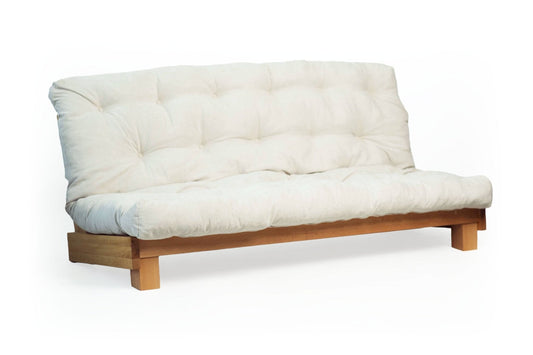
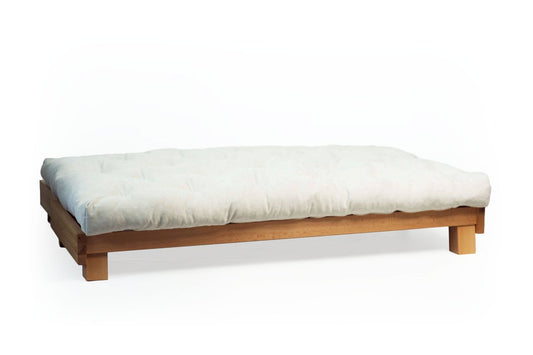
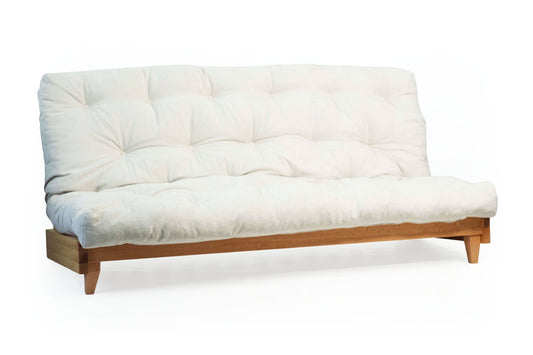
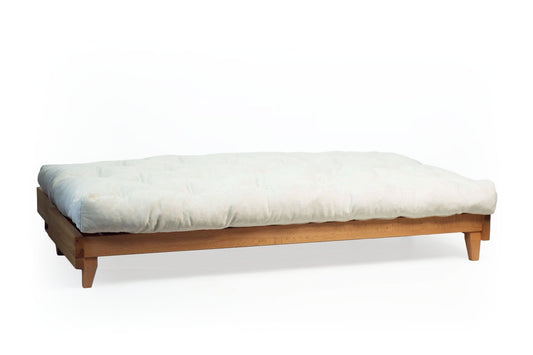
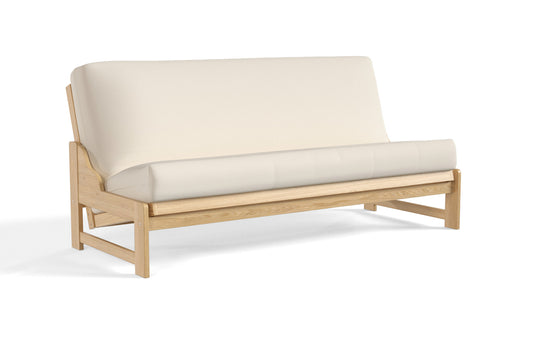
A daybed is a single sleep surface that functions as seating during the day without requiring a mechanical conversion. There is no pull-out mechanism, no folding frame, no hidden mattress. The sleeping surface is the seating surface — raised on a frame, backed against a wall or a built-in backrest, and styled with cushions to read as a sofa or lounge.
That distinction matters for planning. A sofa bed stores a separate sleeping surface and deploys it mechanically — the comfort profile of the two uses can be managed independently, but so can the bulk and the failure points. A daybed eliminates the mechanism entirely. What you sit on is what you sleep on, which means the mattress and frame have to work well in both positions simultaneously.
The result, when it works, is a piece that does not ask you to do anything to switch modes. No unfolding, no hauling out a mattress, no gap at the fold. The daybed simply gets dressed differently — cushions stacked along the back for seating, cushions set aside and sheets added for sleeping.
Standard Daybed Dimensions and What They Mean in Practice
Most daybeds are built around a twin sleep surface — 38 inches wide by 75 inches long. The frame adds several inches on all sides: a standard twin daybed frame typically runs 42 to 44 inches wide and 78 to 82 inches long, because the backrest, side arms, and posts extend beyond the mattress edge. Daybed dimensions are where most buyers make their first planning mistake — measuring for the mattress and forgetting the frame.
The practical implication: always plan around the frame footprint, not the mattress. The mattress tells you who can sleep there. The frame tells you whether the room still works after it is installed.
| Dimension | Standard Twin Daybed | Full-Size Daybed |
|---|---|---|
| Mattress width | 38" | 54" |
| Mattress length | 75" | 75" |
| Typical frame width | 42"–44" | 58"–62" |
| Typical frame length | 78"–82" | 78"–82" |
| Best for | Sofa-like use, small rooms | Sleeping comfort, more depth |
The full-size format adds 16 inches of seat depth, which is significant. That extra depth changes how the piece sits in a room — it reads more as a bed and less as a sofa, which can undercut the main reason for choosing a daybed in the first place. In small rooms or rooms where sofa proportions matter, the twin format almost always works better. In rooms where sleeping comfort for two or a larger person is the priority, the full size earns that extra depth.
Mattress thickness is the third dimension most people ignore. A mattress that is too thick raises the seat height and makes the back cushions or backrest feel low and unsupportive. For a daybed that needs to work as seating every day, a mattress in the 6 to 8 inch range tends to keep the proportions right — high enough to be comfortable for sleeping, low enough that the seat height and back support work together. Thicker mattresses are not a comfort upgrade on a daybed; they are a proportional problem.
Frame Quality: What Separates a Solid Wood Daybed from a Cheap One
A daybed frame takes more varied stress than a standard bed frame. At night it supports a sleeper across the full surface. During the day it takes concentrated pressure from people sitting upright, leaning into the back, and perching near the front edge. A frame built for one use may not hold up under both over years of daily contact — which is why construction details that matter less on a bed frame matter significantly on a daybed sofa.
Wood species. Beech is particularly well-suited to daybed construction because of its density and resistance to racking — the gradual lateral shift that causes creaking and instability in frames that regularly absorb sideways force from people leaning. Hardwoods generally hold joinery and hardware securely through this kind of mixed use. Softwoods like pine are genuine solid wood but compress at hardware contact points over time, which is typically where wobble starts in a heavily used frame.
Joinery. Wood-to-wood joinery — mortise-and-tenon, interlocking connections — transfers load through the material itself rather than through bolts and brackets. Hardware-dependent joints loosen gradually as the wood compresses around the fastener, and the resulting wobble is usually irreversible without disassembly. This matters more on a daybed than on a bed because the lateral and rotational forces from daily sitting accelerate that loosening.
Finish. A penetrating oil finish soaks into the wood fiber rather than sitting on top as a film that chips and wears. It can be refreshed periodically and does not emit the VOCs associated with lacquer or polyurethane coatings — relevant for a piece in close daily contact in a living room or bedroom.
Weight capacity. A daybed needs a meaningful weight rating that accounts for sitting loads, not just sleeping loads. The Long Beach carries a 600-pound combined limit. Always check the specification — capacity ratings on engineered wood frames often reflect only the sleeping use case.
The Long Beach Daybed: Freestanding Solid Wood Frame with Adjustable Arm
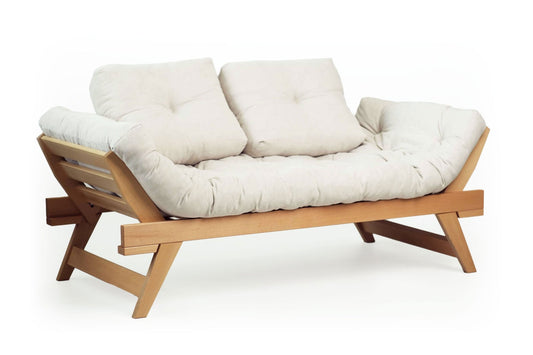
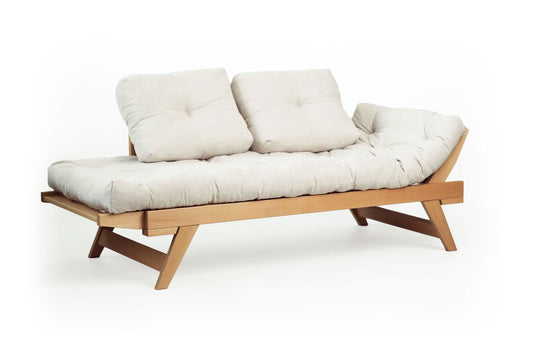
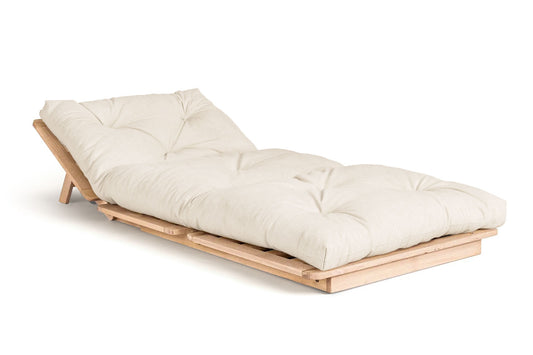
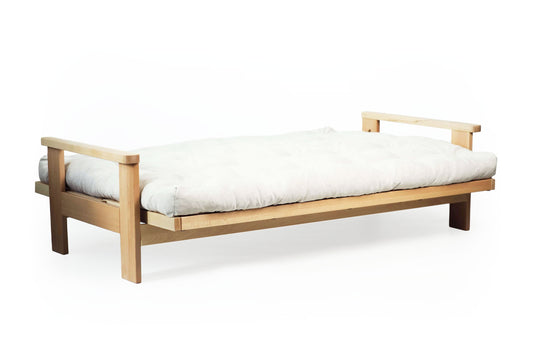
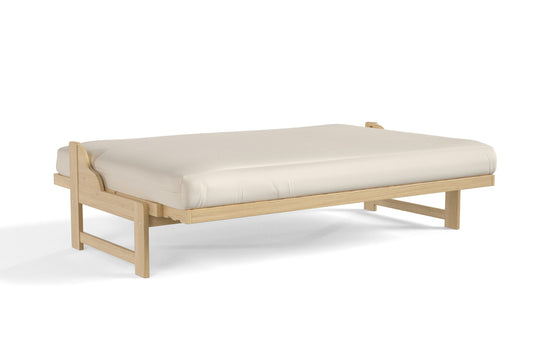
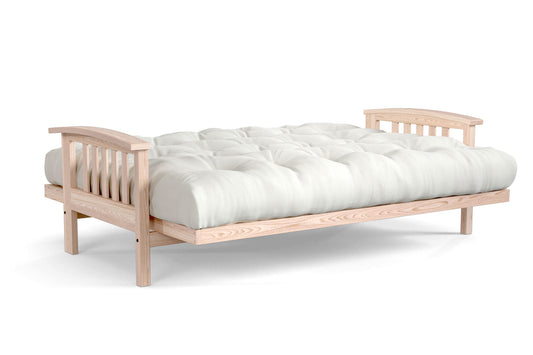
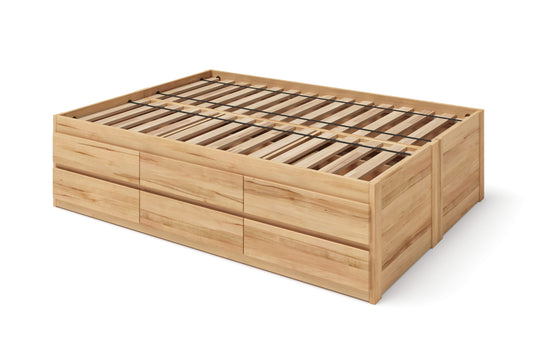
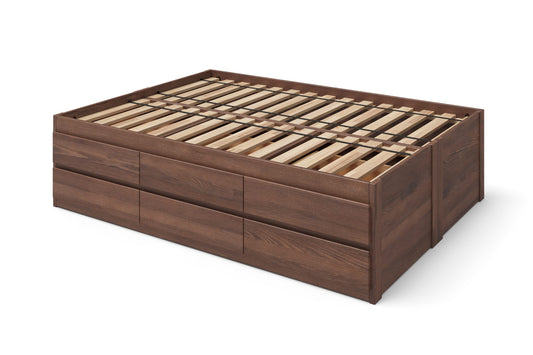
The Long Beach Daybed is a solid beechwood daybed sofa with one adjustable side panel. In sofa configuration it measures 64.5" wide by 32.7" deep. The arm on one side folds down to a horizontal position, which extends the sleeping surface to 79.5" and creates a single bed. It can also be lowered partway — stopping at an angled position — to create a recliner. That three-position range (upright sofa arm, angled recliner, flat bed extension) is what makes this solid wood daybed genuinely versatile rather than simply convertible.
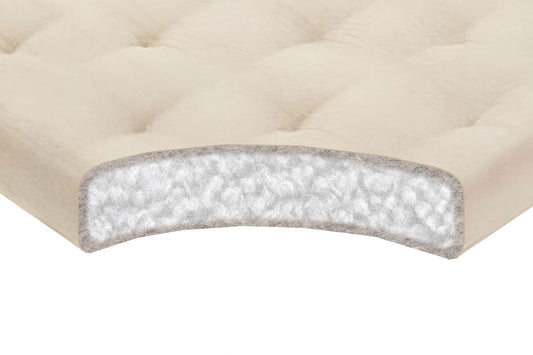
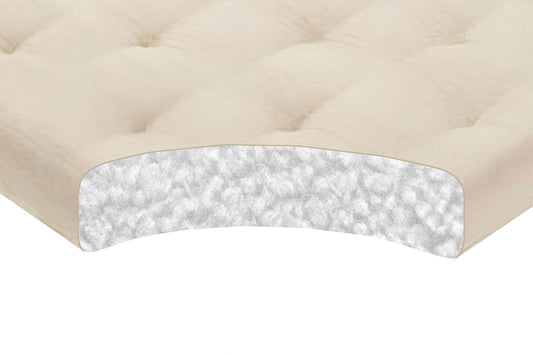
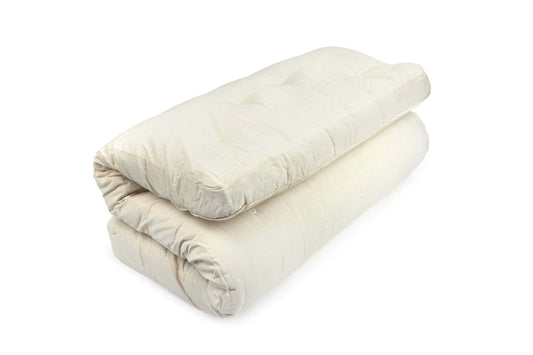
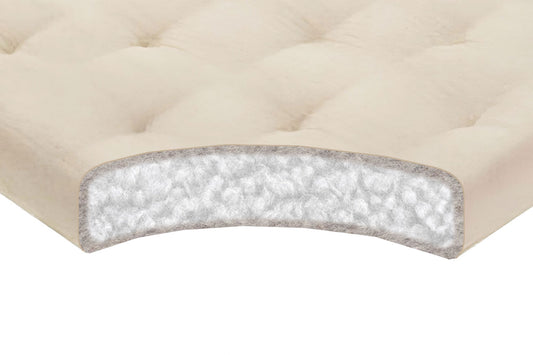
The frame is FSC-certified beechwood with a hand-rubbed oil finish and no exposed hardware. Weight limit is 600 pounds. It is sized for a custom 80" × 32" mattress — slightly narrower than a standard twin — with a matching set of two 23" × 23" back cushions. Cotton and cotton-wool mattress options are available; natural latex is the upgrade for anyone who wants more resilience and a longer mattress lifespan.
The freestanding design is the key practical distinction. The frame does not need to be pushed against a wall — the arm provides back support in sofa mode, and the piece can be positioned freely in the room. Lowering the arm to sleep is a single movement, which makes it suitable for daily use rather than only occasional guest setups.
The custom sizing — 32" rather than a standard 38" twin — is worth noting for room planning. The compact footprint is an advantage in smaller rooms, but standard twin mattresses and bedding will not fit without adjustment. The matching mattress and cushion set resolves this in practice.

An Alternative Approach: The Tatami Sofa Bed Set
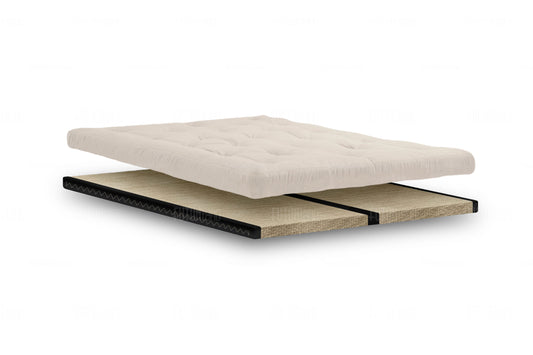
Not everyone shopping for a solid wood daybed ends up wanting a framed piece. For rooms where a low, floor-level setup is intentional — a dedicated tatami space, a Japanese-style bedroom that doubles as a lounge, or simply a preference for sitting and sleeping close to the floor — a framed daybed is not always the answer. The tatami sofa bed set is not a solid wood daybed; it has no frame at all. But it solves the same core problem — a single surface that serves as seating and sleeping — through a modular system of tatami mats and natural mattresses that reconfigure without hardware. We include it here because for some rooms and some buyers it is the more honest answer, and leaving it out would make this guide less useful.
The Tatami Sofa Bed Set is available in three sizes and reconfigures into different arrangements without any hardware.
In sofa mode, the two units sit side by side with back cushions against a wall — the design assumes wall contact for back support, since there is no rear frame structure. In bed mode, the same two units are rearranged so the mattresses lie flat together. In a sectional or L-shaped lounge configuration, the units are angled to create a corner setup.
It is available in three sizes:
| Size | Sofa footprint | Bed configuration | Alternate bed option |
|---|---|---|---|
| Queen | 80" × 30" | Queen bed (80" × 60") | Two Cot-size beds |
| Short King | 75" × 39" | Short King bed (75" × 78") | Two Twin beds |
| King | 80" × 39" | King bed (80" × 78") | Two Twin XL beds |
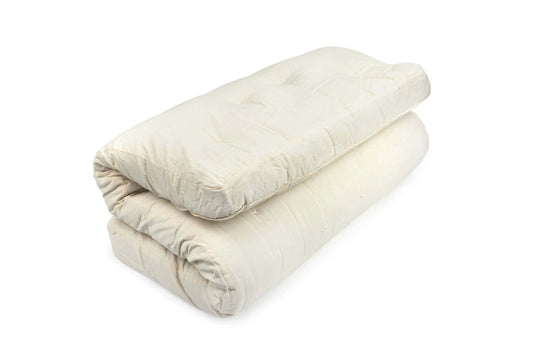
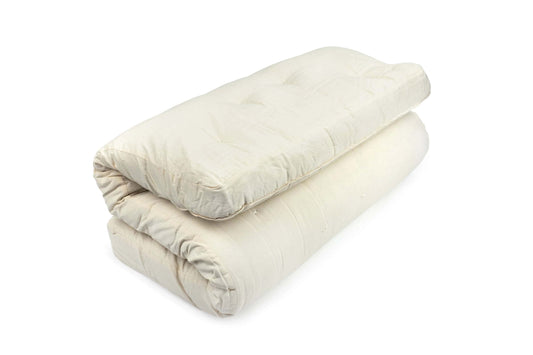
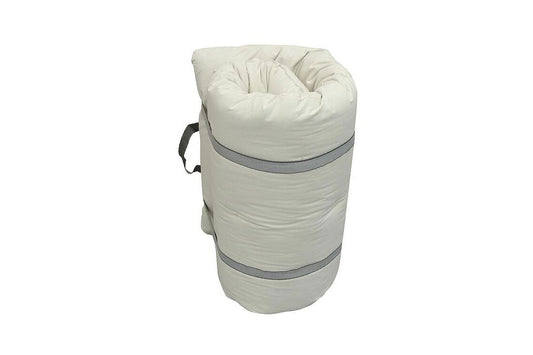
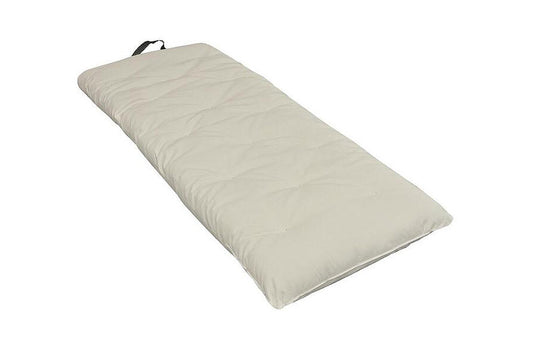
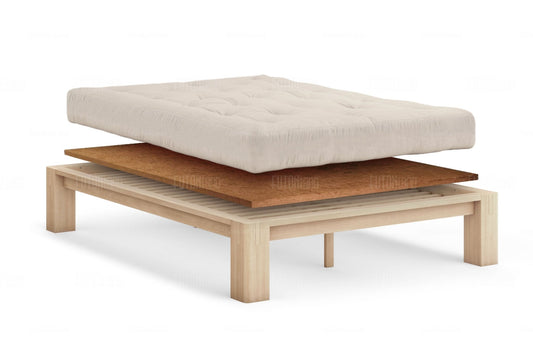
Each unit consists of a 2.25" tatami mat as the base and a 4" natural mattress on top — 6.25" total sleep surface sitting directly on the floor. The sleep height is lower than the Long Beach by design: this is a floor-level setup, and the tatami base provides the same ventilation and firm support it would in a traditional Japanese floor bed. Mattress options are cotton-wool and natural latex, both overstuffed and not designed to be folded.
The honest trade-off is reconfiguration effort. Each mattress weighs approximately 40 pounds. Converting from sofa to bed mode means moving two 40-pound mattresses and two tatami mats — manageable, but not something most people will do every evening. The product description is direct about this: it works well as an occasional sleeping arrangement rather than a nightly conversion. As a daytime lounge and occasional guest bed, the modular system is genuinely flexible. As a daily bed-sofa converter, the weight makes it more demanding than a framed daybed.
The wall requirement is also a real constraint. The tatami sofa bed needs to be placed against a wall for the back cushions to have support. Unlike the Long Beach, which is freestanding, the tatami set needs the room to cooperate with its placement.

Which One Fits Your Room
| Long Beach Daybed | Tatami Sofa Bed Set | |
|---|---|---|
| Sleep height | 13.8" (standard seat height) | ~6.25" (floor-level) |
| Sofa footprint | 64.5" × 32.7" | 80"×30" / 75"×39" / 80"×39" |
| Conversion method | Single arm folds down | Rearrange two modular units |
| Conversion effort | One movement, seconds | Move two ~40 lb mattresses |
| Wall required | No — freestanding | Yes — back cushions need wall |
| Frame material | FSC solid beechwood | No frame — tatami mat base |
| Sizes available | One (custom 80"×32") | Queen, Short King, King |
| Price range | ~$1,000–$1,200 | ~$1,300–$2,100 depending on size and mattress |
| Best for | Daily use, freestanding, compact rooms | Floor aesthetic, larger sleeping area, occasional conversion |
The practical decision usually comes down to two questions: how often will you convert between sofa and bed mode, and what sleep height works for the room and the people using it? The Long Beach solid wood daybed is the better choice for daily or frequent conversion — the arm folds in seconds and the seat height is conventional. The tatami set is the better choice when the sleeping area needs to be larger, when the floor-level aesthetic is intentional, or when the piece will mostly stay in one configuration at a time.
-
El Paso Eco Futon Sofa Bed
Regular price From $689.99Regular price $819.99 Sale price From $689.99Sale -
Taurus Eco Futon Sofa Bed
Regular price From $519.99Regular price $699.99 Sale price From $519.99Sale -
Long Beach Daybed Sofa Bed
Regular price From $659.99Regular price $739.99 Sale price From $659.99Sale -
Hitachi Tri-Fold Futon Sofa Bed
Regular price From $249.99Regular price $599.99 Sale price From $249.99Sale -
Elk Grove Eco Futon Sofa Bed
Regular price From $759.99Regular price $869.99 Sale price From $759.99Sale -
Aries Eco Futon Sofa Bed
Regular price From $569.99Regular price $699.99 Sale price From $569.99Sale -
Akron Eco Futon Sofa Bed
Regular price From $689.99Regular price $819.99 Sale price From $689.99Sale -
Virgo Eco Futon Sofa Bed
Regular price From $589.99Regular price $699.99 Sale price From $589.99Sale -
Sendai Tri-Fold Futon Sofa Bed
Regular price From $299.99Regular price $349.99 Sale price From $299.99Sale -
Mission Flat Arm Amish-Made American Oak Futon Sofa Bed
Regular price From $959.99Regular price $1,199.99 Sale price From $959.99Sale -
Libra Eco Futon Sofa Bed
Regular price From $619.99Regular price $699.99 Sale price From $619.99Sale -
Mission Bent Arm Amish-Made American Oak Futon Sofa Bed
Regular price From $1,019.99Regular price $1,299.99 Sale price From $1,019.99Sale