Platform Bed Slats: How to Stop Mattress Sagging, Squeaking, and Mold
This article is written by the Comfort Pure editorial team and contains links to our featured products.
Share
You invest in a high-quality organic mattress, bring it home, and for the first few months, you sleep perfectly. But eventually, you notice a dip forming in the middle of the bed. Your lower back starts to ache. You might even start feeling the rigid wooden boards underneath you when you roll over.
Most people immediately blame the mattress. But in reality, the hidden culprit behind a sagging, uncomfortable bed is almost always the foundation underneath it. If you are sleeping on a platform bed frame, the architecture of the wood slats dictates the lifespan of your mattress.
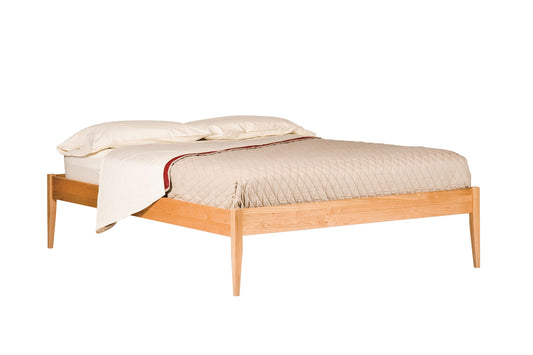
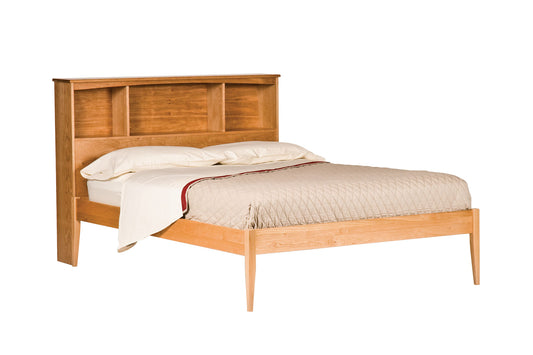
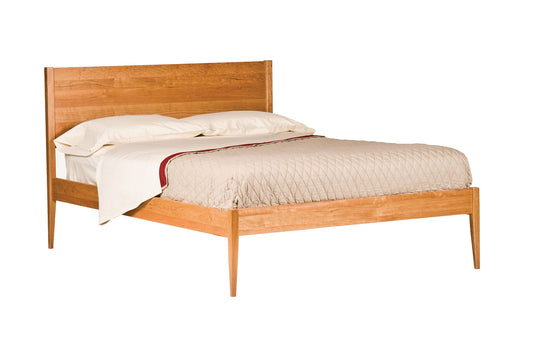
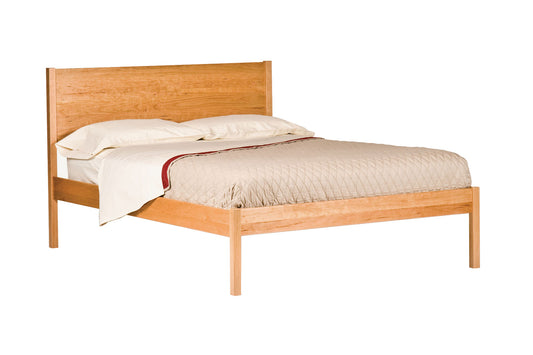
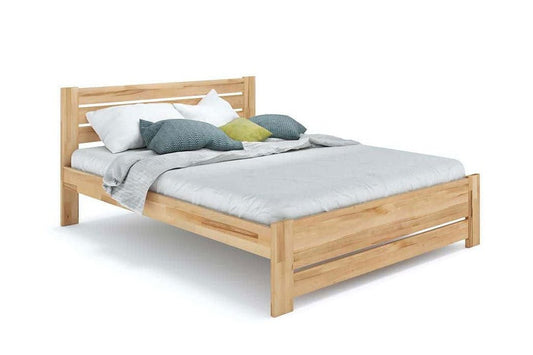
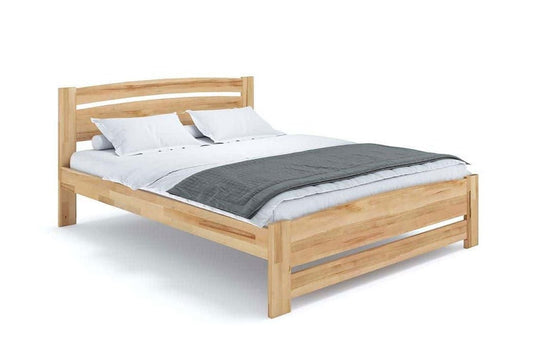
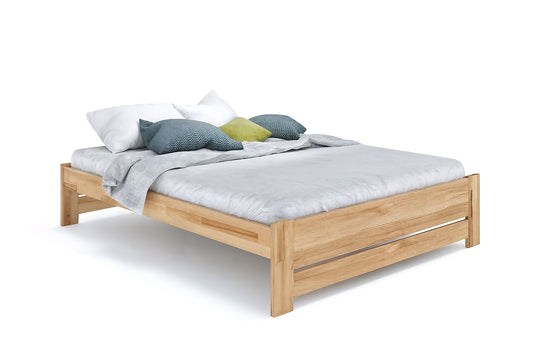
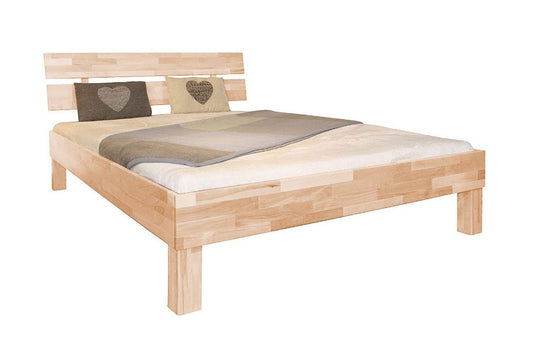
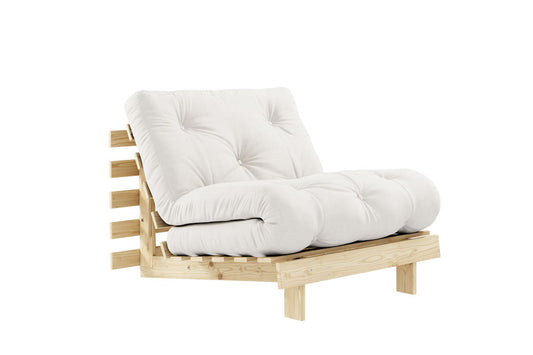
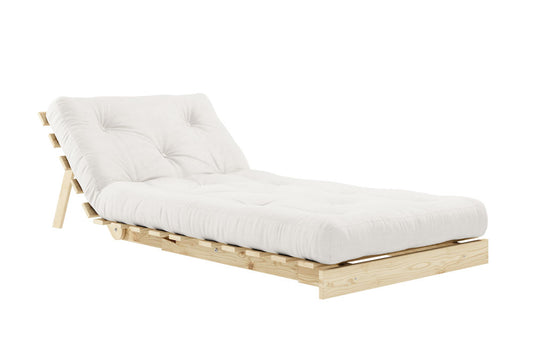
At Comfort Pure, all of the bed frames we craft are true platform beds. This means they are engineered with a supportive, built-in foundation, and you never need to buy a box spring. Whether you are using a standard Western mattress or a natural cotton futon, our frames provide everything you need. However, to get the most out of your sleep setup, you need to understand the golden rules of slat spacing, mattress thickness, and airflow.

The Golden Rule of Slat Spacing: Maximum 2.5 Inches
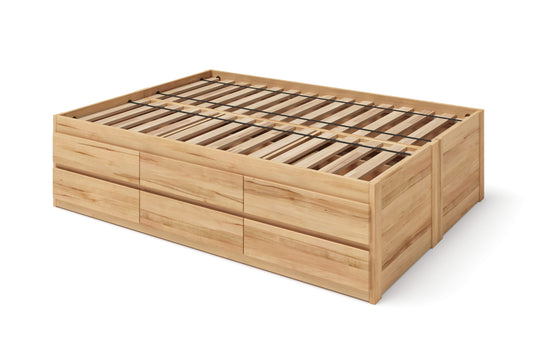
The most common mistake in the furniture industry is wide slat spacing. Many mass-market bed frames use cheap, flexible plywood slats spaced 4 to 6 inches apart to save on manufacturing costs. While this might temporarily support a rigid traditional inner-spring mattress, it is a death sentence for high-quality natural mattresses, futons, and latex beds.
When you lie down, your body weight creates localized pressure (especially around your hips and shoulders). If the gaps between your wooden slats are too wide, the dense natural fibers of your mattress will begin to bulge and push through the empty spaces. This phenomenon is known as "extrusion." Over time, extrusion stretches the fabric, compromises the core materials, and causes permanent sagging.
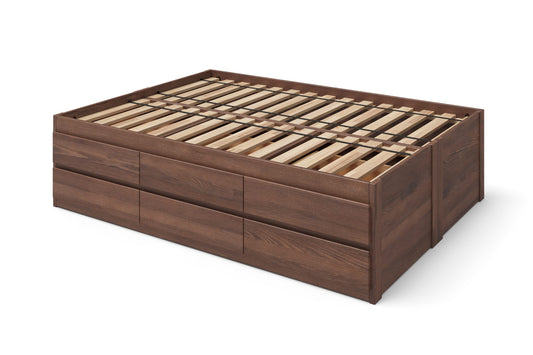
The Solution: Your bed frame slats should never be spaced more than 2.5–3 inches apart. This specific spacing ensures that the mattress is fully supported across its entire surface, completely preventing sagging while still allowing enough open space for the materials to breathe.
Build Your Sleep Foundation with Solid Hardwood
-
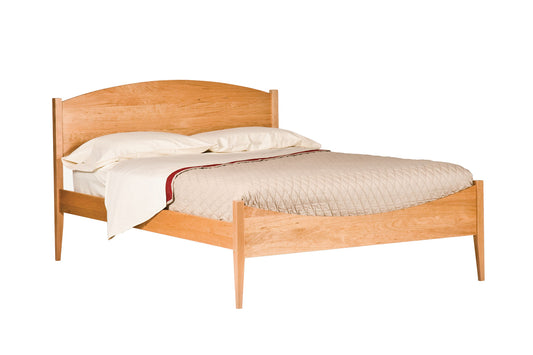
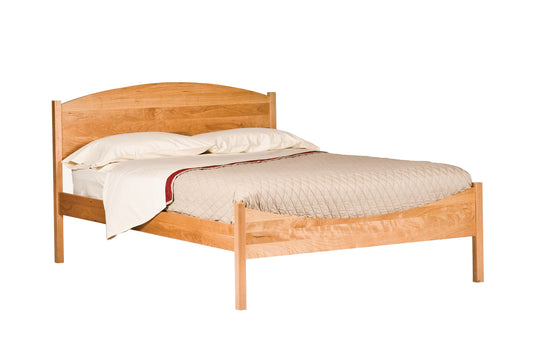
Columbus Natural Eco Platform Bed
Regular price From $469.99Regular price $799.99$799.99Sale price From $469.99Sale -
Lakewood Natural Eco Platform Bed
Regular price From $679.99Regular price $899.99$899.99Sale price From $679.99Sale -
Sacramento Natural Eco Platform Bed
Regular price From $599.99Regular price $829.99$829.99Sale price From $599.99Sale -
Plainfield Natural Eco Platform Bed
Regular price From $409.99Regular price $739.99$739.99Sale price From $409.99Sale -
Anchorage Platform Bed
Regular price From $549.99Regular price $799.99$799.99Sale price From $549.99Sale -
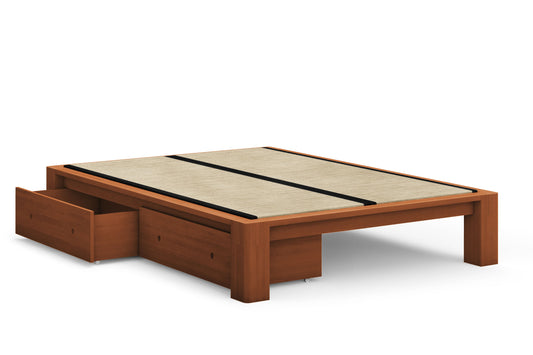
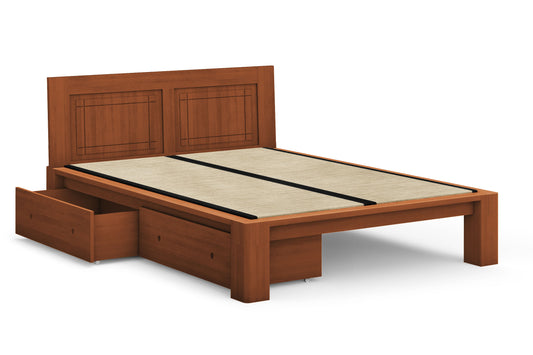
Japanese Tatami Platform Bed
Regular price From $729.99Regular price $929.99$929.99Sale price From $729.99Sale -
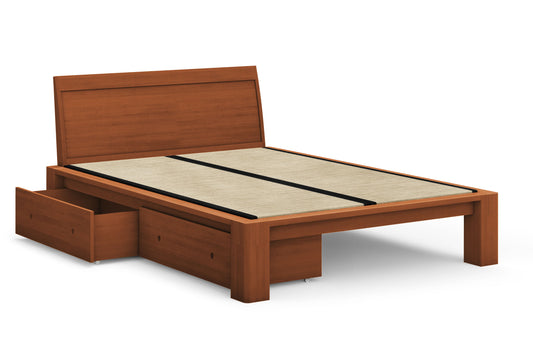
Japanese Tatami Platform Bed with Solid Headboard
Regular price From $929.99Regular price $1,129.99$1,129.99Sale price From $929.99Sale -
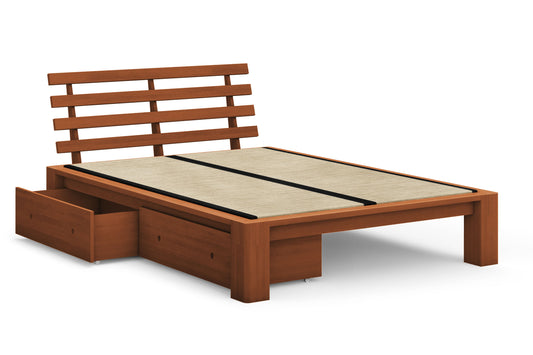
Japanese Tatami Platform Bed with Slatted Headboard
Regular price From $819.99Regular price $1,019.99$1,019.99Sale price From $819.99Sale -
Japanese Tatami Platform Bed with Grooved Headboard
Regular price From $899.99Regular price $1,099.99$1,099.99Sale price From $899.99Sale -
SaleBasic Platform Bed
Regular price From $637.49Regular price $939.99$939.99Sale price From $637.49Sale -
SaleEclipse Platform Bed
Regular price From $917.99Regular price $1,349.99$1,349.99Sale price From $917.99Sale -
Moondance Platform Bed
Regular price From $926.49Regular price $1,369.99$1,369.99Sale price From $926.49Sale
The 6-Inch Rule for Futon Mattresses
Because true platform beds utilize rigid, solid wood slats, they push back against your body weight to provide excellent spinal alignment. However, this means you need adequate cushioning between your body and the wood.
If you are pairing a Western mattress (like a standard memory foam or thick hybrid) with a platform bed, any standard thickness will work perfectly. But if you are choosing a natural futon mattress for your frame, thickness becomes crucial.
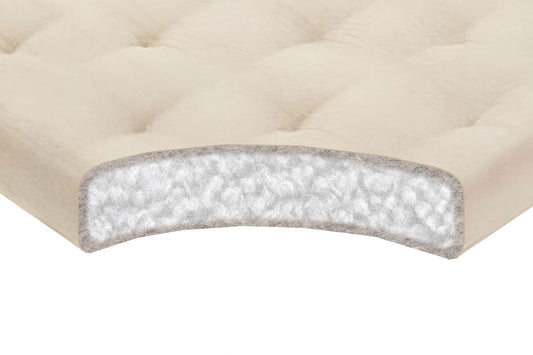
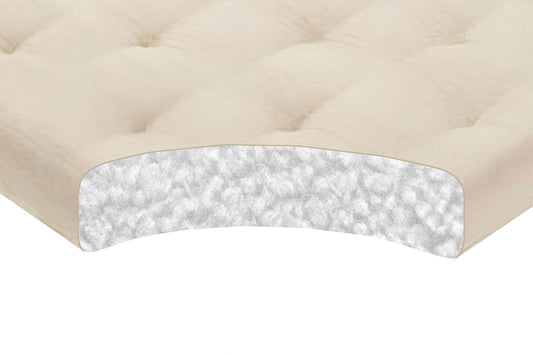
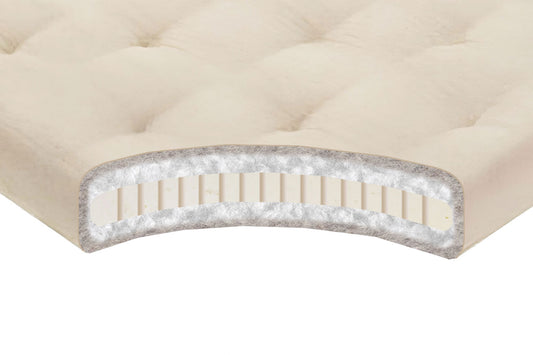
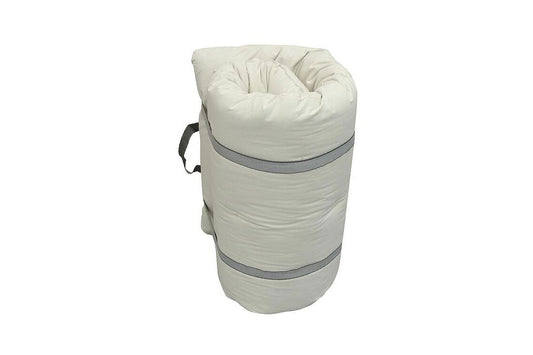
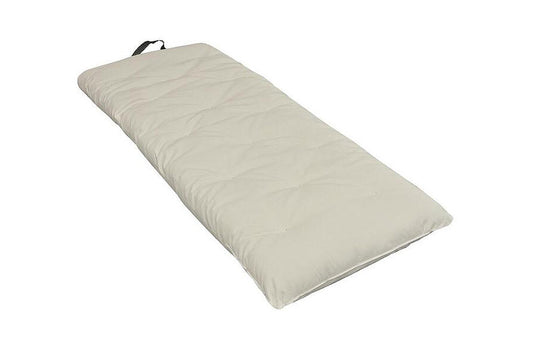
We highly recommend using a futon mattress that is at least 6 inches thick for a slatted platform bed. Because natural cotton, wool, and latex are incredibly dense and do not contain rigid metal springs, they conform to the surface they rest on. If you use a mattress thinner than 6 inches directly on wooden slats, the material will eventually compress, and you will begin to feel the individual slats pressing against your ribs and joints. A 6-inch or thicker futon provides the necessary depth to absorb your body weight before it ever reaches the wood.
Why Platform Beds Squeak — and How to Stop It Permanently
A squeaking platform bed is one of the most frustrating sleep disruptions — and one of the most misdiagnosed. Most people tighten the bolts, add felt pads, and hope for the best. A week later, the creak is back. The reason the quick fixes never last is that they treat the symptom, not the cause.
Platform bed squeaking almost always originates from one of two sources: loose frame joints or flexible plywood slats rubbing against the frame rail. Here is what is actually happening in each case:
Plywood slat flex. Mass-market bed frames use thin, flexible plywood slats that are not fixed in place — they simply rest in grooves or on ledges inside the frame. Every time you shift your weight, the slats bow slightly downward, then spring back. As they flex, the edges of the slats rub against the frame rail or each other, generating friction. That friction is the squeak. No amount of lubrication permanently solves this because the movement never stops.
Loose frame joints. In frames assembled with cam-lock bolts or dowel pins, the connection points loosen over time as the wood compresses under repeated load. Micro-movement at each joint creates noise. Retightening works temporarily, but the underlying play in the joint returns.
The permanent fix is to eliminate the flex entirely. Solid hardwood slats — the kind used in Comfort Pure frames — are rigid by nature. They do not bow under load, which means there is no movement, no friction, and no squeak. The slats are also secured in fixed positions so they cannot shift laterally against the rail. If your current frame squeaks, no amount of maintenance will replicate what a properly engineered hardwood foundation provides from day one.
Quick diagnostic: Stand beside your bed and press down firmly on different sections of the mattress with both hands. If you hear squeaking when pressing near the edges or center, the slats are the source. If the noise only appears when you push on the corners of the frame itself, the joints are the culprit.
Find the Perfect Match for Your Frame
-
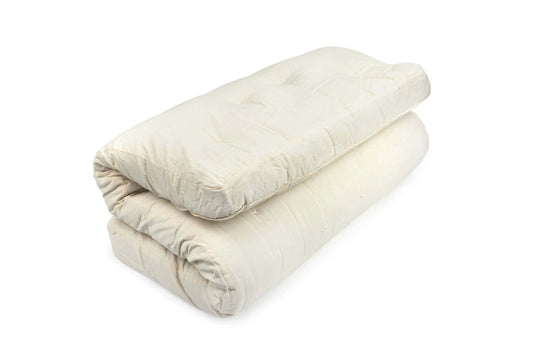
Natural Cotton and Wool Shiki Futon Mattress
Regular price From $279.99Regular price $419.99$419.99Sale price From $279.99Sale -
Natural All Cotton Shiki Futon Mattress
Regular price From $199.99Regular price $299.99$299.99Sale price From $199.99Sale -
Organic Cotton and Wool Shiki Futon Mattress
Regular price From $429.00Regular price $859.99$859.99Sale price From $429.00Sale -
Organic All Cotton Shiki Futon Mattress
Regular price From $359.00Regular price $719.99$719.99Sale price From $359.00Sale -
Natural Cotton, Wool and Foam Futon Mattress
Regular price From $469.99Regular price $709.99$709.99Sale price From $469.99Sale -
Natural Cotton and Wool Japanese-Style Firm Futon Mattress
Regular price From $529.99Regular price $669.99$669.99Sale price From $529.99Sale -
Natural Cotton, Wool and Latex Shiki Futon Mattress
Regular price From $879.00Regular price $1,759.99$1,759.99Sale price From $879.00Sale -
Natural Cotton, Wool and Foam Japanese-Style Medium-Firm Futon Mattress
Regular price From $659.99Regular price $829.99$829.99Sale price From $659.99Sale -
Organic Cotton and Wool Japanese-Style Firm Futon Mattress
Regular price From $909.99Regular price $1,139.99$1,139.99Sale price From $909.99Sale -
Natural Cotton, Foam and Innerspring Mattress
Regular price From $523.48Regular price $769.96$769.96Sale price From $523.48Sale -
Organic Cotton, Wool and Latex Shiki Futon Mattress
Regular price From $1,119.00Regular price $2,239.99$2,239.99Sale price From $1,119.00Sale -
Natural Cotton, Wool and Latex Japanese-Style Medium-Firm Futon Mattress
Regular price From $839.99Regular price $1,049.99$1,049.99Sale price From $839.99Sale
Leveling Up: How to Upgrade Your Platform Bed
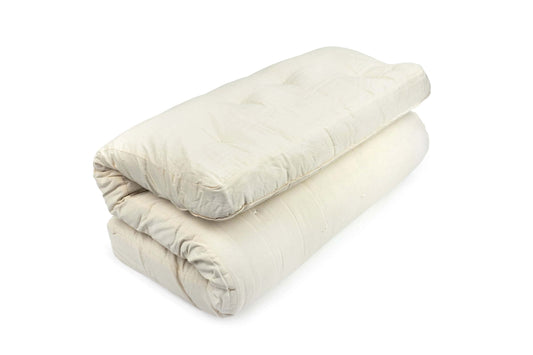
What if you want to use a thinner, traditional Japanese Shikibuton on a bed frame? Or what if you want to maximize the lifespan of your heavy natural mattress? You can drastically alter the physics of your platform bed by adding a foundational layer between the slats and the mattress.
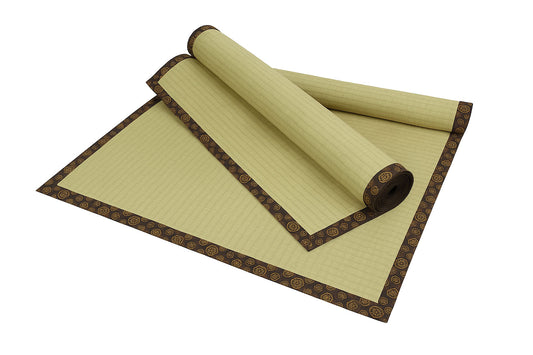
1. Tatami Mats: The Structural Upgrade
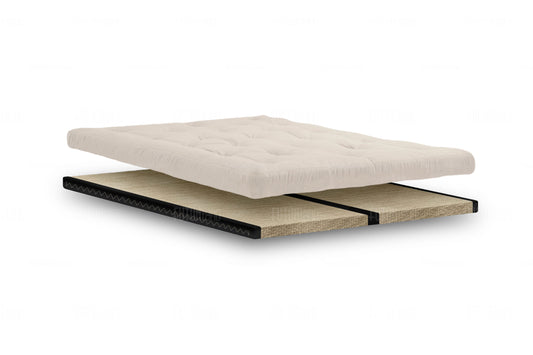
Placing an authentic tatami mat directly over your wooden slats completely transforms how your bed frame handles weight. Wooden slats bear "point-load" pressure, meaning the specific slats directly under your torso do all the heavy lifting.
A tatami mat acts as a rigid, unified deck. It takes your concentrated body weight and distributes it evenly across every single slat simultaneously. This simple addition provides massive benefits:
- Increased Frame Capacity: By spreading out the load, tatami mats significantly increase the overall weight capacity and stability of the bed frame.
- Perfect for Thin Mattresses: Because the tatami mat creates a completely flat, solid surface, you can comfortably use ultra-thin 3-inch or 4-inch Shikibutons on a bed frame without ever feeling the slats.
- Firm Orthopedic Support: It provides the unyielding, grounding support of traditional floor sleeping, but elevated away from cold drafts and dust.
2. Coconut Coir Pads: The Airflow and Mold Prevention Upgrade
Natural mattresses need to breathe — and understanding why is the key to preventing the most damaging and least visible problem a platform bed owner faces: mold.
As you sleep, your body naturally releases heat and moisture. On average, a person releases between 200ml and 300ml of perspiration per night, all of which travels downward through your mattress. In a slatted bed with adequate spacing, that moisture disperses into the air beneath the bed and evaporates harmlessly. But if that moisture hits a solid, non-breathable surface — a plywood slat, a solid panel deck, or even a mattress placed directly on wide-gapped slats with no underlayer — it has nowhere to go. It pools, it condenses, and in the warm, dark environment beneath your mattress, it creates the perfect conditions for mold and mildew to establish.
Mold on a natural mattress is particularly destructive because the organic materials — cotton, wool, latex — are exactly what mold feeds on. By the time mold is visible or detectable by smell, it has already compromised the mattress core. Prevention is the only viable strategy.
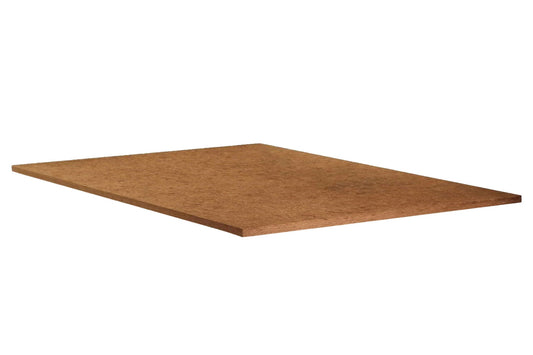
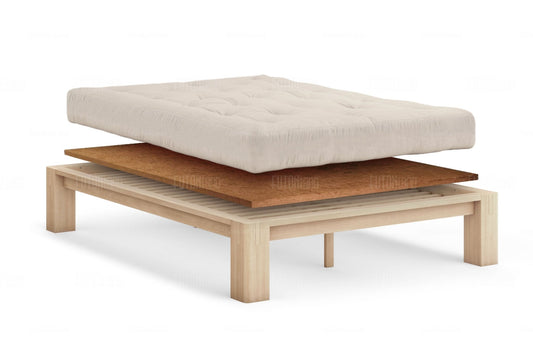
A coconut coir pad is the most effective single addition you can make for mattress hygiene. Made from woven coconut husks infused with natural latex, coir is incredibly tough and highly porous. Placing a coir pad between your mattress and your bed frame does two things simultaneously: it adds a slight layer of firm, supportive cushioning, and — most importantly — it creates a mandatory breathable micro-climate beneath your mattress. The open-weave structure of the coir ensures that moisture is never trapped. It wicks away from the mattress surface and evaporates through the gaps in the slats below.
If any of the following apply to you, a coir pad is not optional — it is essential:
- You live in a humid climate (coastal regions, high-humidity cities)
- You sleep warm or sweat at night
- Your bedroom has limited ventilation or air conditioning
- You use a solid panel platform bed rather than a slatted one
- You are using a natural cotton or wool mattress without a moisture-wicking cover
Upgrade Your Frame with Tatami Mats & Coir Pads
-
SaleCoconut Coir Bed Rug
Regular price From $209.99Regular price $329.99$329.99Sale price From $209.99Sale -
SaleTatami Mat
Regular price From $169.99Regular price $219.99$219.99Sale price From $169.99Sale -
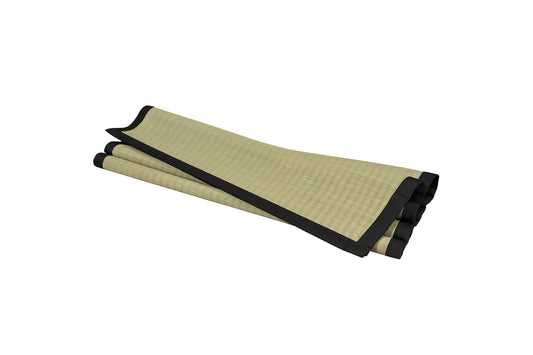
SaleFolding Tatami Mat
Regular price From $179.99Regular price $269.99$269.99Sale price From $179.99Sale -
SaleGoza Tatami Mat
Regular price $89.99Regular price $129.99$129.99Sale price $89.99Sale -
SaleTatami Room Kit
Regular price From $779.99Regular price $1,289.99$1,289.99Sale price From $779.99Sale
Conclusion
A bed is only as good as the foundation it rests on. By choosing a solid wood platform bed with slats spaced no more than 2.5 inches apart, you ensure your mattress will perform exactly as designed for years to come. Rigid hardwood slats eliminate squeaking at the source, proper spacing prevents sagging and mold, and foundational additions like tatami mats and coir pads let you customize your sleep surface for any mattress type. Whether you top it with a thick 8-inch futon or a minimalist Shikibuton, building your bed with the right structural support is the ultimate key to restorative sleep.
Frequently Asked Questions
Do I need a box spring with a platform bed?
No. By definition, a platform bed provides its own built-in foundation, usually through rigid wooden slats or a solid panel deck. A box spring is entirely unnecessary and will simply make your bed artificially high and prone to squeaking. Adding a box spring to a platform bed also voids the warranty on most natural and latex mattresses, which are engineered to rest directly on a firm, slatted surface.
How far apart should slats be on a platform bed?
For optimal support and to prevent your mattress from sagging, bed slats should be spaced no more than 2.5 to 3 inches apart. This prevents the heavy natural materials of the mattress from extruding through the gaps while still allowing proper airflow. Wide slat gaps of 4 to 6 inches — common in mass-market frames — are the single most frequent cause of premature mattress sagging, even in high-quality natural or latex beds.
Can I put a thin Japanese futon (Shikibuton) on a slatted bed frame?
We do not recommend placing a mattress thinner than 6 inches directly on wooden slats, as you will likely feel the gaps through the mattress. However, you can easily use a thin Shikibuton on a slatted frame if you place a rigid tatami mat over the slats first to create a solid, flat surface. The tatami distributes your body weight evenly across all slats simultaneously, eliminating pressure points and making even a 3-inch Shikibuton feel fully supported.
Why is my platform bed squeaking?
Squeaking is typically caused by friction between loose joints or cheap flexible plywood slats rubbing against the frame rail as they flex under your weight. Unlike rigid hardwood slats that stay fixed in place, thin plywood slats bow and spring back with every movement, generating the characteristic creak. Upgrading to a solid hardwood platform bed with rigid, fixed slats will permanently eliminate squeaking by removing the flex that causes friction in the first place.
How do I prevent mold under my mattress on a platform bed?
Mold forms when body moisture travels through your mattress and becomes trapped against a non-breathable surface. To prevent this, choose a platform bed with slats spaced 2.5 to 3 inches apart to allow passive airflow, and add a coconut coir pad between the mattress and the slats. The coir pad creates a mandatory breathable gap that allows moisture to evaporate rather than condense. If you live in a humid climate or are a warm sleeper, a coir pad is an essential investment, not an optional one.