



Comfort Pure
Natural Cotton, Wool and Latex Shiki Futon Mattress
Natural Cotton, Wool and Latex Shiki Futon Mattress


SKU:YI-NAT-CWL6-TW
91783 —Doorstep
Couldn't load pickup availability
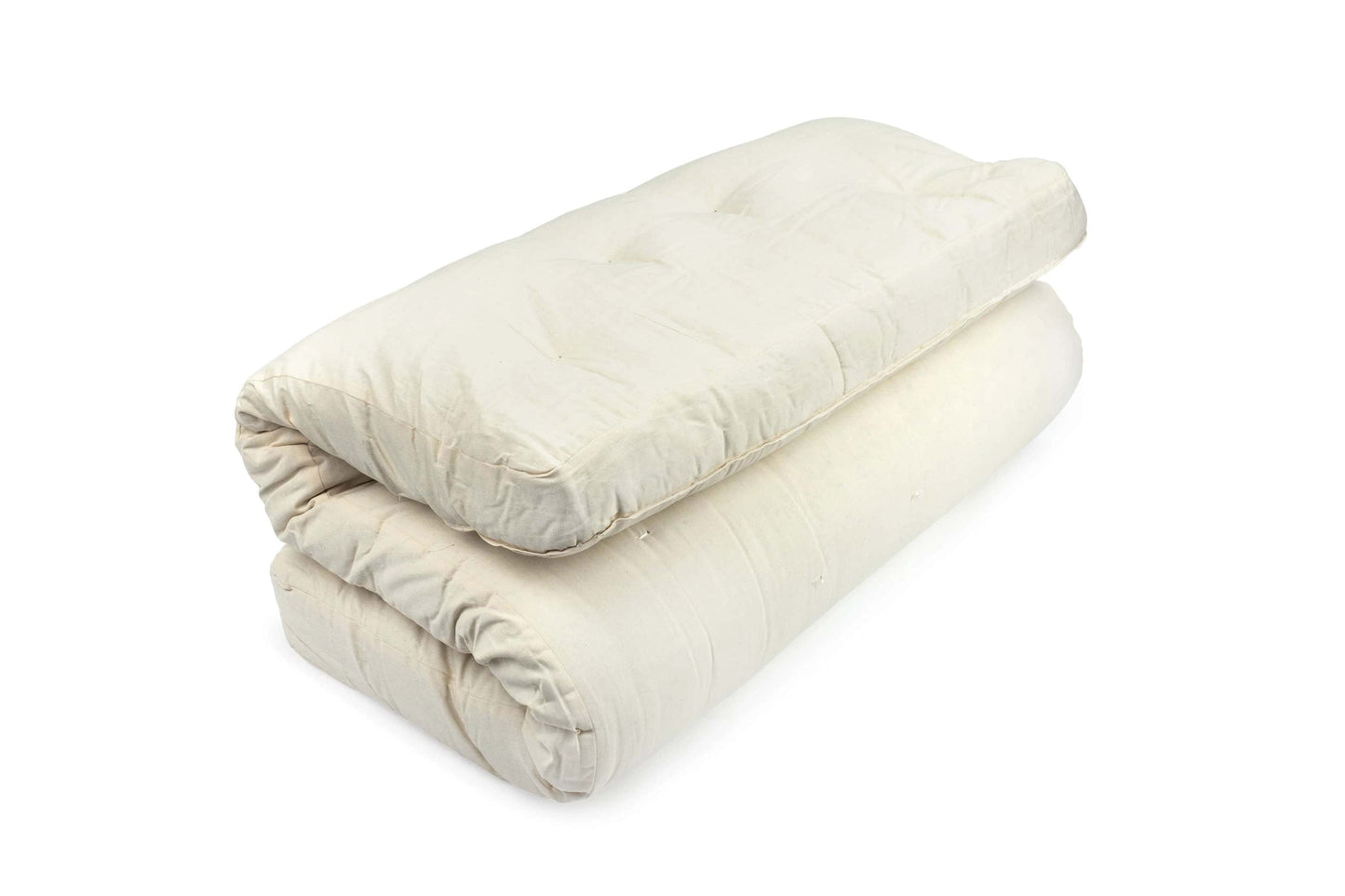
Experience the perfect combination of comfort and sustainability with the Natural Cotton, Wool & Latex Mattress. Made with 100% natural cotton, GOLS-certified organic latex, and a soft wool wrap, this eco-friendly mattress delivers superior support and breathability without harmful chemicals. It's an ideal choice for those who value a healthier, all-natural sleep experience while enjoying a restful night's sleep.
- Medium-firm comfort level for balanced support.
- Natural cotton core for a breathable, chemical-free sleeping surface.
- Soft all-natural wool wrap enhances comfort and provides natural temperature regulation.
- 2-inch GOLS-certified organic Dunlop latex layer offers superior resilience and pressure relief.
- 100% all-natural cotton casing.
- Free from synthetic chemicals, flame retardants, and harmful additives.
- Hypoallergenic and eco-friendly for a healthier, more sustainable lifestyle.
- Handcrafted in the USA.


Dimensions
Dimensions
- Twin: 75" x 39"
- Twin XL: 80" x 39"
- Full: 75" x 54"
- Queen: 80" x 60"
- King: 80" x 76"
- California King: 84" x 72"
Futon mattresses with a cotton core may measure 1–2 inches shorter than standard sizes due to their rounded edges and design. They may also appear smaller upon delivery because of compression during packing and shipping—please allow 1–2 weeks for them to expand to their average size. All measurements are for reference only.
Shipping & Returns
Shipping & Returns
| Shipping Method | Cost |
|---|---|
| Standard Shipping | Free* |
| Room of Choice Delivery | $99+ |
| Room of Choice Delivery & Assembly | $149+ |
Our items are stocked and sourced from a network of U.S.-based warehouses. Fulfillment and shipping times depend on availability and the delivery address. Shipping Policy »
Most items can be returned within 30 days for a refund. You will be responsible for shipping charges and a 20% restocking fee. Return Policy »


Frequently Asked Questions
What is the Natural Cotton, Wool & Latex Shiki Futon Mattress?
The Natural Cotton, Wool & Latex Shiki Futon Mattress layers three natural materials into a medium-firm, handcrafted sleep surface. A natural cotton core provides the foundation, a wool wrap adds softness and temperature control, and a GOLS-certified organic Dunlop latex layer brings resilience and pressure relief. Made to order in the USA and available in 6-inch and 8-inch profiles, it suits platform beds, futon frames, and tatami setups alike.
What natural materials does it use?
- Natural Cotton Core: Layers of 100% natural cotton batting form the body of the mattress, giving it a breathable, supportive base with no foam or synthetic fill.
- Wool Wrap: An all-natural wool layer surrounds the cotton, softening the surface feel and helping regulate temperature through the night — warmer in winter, cooler in summer, with built-in moisture wicking.
- Organic Dunlop Latex: A 2-inch layer of GOLS-certified organic latex sits within the build, adding gentle bounce and contouring that cotton alone can't provide. Latex holds its shape and resists body impressions far better than fiber-only constructions.
Can I choose the thickness?
This mattress comes in two profiles: 6-inch and 8-inch. Both share the same cotton, wool, and latex construction, so the choice comes down to how much cushioning depth you want. The 6-inch keeps a lower, more traditional shiki futon profile, while the 8-inch adds extra material for a fuller feel closer to a conventional mattress.
Is this mattress eco-friendly and chemical-free?
Yes. The build contains no synthetic foams, chemical flame retardants, or harmful additives, and the latex layer carries GOLS organic certification. The combination of natural fibers and certified latex makes it hypoallergenic and well-suited to anyone prioritizing a cleaner sleep environment.
Where can I use this mattress?
The latex layer gives this mattress enough structure to perform well across different setups: a platform bed, a futon frame, or directly on a tatami mat. Its medium-firm character makes it equally workable as a primary bed mattress or a dual-purpose sleeping and lounging surface.
Why does my mattress have marks or stress around the tuft points?
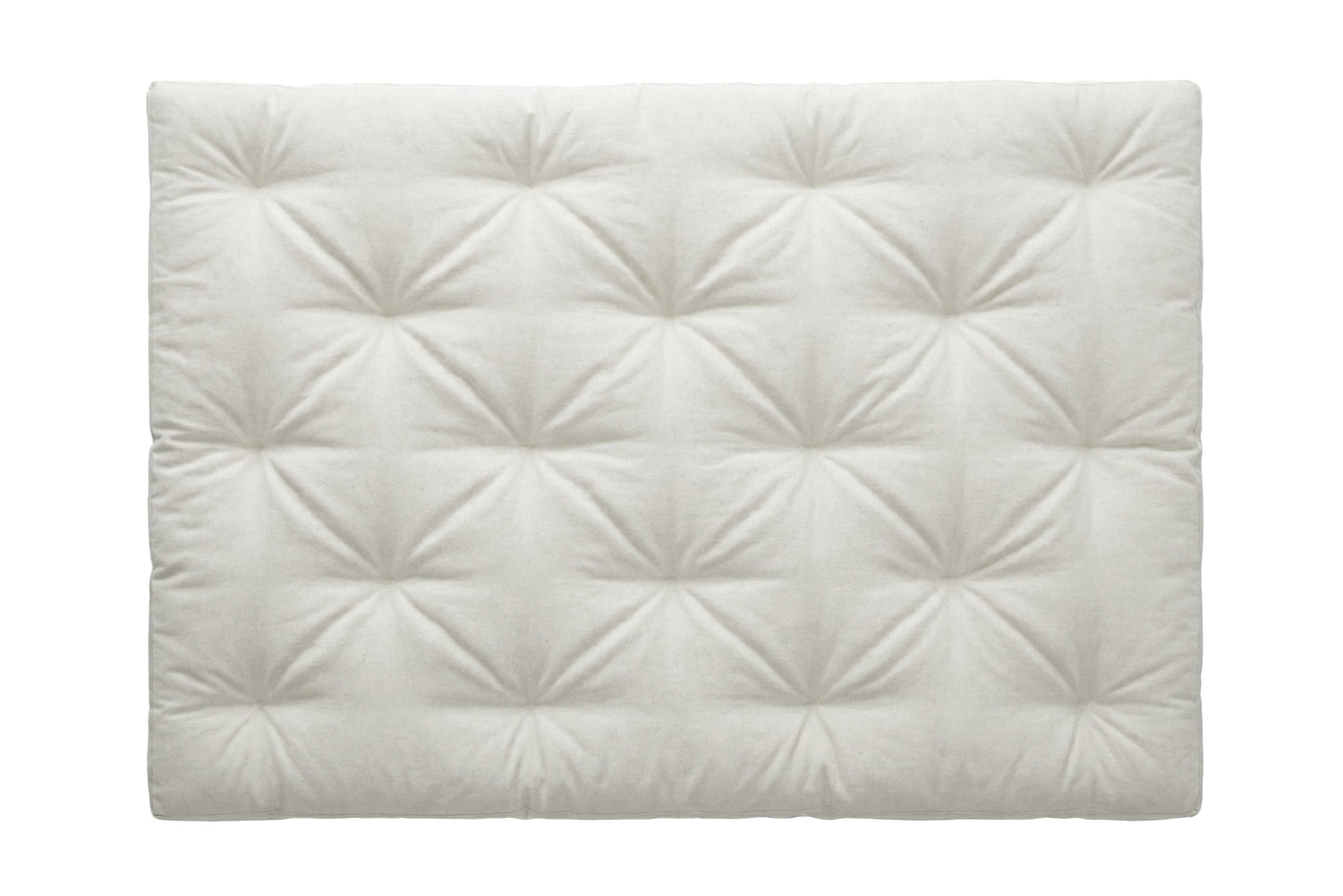
Each tuft is created by a needle drawn through the entire depth of the mattress, so some compression, dimpling, or light fiber pull at those points is built into how a hand-tufted mattress is made. These spots are structural anchors, not defects, and they won't spread or tear under normal use. Genuine problems look different: open tears in the fabric, broken seams, or filling working its way out. If you spot any of those, reach out with photos.
What does the mattress casing fabric feel like?
The casing is a heavy, durable-textured 100% natural cotton fabric built to contain the layered fill and hold up over years of use. It feels noticeably firmer than the quilted top of a typical mattress, and that's by design — the fabric relaxes gradually as the mattress breaks in. Most owners add a fitted sheet or futon cover, so the casing texture isn't something you feel while sleeping.
How do I care for it?
Air the mattress out periodically and keep it on a breathable base so the natural fibers can release moisture. For spills, spot clean with a mild, natural cleaner and let the area dry fully before remaking the bed. A removable cover adds an easy layer of protection and extends the life of the casing.
Do I need to rotate or flip this mattress?
Yes — treat it as part of break-in rather than optional maintenance. For the first 90 days, rotate head-to-foot every week or two and flip the mattress every two to three weeks so the cotton and wool layers settle evenly. Most cases of lopsided compression trace back to skipping this routine early on. After break-in, a monthly rotation keeps wear distributed.
Featured categories
-

Shikibuton Mattresses
Shikibuton mattresses (often listed as shikifutons, "shiki" mattresses, or tatami mattresses) are...
-

Storage Furniture & Tables
Solid wood storage furniture and tables bring order to bedrooms, living rooms...


Learning Center
View all-

Light Wood Nightstand: A Guide to Species, Fini...
A light wood nightstand can get its color from a pale species, a clear finish, a white-wash, or a printed laminate. They look alike on day one and diverge completely...
Light Wood Nightstand: A Guide to Species, Fini...
A light wood nightstand can get its color from a pale species, a clear finish, a white-wash, or a printed laminate. They look alike on day one and diverge completely...
-

Minimalist Bedroom Furniture: How to Spot Real ...
Minimalist bedroom furniture is sold on a look that's easy to fake. Here's how to tell furniture that's designed simple from furniture that's merely stripped simple — before the corner...
Minimalist Bedroom Furniture: How to Spot Real ...
Minimalist bedroom furniture is sold on a look that's easy to fake. Here's how to tell furniture that's designed simple from furniture that's merely stripped simple — before the corner...
-

King vs. California King
A California King is longer; a King is wider — and they cover almost exactly the same area. Here's which shape suits your height, your room, and your bedding, plus...
King vs. California King
A California King is longer; a King is wider — and they cover almost exactly the same area. Here's which shape suits your height, your room, and your bedding, plus...


