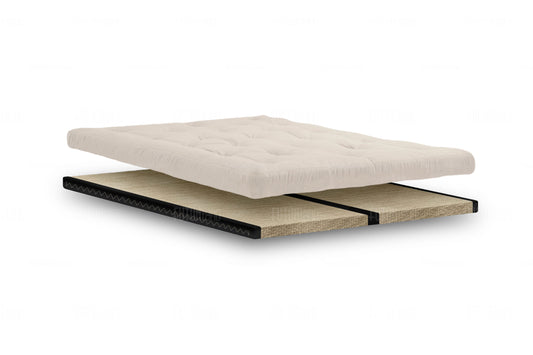

Best Non-Toxic Mattress Topper: How to Evaluate Materials, Certifications, and Fit
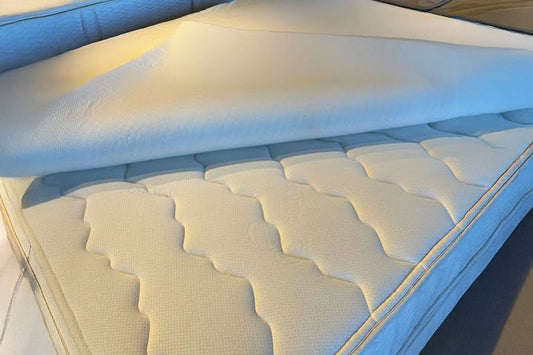
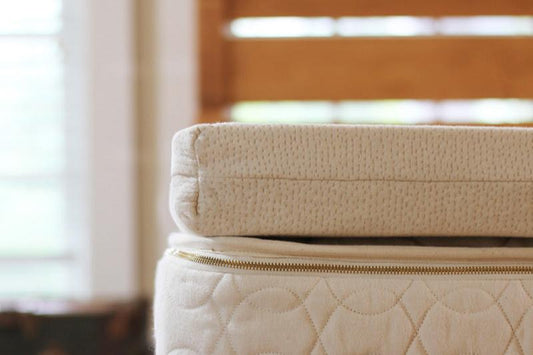
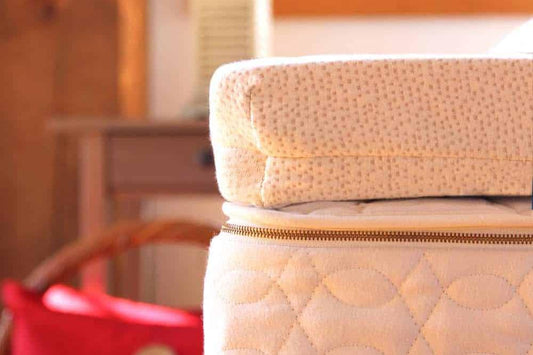
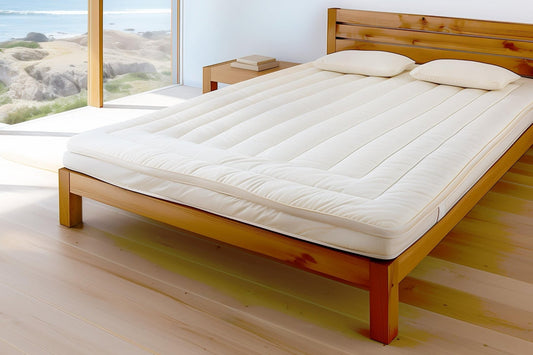
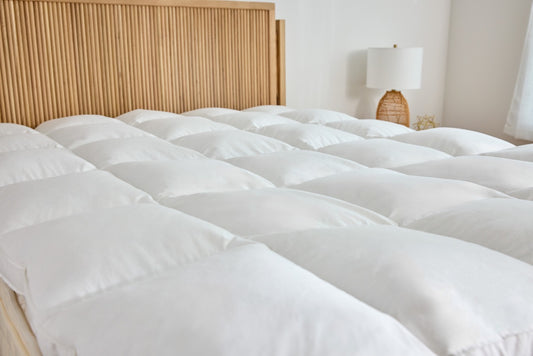
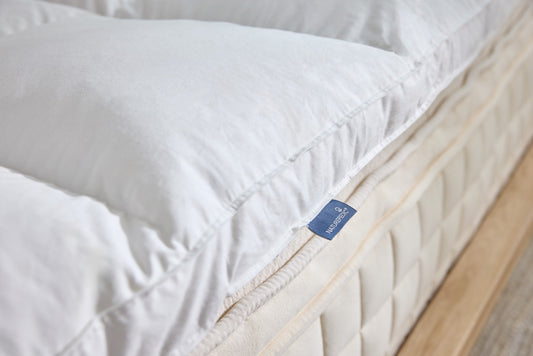
A mattress topper is a removable comfort layer, usually 1.5 to 3 inches thick, that sits on top of your existing mattress and changes how it sleeps. It is not a repair for a failing bed. On a mattress that is still structurally sound, it adjusts pressure relief, surface firmness, and temperature — often noticeably, on the first night.
If you have already decided you want a natural one, the question is not which brand is best. It is what makes a topper genuinely non-toxic, and which material solves your actual sleep problem. A lot of toppers are marketed as natural because they use a cotton cover or a label that sounds clean. That is not enough. A topper earns the label when the full build avoids the usual problem materials: memory foam, polyurethane foam, synthetic fill, fiberglass, and chemical fire retardants. The best non-toxic mattress topper uses simple materials, has credible certification, and changes the feel of your bed in the right direction without creating a new problem.

What a Topper Actually Does
Five things, in rough order of how often they motivate the purchase:
- Adjusts comfort. Adds pressure relief to a mattress that sleeps too firm, or a bit of structure to one that feels soft and unsupported.
- Improves alignment. A responsive layer can keep the spine closer to neutral through the night, which is where morning stiffness usually comes from.
- Changes surface temperature. Breathable natural fibers move heat and moisture away from the body instead of holding it.
- Softens partner motion. A cushioning layer absorbs some movement transfer across the bed.
- Takes the wear. Daily friction, sweat, and compression hit the topper first, so the mattress underneath ages more slowly.
What a topper cannot do is restore structure. If the support core has collapsed, a topper conforms to the dip rather than correcting it.
Topper, Pad, or Protector?
These three get used interchangeably and do entirely different jobs.
A topper changes comfort and support — it is thick enough to alter how the bed sleeps. A pad is thinner, adding a little surface plushness without a real change in feel. A protector shields against spills, sweat, and allergens and is designed to change nothing about the feel at all.
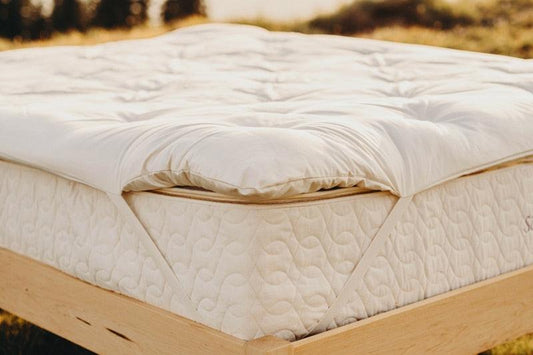
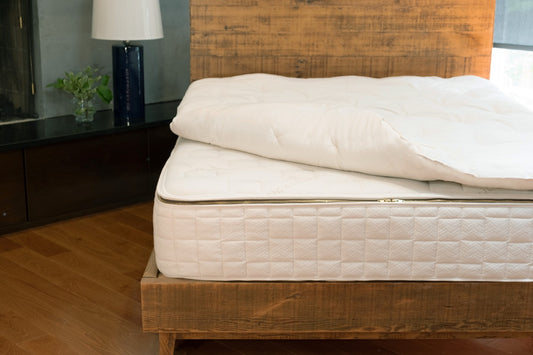
They layer in that order: topper on the mattress, protector over the topper, sheets on top. That sequence keeps the surface clean while leaving the topper's breathability intact, which matters most with natural fiber fills that manage moisture actively.
What Makes a Topper Genuinely Non-Toxic
A non-toxic topper is defined first by what it does not contain. No memory foam. No polyurethane. No polyester batting sold as "plush fill." No chemical flame barrier added to compensate for synthetic construction.
That matters because the biggest problem in this category starts with the base material, not the marketing around it. If the core is petroleum-based foam, the product may still feel comfortable, but it is not what most people mean when they are seeking a cleaner sleep surface.
Four filters are worth applying before anything else:
Material origin. Start with the fill. Wool, natural latex, and organic cotton are the materials worth paying attention to. They come from renewable sources and do not rely on the same chemistry as synthetic foams.
Third-party certification. Claims like "green," "eco," or "natural" do not verify much on their own. Certification is what turns a soft claim into a checkable one.
Total construction. A latex core inside a polyester-padded cover is not a fully non-toxic topper. The cover, quilting, and any batting matter as much as the fill itself.
Off-gassing potential. Natural materials can have a scent. That is different from the chemical off-gassing associated with foam made from petroleum derivatives — a distinction worth understanding before making a purchase.
A cleaner topper usually uses a simple combination: wool fill with an organic cotton casing, GOLS-certified latex with a cotton cover, or cotton and wool together for a flatter, more traditional surface feel. The common thread is simple construction — fewer layers, fewer mystery treatments, fewer places for synthetics to hide.
Decoding Certifications: GOLS, GOTS, OEKO-TEX, and GREENGUARD Gold
Certifications are the closest thing this category has to a verified ingredient list. Without them, you are trusting a brand's wording. With them, you have something checkable.
GOLS (Global Organic Latex Standard) is the key certification for latex. Latex can be marketed as "natural" while still containing synthetic components or undisclosed blend materials. GOLS requires that the latex content contain at least 95% certified organic raw material, covers the processing chain, and prohibits the use of certain harmful chemical inputs. A GOLS-certified topper gives you much firmer ground than one described only as "natural latex." Crucially, GOLS certifies the latex material — it does not automatically certify the rest of the topper.
GOTS (Global Organic Textile Standard) covers cotton and wool textile components — the cover fabric, quilting, and batting. GOTS requires at least 95% certified organic fiber for the full "organic" designation (70% for "made with organic") and restricts chemical dyes, processing agents, and finishing treatments across the supply chain. A topper with GOTS-certified cotton and GOLS-certified latex has organic verification on every major component. A topper with GOTS certification only on its cover fabric may still have an uncertified latex or foam core underneath.
OEKO-TEX Standard 100 tests finished materials for harmful substances — residual chemicals, heavy metals, VOCs, pesticides, and dyes. It does not verify organic sourcing, but it does confirm the finished component will not expose you to identified harmful substances. It works well as a complementary certification alongside GOLS and GOTS.
GREENGUARD Gold tests the assembled product for chemical emissions against strict indoor air quality limits. This is the certification most directly relevant to the bedroom use case — it measures what the product actually releases into room air, not just what went into making it. For anyone with chemical sensitivities or concerns about indoor air quality, GREENGUARD Gold on the finished topper is particularly useful.
One practical check worth making: certification bodies maintain public databases. GOTS certificates can be verified at global-standards.org. GREENGUARD Gold certificates can be checked through the UL SPOT database. If a brand cannot provide a license number that leads to a verifiable database entry, the claim cannot be independently confirmed.

Comparing the Materials: Wool, Latex, and Cotton
The material choice matters more than is often discussed in topper guides. Not because one is universally better, but because each solves a different problem.
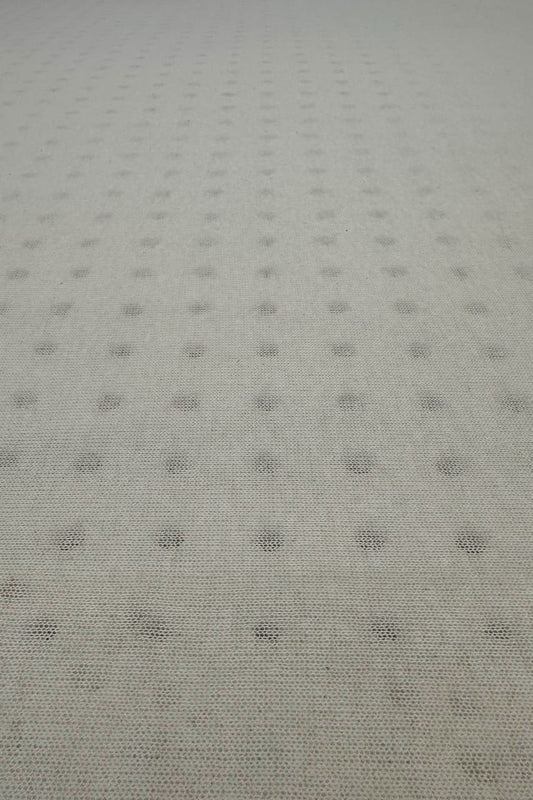
Latex for pressure relief and responsiveness. Latex is the performance material in this group. It provides pushback, elasticity, and a more active feel than wool. It contours under body weight — particularly at the shoulders and hips for side sleepers — but springs back immediately when you shift position, unlike the slow recovery of memory foam. For a mattress that feels too firm at pressure points rather than generally uncomfortable, latex is usually the more targeted solution. Perforated latex designs improve breathability further while maintaining the support properties.
The trade-off is feel. Latex is buoyant and springy, not soft and plush. Sleepers coming from conventional foam who expect a melting, slow sensation will find latex noticeably different. That is a benefit for anyone avoiding synthetics specifically, but it is worth knowing before buying.
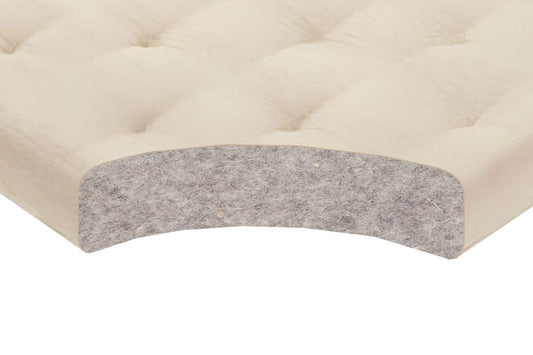
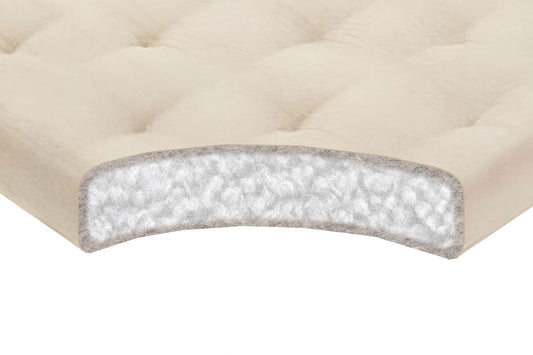
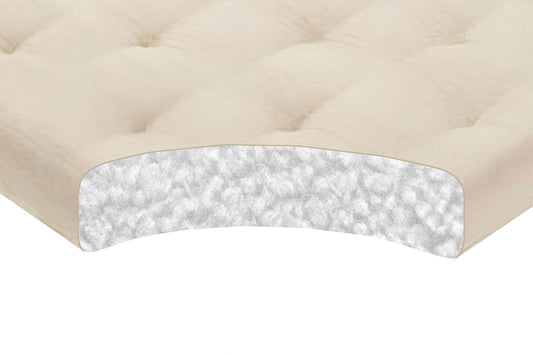
Wool for temperature regulation and surface comfort. Wool solves a different set of problems. It does not contour like latex. What it does is soften a firm surface in a more subtle, cushioned way and — more importantly — manage heat and moisture. Wool absorbs humidity without feeling damp and releases it as conditions allow, which is why it tends to regulate temperature across a wider range of sleep conditions than synthetic "cooling" treatments that depend on surface coatings.
This makes wool the more natural first choice for hot sleepers, for people who dislike foam altogether, and for anyone who wants the bed to feel calmer rather than springier. A thicker wool topper can make a firm mattress substantially more livable without altering its underlying support character.
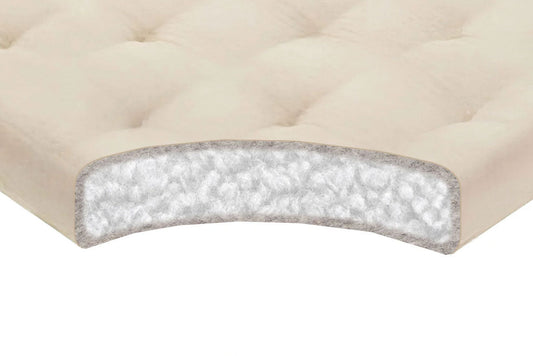
Cotton in combination. Cotton is not usually the star material in a topper core, but it plays an important role in cotton-and-wool builds. It creates a more grounded, familiar surface feel — lightly cushioned, breathable, without the bounce of latex or the loft of a thick wool build. Cotton and wool together suit buyers who want a modest, natural comfort adjustment rather than a material with a strong personality of its own.
| Material | Primary benefit | Feel | Best for |
|---|---|---|---|
| Wool | Temperature regulation and moisture management | Cushioned, breathable, less springy | Hot sleepers, firm mattresses, people who dislike foam feel |
| Natural latex | Pressure relief and responsive support | Buoyant, supportive, contours and rebounds quickly | Side sleepers, pressure points at shoulder and hip, mattresses needing comfort adjustment |
| Cotton and wool | Balanced natural surface | Flatter, lightly cushioned, breathable | Shoppers wanting a subtle change with a simple, familiar natural build |
Matching the Topper to How You Sleep
Sleep position changes which material makes sense, because it changes where your weight concentrates.
Side sleepers need room for the shoulder and hip to settle without going numb. That is a pressure-point problem, and latex addresses it most directly by contouring at those specific points. A wool or cotton-and-wool topper works too if the whole surface feels hard rather than just those two areas.
Back sleepers need a gentle cradle through the lower back with the spine staying level. Buoyant support suits this better than deep sink — a topper that lets the hips drop too far pulls the lower back out of neutral over the course of a night.
Stomach sleepers should keep the surface relatively flat. A thick, plush topper dips the hips below the shoulders, which is the position most likely to cause lower back strain. If a topper is needed at all here, thinner is better.
Combination sleepers should prioritize easy movement. Latex and breathable fibers both allow you to turn without fighting the surface; dense foam resists the change of position and can wake you during the transition.
A Practical Buying Checklist by Sleep Problem
A topper works best when it is bought to solve one specific problem. Clear problems lead to clear choices.
If your mattress is too firm: Choose based on how much change you need and where the discomfort is. If the issue is concentrated at the shoulders and hips, a 2 or 3-inch latex topper is usually the more targeted solution because it contours directly at those pressure points. If the mattress feels generally hard across the whole surface, a wool topper often delivers a more even softening without the bouncier character of latex. More thickness changes the bed more — a modest adjustment usually means a thinner topper, not the thickest available.
If you sleep hot: Wool is usually the first material to consider. It handles warmth and moisture through fiber structure rather than coatings, so the temperature regulation works consistently over time and across seasons. A perforated latex topper can also sleep comfortably warm for most sleepers while providing pressure relief — a useful option when both heat and pressure are issues.
If chemical sensitivity or indoor air quality is the priority: Keep the checklist strict. Start with the fill — wool, natural latex, or organic cotton. Verify the certification: GOLS for the latex core, GOTS for the cover textiles, GREENGUARD Gold on the finished product if emissions testing in a bedroom environment matters to you. Inspect the full build, not just the headline material — cover, quilting, and any hidden batting all affect the overall material profile. Avoid marketing language without verification: "eco foam," "plant-based foam," and "natural blend" are claims that need a certification number behind them to mean anything checkable.
If your mattress is aging: Ask one question before buying: is the mattress uncomfortable, or is it structurally failing? There is a simple test. Strip the bed and lay a broom handle or any long straight edge diagonally across the mattress. If you can slide your hand under the middle without resistance, the mattress is sagging. At that point a topper will conform to the dip rather than correct it, and it becomes a temporary comfort upgrade rather than a fix. Buy a topper to solve a comfort problem on a structurally sound mattress. Buy a new mattress to solve a structural problem.
Natural Scent vs Chemical Off-Gassing: Not the Same Thing
A common source of confusion when a new topper arrives: all smells are not equal.
A new latex topper can have a noticeable rubber scent. Wool can carry a faint fiber scent when new. These are natural material characteristics — they dissipate with air and time, and they do not indicate chemical exposure. The smell of natural rubber and the smell of off-gassing polyurethane foam come from different origins and carry different implications.
Chemical off-gassing from synthetic foam — the sharp, sweet, or adhesive-like odor some people describe when unboxing a new memory foam product — comes from VOCs released as the petroleum-derived material processes out. Research published in Chemosphere (Beckett et al., 2022) measured VOC emissions from two new memory foam mattresses over 31 days and found measurable emissions of acetone, toluene, chloromethane, and 2-propanol, peaking on day one and continuing at lower levels for weeks. Natural latex produces no comparable VOC emissions.
What to do when a natural topper is new: air it out in a ventilated room before putting it on the bed. This helps any packaging compression release and lets temporary material scent dissipate quickly. Airing a natural topper is practical, not remedial — it is part of setup, not a sign of a problem.
Thickness: Choosing the Right Profile
More thickness is not automatically better. The right depth depends on what you are trying to change.
- 1.5 inches is well-suited for light surface cushioning and temperature management. It modifies the feel without substantially changing the mattress character. Good for sleepers who want a modest natural adjustment over an otherwise functional mattress.
- 2 inches is a practical middle ground for most applications — enough to meaningfully address pressure points or surface firmness without fully transforming the sleep feel.
- 3 inches makes the most significant comfort change. Better suited to genuinely firm mattresses where more substantial softening is the goal, or for sleepers with more pronounced pressure point issues.
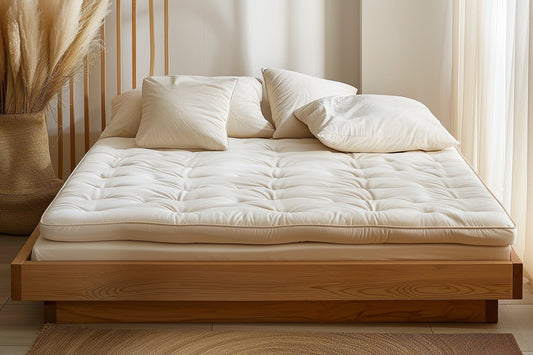
A thicker topper also raises the height of the sleep surface, which can affect fitted sheet fit and how the bed looks. For builds with a minimalist aesthetic, a 2-inch topper often achieves the needed change without visually altering the bed significantly.
Four Mistakes Worth Avoiding
- Buying the thickest option by default. Three or four inches of plush fill can over-sink some sleepers and disconnect them from the support below. Start with the minimum thickness that solves the problem.
- Ignoring breathability. If you run warm, a dense foam topper will undo whatever cooling the mattress underneath was providing.
- Expecting a topper to fix sagging. It changes the surface, not the structure.
- Judging by the cover. An organic cotton casing tells you nothing about what is inside it.
Care and Longevity
Natural toppers reward simple, consistent care. The goals are keeping the fill dry, distributing wear evenly, and protecting the surface from the daily accumulation of sweat and dust.
- Rotate periodically so the same areas do not take all the compression
- Use a breathable mattress protector over the topper to reduce direct sweat and dust exposure — one that fits well without sealing off airflow
- Spot clean carefully with appropriate care for the specific material rather than attempting to soak or machine wash the fill
- Remove the cover and wash it separately according to its care instructions, keeping the fill insert dry
- Air the topper out periodically, particularly if the bedroom stays humid in certain seasons
Natural latex is among the more durable topper materials — its resilience comes from the inherent elasticity of the material rather than from a foam structure that gradually loses its cellular integrity. Wool settles somewhat with use but maintains its temperature regulation properties over time. Proper care extends useful life meaningfully for both.
Three Natural Toppers Worth Knowing
Each of these solves a different problem, which is the only sensible basis for choosing between them.
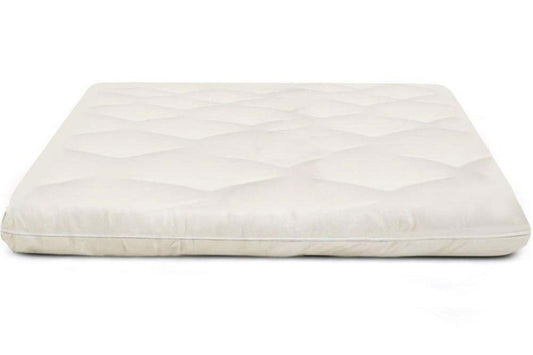
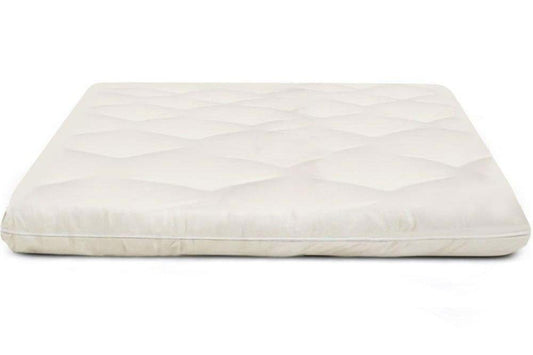
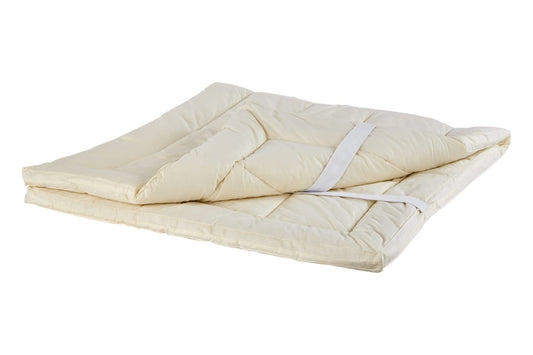
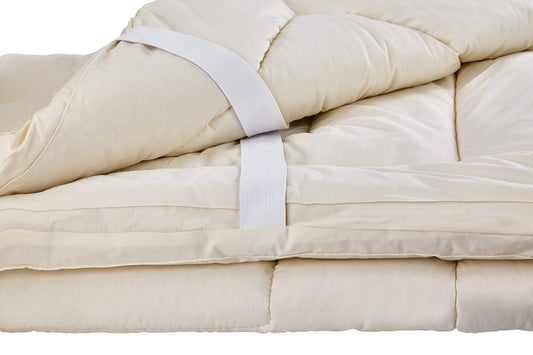
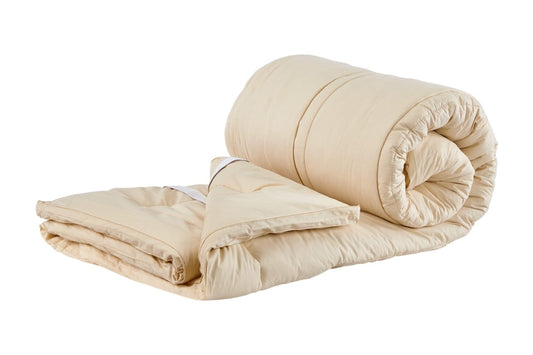
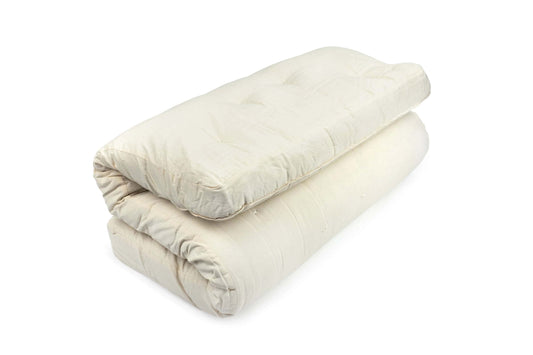
3" Natural Wool Topper — the option for heat and moisture. Cushioned rather than springy, and the material that handles temperature most consistently across seasons. Best on a mattress that is uniformly too firm rather than one with specific pressure points.
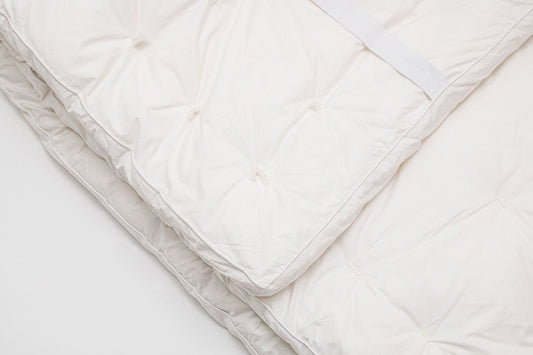
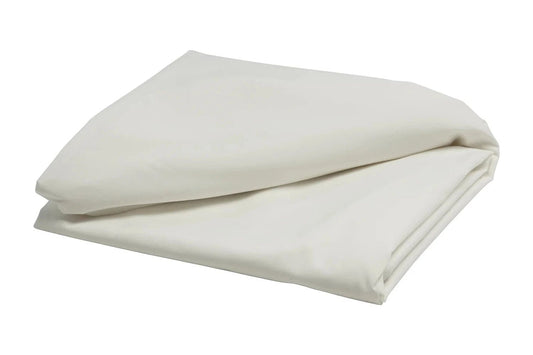
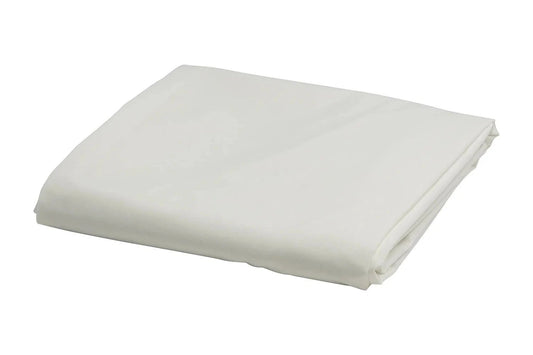
3" Organic Cotton and Wool Topper — a flatter, more familiar surface with a cool handfeel and gentle cushioning. Suits buyers who want a modest natural adjustment rather than a material with a strong character of its own.
Natural Latex and Wool Topper — latex for contouring at the shoulders and hips, wool wrapped around it for breathability. The most targeted option for side sleepers who also run warm, and the one that changes support rather than just surface feel.
-
Natural Wool Mattress Topper (3 Inch)
Regular price From $329.99Regular price $659.99 Sale price From $329.99Sale -
Organic Cotton and Wool Mattress Topper (3 Inch)
Regular price From $389.99Regular price $779.99 Sale price From $389.99Sale -
Organic Latex Mattress Topper (2-3 Inch)
Regular price From $479.00Regular price $599.00 Sale price From $479.00Sale -
Vitality Latex Mattress Topper (3 Inch)
Regular price From $749.00Regular price Sale price From $749.00 -
myTopper® Wool Mattress Topper (1.5 Inch)
Regular price From $169.00Regular price Sale price From $169.00 -
myWoolly® Wool and Latex Mattress Topper (3 Inch)
Regular price From $489.00Regular price Sale price From $489.00 -
myMerino® Merino Wool Mattress Topper (1.5 Inch)
Regular price From $339.00Regular price Sale price From $339.00 -
Savvy Woolsy Natural Wool Mattress Topper (3 Inch)
Regular price From $649.00Regular price Sale price From $649.00 -
Savvy Woolsy Organic Wool Mattress Topper (3 Inch)
Regular price From $749.00Regular price Sale price From $749.00 -
Wooly Organic Wool Mattress Topper (3 Inch)
Regular price From $749.00Regular price Sale price From $749.00 -
Adagio Organic Latex Mattress Topper (2 Inch)
Regular price From $399.00Regular price Sale price From $399.00 -
Box-Stitched Organic Shredded Latex Mattress Topper (3 Inch)
Regular price From $449.00Regular price Sale price From $449.00