
How to Choose a Truly Non-Toxic Bed Frame and Spot Greenwashing
Shopping for a “non-toxic” bed frame can feel confusing fast. Everyone seems to promise clean materials, safe finishes, and eco-friendly manufacturing, but the details are often vague. This guide walks you through what truly makes a bed frame safer for your home – and how to spot the red flags in product descriptions and marketing claims.
Why the Bed Frame Matters for a Healthy Bedroom
When people think about a healthier bedroom, they usually start with the mattress. That’s important, but the frame underneath it has a big impact too. Bed frames made from particleboard, MDF, and low-grade plywood can off-gas formaldehyde and other VOCs into the room, especially in warm, closed spaces.
A non-toxic bed frame focuses on three things:
- Materials: solid wood instead of engineered boards loaded with glue.
- Finishes: plant-based oils or low-VOC coatings instead of heavy solvent lacquers.
- Hardware and construction: sturdy joinery that doesn’t rely on huge amounts of adhesives.
The goal is a frame that supports your mattress, keeps air circulating underneath, and doesn’t introduce unnecessary chemicals into the place where you spend a third of your life.

Start with the Core Material: What Is the Frame Made Of?
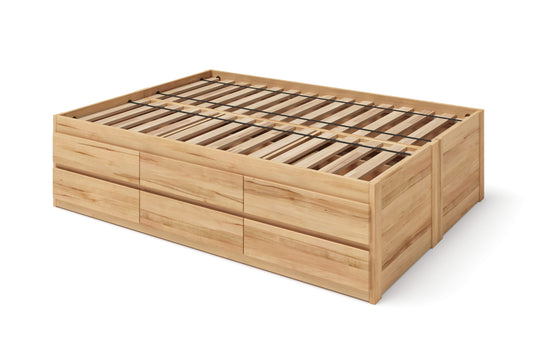
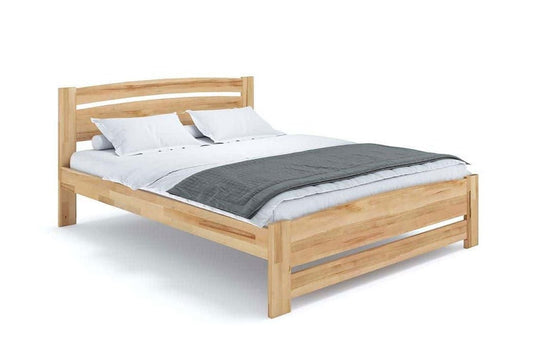
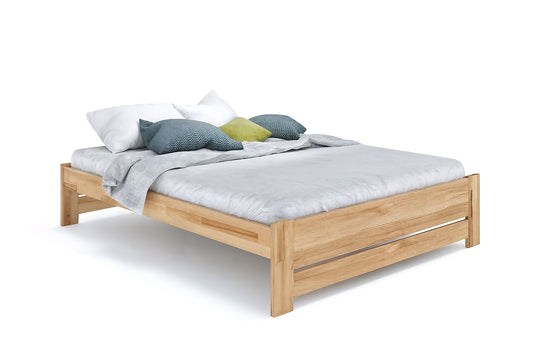
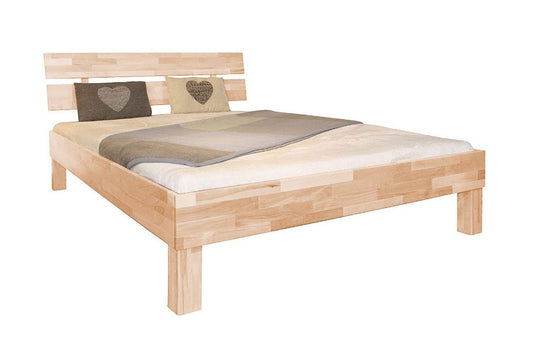
The first thing to look for is the core material. Ideally, your bed frame is built from solid hardwood like beech, oak, maple, or similar species. Avoid vague phrases like “wood products” or “wood composite” with no further detail.
Better signs include:
- “Solid beechwood” or “solid hardwood” clearly listed in the specs.
- Slats and support rails also made from solid wood, not just the visible parts.
- Frames that look simple and structural rather than hollow and bulky.
If you prefer to browse by category, look for curated groups such as our solid wood platform beds or broader bedroom categories like natural wood beds where the construction details are spelled out.
| Solid Wood Frame | MDF / Particleboard Frame | |
|---|---|---|
| Core Material | Solid boards or planks from a single wood species (for example, oak or beech). | Compressed wood fibers, sawdust, and resin binders formed into sheets. |
| Toxicity & Off-Gassing | Naturally low, especially with simple oil or wax finishes. Off-gassing is minimal when finishes are low-VOC. | Depends heavily on glues and resins. May release formaldehyde and other VOCs, especially when new or in warm rooms. |
| Durability | Built to last decades. Can be tightened, refinished, and repaired if scratched or worn. | More prone to chipping, swelling from moisture, and loosening hardware. Difficult or impossible to refinish. |
| Typical Finishes | Clear oils, waxes, or low-VOC stains that highlight the natural grain. | Synthetic veneers, laminates, or opaque lacquers used to hide the engineered core. |
| Cost Over Time | Higher upfront cost, but long service life. Can often be moved, repaired, and reused for many years. | Lower initial price, but more likely to be replaced sooner due to wear, damage, or sagging. |
-
Columbus Natural Platform Bed
Regular price From $469.99Regular price $799.99 Sale price From $469.99Sale -
Lakewood Natural Platform Bed
Regular price From $679.99Regular price $899.99 Sale price From $679.99Sale -
Sacramento Natural Platform Bed
Regular price From $599.99Regular price $829.99 Sale price From $599.99Sale -
Plainfield Natural Platform Bed
Regular price From $409.99Regular price $739.99 Sale price From $409.99Sale -

 Sale
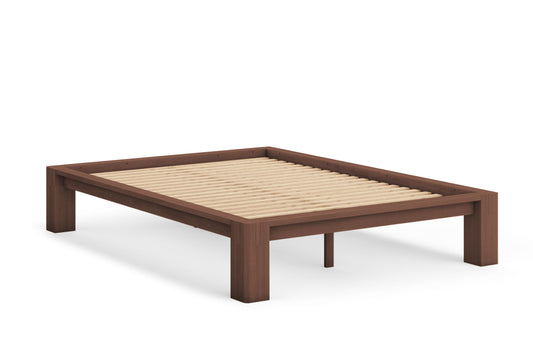
SaleKanso Tatami Bed
Regular price From $749.99Regular price $899.99 Sale price From $749.99Sale -
Anchorage Platform Bed
Regular price From $549.99Regular price $799.99 Sale price From $549.99Sale -
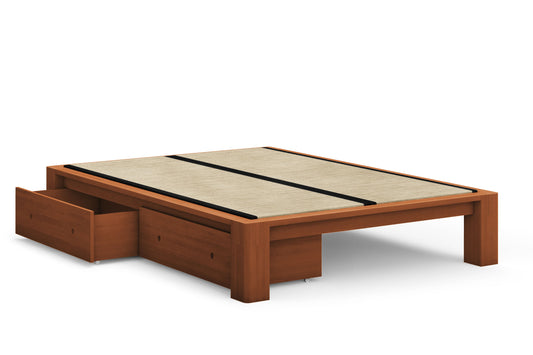
Japanese Tatami Platform Bed
Regular price From $729.99Regular price $929.99 Sale price From $729.99Sale -
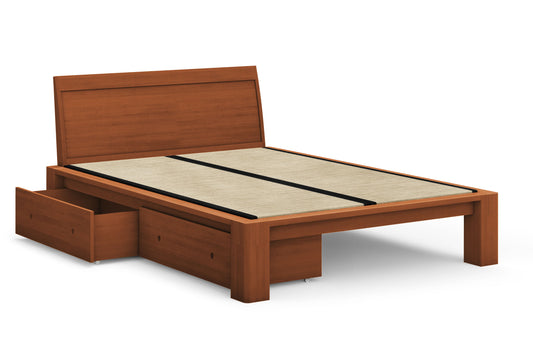
Japanese Tatami Platform Bed with Solid Headboard
Regular price From $929.99Regular price $1,129.99 Sale price From $929.99Sale -
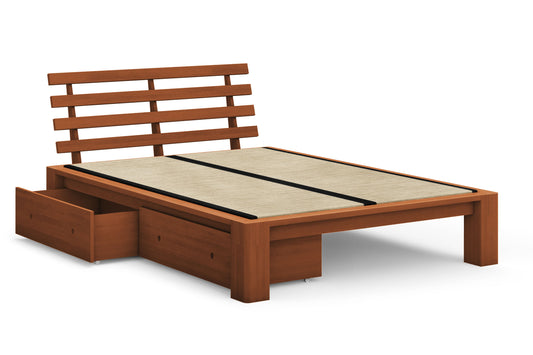
Japanese Tatami Platform Bed with Slatted Headboard
Regular price From $819.99Regular price $1,019.99 Sale price From $819.99Sale -
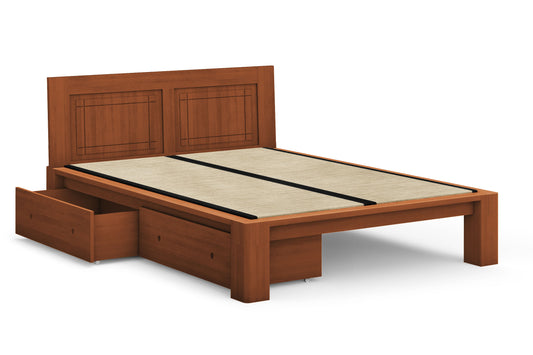
Japanese Tatami Platform Bed with Grooved Headboard
Regular price From $899.99Regular price $1,099.99 Sale price From $899.99Sale -
 Sale
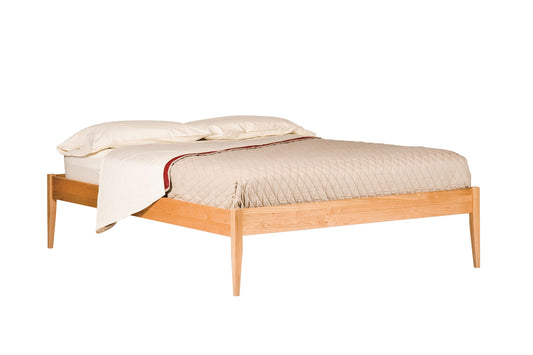
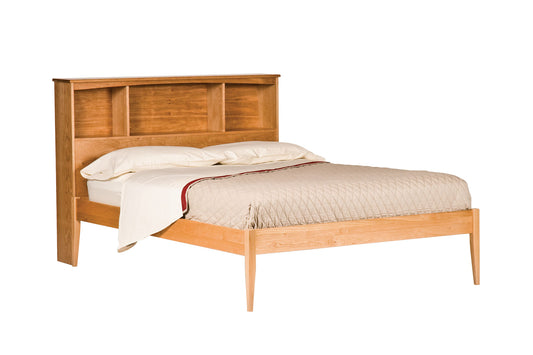
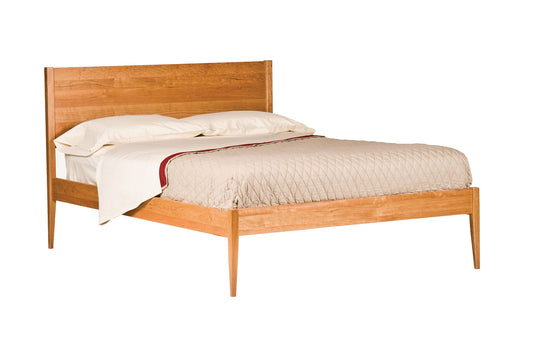
SaleBasic Platform Bed
Regular price From $799.99Regular price $999.99 Sale price From $799.99Sale -
 Sale
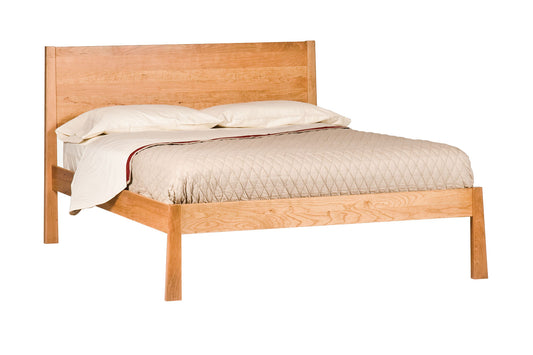
SaleEclipse Platform Bed
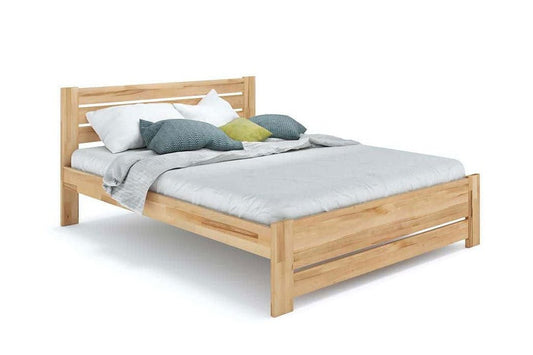
Regular price From $1,149.99Regular price $1,439.99 Sale price From $1,149.99Sale









Finishes: Oil, Wax, and Low-VOC Coatings
Once you know the frame is actually solid wood, the next step is the finish. This is what you touch and smell when the frame is new. A non-toxic bed frame should use one of the following:
- Natural oil or wax finishes based on plant oils, beeswax, or similar ingredients.
- Water-based finishes that are explicitly labeled low-VOC or zero-VOC.
- No finish at all on parts that don’t need it, like hidden slats.
Be cautious with language like “eco finish” or “green lacquer” without any specifics. A truly transparent brand will describe the type of finish and may link to more detail. For a deeper dive into how finishes, foams, and fabrics are certified, you can cross-check claims against our article Your Guide to Eco-Certifications for Furniture, Mattresses, and Bedding.
Adhesives and Engineered Components
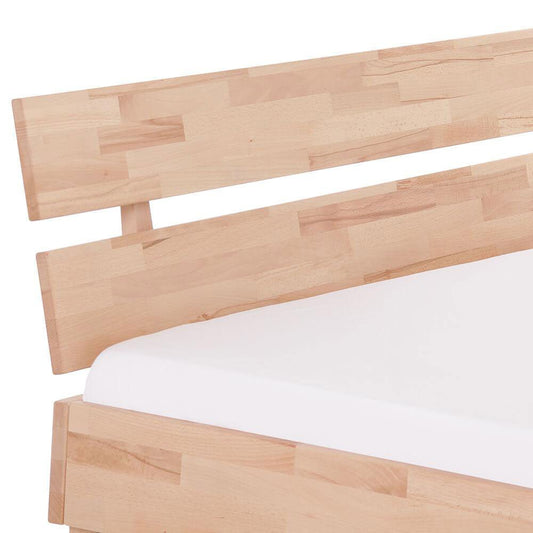
Even solid wood frames sometimes include engineered parts: drawer bottoms, headboard panels, or decorative accents. The key question is what kind of glues and boards are used. Look for mentions of low-formaldehyde or CARB-compliant materials when plywood is unavoidable, and favor designs that rely more on joinery than on large glued surfaces.
If a product description never mentions what the headboard panel or internal parts are made of, assume MDF or particleboard is involved. This does not always mean “bad,” but it does mean more adhesives and more off-gassing than a simple solid-wood frame.

Certifications, Standards, and How to Read Them
Certifications are useful, but only when you know what they actually mean. Some labels apply to fabrics and foams, while others cover wood, adhesives, or overall VOC emissions. A few examples:
- Wood-related standards may reference sustainably managed forests or low-emission composite boards.
- Indoor air quality labels focus on VOC emission limits from finished products.
- Organic labels usually apply to textiles and natural fills, not the wood itself.
It helps to think of certifications as one piece of the puzzle. A bed frame made from solid hardwood with a simple oil or wax finish and good airflow underneath may be healthier in real life than a heavily engineered frame with a single certification logo but layers of glue and lacquer.
Red-Flag Phrases and Classic Greenwashing
Because “non-toxic” furniture is in demand, there is a lot of marketing language that sounds good but doesn’t say much. Some phrases to treat with caution:
- “Eco-friendly wood” with no explanation of what makes it eco-friendly.
- “Green finish” without specifying whether it is water-based, low-VOC, or oil-based.
- “Made from wood and wood products” with no detail on what those “products” are.
When you see this kind of language, scan the specifications for something more concrete: species of wood, type of finish, and whether the frame is solid throughout. Compare that to more transparent categories like non-toxic furniture and beds where materials and finishes are clearly spelled out.
How to Evaluate a Product Page in 30 Seconds
To keep things practical, here is a quick checklist you can use on any bed frame product page:
- Look at the materials section: does it clearly say “solid beech,” “solid oak,” or similar?
- Scan for the word “MDF” or “particleboard.” If present, which parts are affected?
- Check the finish description: is it named (oil, wax, water-based) or just “protective coating”?
- Check for slats or a ventilated base that allows airflow under your mattress.
If the page answers these questions directly, that is usually a good sign. If you have to dig through multiple tabs and still can’t tell what the frame is made of, you are probably dealing with a product that leans more on marketing than on transparent design.
Matching a Non-Toxic Frame with a Healthy Sleep System
A good frame is only part of the equation. It has to work together with your mattress and bedding. Pairing a ventilated wood frame with a breathable mattress is ideal; a simple slatted platform from our platform bed collection combined with a natural mattress from natural mattresses or organic mattresses helps keep airflow moving and reduces the risk of moisture buildup.
For inspiration on how a solid wood platform frame anchors the rest of the bedroom, you can also look at Why a Solid Wood Platform Bed Is the Best Investment for Your Bedroom, which dives deeper into durability, style, and long-term value.
Putting It All Together
Choosing a truly non-toxic bed frame is less about chasing a single perfect label and more about understanding the basics: solid wood construction, simple low-VOC finishes, minimal adhesives, and honest product descriptions. Once you know what to look for, it becomes much easier to ignore vague marketing language and focus on the pieces that actually support a healthier bedroom.
Start with clear materials, check the finish, watch for red-flag phrases, and then build the rest of your sleep system – mattress, bedding, and storage – around that foundation. Over time, this approach does more for your health and comfort than any one buzzword ever could.