
When Is Your Child Ready for a Bunk Bed? Age, Safety, and the Case for Low-Profile Designs
There's no universal age at which a child is suddenly ready for a bunk bed. The question parents are really asking is more specific: is my child ready for the top bunk? And the honest answer involves a few different factors that have nothing to do with a number on a birthday cake.
The American Academy of Pediatrics recommends that children under six avoid the top bunk — not because six is a magic threshold, but because spatial awareness, motor coordination, and the ability to respond safely to nighttime disorientation develop significantly between ages four and seven. A five-year-old who sleeps soundly and wakes up slowly is a different situation from a five-year-old who rolls, kicks, and hops out of bed the moment they're conscious.
Comfort Pure's bunk bed collection includes both standard-height frames and lower-profile designs that suit families at different stages. Understanding what to look for — and what to watch out for — makes the purchase decision considerably easier.

What Readiness Actually Looks Like
Before age matters, observe the behavior. A child who is ready for a top bunk tends to understand and follow instructions consistently, wakes up gradually rather than suddenly, doesn't roll out of bed at night, and can navigate a ladder or staircase with reasonable composure. These aren't strict criteria — they're observations that help you gauge whether a top bunk will work in practice.
If any of those feel uncertain, there are two good options: delay the top bunk, or choose a low-profile bunk bed that reduces the height of both sleeping surfaces.
Why Low Bunk Beds Solve the Problem Differently
A standard bunk bed positions the top sleeping surface roughly 60 to 70 inches off the ground, depending on the model. A low bunk bed reduces that height — typically placing the top bunk at 50 inches or below — while keeping the two-bed-in-one-frame benefit that makes bunk beds practical for shared rooms.
The Phoenix Bunk Bed, built from solid kiln-dried pine, has a lower overall profile than many bunk beds on the market while maintaining full guardrail height on the top bunk. For families with younger children who want the space efficiency of a bunk bed without a top bunk at full height, this is often the right starting point.
There's also a ceiling clearance calculation that often gets overlooked. The child in the top bunk needs enough headroom to sit up comfortably. A general rule: measure from the floor to your ceiling, subtract the mattress height, and make sure there are still at least 30 to 33 inches of clearance above the top mattress surface. Rooms with lower ceilings may make a lower-profile bunk bed not just preferable but necessary.
-
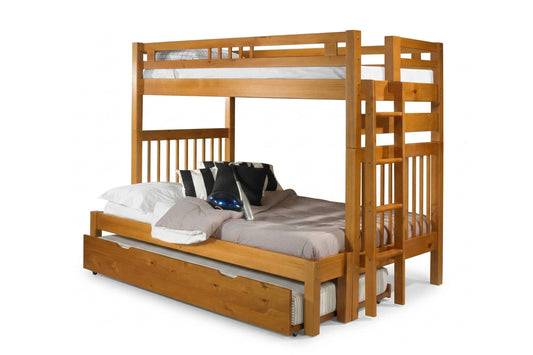
Peppermint Staircase Bunk Bed
Regular price From $1,949.99Regular price Sale price From $1,949.99 -
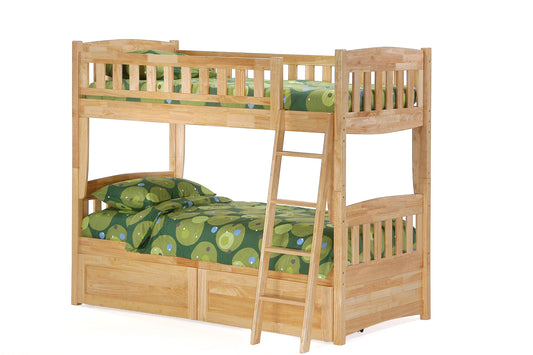
Cinnamon Bunk Bed
Regular price From $1,279.99Regular price Sale price From $1,279.99 -
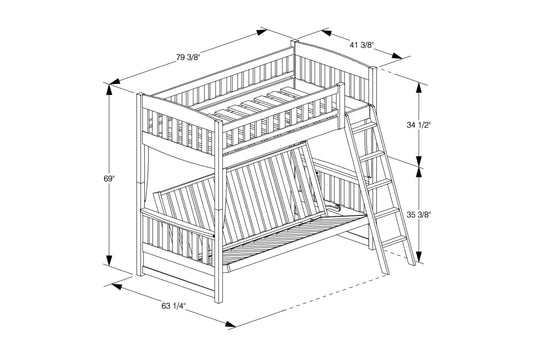
Cinnamon Futon Bunk Bed
Regular price $1,629.00Regular price Sale price $1,629.00 -
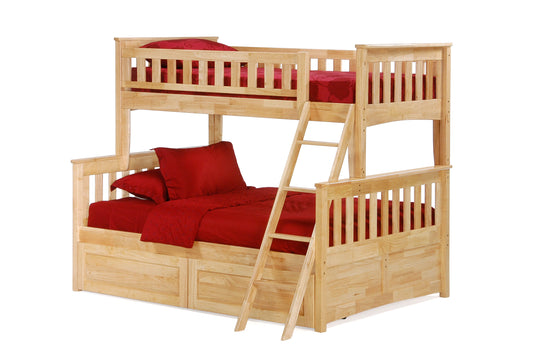
Ginger Bunk Bed
Regular price From $1,689.99Regular price Sale price From $1,689.99 -
Phoenix Bunk Bed
Regular price From $669.99Regular price Sale price From $669.99 -
Sacramento Bunk Bed
Regular price From $819.99Regular price Sale price From $819.99 -
Sacramento Staircase Bunk Bed
Regular price From $1,349.99Regular price Sale price From $1,349.99







The Bottom Bunk for Younger Siblings
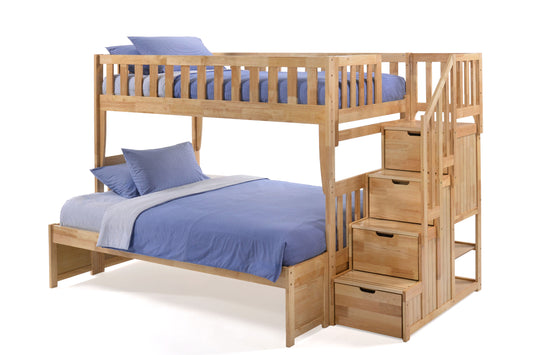
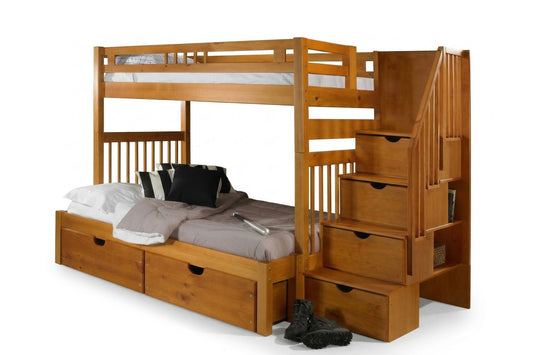
A common configuration in families with children of different ages is to put the older child on top and the younger one below. This works well — the bottom bunk on any Comfort Pure model sits close to the floor, and the guardrails on the top bunk protect the older child regardless of age.
One thing worth knowing: all twin/twin models in the Comfort Pure lineup convert to twin/full with a conversion kit, which is useful when a younger child in the bottom bunk grows and wants a larger sleeping surface. Buying a twin/twin now doesn't lock you in permanently.
The Cinnamon Bunk Bed, built from eco-rubberwood, is a popular choice for this kind of mixed-age setup. Its arched headboard styling sits comfortably between a children's bed and something that doesn't look out of place as kids get older. Optional storage drawers fit beneath the lower bunk and add practical storage without requiring additional furniture.
Toddler Bunk Beds: What Parents Are Really Looking For
Searches for toddler bunk beds represent a specific parent: someone with a child under four who wants to start thinking ahead, or who has a toddler and a slightly older child sharing a room and needs to figure out the arrangement. The honest guidance for this group is that a toddler should not be in a top bunk under any circumstances — but they are perfectly safe in the lower bunk of a well-built frame, and can transition to the top bunk when they're developmentally ready.
Buying the bed now for the lower bunk, and planning the top bunk transition for two or three years from now, is a reasonable approach. The bed will last long enough for that — which brings up construction.

Why Construction Matters More for Younger Children
A bunk bed used by young children experiences more physical stress than most parents expect: jumping, climbing on the rails, using the frame as a play structure, general roughhousing. This is normal. What varies is how well different frames hold up to it.
Comfort Pure's pine and rubberwood frames use Mortise and Tenon joinery reinforced with glue and hardware — a construction method that locks the frame together rather than relying solely on screws into wood. Screws into particleboard or MDF loosen over time under repeated stress. Mortise and Tenon joints don't, which is why solid hardwood frames maintain their stability over years of actual child use rather than just on the day of assembly.
This isn't a minor point for families with young children. A bed that wobbles is one that makes parents nervous and children less safe. Building right from the start eliminates that concern.
A Note on Guardrail Height
US safety standards set two distinct requirements for top bunk guardrails. The first covers entrapment: gaps within the guardrail structure, and between the bottom of the rail and the bed frame, must be no larger than 3.5 inches — small enough that a child's body cannot slip through and become trapped. The second covers roll-off protection: the top edge of the guardrail must extend at least 5 inches above the mattress surface, which is why mattress thickness on the top bunk directly affects how much protection the rail actually provides. A thicker mattress reduces that margin. The complete guide to bunk bed mattresses covers the thickness question in detail. All Comfort Pure bunk beds are designed to meet both standards.
FAQs
What is the recommended minimum age for a top bunk?
The American Academy of Pediatrics recommends that children under six avoid the top bunk. Beyond age, the child's sleep behavior and coordination matter just as much — a child who rolls frequently at night or wakes disoriented may need more time regardless of age.
Can a toddler sleep in the bottom bunk?
Yes. The bottom bunk on a standard bunk bed sits close to the floor and is appropriate for toddlers. The age restriction applies specifically to the top bunk.
What ceiling height do I need for a bunk bed?
You need at least 30 to 33 inches of clearance above the top mattress surface for the occupant to sit up comfortably. Measure from floor to ceiling, subtract the bed height and mattress thickness, and verify before purchasing.
Do twin/twin bunk beds convert to twin/full later?
All twin/twin Comfort Pure bunk beds can be converted to twin/full with a conversion kit, allowing the bottom bunk to be upgraded to a larger size without replacing the frame.
What construction features make a bunk bed safer for younger children?
Solid wood construction that stays structurally tight over years of use, full-perimeter guardrails on the top bunk meeting both the 3.5-inch entrapment standard and the 5-inch roll-off standard, and a ladder or staircase the child can navigate reliably are the key factors.
The bottom line: the right time for a top bunk is when a child can use it safely and consistently, not when a specific number of candles are on the cake. A low-profile bunk bed bought early gives you the space efficiency of a bunk configuration without rushing that decision. And a well-built frame from solid wood will still be structurally sound when the top bunk finally gets used.
For more on bunk bed safety standards and guardrail requirements, the full safety guide is worth reading before you buy.