
Twin over Twin, Twin over Full, Full over Full: How to Choose the Right Bunk Bed Size
Size is the decision that most bunk bed buyers underestimate. People spend considerable time thinking about style, wood finish, and whether to get stairs or a ladder — and then discover six months later that the bottom bunk is too short for the teenager who ended up in it, or that the full-over-full configuration they bought for a guest room is larger than the space can comfortably hold.
Getting the size right from the start requires thinking about two things: the room and the people who will actually use the bed — not just today but in a few years. Comfort Pure's bunk bed collection covers three configurations: twin over twin, twin over full, and full over full. Each has a clear use case, and understanding them makes the choice considerably simpler.

Twin over Twin: The Compact Standard
A twin mattress is 38 inches wide by 75 inches long. A twin-over-twin bunk bed puts two of them in a vertical stack, making it the most space-efficient configuration available. The footprint of the bed itself rarely exceeds 45 inches in depth — leaving substantial floor space in most children's bedrooms.
This is the right choice when both children sharing the room are under ten, when the room is genuinely small, or when a compact footprint is a priority. It works well for two same-age siblings, two children of similar size, or situations where the bunk bed is being bought with a few years of growth in mind and an upgrade is anticipated later.
That last point matters: all twin/twin models in the Comfort Pure lineup can be converted to twin/full with a conversion kit. Buying twin/twin now doesn't prevent you from upgrading the bottom bunk to a full later — so if you're uncertain which way to go, starting with twin/twin and converting later is a reasonable approach.
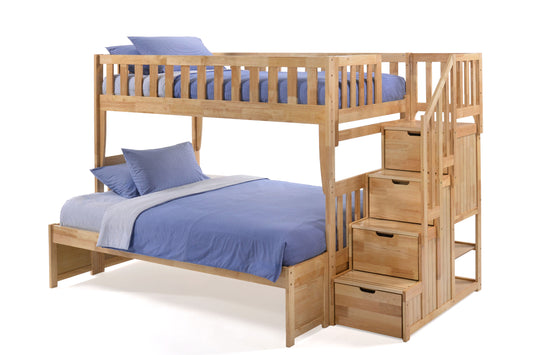
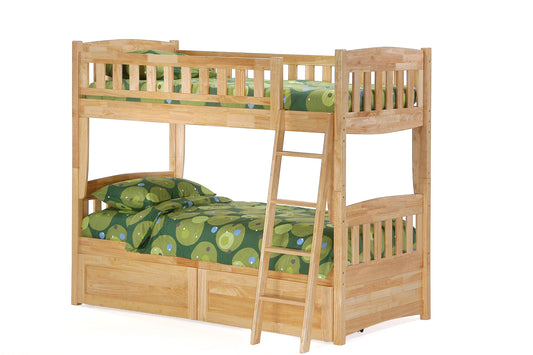
The Phoenix and Sacramento Bunk Beds are both available in twin/twin. The Cinnamon and Peppermint models also offer twin/twin configurations, with the Peppermint adding the integrated staircase.
Twin over Full: The Most Practical Long-Term Choice
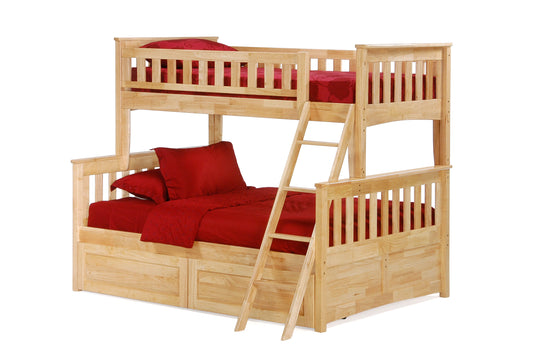
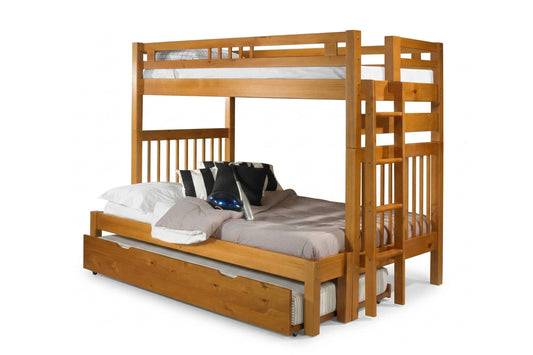
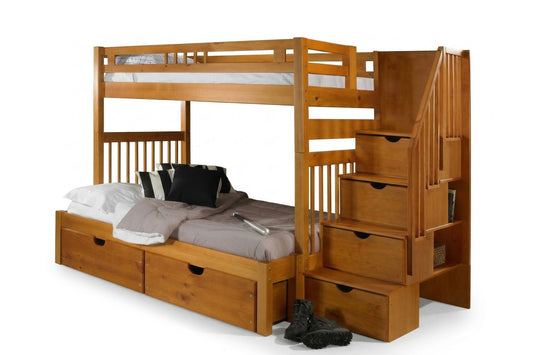
The twin-over-full bunk bed is, for most families with children of different ages, the most practical configuration you can buy. The top bunk stays twin — comfortable for most children and adolescents, and appropriate for the upper sleeping position. The bottom bunk becomes a full, which is 54 inches wide: meaningfully wider than a twin and comfortable well into adulthood.
This matters for a few reasons. An older or larger child in the bottom bunk has room to sleep comfortably without feeling cramped. A parent sitting on the lower bunk to read a bedtime story has room to sit. If the bunk bed is eventually disassembled and the lower section used as a standalone bed in a teenager's room, a full-size mattress is a reasonable adult sleeping surface.
The Sacramento and Sacramento Staircase models offer twin/full configurations in pine. The Cinnamon and Ginger models offer twin/full in rubberwood. If you have two children who are more than three or four years apart in age, or if there's any likelihood that the lower bunk will be used by a teen or adult at some point, twin over full is generally the right answer.
-
Peppermint Staircase Bunk Bed
Regular price From $1,949.99Regular price Sale price From $1,949.99 -
Cinnamon Bunk Bed
Regular price From $1,279.99Regular price Sale price From $1,279.99 -
Cinnamon Futon Bunk Bed
Regular price $1,629.00Regular price Sale price $1,629.00 -
Ginger Bunk Bed
Regular price From $1,689.99Regular price Sale price From $1,689.99 -
Phoenix Bunk Bed
Regular price From $669.99Regular price Sale price From $669.99 -
Sacramento Bunk Bed
Regular price From $819.99Regular price Sale price From $819.99 -
Sacramento Staircase Bunk Bed
Regular price From $1,349.99Regular price Sale price From $1,349.99







Full over Full: When Both Sleepers Need More Space
The full-over-full configuration serves a specific purpose. Both bunks are full-size, making this the right choice when two older children or adults need a comfortable sleeping surface, or when a bunk bed is going into a vacation home or rental property where guests of various sizes might use it.
The Ginger Bunk Bed is Comfort Pure's full-over-full option, built from eco-rubberwood with the same arched styling and Mortise and Tenon construction as the rest of the rubberwood line. It's a heavier, wider frame — which means it requires a larger room and appropriate ceiling clearance — but for the use cases it serves, it's the only configuration that makes sense. For more on adult use cases, the guide to bunk beds for adults covers the full-over-full in more detail.
Room Size by Configuration
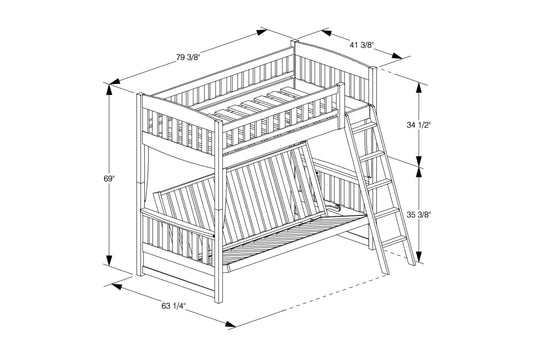
A twin/twin bunk bed typically needs a minimum room dimension of around 10 by 10 feet to function comfortably — enough to walk around, open drawers, and fit a little additional furniture. The bed itself runs roughly 43 to 45 inches deep and 42 inches wide.
A twin/full requires slightly more width — the bottom bunk frame is wider — so 10 by 10 feet is still workable but tighter. A 10 by 12 foot room is more comfortable.
A full/full is the largest configuration and genuinely requires more space. Rooms under 12 by 12 feet will feel crowded with a full/full bunk bed as the centerpiece.

Ceiling Height
All bunk bed configurations require adequate ceiling clearance for the top bunk occupant to sit upright. The standard recommendation is 33 to 36 inches of clearance above the top mattress surface. Rooms with lower ceilings may require a lower-profile frame or a thinner mattress on top. The complete guide to bunk bed mattresses covers mattress thickness and its effect on clearance in detail.
FAQs
Can a twin/twin bunk bed be converted to twin/full later?
Yes. All twin/twin Comfort Pure models include conversion kit compatibility, allowing the bottom bunk to be upgraded to a full-size sleeping surface without replacing the frame. Contact us for details and pricing.
Which configuration is best for siblings of different ages?
Twin over full is generally the most practical for siblings with an age gap. The older or larger child takes the full-size lower bunk, and both sleeping surfaces remain appropriate as children grow.
If you're still working out whether your youngest is ready for the top bunk at all, the age and readiness guide is a useful read before committing to a configuration.
What room size do I need for a full-over-full bunk bed?
A minimum of 12 by 12 feet is recommended. Full-over-full frames are wider and heavier than twin configurations and require proportionally more floor space to function comfortably.
How do I calculate ceiling clearance for a bunk bed?
Measure from floor to ceiling. Subtract the bed's overall height, then subtract your planned mattress thickness. The remaining number should be at least 33 inches for comfortable headroom in the top bunk.
Is full over full appropriate for adults?
Yes. Full-size sleeping surfaces are comfortable for most adults. The Ginger Bunk Bed in full/full configuration is used in vacation homes and rental properties specifically for this reason.
The size decision becomes straightforward once you think about who is sleeping in each bunk now, who will be in two or three years, and how much room the bed is allowed to occupy. Twin/twin for younger children with room to upgrade. Twin/full for most families with children of different ages. Full/full for older occupants or properties where adult comfort is the priority.