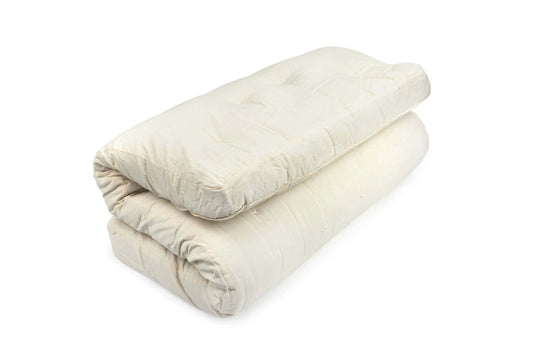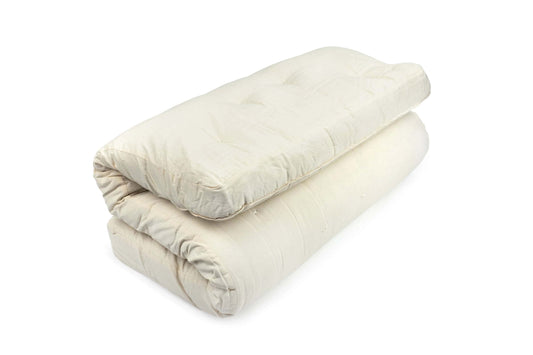

The Truth About Japanese Futons: The Difference Between a "Mat" and a "Mattress"
A recent conversation in the floor-sleeping community has sparked a debate that leaves many sleepers confused: Are American-made shikibutons "fake" because they are heavier and thicker than the lightweight mats found in Japan? Are the airy, lightweight imports the only "true" path to floor sleeping?
It’s a valid question. If you’ve been browsing Reddit threads or watching reviews, you might feel forced to choose between "Authentic" (Light/Japanese) and "Westernized" (Heavy/American). But this choice is misleading. The answer isn’t about which is "real." It’s about physics and lifestyle.
In Japan, a futon is a Mat moved daily. In the West, we built a Mattress designed to support you nightly. Here is the unvarnished reality of the difference, why the "Western" evolution happened, and why your back might actually prefer the heavier option.
In this article:
- 1. The Origin Story: Physics of the "Mat"
- 2. The Western Evolution: Why we built a "Mattress"
- 3. The Truth about "Overstuffing"
- 4. Why we add Wool (The Secret Weapon)
- 5. Thickness Guide: Which profile do you need?
- 6. The "Cheap" Trap: Understanding Budget Mats
1. The origin story: physics of the "Shikibuton Mat"
To understand the design of a traditional Japanese futon, look under it. You cannot separate the mattress from the floor it was built for.
The Tatami factor
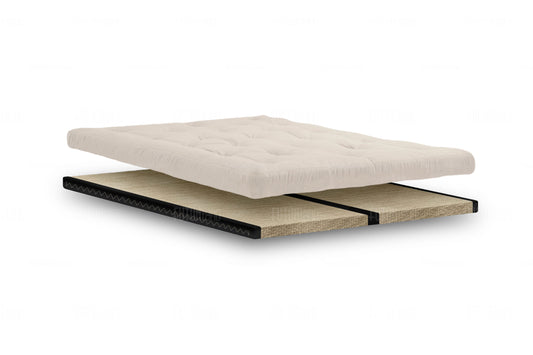
In a traditional Japanese home, the floor is active infrastructure. Tatami mats—thick blocks of woven soft rush grass (Igusa) packed around a rice straw core—provide significant shock absorption. A standard Tatami mat is roughly 2 inches thick and has natural "give."
When you sleep on Tatami, the floor does 50% of the work. It absorbs the pressure from your hips and shoulders. Because the floor is forgiving, the mattress on top—the shikibuton—doesn't need to be structurally self-sufficient. It can be thin (2–3 inches) and relatively simple.
In the Western market, a product this thin relies entirely on the surface beneath it. Because of this, what looks like a "Traditional Futon" to a purist is often categorized as a Mattress Topper in our collection—a comfort layer designed to go on top of a support system, rather than acting as the standalone bed.
The ritual of the closet
The second factor driving the "Mat" design is space. Japanese homes are historically compact and multi-functional. A room that serves as a bedroom at night often becomes a dining or living space during the day.
This creates a requirement: The Morning Fold. Every morning, the bedding is cleared away. To make this possible for everyone, the shikibuton must be lightweight (typically 10–15 lbs). It needs to be flexible enough to hoist over a balcony railing or stuff onto a high shelf.
The trade-off: maintenance is mandatory
This portability comes with a trade-off often missing from romanticized videos of Japanese living: Maintenance. To keep a thin, all-cotton mat fluffy, it requires aggressive care. In Japan, "sunning" the futon is a necessary chore. The sun kills bacteria and dries out sweat absorbed by the cotton. Beating the futon refluffs the fibers.
Without this frequent ritual, a thin, lightweight mat compresses into a hard, flat board quickly. It relies on the user to mechanically "reset" the loft.

2. The Western evolution: why we built a "Mattress"
When floor sleeping migrated to the West, the environment changed. The "Mat" encountered a different ecosystem—one that required a new approach to airflow and support.
The sealed floor problem (and why we don't sleep directly on it)
Western homes rarely have breathing floors like Tatami. We have hardwood, laminate, concrete, or tile. These surfaces are sealed and cold.
We do not recommend placing any natural mattress directly on a sealed floor.
Why? Physics. When a warm human body sleeps on a cold, sealed floor, condensation forms beneath the mattress. Without the natural airflow of traditional straw tatami, that moisture gets trapped, leading to mold and compacted cotton.
To solve this without giving up the "floor sleeping" feel, we use breathable barriers. We recommend placing your shikibuton on a Mattress Rug—either a traditional Tatami mat or a Coconut Coir pad. These provide the necessary airflow gap to keep your mattress healthy while keeping you grounded.
The foundation solution
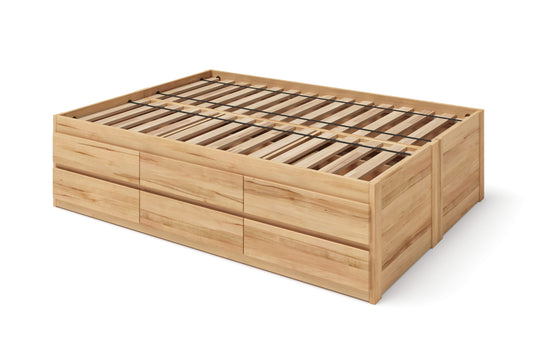
Even more common than floor sleeping is the use of elevated beds. Western sleepers often want the health benefits of a futon but prefer to be off the ground for ease of entry. We typically recommend using a Platform Bed, or pairing standard bed frames with rigid Mattress Foundations and Bunkie Boards.
If you put a lightweight, floppy Japanese "Mat" on a slat frame with 3-inch gaps, the mattress will drape between the slats. You will wake up feeling the frame beneath you. A Western-style Shikibuton needs the structure to bridge those gaps.
The evolution: density as a solution
To adapt, American craftsmen evolved the "Mat" into a "Mattress."
- Increased thickness: Moving from 3 inches to 6, 8, or 10 inches.
- Increased density: Packing more material into the casing to create a self-supporting structure that doesn't rely on Tatami.
Yes, this makes them heavier. A high-quality Western Shikibuton might weigh 40 to 60 lbs. But that weight is functional density. It is the mass required to protect your spine and maintain structure on a slatted foundation.
3. The "Cotton Compression" myth & the truth about "Overstuffing"
One critique of Western-style futons is that they are "overstuffed," "lumpy," or that they get firm too quickly. This is true—and intentional.
Understanding compression loading
Cotton is a natural fiber. Unlike polyurethane foam, which is a chemical bubble that bounces back instantly (until it degrades), cotton settles. If you manufacture a mattress that feels perfectly soft and airy on Day 1, it will flatten significantly by Day 30. Physics dictates that cotton will compress under body weight.
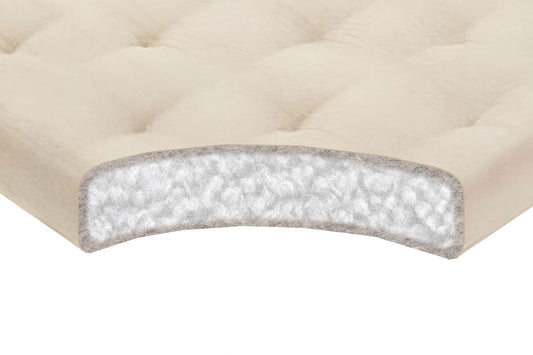
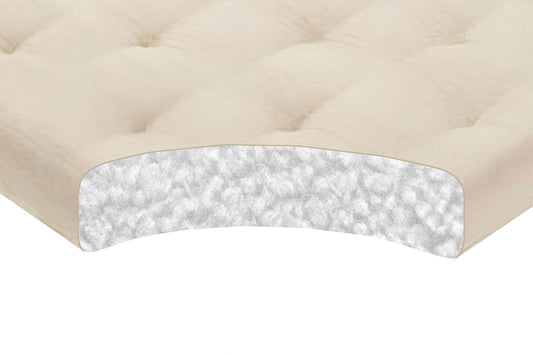
To counter this, high-quality manufacturers use Compression Loading. Our Japanese-Style Handmade Mattresses are effectively "overstuffed." We pack significantly more cotton into the casing than seems necessary. When you first receive it, it might look puffy or rounded.
As you sleep on it, the air is pushed out and the fibers interlock. The mattress settles.
- A "Light" Mat: Settles into a hard, thin layer.
- A "Heavy" Mattress: Settles into a dense, supportive slab.
We build them to break in, not break down. The firmness you feel after a month is the intended support level—a dense surface that keeps your spine aligned.
The "springy" import trap
Some users point to imported mats that seem lightweight yet "springy." They ask, "Why can't American cotton do that?"
Often, it isn't just cotton. To achieve lightness and permanent fluffiness without maintenance, many modern imports mix synthetic polyester fibers into the cotton batting. Polyester is light, cheap, and acts like a spring. While this feels nice, it defeats the purpose of buying a natural mattress.

4. Why we add wool (the "secret weapon")
Authentic Japanese mats are often 100% cotton. While purists love this, it presents two distinct problems in the US market: Fire Safety and Climate Control.
The fire safety paradox
In the United States, mattresses must pass flammability laws (CPSC 1633). To do this naturally, without the chemical sprays often used in cheaper bedding, we rely on nature's technology.
At Comfort Pure, we wrap our cores in natural wool. Wool has a high nitrogen and water content, making it naturally flame-resistant. It chars rather than burns. By using a thick layer of wool, we can pass safety laws without using borate powder or chemical sprays.
The sweat solution
Cotton is hydrophilic—it absorbs moisture. If you have a dense cotton mattress without airflow, moisture gets trapped. Wool regulates this. It wicks moisture away from the cotton core and evaporates it. This keeps the mattress dry and prevents that "clammy" feeling. In a thicker Western mattress, that wool layer is vital for hygiene.
5. Thickness guide: which profile do you need?
One confusing aspect of shopping for a Western Shikibuton is the range of thicknesses. In Japan, you get 3 inches. In the US, you can find everything from 3 to 12 inches. Here is how to choose the right thickness for your needs.
The 3-inch to 4-inch "Purist"
Best For: Dedicated floor sleepers using Tatami or Coir Rugs, Back sleepers, Travel/Van life.
The Feel: Very firm. You will feel the surface beneath you.
Verdict: Closest to the "Authentic" experience. Often functioning similarly to a Heavy Topper, this is perfect for small apartments where the bed must disappear during the day.
The 6-inch to 8-inch "Hybrid"
Best For: Futon Sofas, Side sleepers, Guest beds.
The Feel: Cushioned but supportive.
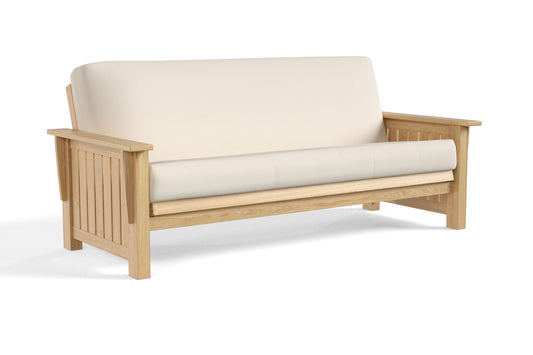
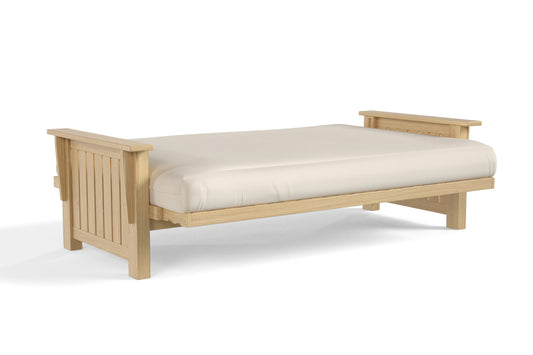
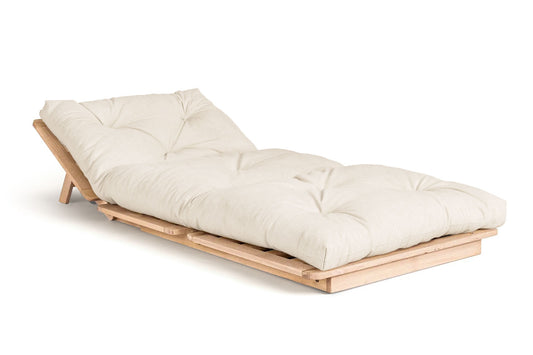
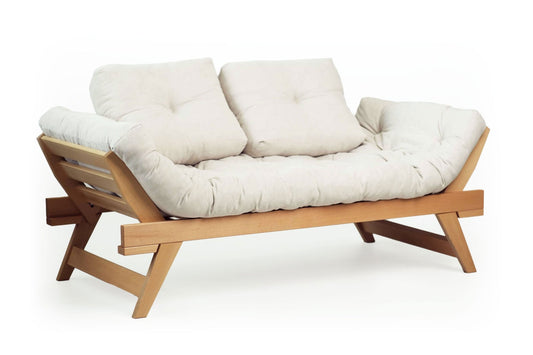
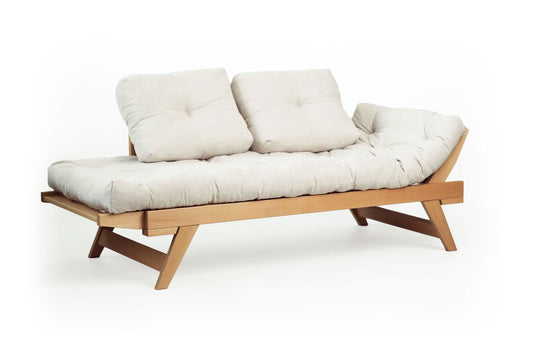
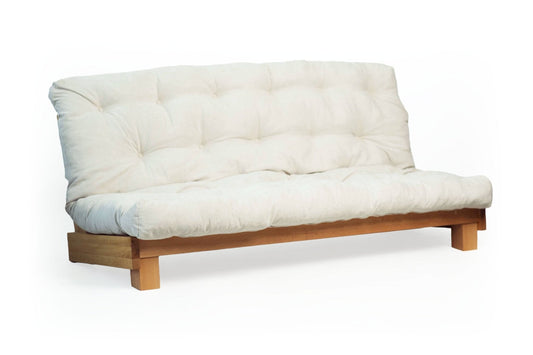
Verdict: The gold standard for Futon Sofas. They are thick enough to sit on without hitting the frame, but thin enough to fold at the crease.
The 8-inch+ "Western Converter"
Best For: Platform Beds, Heavy sleepers, People transitioning from coil mattresses.
The Feel: Substantial. Feels like a standard bed.
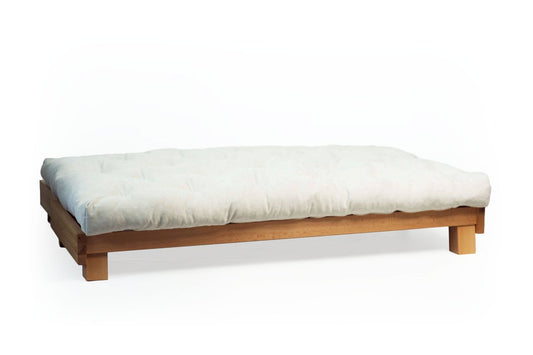
Verdict: If you want the health benefits of cotton/wool but don't want to give up the height of a standard bed, this is your choice. Designed to live permanently on a platform bed frame.

6. The "Cheap" trap: understanding Zonli & budget mats
A third category often clouds this debate: The mass-produced "floor mat" found on marketplaces like Amazon.
Do not be confused. These are rarely Shikibutons. Most budget options are filled with Memory Foam and Polyester Fiberfill, wrapped in a thin microfiber case. They trap heat, often off-gas VOCs, and flatten out like sleeping bags within months.
Comparing a polyester camping mat to a hand-tufted Cotton & Wool Shikibuton misses the point. They may look similar in a photo, but the reality on your skin is vastly different.
7. Comparison: the ecosystem at a glance
| Feature | Japanese Import "Mat" | Comfort Pure "Mattress" | Budget Mat |
|---|---|---|---|
| Primary Material | 100% Cotton (or Poly blend) | Cotton, Wool, Latex | Polyester, Memory Foam |
| Typical Thickness | 2" – 3.5" | 3" – 8" | 3" – 4" |
| Weight | Light (10-15 lbs) | Substantial (30-60+ lbs) | Light (10 lbs) |
| Best Foundation | Tatami Floor | Slats or Mattress Rugs | Floor / Carpet |
| Maintenance | High (Daily Sunning) | Moderate (Monthly Rotation) | Low (Disposable) |
| Fire Safety | Unknown/Exempt | Natural Wool (Safe) | Chemical Treatments |
8. "But I want that bouncy feel!"
Some sleepers try a pure cotton futon and miss the "push-back" or bounce of their old spring mattress. As noted, if an import is "springy," it likely has polyester.
But there is a natural way to get that bounce: Latex.
If you want lightweight responsiveness without the maintenance of cotton or the plastic of polyester, look for a Hybrid. Our collections include options with Natural Latex Cores. This places a layer of resilient, natural rubber between the cotton layers.
- Reduces overall weight compared to a solid cotton core.
- Provides instant rebound (no fluffing required).
- Keeps the mattress from "bottoming out."
This is the evolution of the Shikibuton—taking the best of traditional materials (cotton breathability) and modern natural materials (latex support).
Which one are you?
There is no "fake" or "real." There is only the right tool for the job. The debate between "Mat" and "Mattress" is really a debate about lifestyle.
Choose the Lightweight Import "Mat" (or a Heavy Topper) if:
- You use authentic Tatami floors to provide suspension.
- You plan to fold and store your bed every morning.
- You are a strict back sleeper who enjoys a firm, ground-level sleep.
Choose the Comfort Pure "Mattress" if:
- You sleep on a Western platform bed or use a breathable mattress rug.
- You want natural fire safety (Wool) without chemicals.
- You are a side sleeper who needs pressure relief.
- You want a piece of furniture that looks like a bed and lasts 10+ years without a daily workout.
We honor the Japanese futon by adapting it to the Western home. It’s about ensuring that when you lie down, your mattress supports you.
Inspired by the ongoing conversation in the floor-sleeping community regarding the definition of authentic futons.