
How Does a Futon Actually Work? Frames, Positions, and Mattress Types Explained
At first glance, a futon just looks like a sofa that happens to turn into a bed. Underneath, though, there is a simple mechanical system and a flexible mattress working together to give you both seating and sleeping in the same footprint. Understanding how a futon actually works makes it much easier to choose the right frame, pick the right mattress, and avoid the common comfort problems people associate with cheap dorm futons.
What makes a futon different from a regular bed or sofa?
A conventional sofa is built to be a seat first. A regular bed is built to be a sleeper only. A futon frame is designed from the start to do both by changing shape. That convertible design is what makes futons so useful in small apartments, guest rooms, and multipurpose spaces.
There are three core parts that make a futon work:
- A wooden or metal frame with moving sections and a hinge system.
- A flexible, foldable mattress that can bend with the frame without breaking down.
- A cover and optional protectors that keep the mattress clean and help it look like a finished sofa.
When everything is well designed and properly matched, the frame locks securely in a seated position during the day and opens out into a flat sleeping surface at night. When the frame or mattress is poorly designed, you feel bars, gaps, or sagging, and that is where most of the bad futon stories come from.

The basic anatomy of a futon frame
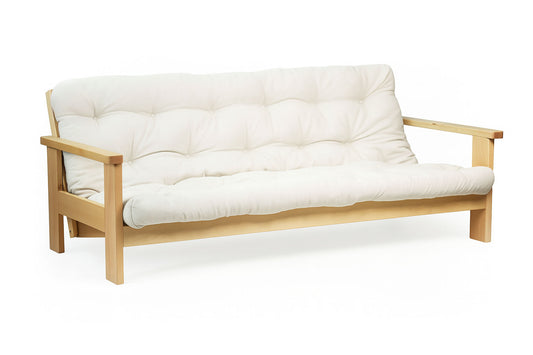
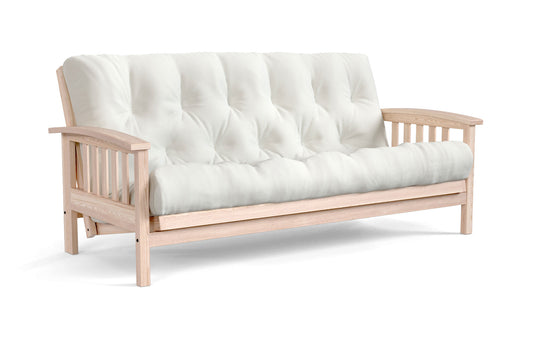
Most futon frames are either bi-fold (two main sections) or tri-fold (three sections). In both cases, the structure is made from a series of slats or panels and a hinge system that allows the back, seat, and sometimes leg section to move between different angles.
Bi-fold futon frames
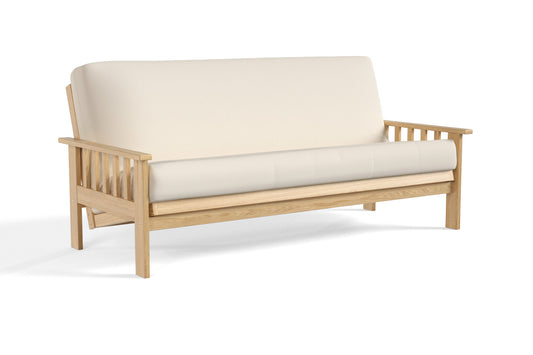
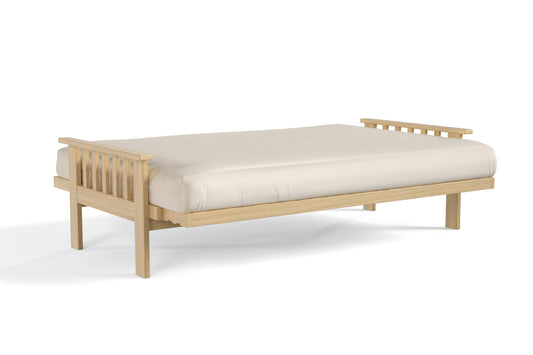
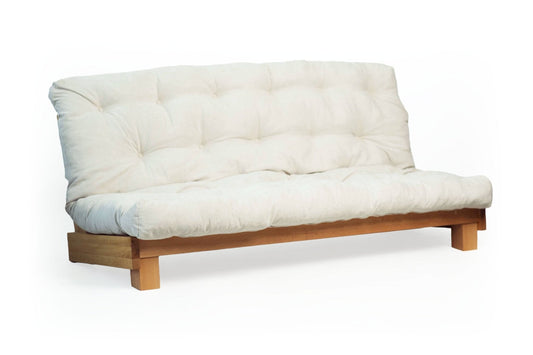
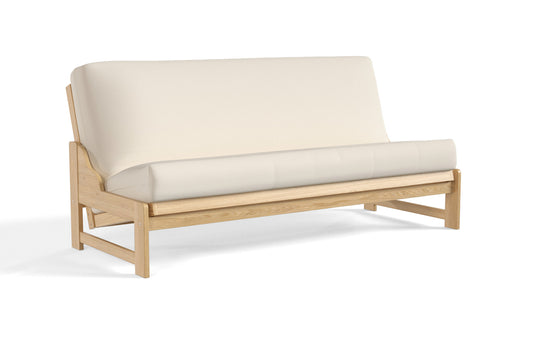
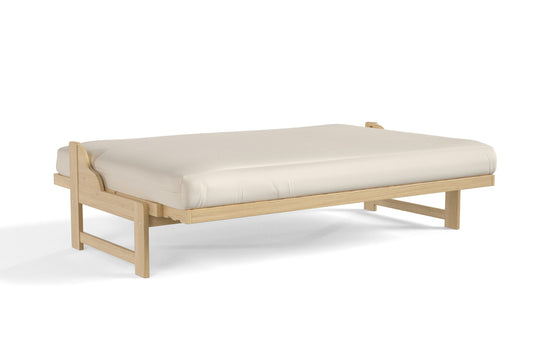
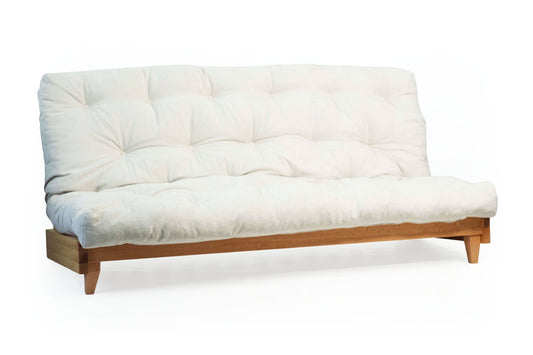
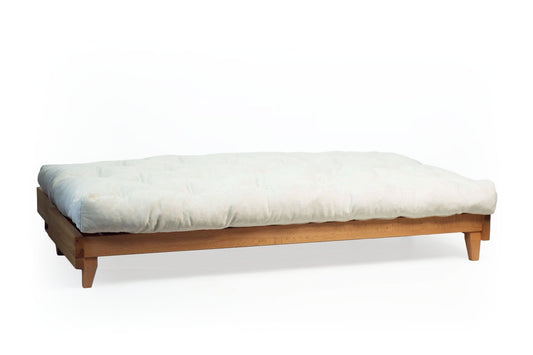
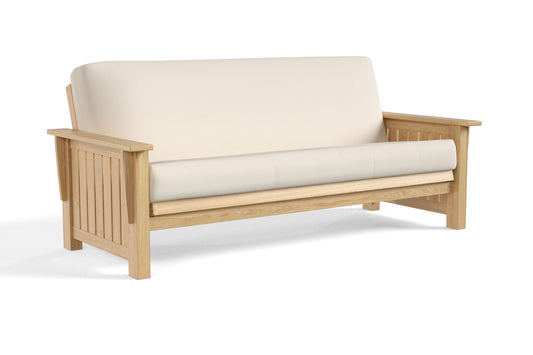
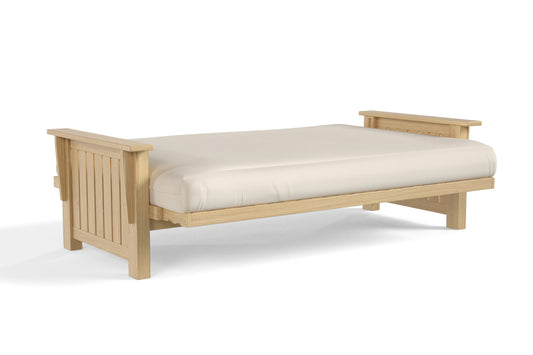
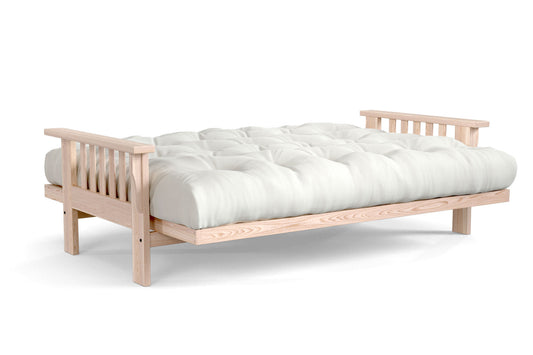
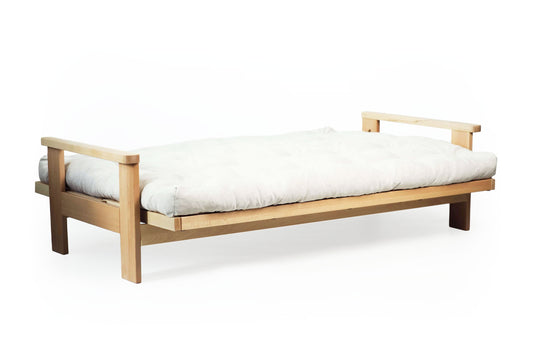
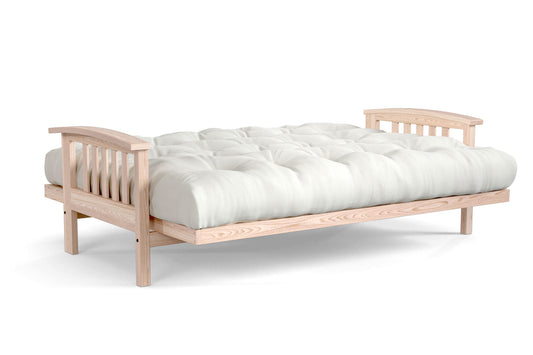
On a bi-fold futon, the mattress folds once across its width. In sofa mode, one half of the frame acts as the backrest and the other half as the seat. When you convert it into a bed, the back section drops down so that both halves lie flat, forming a sleeping surface.
Key details that affect how bi-fold frames work in daily life:
- The hinge mechanism controls how smoothly the back lowers and how securely it locks into place when upright. Higher quality frames use solid, well-fitted hardware that doesn’t wobble.
- The angle of the back in sofa position determines how relaxed or upright the sitting posture feels.
- The spacing and strength of the slats matter, because they support the mattress and prevent it from sagging into gaps over time.
If you want a full-size or queen-size sleeping surface that looks and feels like a real couch, bi-fold models are usually the most common choice. You will see many of these in convertible futon frame collections that are meant to live in the main living space.
Tri-fold futon frames
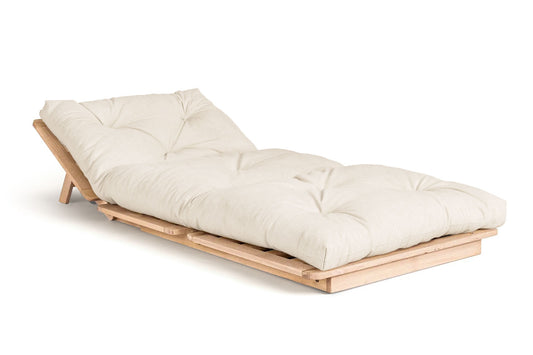
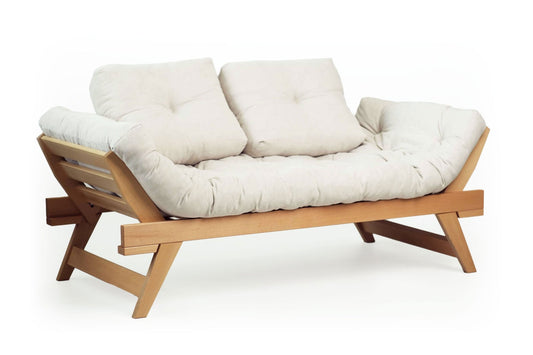
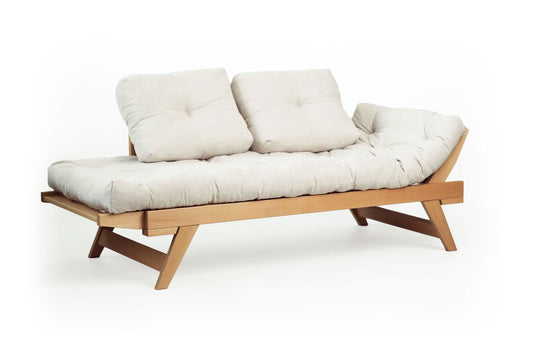
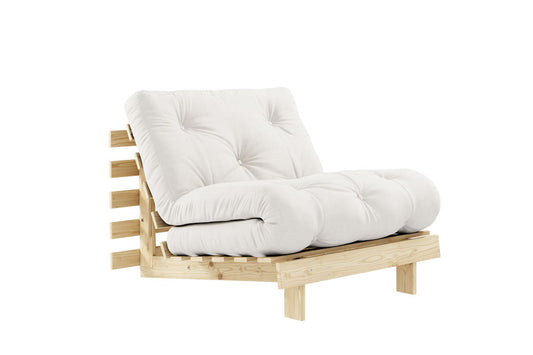
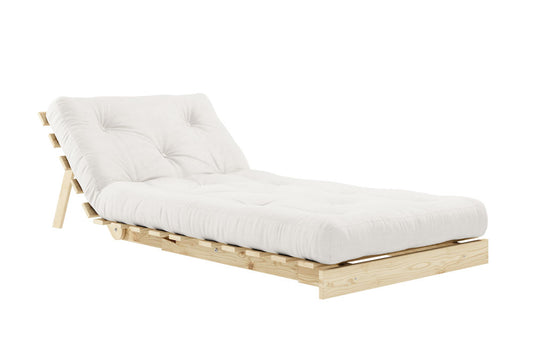
A tri-fold futon frame uses three sections instead of two. The mattress folds in more places, which allows different layouts and more compact seating profiles. In a typical tri-fold design, one section becomes the back, one becomes the seat, and the third may tuck under or extend as a leg support or lounge extension.
Tri-fold frames are especially helpful in tight spaces, dens, or guest rooms where you want a lower, more lounge-like seat or a versatile layout. The tradeoff is that the mattress needs to be more flexible, and you want to avoid overly thick or rigid cores that cannot comfortably bend along all three hinge points.
If you want to compare different frame mechanisms in more detail, an in-depth guide to bi-fold and tri-fold designs can help you match the mechanism to your space and the way you plan to use the futon.
-
Taurus Eco Futon Sofa Bed
Regular price From $519.99Regular price $699.99 Sale price From $519.99Sale -
Hitachi Tri-Fold Futon Sofa Bed
Regular price From $249.99Regular price $599.99 Sale price From $249.99Sale -
El Paso Eco Futon Sofa Bed
Regular price From $689.99Regular price $819.99 Sale price From $689.99Sale -
Aries Eco Futon Sofa Bed
Regular price From $569.99Regular price $699.99 Sale price From $569.99Sale -
Long Beach Daybed Sofa Bed
Regular price From $659.99Regular price $739.99 Sale price From $659.99Sale -
Virgo Eco Futon Sofa Bed
Regular price From $589.99Regular price $699.99 Sale price From $589.99Sale -
Akron Eco Futon Sofa Bed
Regular price From $689.99Regular price $819.99 Sale price From $689.99Sale -
Sendai Tri-Fold Futon Sofa Bed
Regular price From $299.99Regular price $349.99 Sale price From $299.99Sale -
Libra Eco Futon Sofa Bed
Regular price From $619.99Regular price $699.99 Sale price From $619.99Sale -
Mission Flat Arm Amish-Made American Oak Futon Sofa Bed
Regular price From $959.99Regular price $1,219.98 Sale price From $959.99Sale -
Elk Grove Eco Futon Sofa Bed
Regular price From $759.99Regular price $869.99 Sale price From $759.99Sale -
Mission Bent Arm Amish-Made American Oak Futon Sofa Bed
Regular price From $1,019.99Regular price $1,319.98 Sale price From $1,019.99Sale



The role of the mattress: flexible but supportive
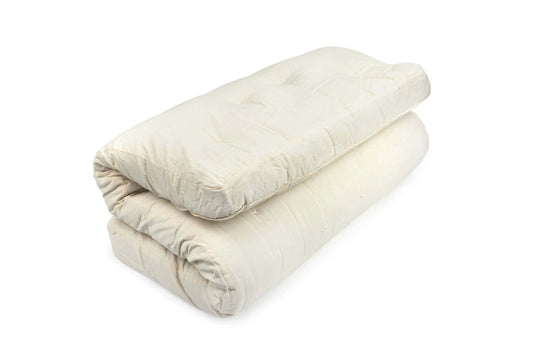
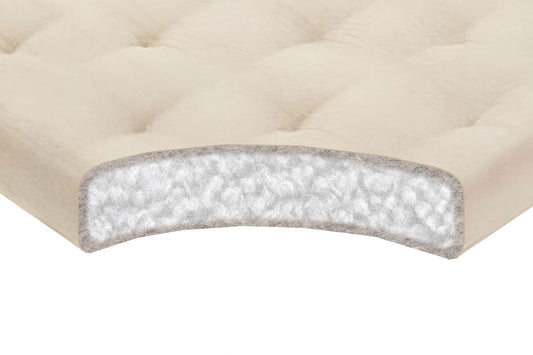
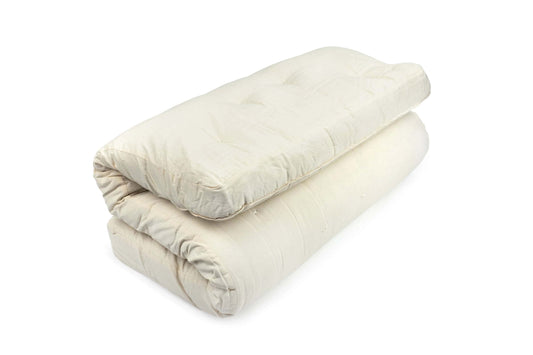
The futon mattress is just as important as the frame. Unlike a typical innerspring bed mattress, which is designed to sit flat for its entire life, a futon mattress needs to bend every time you convert the frame. That is why the best futon mattresses use materials and construction techniques that allow repeated folding without breaking down or shifting.
Common futon mattress builds include:
- All-cotton cores, which feel firm and supportive and gradually mold to the person using them.
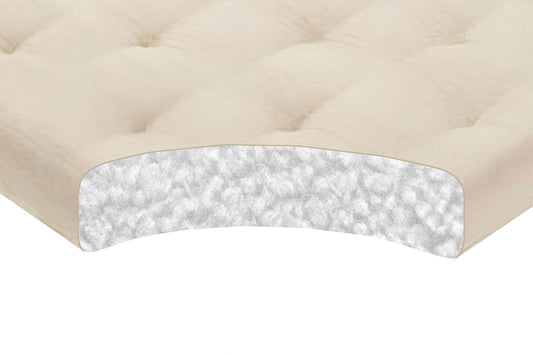
- Cotton and wool layers, which add a bit more loft, pressure relief, and natural temperature regulation.
- Cotton combined with a latex core, which gives more bounce and resilience, especially for everyday sleepers who need a bit more pushback.
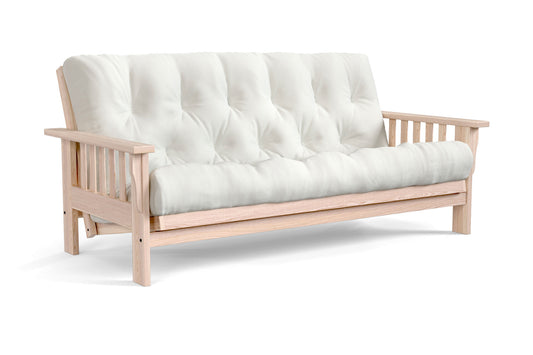
All of these styles are tightly tufted to keep the filling from migrating. The tufting also helps the mattress keep its shape as it folds over the frame. That is why you will often see slightly thinner but denser futon mattresses in collections of Japanese-style floor mattresses, where flexibility and durability matter more than extreme loft.

How a futon converts from sofa to bed
Although the exact motion varies by frame design, most futons follow the same basic sequence when going from sofa to bed:
- Step away any coffee tables or items in front of the futon so the front edge has room to move.
- Lift slightly under the seat or at the front edge to release the locking mechanism holding the back upright.
- Guide the back section down as the hinge pivots, letting the frame open up into a flat plane.
- Smooth the mattress so that it lies evenly across the slats, and adjust any gaps so you have a continuous sleeping surface.
High quality frames use mechanisms that require only a light lift and minimal force to release. Once you are used to it, converting from sofa to bed and back again becomes a quick, one-person job. If the hinge is stiff, noisy, or feels unsafe, that is usually a sign that the frame or hardware is not well constructed.
For people who want more detail on how these convertible designs fit into real homes, an extended futon sofa overview can be helpful when you are comparing against traditional sofa beds and sectionals.
How different mattress types change the way a futon works
The “futon experience” is not only about the frame mechanics. The choice of mattress has a huge impact on comfort, support, and how well the futon performs in both sofa and bed modes.
Here are a few practical examples:
- A thinner all-cotton mattress may feel quite firm at first but will usually sit neatly on a frame, bend easily, and provide strong support once broken in. This style works well in a guest room or a space where the futon is used regularly as a seat and occasionally as a bed.
- A cotton and wool blend mattress offers more surface softness. This can make sofa seating more inviting and reduce pressure points when you sleep, especially if you prefer to lie on your side.
- A mattress with a latex layer in the middle will spring back more readily after folding. That can be useful when you use the futon as your main bed every night and open and close it daily.
Because futon mattresses are made to flex, they generally do not contain the thick steel springs or heavy foam blocks you see in conventional mattresses. If you are unsure about how futon mattresses compare to regular beds, it can help to compare them directly with conventional mattresses in terms of support, durability, and everyday comfort.
Floor futons and Japanese-style configurations
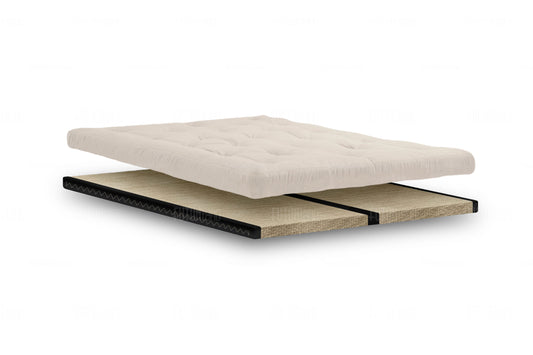
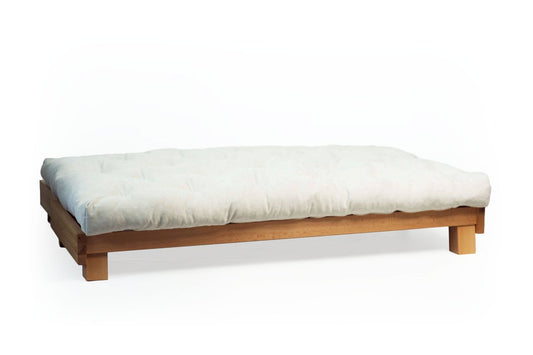
Not every futon uses a sofa-like frame. In traditional Japanese setups, the mattress is placed directly on tatami or a breathable underlay and folded away when not in use. In that sense, the “frame” is the tatami mat or platform, and the mattress is thinner and easier to handle than most Western futon sofa mattresses.
Modern floor futon setups often use:
- A tatami mat or ventilated platform to keep the mattress off the cold floor and allow airflow underneath.
- A medium-thickness shikibuton that can be folded and aired out regularly.
- A lightweight comforter and pillow made from natural fibers to keep the entire system breathable.
If you like the idea of a floor bed but want a bit of structure, collections of tatami mats and low platforms are a good place to start. When you combine those with Japanese-style shikibuton mattresses, you get a flexible sleep system that can either stay out full-time or be folded away when you need the floor space.
Choosing the right frame size and layout
Beyond how the mechanism works, the size and layout of the futon frame determine how comfortable and practical it will feel in your room. Full-size frames are often ideal for studio apartments and home offices, while queen-size frames give couples more room to sleep without feeling cramped.
If you know you want a classic sofa profile with arms and a back that feels much like a conventional couch, a futon frame from a collection of convertible sofa-style futons is usually the best match. If you are outfitting a small den or a narrow guest room, it may be easier to work with full-size futon options that take up less wall space when open but still sleep like a real bed.
For people who want a bigger sleeping surface for two adults, queen-size futon choices offer more width and often a deeper seat in sofa mode. Paired with a supportive, flexible mattress, they can comfortably replace a standard guest bed or even serve as an everyday sleeper.
Putting it all together for everyday use
When you look past the simple “sofa that turns into a bed” label, a futon is essentially a coordinated system of frame, hinge mechanism, mattress construction, and sleep surface. The frame determines how you sit and how easy it is to convert. The mattress determines how you feel when you sit and sleep. The overall design decides whether the futon becomes a favorite spot in your home or something you avoid using.
If you think of the futon more like a flexible sleep system than a piece of disposable furniture, it becomes much easier to invest in the right components. A well-built frame, a mattress made from durable natural fibers, and a cover that fits cleanly will give you a sofa-bed that works smoothly for years. Exploring a deeper look at traditional Japanese bedding or a detailed guide to floor-bed layouts can also help you decide whether you want a classic sofa-style futon, a low-profile platform, or a true floor futon that folds away each morning.
Once you understand how futons work, it becomes much easier to ignore the flimsy, uncomfortable versions and focus on the designs that are genuinely comfortable, supportive, and well suited to the way you actually live.