
Sheets That Keep You Cool: A Practical Guide
Cooling sheets don't lower your body temperature. They either let heat and sweat escape or trap them. The strongest materials for that job include bamboo, cotton, linen, and polyester, with bamboo's bedding-fabric share estimated at 7.8% in 2025, compared with 4.1% in 2020. Market data
The popular advice is to buy anything labeled “cooling.” That's too easy, and often wrong. A sheet can feel cold when you first touch it, then leave you damp and overheated later. For hot sleepers, especially people dealing with night sweats, fast moisture handling matters more than a chilly first impression.
Why Most Cooling Sheets Don't Actually Cool You
“Cooling” is mostly a marketing shortcut. Sheets don't have an active cooling system, and they can't create a lower temperature than the room around you. Their job is passive, but important. They influence how body heat moves away from you and how quickly perspiration leaves the skin.
Two mechanisms matter.
Breathability describes how readily air and water vapor pass through the fabric. An open weave gives warm air a path out of the bed instead of holding it close to your body. Moisture management describes how fabric moves liquid sweat away from the skin, spreads it across a larger area, and allows it to evaporate. The Sleep Foundation explains these two functions as the foundation of cooling-sheet performance.
Initial coolness is a separate sensation. A fabric can draw heat from your hand quickly because of its surface and thermal conductivity, but that feeling fades. It doesn't prove the sheet will keep managing heat or sweat for the whole night.
The practical rule: for night sweats, choose the fabric that dries well, not the one that feels cold for the first few minutes.
A 2021 thermal-comfort study tested structured cool bed linen in air-conditioned bedrooms in a hot-humid climate. The outer layer used 70% polyethylene, 20% polyester, and 10% nylon, with a 95% polyester and 5% nylon mesh lining and a 100% polyester core padding. The design shows that cooling performance can come from fiber choice and fabric structure, not softness alone. Read the study in Sustainability.
Every Cooling Fiber, Ranked by How It Handles Heat and Sweat
No fiber wins for every sleeper. The useful comparison is how each material handles air, liquid, humidity, and feel over a full night.
Cotton
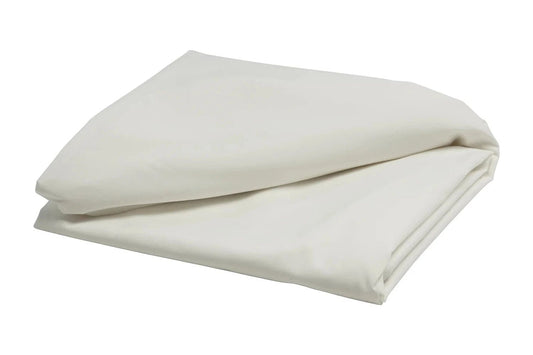
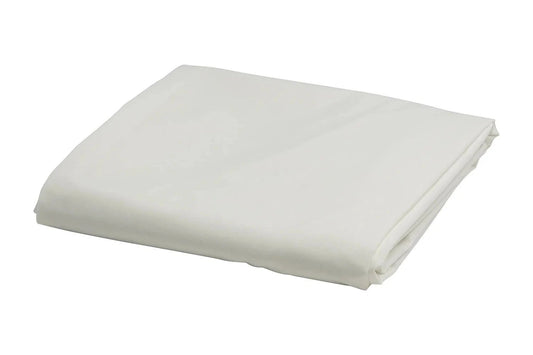
Cotton is the dependable starting point, especially in a percale weave. Good cotton percale feels crisp, allows useful airflow, and works well in dry or moderately warm rooms. Long-staple cotton can feel smoother and hold up better, but the fiber label alone doesn't tell you whether the finished sheet breathes. The weave and finish still matter.
Cotton absorbs perspiration rather than instantly pushing it away. That makes it comfortable for a light sweater, but a heavy night-sweater may eventually feel damp. Choose cotton percale for a consistently hot sleeper who wants a natural, familiar sheet.
Linen
Linen is one of the strongest choices for warm, dry climates. Its naturally irregular linen weave creates an airy hand and a relaxed surface. It absorbs moisture, releases it more readily than dense cotton, and becomes softer with use.
The trade-off is obvious. Linen wrinkles, feels textured, and can seem less polished than sateen. That isn't a performance flaw. If you value airflow over a smooth hotel-sheet finish, linen is worth the compromise.
Merino and traditional wool
Wool sounds like a winter material, but lightweight merino can work surprisingly well in summer. It manages vapor and moisture without immediately feeling wet, and it can buffer changes in comfort as the room shifts from warm to cool. Independent bedding-climate research found that lyocell viscose and lyocell-linen blends had the highest tested breathability, while lyocell and linen blends also moved liquid quickly in both fabric directions. See the bedding-climate research.
Wool isn't the crispest sheet material, and some sleepers dislike its texture. Merino is the better choice for a sleeper who sweats but also gets chilled afterward. Explore merino bedding options only if you want wool's vapor-management benefits and can accept a different hand feel.
Bamboo viscose
Most “bamboo sheets” are viscose rayon regenerated from bamboo pulp, not sheets made from intact bamboo fiber. The finished material is usually smooth, soft, and reasonably good at handling moisture. It can suit a sleeper who wants a drapey sheet with less crispness than percale.
Processing matters, so ask whether the product clearly states that it uses bamboo viscose or rayon. Don't treat the word bamboo as proof of natural processing or superior cooling.
Tencel and lyocell
Tencel is a branded form of lyocell. It generally feels smooth and handles liquid well, making it a strong option for night sweats. The limitation is humidity. In a muggy room, a very smooth moisture-absorbing fabric can feel clammy if evaporation is slow.
Choose lyocell when moisture transfer is your priority, particularly if you dislike linen's texture. The research cited above supports lyocell's strong vapor and liquid-handling performance in tested bedding fabrics.
Polyester and microfiber
Polyester microfiber often feels cool at first because its smooth surface moves heat quickly from your hand. That sensation doesn't guarantee good overnight performance. Tight microfiber constructions can restrict airflow, hold sweat against the sleeper, and retain odor more readily than breathable natural fibers.
Polyester can be durable and inexpensive, but it's a weak default for hot sleepers. Use it only when the product provides convincing construction details and you specifically prefer its smooth, low-wrinkle feel.
Treated and phase-change synthetics
Gel coatings and phase-change treatments can create a temporary cool touch. Industry guidance warns that these effects may diminish with use and washing, so don't confuse a finish with permanent breathability. Forbes explains how cooling-sheet treatments work.
| Fiber | Breathability | Moisture handling | Feel | Best for |
|---|---|---|---|---|
| Cotton percale | High when openly woven | Absorbs, then dries at a moderate pace | Crisp and fresh | Hot sleepers in dry or moderate climates |
| Linen | High | Strong evaporation and vapor release | Textured and relaxed | Dry heat and natural-fiber buyers |
| Merino wool | Moderate to high | Excellent vapor buffering | Warm, soft, lightly textured | Sweaty sleepers who also get chilled |
| Bamboo viscose | Moderate to high | Good absorption and drape | Smooth and fluid | Sleepers who dislike crisp sheets |
| Tencel or lyocell | High in tested constructions | Strong liquid handling | Smooth and cool-feeling | Night sweats and sensitive skin preferences |
| Polyester microfiber | Variable, often limited | Can hold moisture and odor | Sleek and low-wrinkle | Budget buyers who don't overheat easily |
| Treated synthetics | Depends on base fabric | Finish may not last | Cool at first touch | Short-term surface-coolness preference |
Weave and Thread Count, and Why Higher Numbers Often Mean Less Airflow
Look at the weave before you look at the thread count. Percale uses a simple one-over-one structure, giving cotton a crisp feel and generally better airflow. Sateen uses a longer floating-yarn structure, often described as three or four over one, which creates a smooth, dense surface with less air movement. Jersey is knitted rather than woven, so it stretches and tends to hold more warmth. Linen weave is irregular and open, which helps it feel airy.
Thread count is not a cooling score. A very high label can count multi-ply yarns twisted together instead of representing the number of individual fibers passing through the fabric. The resulting cloth may be denser than a well-made, single-ply percale with a lower listed count.
For cotton percale, a practical shopping range is 200 to 400 single-ply, provided the seller clearly identifies the weave and fiber. Higher counts often add density rather than useful durability, and density reduces airflow.

Shopping rule: an open weave made from a sound fiber beats a dense weave with an impressive label.
The same principle applies to linen, lyocell, and bamboo viscose. Fiber affects moisture behavior, while construction determines how easily air and vapor can leave the bed.
How to Read a Cooling Sheet Product Page Without Being Sold Hype
Start with the specification panel, not the product title. A useful product page should answer four questions:
- What is it made from? Look for fiber percentages, not just “natural,” “performance,” or “bamboo-inspired” language.
- How is it woven? Percale, sateen, twill, and jersey behave differently.
- How heavy is the fabric? GSM can help describe knits and some bedding fabrics, while ounces per square yard may appear for woven textiles. A missing weight isn't automatic proof of poor quality, but it removes useful context.
- Where was it made? Country of origin helps you evaluate transparency and compare construction details.
A claim such as “100% cotton” tells you nothing about whether the sheet is percale, sateen, heavily finished, or unusually dense. “Long-staple cotton” and “Egyptian cotton” should come with clear certification or traceable sourcing, not just a badge.
Terms such as “cooling,” “temperature regulating,” and “performance fabric” don't have one universal meaning or one required test. Treat them as prompts to inspect the actual fiber, weave, weight, and finish. Vague proprietary blends, missing GSM, and a product page built almost entirely around a thread count above 800 deserve caution.
For chemical-residue information, look for named third-party standards. OEKO-TEX and Global Standard explain their certification systems and criteria. Certification doesn't make a sheet cooler, but it can provide more useful information about tested substances and processing than an unsupported “clean” claim.
For a starting point, compare the construction details across Comfort Pure's bed-sheet collection.
What Else in the Bed Matters Beyond the Sheets
A breathable sheet can still feel hot if the layers underneath block air or store too much heat. Treat the bed as a system, not a single fabric surface.
The mattress protector sits directly below the sheet. Avoid thick, fully sealed polyurethane-backed designs when airflow is your priority. Look for a cotton or Tencel surface with a thin waterproof film, then check whether the product explains its construction rather than relying on “cooling” language. You can compare mattress protector options.
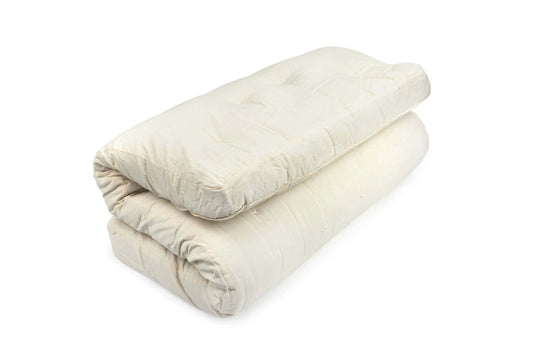
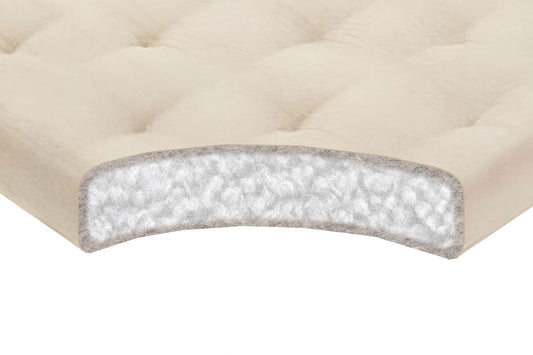
The topper can change the result more than a sheet upgrade. Dense memory foam commonly retains warmth, while latex and wool allow a more breathable surface. If your mattress is already warm, inspect mattress pads and toppers before blaming the top sheet.
The comforter and pillow finish the stack. Down and wool can insulate without the sealed feel of some polyester fills, while a ventilated pillow cover may help with neck sweat. A breathable sheet can't offset a heavy, heat-trapping comforter pulled tightly around the body.
Care Habits That Keep Sheets Breathing for Years
Residue is the quiet enemy of airflow. Body oils, excess detergent, and softener coatings can fill the spaces that help cotton, linen, and moisture-managing fibers release vapor.
Use a fragrance-free liquid detergent and wash according to the care label. Warm water is usually a practical middle ground, while very hot water can stress natural fibers. Skip liquid fabric softener and dryer sheets because their coating can leave a film on the surface.
Dry on low heat or hang the sheets. High heat can weaken fibers and shrink natural weaves, and over-drying is especially hard on Tencel and bamboo viscose. Wash new sheets before the first night to remove residual manufacturing finishes.
If detergent buildup is obvious, an occasional residue-focused wash can help, but follow the care label before adding vinegar or washing soda. Don't combine cleaning agents casually. For households that need help managing bulky bedding, family laundry solutions can reduce the temptation to overdry sheets at home.
Care priority: clean residue away, dry gently, and never coat a breathable sheet with a product designed to make it feel artificially soft.
Matching Fabric to Sleeper Type and Climate
Climate changes the best fabric choice. In dry heat, linen's quick evaporation suits a hot sleeper. In humid air, lyocell handles liquid better, reducing the clammy feeling that comes from sweat sitting against the skin. Choose for the moisture problem you have, not for a temporary cool touch.
| Sleeper profile | Best fiber | Best weave | Watch out for |
|---|---|---|---|
| Consistently hot sleeper in a dry climate | Linen or cotton | Linen weave or percale | Dense sateen and heavy finishes |
| Night sweats at varied room temperatures | Tencel, merino, or bamboo viscose | Open, lightweight construction | Fabrics that only feel cool at first touch |
| Hot, humid bedroom | Tencel or percale cotton | Open percale or breathable lyocell construction | Tight sateen, thick microfiber, coated surfaces |
| Sleeper who overheats but dislikes texture | Tencel or bamboo viscose | Lightweight smooth weave | Assuming smoothness means better drying |
| Couple with different temperature needs | Breathable cotton or linen with separate layers | Percale or open linen weave | One heavy comforter used as a compromise |
| Cool room with occasional overheating | Merino or mid-weight cotton | Breathable woven construction | Very lightweight fabric that leaves you chilled |
For dry heat, linen is my first choice because it releases moisture quickly. For muggy summers, pick Tencel or percale cotton, and avoid a tight sateen surface. During shoulder seasons, mid-weight cotton provides a practical balance without the feel of a highly specialized fabric.
Night-sweat sufferers should rank moisture handling above initial touch temperature. Evidence on objective sleep outcomes remains mixed. A 2025 systematic review cited in a 2026 market article found that cooling bedding could lower core body temperature in the short term, but did not consistently improve sleep onset, total sleep time, sleep efficiency, or sleep stages. A separate pilot study reported that the share of participants who said they slept hot at least weekly was cut in half after cooling sheets were introduced, while complaints linked to night sweats also fell. Read the coverage of the mixed evidence.
The practical takeaway is straightforward: sheets can make the bed more comfortable without treating a medical issue or guaranteeing better sleep architecture. A fabric that absorbs or moves sweat remains more useful than one that merely feels cold for the first few minutes.
For low-chemical, breathable cotton and linen options, compare Comfort Pure with other sellers that clearly describe their materials. If temperature regulation matters in a cool room, merino bedding options are also worth considering, especially for sleepers who overheat intermittently but dislike a thin, chilly sheet.
The Final Verdict and Your Cooling Sheet Questions Answered
The best sheets that keep you cool aren't the ones with the coldest product-page language. They're the ones that move moisture away from your skin, allow vapor to escape, and avoid finishes that block the fabric's natural behavior. Start with cotton percale or linen for straightforward airflow. Choose lyocell or merino when sweat management is the priority.
Are bamboo sheets actually cooling?
Bamboo viscose can feel smooth and manage moisture well, but “bamboo” usually describes the source pulp, not an intact natural bamboo fiber. Check the processing description and weave.
Does thread count affect temperature?
Yes. Higher density can reduce airflow. A lower or moderate single-ply count in an open weave is often a better choice than a very high count.
Is percale or sateen better for hot sleepers?
Percale. It usually allows more air movement and feels crisper. Sateen is smoother and warmer, so choose it only if that feel matters more than maximum airflow.
Is linen worth it?
Yes, if you can accept wrinkles and texture. Linen is particularly convincing in dry heat, where moisture can evaporate readily.
Do cooling sheets work?
They can improve thermal comfort and moisture movement, but they don't guarantee faster sleep onset or better sleep stages. Finishes may create a temporary cool feel, while fiber and weave provide the durable performance.
Are wool sheets too hot for summer?
Not necessarily. Lightweight merino can manage vapor and help regulate changing comfort, though its texture and price won't suit everyone.
Does a higher price guarantee better cooling?
No. Price can reflect fiber quality and construction, but there isn't one universal cooling certification that makes an expensive sheet automatically better.
Check the mattress protector, topper, comforter, and pillow before replacing sheets. Then shop bedding by fiber, weave, finish, and care instructions, not by the word “cooling.”
If you're ready to replace a heat-trapping top layer, compare the available bed sheets and choose the construction that fits your sleeper profile, room humidity, and laundry routine. For a fuller setup, review the comforters and mattress layers together so your new sheet isn't working against the rest of the bed.