
Non Toxic Mattress Pads Compared and How to Choose
For most shoppers, a pad adds comfort and light protection, a protector blocks spills, a topper changes the feel of the bed, and a cover or encasement surrounds the mattress. The non-toxic question matters most with waterproof protectors, which almost always use a plastic film or membrane between the sleeper and mattress.
Quick Answer and Why Most Shoppers Buy the Wrong Product
“Non-toxic mattress pads” sounds like a clear product category. It isn't. Retailers often use pad, protector, cover, and topper as if they mean the same thing, even though each one performs a different job.
That confusion leads shoppers to evaluate the wrong layer. A person looking for comfort may buy a thin waterproof protector. A parent trying to manage bedwetting may choose an absorbent pad that doesn't stop liquid from reaching the mattress. Someone concerned about chemical finishes may focus on an organic cotton face fabric without checking what sits underneath it.
The most important question is usually not whether the top fabric is organic. It's what the barrier is made from.
Research helps explain why shoppers pay attention to the materials closest to the sleep surface. A 2019 study of eight polyurethane mattresses found 18 VOCs, with emissions increasing under higher temperatures that simulated body heat. Another study of two new memory foam mattresses found that mattress-related chemical concentrations peaked on the first day and then declined over the following 31 days. The modeled first-year averages were 2.7 and 4.2 µg/m³, and four chemicals made up about 81% and 95% of the first-year ΣVOC levels in the two mattresses (ScienceDaily summary of the mattress-emissions research).
That evidence doesn't prove that every mattress pad creates a health problem. It does show why buyers compare low-emission materials, breathable construction, and added finishes, rather than relying on the word “natural.”
A protector with an organic cotton surface and polyurethane waterproof backing still contains a synthetic waterproof layer. The cotton certification may apply only to the face fabric. That distinction is the central issue in this category.
The practical rule: Decide whether you need comfort, spill protection, full enclosure, or a change in firmness before comparing materials.
What Each Product Actually Does for Your Bed
Start with the job. Product names matter less than construction.
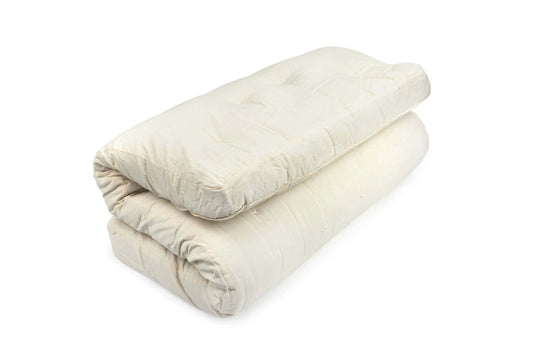
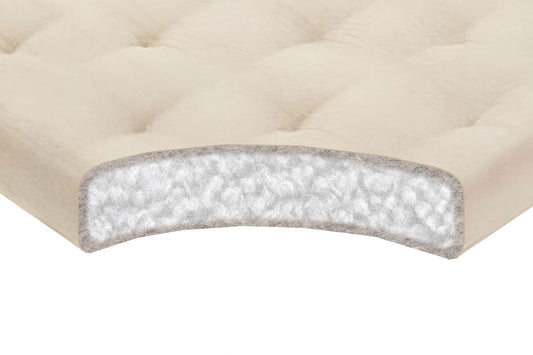
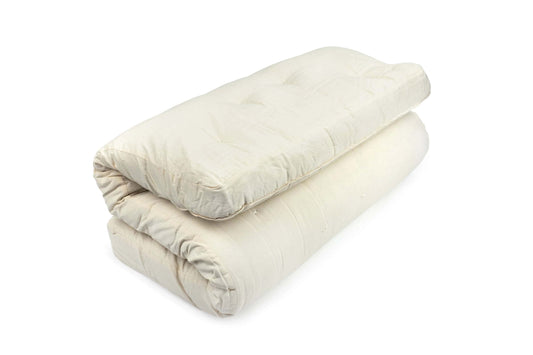
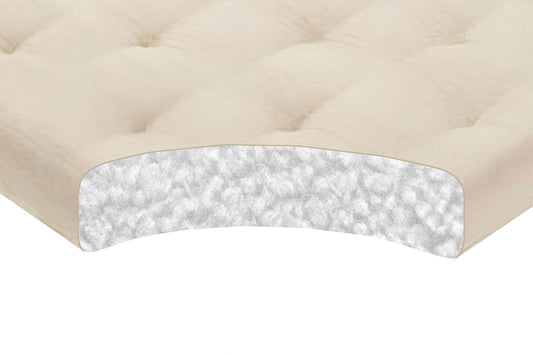
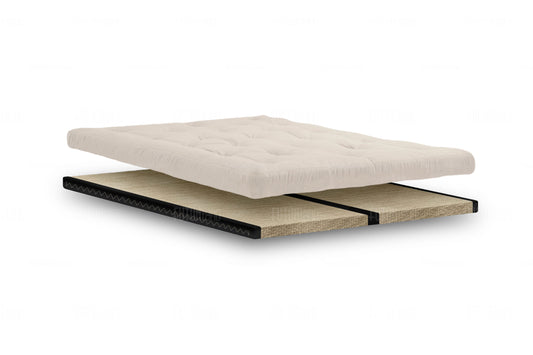
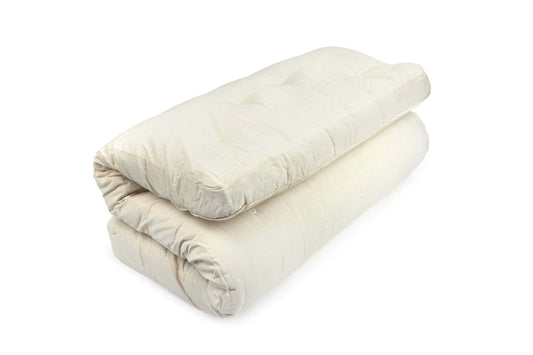
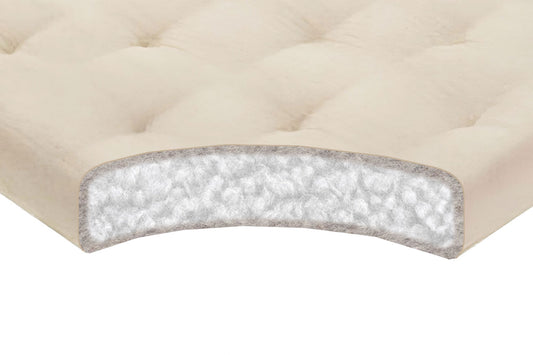
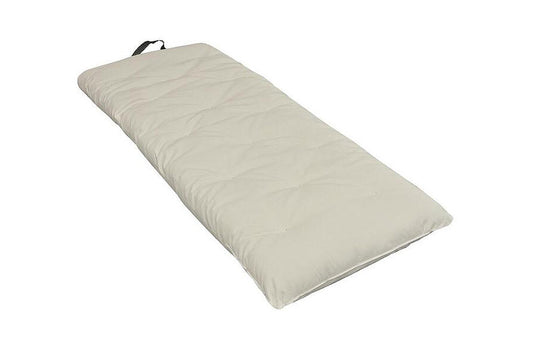
A mattress pad is usually a relatively thin layer that adds softness, light cushioning, and some absorbency. Common fills include cotton batting, wool, polyester, or latex. Many pads aren't waterproof. They may absorb perspiration or small spills, but liquid can still pass through to the mattress.
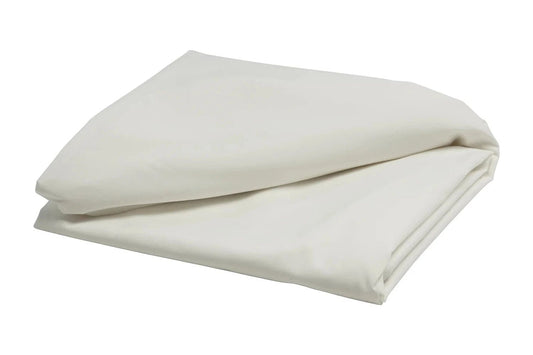
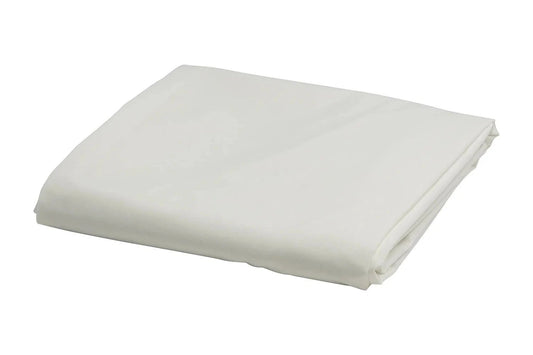
A protector is primarily a barrier. Its purpose is to block sweat, spills, stains, and other moisture from reaching the mattress. The common construction combines a fabric face with a waterproof membrane. That membrane is where questions about polyurethane, TPU, vinyl, PVC, and fluorinated treatments become relevant.
A topper is thicker and changes the feel of the bed. Retailer guidance commonly places protectors under 1 inch, pads around 0.5 to 2 inches, and toppers around 2 to 4 inches (mattress-cover and mattress-pad comparison). A topper can add pressure relief or firmness, but it usually isn't a substitute for a waterproof protector.
A cover or encasement surrounds the mattress, often on all six sides. It can protect against spills, dust, and other particles when the zipper, seams, and fabric construction create a continuous enclosure. A fitted cover that only covers the top and sides isn't the same as a full encasement.
| Product Type | Primary Job | Typical Materials | Waterproof | Breathability |
|---|---|---|---|---|
| Mattress pad | Comfort and light protection | Cotton batting, wool, latex, polyester, cotton face fabric | Usually no, unless laminated | Often good with cotton or wool |
| Mattress protector | Moisture barrier | Cotton or polyester face with polyurethane or TPU membrane, sometimes vinyl or PVC | Usually yes | Varies by membrane and fabric |
| Topper | Changes mattress comfort and support | Latex, wool, foam, cotton, fiber blends | Usually no | Varies widely |
| Cover or encasement | Full enclosure and surface protection | Woven cotton, synthetic fabric, membrane, zipper, sealed seams | May be, depending on construction | Lower when tightly sealed or laminated |
The sleeping surface also sits within the larger indoor environment. Readers who want broader context can review this practical resource on understanding health impacts of poor air without treating a mattress product as a medical solution.
If you need a true liquid barrier, compare construction details in the mattress protector collection, not just the product title. If you need cushioning, start with mattress pads or toppers. For full enclosure, look at mattress rugs and confirm whether the product covers every side.
Materials That Determine Breathability Protection and Feel
Waterproofing and breathability pull in opposite directions. A continuous membrane blocks liquid because it closes pathways through the fabric. The same construction can slow the movement of air and water vapor.
That doesn't make a waterproof protector a bad choice. It means you need to choose based on the kind of protection you need.

Barrier materials
Polyurethane laminate is common because it can create a flexible, relatively quiet waterproof backing. It's still a synthetic layer, even when it's bonded to organic cotton. Check whether the manufacturer names polyurethane directly and whether the certification applies to the fabric, the finished product, or both.
TPU, or thermoplastic polyurethane, is another synthetic membrane used in waterproof bedding. Product pages should identify TPU rather than hiding it under phrases such as “natural waterproofing” or “chemical-free barrier.”
Vinyl and PVC form a more visibly plastic-like barrier. They may be effective against liquid, but they can feel less flexible, less breathable, or noisier depending on the construction. Buyers who want fewer undisclosed materials should look for explicit statements about whether vinyl or PVC is present.
Wool handles moisture differently. It can absorb and buffer water vapor, helping the sleep surface manage dampness. Textile research found that wool has higher water-vapor permeability than cotton and polyester, which the authors connected with faster sweat evaporation, drier skin conditions, and thermal comfort in normal or warm environments (systematic review of bedding fibers).
Wool isn't a true liquid barrier. A wool pad may manage perspiration and minor moisture, but a large spill or repeated wetting can reach the mattress.
| Barrier Material | Waterproof | Breathability | Durability | What to Check |
|---|---|---|---|---|
| Polyurethane laminate | Yes, when intact | Moderate to good, depending on construction | Can weaken with heat and repeated washing | Exact membrane name, care limits, certification scope |
| TPU membrane | Yes, when intact | Varies by film and fabric | Flexible, but still sensitive to laundering and heat | Whether TPU is disclosed and how it's bonded |
| Vinyl or PVC | Yes | Usually lower than open woven fabrics | Can crack, peel, or become noisy over time | Presence of PVC, odor, plasticizers, and warranty |
| Wool | No, not as a liquid barrier | High moisture-vapor permeability | Can last with careful care | Fiber content, shrinkage instructions, and whether a separate barrier is included |
Fully waterproof and fully breathable are competing goals. If liquid protection is essential, accept a membrane and choose the most clearly disclosed construction. If vapor movement matters more, consider wool or breathable cotton and accept that they won't stop every spill.
Face fabrics and fills
Organic cotton is popular because it feels familiar, washes reasonably well, and can be certified under a recognized textile standard. Wool adds moisture buffering and insulation. Polyester can provide resilience and lower bulk, but shoppers should check whether it includes stain-resistant, antimicrobial, or water-repellent finishes.
Pad fills change the feel more than the waterproof performance. Cotton batting feels soft and flat. Wool feels springier and manages vapor well. Latex adds resilience and structure, though it isn't automatically organic or free of every added treatment. Polyester fiberfill can be washable and durable, but it's a synthetic material.
The broader buying guide for bamboo sheets is useful for comparing fiber claims and processing language across bedding, although the same principle applies here: identify the actual fiber and finish instead of relying on a broad natural label.
Flame retardants deserve separate attention. A pad shouldn't be treated as the main fire-safety layer. The mattress's own barrier and compliance construction matter more than adding a flame-retardant treatment to a removable pad. Ask the mattress manufacturer what its barrier contains rather than assuming a pad changes that construction.
Antimicrobial and silver finishes also require direct disclosure. “Fresh,” “hygienic,” or “odor control” may describe a treatment rather than the fiber itself. If the page doesn't name the active treatment, ask before buying.
Stain-resistant and water-resistant finishes deserve similar scrutiny. One study detected PFAS in 72% of 47 stain- or water-resistant items and in 4 of 7 mattress pads or protectors tested (Toxic-Free Future PFAS results). That finding doesn't identify every product on the market, but it's a strong reason to ask whether a water-repellent finish is used and whether PFAS are excluded.
Certifications and How to Read a Product Page Without Guessing
A certification logo can describe one component while the product page leaves the rest unclear. Sort the product first. A pad adds cushioning, a protector helps block spills, a topper changes the surface feel, and an encasement surrounds the mattress. The non-toxic question usually centers on the waterproof barrier, because that layer may sit between the sleeper and the mattress.

What the main certifications cover
GOTS, the Global Organic Textile Standard, covers organic fibers, processing, environmental and social criteria, and supply-chain traceability. Its requirements can restrict substances such as PFAS. GOTS certification does not automatically cover a polyurethane membrane attached to a cotton face unless that component falls within the certified scope. The Global Organic Textile Standard information explains the standard and its scope.
GOLS, the Global Organic Latex Standard, applies to organic latex, processing, and chain of custody. It does not automatically certify cotton fabric, a waterproof backing, a zipper, or an entire mattress pad. A product containing GOLS latex may still include materials outside that certification.
OEKO-TEX Standard 100 tests textile components for listed harmful substances. OEKO-TEX has banned intentional PFAS use in certified products since January 2024 and screens for a broad chemical marker through total organic fluorine. Check the certificate number and product scope through the OEKO-TEX Standard 100 certification information.
GREENGUARD Gold addresses VOC emissions limits for indoor products, including bedroom products. It is an emissions certification, not an organic-fiber certification or a guarantee that every material is natural. UL provides the relevant GREENGUARD Gold certification information.
A product-page reading routine
Read the page as a materials document, not only as a sales headline.
- Find the fill percentage. Identify cotton batting, wool, latex, or polyester, and check whether the listed percentages describe the complete fill.
- Name the backing. “Waterproof” is incomplete. Look for polyurethane, TPU, vinyl, PVC, or a statement that no membrane is used.
- Match the certificate to a component. The certificate may cover the cotton cover, latex fill, or finished product. Those are separate claims.
- Look for the certificate number. It lets you verify the issuing organization and product scope.
- Check what's missing. An absent fiber breakdown, backing material, certificate number, or treatment disclosure deserves a pause.
A page may clearly identify the face fabric while leaving the membrane unexplained. That gap matters most when comparing a non toxic mattress cover with a simple wool or cotton pad.
For a mattress built with certified components, see the Naturepedic collection. The organic mattress collection can also help separate mattress certifications from accessory certifications.
Care Washing and How Long Protection Really Lasts
A waterproof protector can fail through care, not just age. Heat, aggressive drying, folding, and repeated stretching can weaken the bond between the fabric and membrane.
Follow the care label over general advice. Cotton and wool need different handling, and laminated products often need cooler washing and lower drying temperatures than ordinary sheets.
A simple care routine
- Wash at the listed temperature. Higher heat may shrink the face fabric or stress the laminate.
- Use a mild detergent. Avoid bleach unless the manufacturer explicitly allows it.
- Skip fabric softener. It can leave a coating on absorbent fibers and may interfere with surface performance.
- Dry conservatively. Line drying or low heat is usually gentler than high-heat tumble drying.
- Avoid ironing. Direct heat can damage membranes and synthetic backings.
- Inspect after washing. Look for peeling, bubbling, cracking, crinkling, or a change in water resistance.
A protector doesn't have one universal replacement schedule. Replace it when the barrier no longer works, the fabric has worn through, seams open, or the membrane starts to delaminate. A pad may last longer when it isn't exposed to repeated wetting, while wool often needs careful airing and spot cleaning rather than frequent machine washing.
If a mattress needs attention beyond routine surface care, a professional mattress sanitizing service can explain what can be cleaned safely. Don't saturate a mattress to compensate for a worn protector.
The mattress's own flame barrier remains the relevant safety construction. A removable pad can protect the surface or add comfort, but it shouldn't be treated as a replacement for the mattress manufacturer's fire-safety design.
For washable sheets and other sleep layers, browse bedding with the same attention to fiber, finish, and care instructions.
Matching the Right Choice to Your Situation and The Final Verdict
The right product depends on the problem you're solving.
For infant or toddler bedwetting, liquid protection usually matters more than maximum airflow. Choose a fitted protector with a clearly named membrane, secure edges, and care instructions that support frequent washing. Keep fit and safety appropriate for the specific mattress, and don't add loose layers to a baby sleep surface without checking the mattress and bedding guidance.
For adult night sweats, start with a breathable wool or cotton pad if the priority is moisture-vapor movement. Add a waterproof protector only when spills, wetting, or warranty protection makes a liquid barrier necessary. Wool options such as myMerino focus on moisture management, not waterproofing.
For allergen management, use a true encasement rather than a top-only pad. The zipper should close continuously, the seams should be securely constructed, and the fabric should form a consistent barrier around every mattress surface. The mechanism is the enclosure itself, not a chemical treatment.
For protecting a new mattress or its warranty, check the warranty language first. Some manufacturers require a protector, while others specify the type of damage or moisture evidence that can affect coverage.
For pure comfort, choose a pad or topper. A waterproof protector won't add meaningful cushioning, and a thick topper won't necessarily stop liquid.
The final verdict
A non toxic mattress pad isn't defined by one material or one logo. It's defined by a clear match between the job, the fibers, the barrier, the treatments, and the certification scope.
If you need waterproofing, acknowledge that the barrier is usually synthetic. If you want the most breathable construction, choose cotton or wool and accept the limits of non-waterproof materials. Comfort Pure's protectors use a synthetic backing, so buyers should weigh that waterproofing trade-off rather than mistake an organic face fabric for a fully plastic-free product.
Frequently asked questions
What's the difference between a pad and a protector?
A pad adds cushioning and light protection. A protector is designed mainly to block liquid and stains, usually with a membrane.
Is there a waterproof protector without plastic?
A true waterproof protector needs a continuous barrier. Wool can buffer moisture but isn't a liquid-proof layer, so shoppers seeking full waterproofing should expect some form of synthetic membrane or film.
Does wool work as a waterproof layer?
No. Wool can absorb and move moisture vapor, but it won't reliably stop a large spill from reaching the mattress.
Does GOTS cover the whole product?
Not automatically. GOTS may cover the certified organic textile and its processing, while a membrane, zipper, thread, or other component may fall outside that certification.
Are antimicrobial treatments a concern?
They're an added treatment to investigate. Look for direct disclosure of antimicrobial or silver finishes, and don't assume “odor control” means untreated fabric.
Can you wash a mattress protector?
Usually, yes, if the care label permits it. Use the stated temperature and drying method because repeated heat and laundering can degrade laminates.
Do you need a protector on a new mattress?
A protector can help protect against spills, perspiration, and stains, but the right choice depends on the mattress warranty and your actual use. Don't buy one just because a retailer calls every mattress layer a pad.
If you're furnishing a child's sleep space, compare the baby mattresses and the named Organic Coco Mattress Pad with its disclosed coconut coir, natural latex, wool, and cotton construction. For a natural mattress replacement, review the organic mattresses collection rather than expecting a thin pad to change the mattress itself.
[CTA shortcode: shop non-toxic mattress pads]
[CTA shortcode: compare mattress protectors]
Choose the product by job first, then verify every layer that touches the mattress or sleeper. Before ordering, check the fill percentage, backing material, certificate number, certification scope, treatments, and care label. That short review will tell you far more than the words “natural” or “non-toxic” on the front of a product page.