
Night Stand Dimensions: A Complete Guide for 2026
The most common advice says to buy a 24 to 28 inch nightstand. That works beside many traditional beds, but it assumes the mattress top sits around 25 inches from the floor. A platform, tatami, or floor bed can sit much lower. For those beds, the mattress top, not the frame, determines the right night stand dimensions.
The Quick Answer
The right night stand dimensions start with your mattress top, not a standard furniture chart. Measure from the floor to the surface where you sleep, then choose a nightstand that reaches that height or sits up to 2 inches higher. This keeps a lamp, phone, or book within easy reach without making the table feel oversized.
Use the mattress-top height as the anchor:
- Traditional frames often suit 24 to 28 inches.
- Low-profile platform beds commonly suit 18 to 22 inches.
- Tatami and floor beds often suit 12 to 18 inches.
These ranges are starting points, not fixed rules. A box-spring-height setup can support a taller table, while a floor-level mattress usually needs a lower one. Matching the table to the sleeping surface also keeps the bedside view balanced.
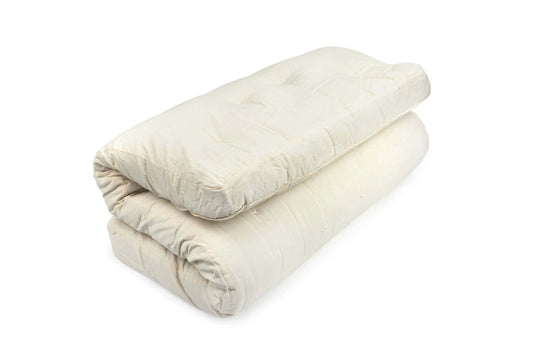
Measure after placing the mattress, shikibuton, and any topper on the bed. If the mattress top measures 19 inches, an 18 to 20 inch nightstand should work. At 23 inches, look for roughly 22 to 24 inches. The frame may be tall or short, but your hand reaches toward the mattress top. That surface determines the useful height.
Where the Standard 24 to 28 Inch Range Comes From
The familiar 24 to 28 inch height range reflects older bed construction more than a universal bedside rule. Traditional North American beds often used a box spring, which raised the mattress to a level that furniture makers and buying guides came to treat as normal. That history still shapes the market, with Birch Lane's nightstand dimension guide listing 24 to 28 inches as a common height range.
Market references also describe a typical nightstand footprint of about 24 by 18 by 26 inches, or roughly 61 by 46 by 66 cm. Products commonly span 21 to 29 inches wide and 12 to 30 inches deep. Drawer-based tables may sit around 20 by 20 inches, while round tables often measure 17 to 20 inches across. These figures describe available furniture, not the correct choice for every bed. (ItemFits' nightstand dimensions guide)
Why the default misses low beds
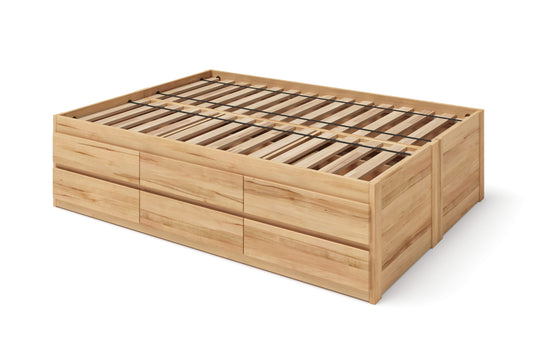
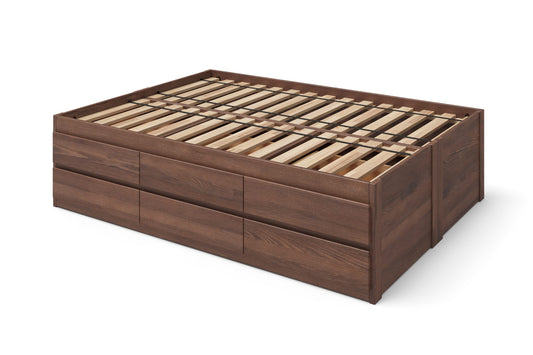
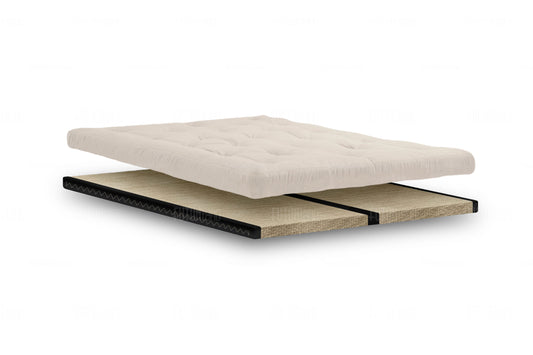
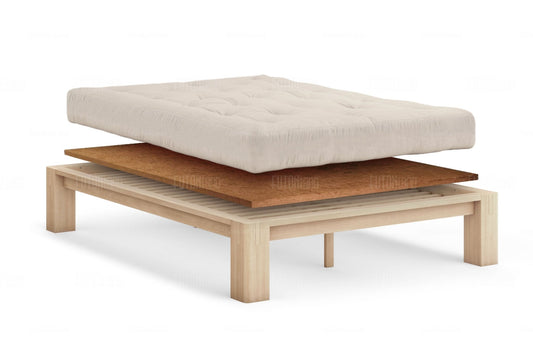
Understanding night stand dimensions starts with the actual mattress surface rather than a furniture category. A platform bed removes the box spring, while a tatami frame or floor bed lowers the whole arrangement. The frame deck may sit near the floor, yet the mattress or shikibuton adds its own thickness.
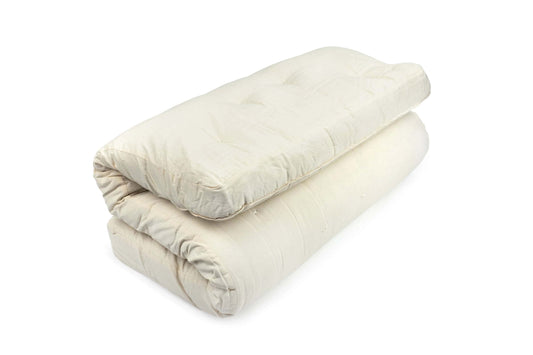
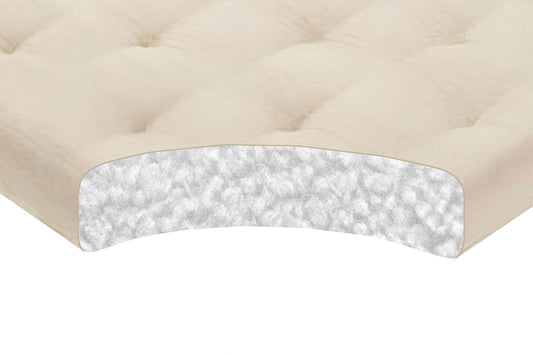
That thickness changes the usable height. Two beds can share the same frame but need different nightstands if one has a thin shikibuton and the other has a thick mattress. The relevant measurement is the distance from the floor to the top surface where your hand reaches.
The guidance on choosing nightstand height follows that mattress-first approach. The same logic applies when comparing platform beds. Measure the finished bed, then choose the table. The standard range is a market reference, not a requirement.
The Three Measurements That Matter
When evaluating night stand dimensions, focus on three measurements: height, width, and depth. Each answers a different practical question. Height affects reach, width affects proportion and storage, and depth affects how much space the table takes from the walkway.
Height controls reach
Height determines whether you can reach a phone, glass, book, or lamp switch without lifting your shoulder from the mattress. Compare the tabletop with the mattress top, not just with the bed frame. A nightstand level with the mattress, or up to 2 inches higher, keeps everyday items within a natural reach.
A table that sits too low makes your arm drop farther than necessary. One that sits too high makes you reach upward and may interrupt the visual line beside the bed. The guidance from Techne Furniture on nightstand dimensions also separates standard beds from platform beds and thicker mattress setups, so a single height cannot suit every room.
Width controls proportion
Width determines how much surface you have and how the table relates to the mattress and headboard. A twin or full bed generally pairs well with a narrower table around 18 to 22 inches wide. Queen and king beds can accommodate more surface, often around 22 to 28 inches, depending on the room and storage needs.
A wider tabletop can hold a lamp and books together, but it may crowd a narrow wall. Measure the open space beside the bed first, including room for drawers or doors to open.
Depth controls clearance
Depth determines how far the furniture projects into the walkway. For many bedrooms, 15 to 18 inches is practical. A compact room may need 12 to 14 inches to keep doors, closets, and foot traffic clear.
Height is the measurement most easily misjudged because shoppers compare the table with the frame instead of the mattress surface. Width and depth tell you whether the table fits. Height tells you whether it feels natural to use.
Match the Nightstand to the Mattress Top, Not the Frame
Accurate night stand dimensions begin with the distance from the floor to the top of the actual mattress. Use this simple calculation:
Frame deck height + mattress thickness = mattress-top height.
The frame is only the starting layer. A box spring belongs in the equation if you use one, and a topper belongs there too because it raises the surface your arm must reach. Froy's mattress-to-nightstand height explanation recommends keeping the tabletop level with the mattress or about 1 to 2 inches higher.
Example with a shikibuton
A tatami-style platform with a 6 inch deck and a 4 inch shikibuton creates this mattress-top height:
6 + 4 = 10 inches.
A nightstand about 10 to 12 inches high should align comfortably. If no table matches exactly, select the closest option that does not sit noticeably above the mattress.
Example with a thicker mattress
Keep the 6 inch frame and replace the shikibuton with a 10 inch latex mattress:
6 + 10 = 16 inches.
The matching nightstand now falls around 16 to 18 inches. The frame stayed the same, but the mattress changed the required table height by 6 inches.
For an existing setup, use a bed frame size calculator to organize clearances, then verify the actual floor-to-mattress-top measurement. Support choices can also raise the deck, so compare mattress foundations before ordering furniture.
Frame Plus Mattress Lookup Table
Use this table to find your night stand dimensions based on the frame and mattress combination. Each cell shows the finished mattress-top height, calculated by adding the frame deck height to the mattress thickness. Choose a nightstand at that height or up to 2 inches higher, following the 0 to 2 inch guideline.
| Frame deck height | 3 in mattress | 4 in mattress | 6 in mattress | 8 in mattress | 10 in mattress | 12 in mattress |
|---|---|---|---|---|---|---|
| 3 in | 6 in | 7 in | 9 in | 11 in | 13 in | 15 in |
| 5 in | 8 in | 9 in | 11 in | 13 in | 15 in | 17 in |
| 6 in | 9 in | 10 in | 12 in | 14 in | 16 in | 18 in |
| 7 in | 10 in | 11 in | 13 in | 15 in | 17 in | 19 in |
| 8 in | 11 in | 12 in | 14 in | 16 in | 18 in | 20 in |
| 10 in | 13 in | 14 in | 16 in | 18 in | 20 in | 22 in |
How to use it: Locate your deck height in the left column, then follow that row to your mattress thickness. The intersecting value is the mattress-top height. Match it with a nightstand of the same height, or choose one no more than 2 inches higher.
For example, a 6 inch deck with a 10 inch mattress gives a 16 inch mattress-top height. A table between 16 and 18 inches should keep the surface within reach without rising noticeably above the bed.
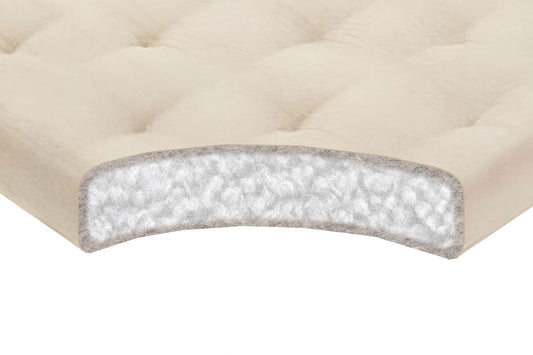
Rounding note: If two available tables are close, the lower one is usually safer for a low bed. Tufted and euro-top mattresses can compress differently from foam-only mattresses, so measure the finished sleeping surface rather than relying only on the listed thickness. A small difference in the final measurement can change which table height feels most natural beside the bed.
Width, Depth, and Drawer Clearance
Once you have settled on night stand dimensions for height, choose the footprint around the room. Width should relate to the bed, while depth should relate to the walkway and nearby doors. A table can fit beside the mattress yet still make the room awkward to use.
| Bed size | Practical nightstand width |
|---|---|
| Twin | 18 to 21 in |
| Full | 18 to 22 in |
| Queen | 20 to 24 in |
| King | 22 to 26 in |
These are working proportions, not strict rules. A twin or full bed usually looks balanced with a compact table. A queen can support more surface area, and a king often needs a wider piece so it does not appear undersized. In a small bedroom, preserving walking space matters more than filling the wall.
Depth and drawer clearance
Set depth by the route you take around the bed. Use 16 to 18 inches where the walkway is open, 14 to 16 inches beside a narrow passage, and 12 to 14 inches near a door or closet swing. Depth is the cabinet's forward projection, so every extra inch becomes space your legs and bedding must clear.
Drawer configuration changes usable storage. A shallow top drawer keeps glasses, a phone, or a book within reach, while deeper drawers hold bulkier items but may require a deeper cabinet. Open cubbies avoid drawer swing, and pull-out trays still need room to extend beyond the mattress edge.
Before buying, tape the intended width and depth on the floor. Then open each drawer with the bed made. Check the mattress edge, hanging bedding, and your legs at the same time. If any of them collide, a smaller footprint or a different drawer layout will work better than choosing a shorter table.
Floor Beds, Tatami Beds, and Storage Trade-Offs
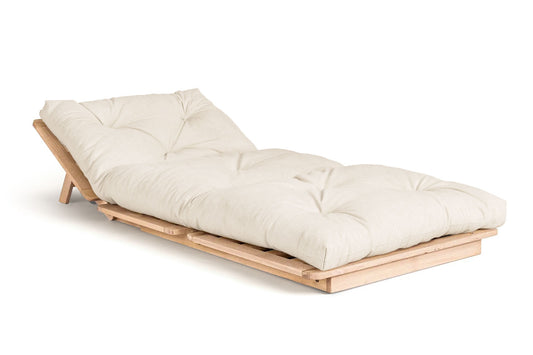
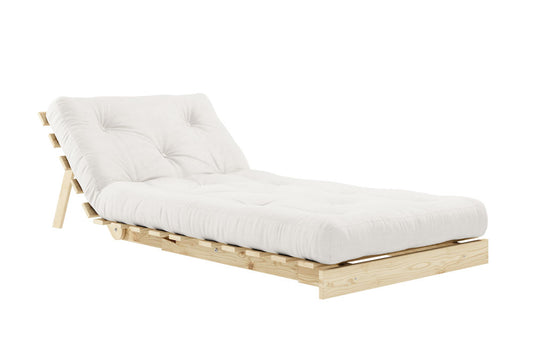
A low bed changes the visual scale of the entire room. A 24 inch nightstand can tower over a floor-level mattress, making the bedside feel more like a desk than an extension of the bed. For tatami and floor arrangements, the useful working band is 12 to 18 inches, with the exact choice set by the mattress top.
A 14 to 16 inch table can sit comfortably beside a sleeping surface created by a low frame and a thinner mattress. Keep the depth below 16 inches where possible. A deep cabinet next to a low bed looks bulky because its mass rises above the mattress line while its footprint takes up valuable walkway clearance.

Less height means less storage
Short cabinets usually give up some drawer volume. A low nightstand may use one drawer and an open cubby rather than several deep drawers. A floating shelf can preserve floor space, while a slim rolling cart can move out of the room when you need a clearer floor.
For a compact, child-friendly reference, a floor bed nightstand with storage shows how a low bedside piece can combine a small surface with accessible organization. The same principle works for adult rooms, but construction still matters.
Solid wood, simple joinery, and a durable finish suit a minimalist bedroom because the piece gets daily handling. Oak, ash, and birch can keep a small cabinet visually light, while thick composite panels may feel heavier at the same dimensions. If you're comparing low sleeping arrangements, review the options in the floor beds collection.
A small table can also serve another purpose. A 14 inch nightstand may work as a temporary laptop perch or a place to sit while tying shoes, provided its construction supports that use.
The Final Verdict and Common Questions
The right night stand dimensions begin with one measurement: the floor-to-mattress-top height. Add the frame deck height to the mattress thickness, then choose a table whose finished surface sits level with the mattress or up to 2 inches higher. Traditional setups often fall in the 24 to 28 inch range, while low platform beds commonly suit 18 to 22 inches, and tatami or floor beds often suit 12 to 18 inches.
Use this final checklist before buying:
- Measure the mattress top after the bed is fully assembled.
- Check the table's usable surface, not just its overall cabinet height.
- Confirm drawer, door, bedding, and walkway clearance.
- Compare the table width with the bed and the available wall space.
- Decide where overflow items will go if the nightstand has limited storage.
These checks catch a common mistake: choosing a table from a product label such as “low” or “standard” instead of comparing its finished height with the actual bed. A nightstand can have suitable proportions and still feel awkward if its drawer hits the bedding or its depth narrows the walking path.
Frequently asked questions
Should a floating shelf follow the same height rule?
Yes. Measure from the floor to the top of the mattress, then place the usable shelf surface at that level or up to 2 inches higher. Include the shelf thickness and mounting hardware in the installation measurement.
Can an upholstered nightstand work beside a low bed?
Yes, if you measure the finished upholstered top. Padding can compress during use, so a surface that begins slightly below the mattress may remain easier to reach.
How much space should sit between the bed and nightstand?
Keep the table close enough to reach without stretching, while leaving space for bedding and cleaning. The needed gap depends on the frame, mattress edge, and whether the table uses drawers or doors.
What height works for a glass of water at night?
A surface level with the mattress or up to 2 inches higher is usually easiest to reach with an extended arm. A much taller table may require lifting your shoulder from the bed.
What if two people share a king bed but use different mattress heights?
If both sides share one mattress, measure that mattress top. If the sleeping surfaces differ, size each table from its own side's mattress height, then keep the tables similar in visual weight.
Should a nightstand be wider than the mattress?
No fixed proportion is required. A wider table can suit a large bed, but measure the wall and walkway first so the room does not feel crowded.
Where should storage go if a low nightstand has only one drawer?
Move less-used items to a shallow wall cabinet, floating shelf, or rolling cart. Keep the bedside surface limited to items used each night.
Where can I compare matching furniture?
Compare the nightstand, bedroom chest, and mattress sizes together. For the bed itself, review platform and tatami options after measuring the mattress top.
A properly sized table should make nighttime routines feel natural. Measure the assembled bed, record the mattress-top height, test the reach from a lying position, and check the clearance around every moving part.
Explore nightstands sized for low-profile beds
Compare platform, tatami, and floor bed options