
Minimalist Bedroom Ideas for Small Rooms: A Practical Guide
The popular advice is to own less. That's incomplete. In a small bedroom, the bigger problem is usually visual weight, not the number of possessions. Lower the furniture line, reduce material variety, and give every useful object a fixed home. Those three changes make the room calmer before you buy anything.
What Minimalism Actually Means in a Small Bedroom
Minimalism in a bedroom isn't an empty room, an all-white palette, or a strict ownership contest. It's a way of controlling what the eye has to process. A tall headboard, open wardrobe, chunky nightstand, laundry basket, and several small objects can make a compact room feel crowded even when it contains fewer pieces than a carefully arranged room.
The reason is simple. Every object carries visual mass, and a small room has less wall, floor, and air around that mass. A 10 by 10 room with seven slim, low pieces can read as cluttered, while the same room with four solid-wood pieces at seating height can feel composed. The count matters less than the silhouette, height, color, and material of each piece.
Minimalist bedroom ideas for small rooms work best when you apply three levers:
- Lower the furniture line. A low bed and compact storage expose more wall and floor.
- Reduce visual variety. Repeating natural wood, undyed textiles, and a restrained tone range creates continuity.
- Assign every remaining object a home. A clear surface stays clear when books, cables, clothing, and laundry have somewhere specific to go.
This approach also respects what you already own. Before replacing a bed, look at its height. Before buying storage, inspect the furniture that's blocking the door or breaking the longest sightline. Minimalism becomes expensive when it starts with a shopping list instead of an honest edit.
The tradition supports this reading. The modern decluttered home developed alongside modernism and was explicitly championed by minimalist art and design in the 1960s, with reduced visual load and simpler forms at its center. That lineage matters in a small room because calm comes from fewer competing shapes, not from a compulsory lack of personality. The historical origins of the decluttered home offers useful context.

The Principles Behind a Calm Small Bedroom
Minimalism in a small bedroom is a visual-weight problem, not an ownership contest. A room can hold the furniture you already own and still feel calm if solid forms, dark colors, strong patterns, and glossy finishes do not dominate the view. A tall black wardrobe carries more visual weight than a pale cabinet of the same width. A matte surface usually recedes more than a reflective one.
Start with sightlines, the routes your eyes follow through the room. From the entrance, aim to see a clear stretch of floor. Keep tall storage out of the direct view opposite the bed, and avoid placing furniture where it interrupts the window. Then build horizontal continuity. A related low line across the bed, bedside surface, and storage makes the room read wider than a collection of unrelated heights.
Negative space needs a job. Preserve usable gaps between furniture and walls, and keep 60 to 90 cm of circulation between pieces where the layout permits. Measure the routes before buying anything. Arcadium3D's small-bedroom layouts shows why accurate measurements and clear movement paths should guide changes to the room.
Apply a limited palette of roughly three materials and three tones maximum. Treat it as a working rule, not a decorating law. Repeat the existing wood species where possible, pair it with one textile family, and keep metal or painted accents restrained. Related finishes can make mismatched furniture look intentional, which is often more useful than replacing it.
| Principle | Before | After |
|---|---|---|
| Sightline | Wardrobe, chair, and laundry interrupt the view | A clear route links the door, bed, and window |
| Floor space | Several low-wide pieces spread across the room | Storage is consolidated into one vertical or under-bed zone |
| Material count | Mixed woods, glossy laminate, patterned fabric | Repeated wood, quiet textiles, and one supporting finish |
For practical guidance on making small rooms feel bigger, edit what the eye notices first before adding decorative solutions.
Rule of thumb: keep furniture low, finishes related, and gaps intentional.
Why a Low Bed Changes Everything
The bed is the room's largest object, so its height sets the visual horizon. A high divan can divide the wall and make every neighboring piece feel undersized or forced. A low platform or slatted frame leaves more uninterrupted wall above the mattress, which gives the eye a longer vertical plane to read.
Design guidance for small bedrooms often recommends furniture no taller than 40 to 48 inches, while low-profile pieces with slim legs or raised bases preserve visible floor area. This small-bedroom furniture guidance supports the practical reason to avoid bulky, tall forms. The point isn't a particular style. It's the relationship between the mattress line, the wall, and the furniture around it.
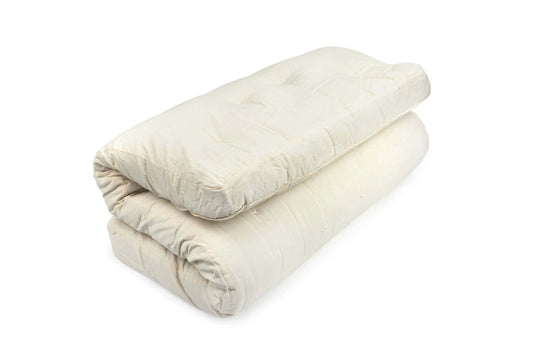
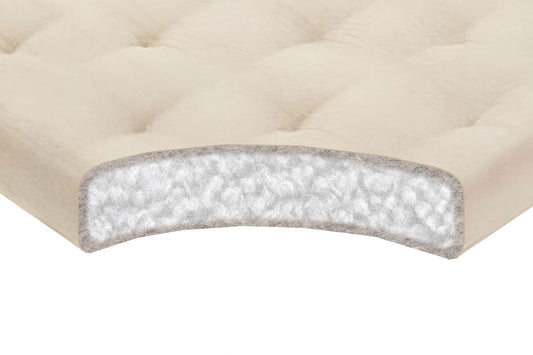
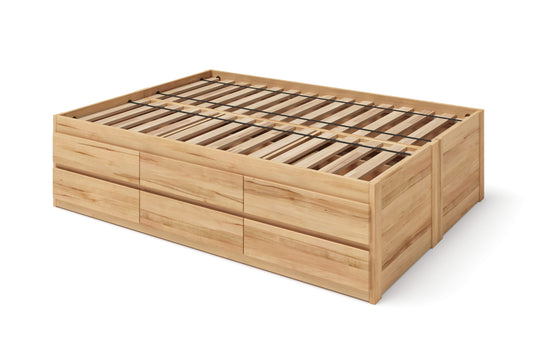
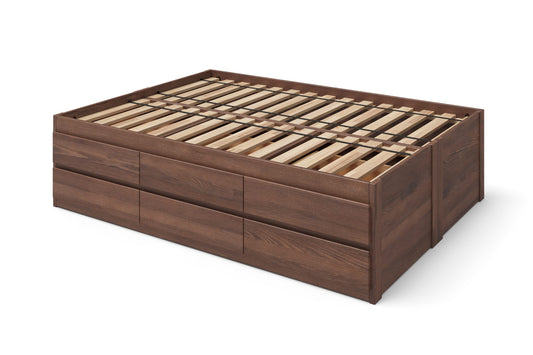
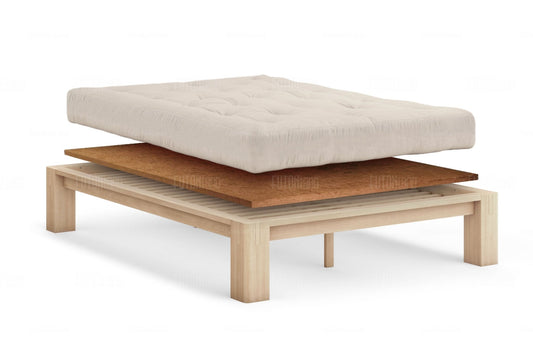
I usually start with a solid-wood platform frame on short legs or a simple slatted base. A mattress around 15 to 20 cm high keeps the overall profile controlled, but mattress comfort and support still come first. If you need something behind your back for reading, use a thin lumbar cushion or a low upholstered panel rather than a full-height headboard.
A headboard isn't automatically wrong. It's wrong when it consumes the clearest wall area without adding useful function. In a very small room, a low wood headboard, a narrow upholstered rail, or no headboard at all usually leaves a cleaner sightline. The minimalist low-profile bed frame collection shows the kind of open profile that suits this approach.
The trade-off is real. Low beds are harder to make and less accessible for some people. Add a 5 cm topper if the sleep surface needs more height, or choose drawers integrated into the frame so the lost under-bed volume becomes useful storage rather than dead space.
Furniture Count and Storage That Disappears
Start with a strict count: one bed, two bedside supports or one shared surface, one wardrobe or clothing rail, and one compact seat or dressing table. That's a starting framework, not a rule that overrides the room's needs. If you work in the bedroom, the desk may replace the dressing table. If the wardrobe is outside the room, you may need only the bed and one bedside surface.
Remove the pieces that create friction first. Duplicate tables, abandoned luggage racks, spare chairs covered with clothing, and furniture that blocks the door should go before you consider replacing anything. Measure the route from the entrance to the window, wardrobe, and both sides of the bed. Small-room guidance recommends preserving clear circulation rather than scattering multiple storage units around the perimeter.
Put storage in order of use
Use under-bed drawers or lift-up storage for seasonal clothing, spare bedding, and items you don't reach for every day. Put frequently worn clothes in closed storage at a comfortable height. A tall, narrow cabinet often works better than several low-wide pieces because it uses vertical territory without spreading across the floor.
Design guidance commonly treats the area above roughly 60 inches as available storage territory, provided the items remain safe and reachable. Wirecutter's small-bedroom ideas covers the practical value of under-bed storage, wall shelves, and furniture with dual use.
Closed doors and drawers create one calm plane. Open shelving should hold a small edited collection, not every object that lacks a home. A narrow wardrobe beside the door can use dead space more effectively than a deep unit opposite the bed, where opening doors and drawers may interfere with circulation.
For additional ideas on keeping compact rooms workable, Admiral's Yard Self Storage bedroom ideas is useful because it treats storage as a zoning problem rather than a reason to add more furniture. If drawers are the right answer for your layout, compare their footprint and clearance before choosing under-bed storage drawers.

Materials, Textiles, and Lighting That Do the Work
Color gets most of the attention, but material consistency usually does more to settle a small bedroom. Repeat pale or mid-tone solid wood, warm off-white textiles, and one dark metal accent. The room can still have color, but it won't look fragmented when the bed, chest, shelf, and lamp share a related surface language.
Solid wood works well when the construction stays simple. Look for visible joinery, a finish that can be dusted and repaired, and components that can be carried through the doorway and assembled inside the room. A beautiful large piece is not a practical choice if it can't pass the narrowest access point.
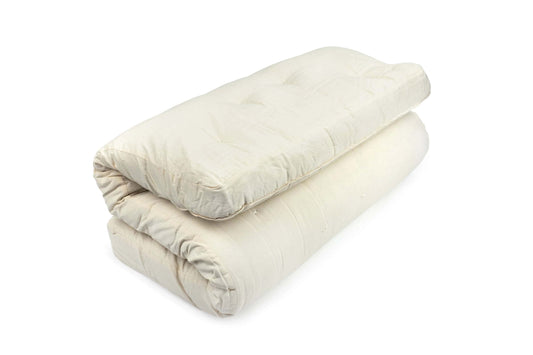
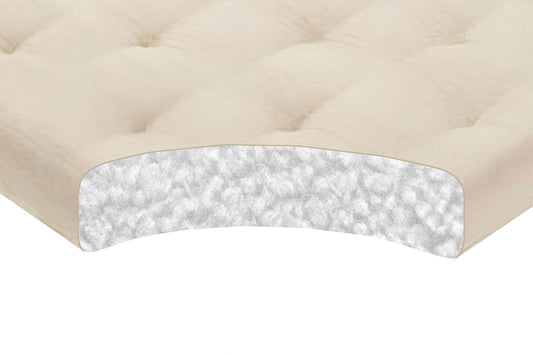
Choose breathable bedding in natural cotton, linen, or wool, and pay attention to care instructions and finish rather than chasing a particular label. Use one fitted sheet, one flat layer, and one duvet in related tones. Add a waffle throw or plain cushion for texture, then stop. Multiple patterns compete quickly when the bed occupies much of the visible room.
Small accessories need the same discipline. If you add a plant, choose a pot that supports the room's material palette. A guide to the best pots for succulents can help you select a container that looks intentional rather than introducing another unrelated finish.
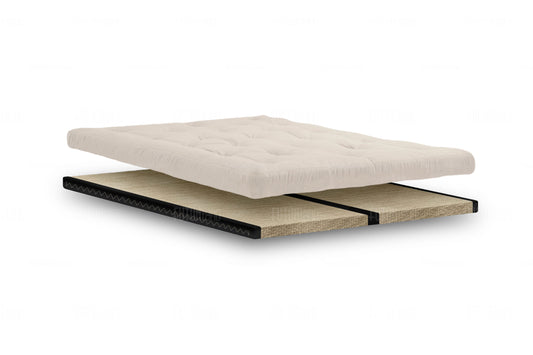
Lighting should be layered without consuming the bedside surface. A warm ceiling fixture provides ambient light, while a wall-mounted sconce or pendant handles reading. A narrow bedside light can still work, but only if it doesn't crowd the table. Wall-mounted options such as Kumiko lamps keep the floor and nightstand clear. For a lower, grounded room, tatami bed designs can reinforce the same quiet material direction.

A Practical Decluttering and Staging Sequence
Begin with the room you already have, not a storage purchase. Remove bedside objects, books, laundry, electronics, loose décor, and anything left temporarily on the floor. Then measure wall lengths, ceiling height, usable floor area, door swing, window, radiator, sockets, and the narrowest access point. Mark the constraints on paper or with removable tape. Photograph the room from the doorway and each corner. Photos reveal blocked sightlines more clearly than standing inside the space.
Place the bed before anything else
Set the bed against the longest uninterrupted wall or in a useful nook, keeping the entrance path clear. Its position establishes circulation and shows how much space remains for storage. Place the wardrobe or clothing storage next. Add a bedside surface only where access requires it. If one side must remain open, use a wall-mounted shelf rather than forcing in a table.
With the main pieces placed, sort the remaining belongings into four groups:
- Keep here: Items used for sleeping, dressing, reading, or another defined daily habit.
- Store elsewhere: Seasonal belongings and occasional-use objects.
- Donate: Useful items you no longer use or want in this room.
- Discard: Broken, worn-out, or incomplete objects with no practical role.
Empty every container before assigning its contents. Carrying a full bag into another room only moves the problem.
Finish with curtains, one artwork, and one plant or natural object if the room needs them. Keep useful surfaces mostly clear, make stored items accessible, and remove anything placed only to conceal a pile. The practical sequence is empty, measure, place, then edit. This order lets existing furniture prove its value before you buy anything, and it follows the same small-bedroom planning logic described in small bedroom planning guidance.

Staying Minimalist and Frequently Asked Questions
Minimalism fails when it depends on one dramatic clear-out. It works when the room has a maintenance rhythm.
Once a week, reset the visible surfaces. Return books, clothing, cables, and toiletries to their assigned homes. Each month, review the room against a simple rule of three horizontals: the bed line, the main storage line, and the usable wall or floor line. If a new piece breaks those relationships, remove or relocate something before adding more.
Seasonally, review stored clothing, spare bedding, and decorative objects. Use the under-bed area for items that earn their space, not for belongings you keep avoiding. The visual benefit comes from the system, not from a single afternoon of tidying.
The final verdict
The most effective minimalist bedroom ideas for small rooms don't begin with white paint or a new shopping list. They begin with less visual weight, a lower bed, related materials, uninterrupted sightlines, and storage that closes away daily noise. Buy only when an existing piece cannot meet the room's needs without blocking movement or adding bulk.
Frequently asked questions
Does a low bed make a room look bigger?
Usually, yes. A low bed leaves more visible wall above the mattress and reduces the heavy horizontal break across the room. It can also expose more floor, especially when the frame has short legs or a raised base.
Should a small bedroom skip the headboard?
Skip a tall headboard unless it provides a clear function. A low wood headboard, slim upholstered panel, or no headboard keeps the main wall more open and avoids adding mass where the eye naturally focuses.
What colors make a small room feel larger?
Use light or mid-tone colors that relate across the walls, bedding, and furniture. The room doesn't need to be white. A consistent palette matters more than choosing one supposedly correct color.
How much furniture does a small bedroom need?
Start with a bed, one shared bedside surface or two small supports, clothing storage, and one compact piece for seating or dressing if you use it. Every additional item should earn its place through regular use.
Where should storage go?
Put seasonal items under the bed or higher in the room. Keep daily clothing in closed storage, and use a narrow vertical unit or a wardrobe beside the door when that area is otherwise unused.
Is a rug a good idea in a small bedroom?
Yes, if it doesn't obstruct the door or reduce the walking route. Choose a low-pile rug with a quiet texture and enough coverage to relate to the bed. A small, isolated mat can create more visual breaks than comfort.
How can a minimalist bedroom feel cozy instead of sterile?
Use natural wood, linen, cotton, wool, warm lighting, and one or two tactile layers. Comfort comes from texture and proportion, not from filling every surface.
What are sensible low-VOC material choices?
Choose solid wood with a clearly described finish, natural cotton or linen bedding, wool where suitable, and simple metal hardware. Check the manufacturer's care and finish information, and avoid making health claims from a material label alone.
If your bedroom feels crowded, start with a measured floor plan and the bed you already own. When the frame itself is too tall or bulky, compare the compact profiles in Comfort Pure's platform beds, then choose storage only after the circulation route is clear.