
Minimalist Bedroom Furniture: How to Spot Real Construction
Quick answer. Minimalist bedroom furniture earns its simplicity through proportion, honest materials, restrained lines, and construction that does not rely on applied trim. Inspect a drawer corner: dovetail joints show interlocking pins and tails rather than a straight, stapled seam. Also check solid panels, durable drawer parts, consistent finishes, and supported backs. Avoid pieces whose minimalist surface merely conceals fragile engineered board.
The Construction Claim Behind Minimalist Design
The popular advice is simple: remove decoration and the room becomes minimalist. That's only half right. A piece can have a plain front, no carving, and a neutral finish while still being poorly made. Minimalism is often a construction claim, not just a visual style.
Designed-simple furniture gets its appearance from the way its parts meet. A rail has a clear purpose. A panel carries its own surface. Legs, drawers, and fasteners follow the logic of the structure. There's no applied molding, false edge, or decorative layer trying to make an ordinary box look more considered than it is.
Stripped-down furniture removes ornament but may leave the same weak core behind. A flat-fronted particleboard dresser with laminate over engineered board can look quiet in a photograph. That doesn't make it structurally honest. The important question is what remains when you inspect the edges, drawer boxes, back panel, hardware, and interior.
The practical test: If the decorative surface were removed, would the furniture still have a clear, durable construction?
This distinction matters for buyers who care about long-term use and responsible purchasing. Choosing fewer, better-resolved pieces is more useful than treating minimalism as an excuse to buy disposable furniture. For broader principles around making deliberate household choices, you can browse sustainable lifestyle tips.
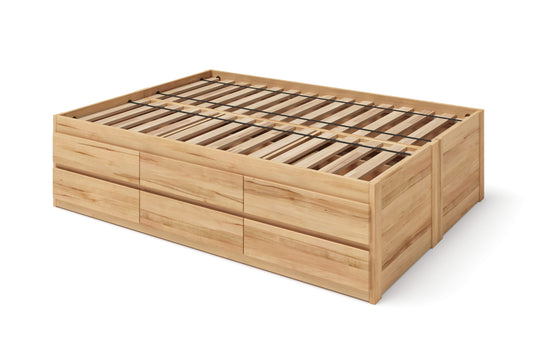
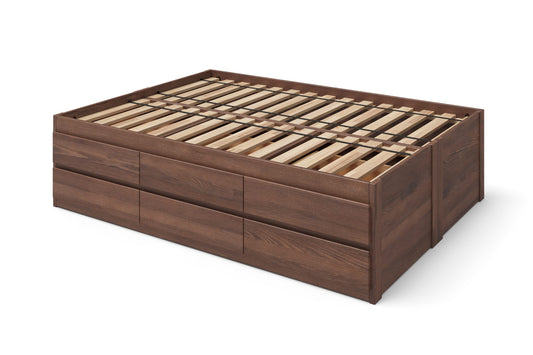
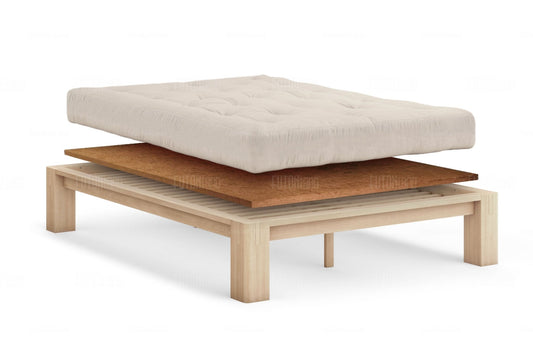
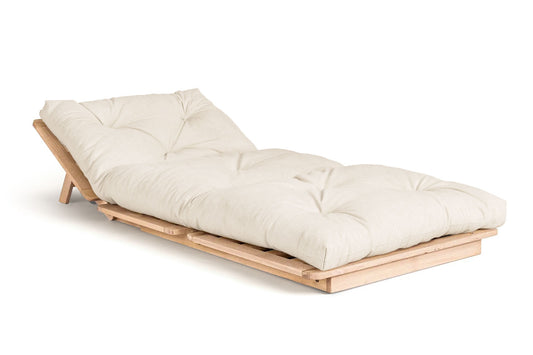
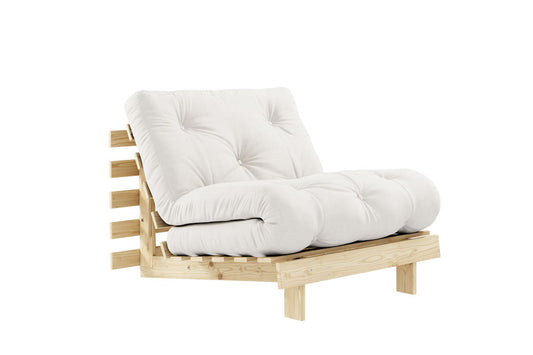
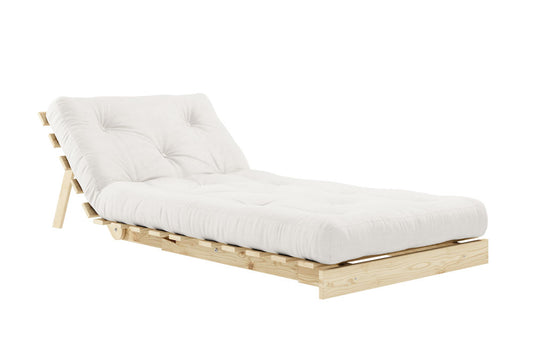
A low-profile bed without a headboard can express this idea particularly well. Its appearance depends on the rail height, leg placement, platform support, and finish rather than on a decorative panel. Compare those details when reviewing minimalist low-profile bed frames without headboards, not just the room photograph.
Visual Weight and the Absence of Ornament
Minimalist bedroom furniture succeeds when line, proportion, and visual weight work together. Visual weight is the amount of presence a piece seems to have in the room. A thick solid platform, a wide case, and a dark finish carry more weight than a slender frame with exposed legs, even when both occupy similar floor area.
Line controls the direction of that weight. Long horizontal rails make a bed feel grounded. Tapered legs lift a dresser visually. Flush drawer fronts create a quiet plane, while projecting pulls interrupt it. None of these choices is automatically right or wrong. The question is whether each detail has a useful relationship to the furniture's size and function.
Proportion keeps simplicity from becoming emptiness. A very low bed can look calm, but it may provide less under-bed access and storage. A narrow nightstand can preserve visual space, but it still needs enough surface for the objects you use every night. A large dresser with tiny pulls can appear unbalanced, while oversized hardware can dominate an otherwise restrained case.

Three traditions behind the modern market
The Shaker tradition shows up in furniture with disciplined proportions, practical construction, and limited decoration. In current bedroom pieces, that influence appears in framed fronts, straightforward knobs, useful drawers, and a sense that every component should serve a purpose.
Japanese furniture tends to emphasize quiet geometry, natural material presence, careful joinery, and a close relationship between low forms and daily use. Contemporary products marketed in this direction often use low beds, compact storage, restrained hardware, and timber surfaces that remain visually legible. You can compare that language in the Japanese furniture collection.
Scandinavian furniture usually brings light visual mass, functional storage, simple silhouettes, and a warmer interpretation of restraint. Tapered legs, pale or medium wood tones, and gently softened edges are common ways that influence appears in modern bedroom furniture.
These traditions overlap, but they aren't interchangeable. A Shaker-inspired dresser may feel more architectural and framed. A Japanese-influenced bed may sit lower and rely on quiet joinery. A Scandinavian case piece may feel lighter because of its legs and proportions. The best modern furniture borrows principles rather than copying surface cues.
Identifying Quality Joinery and Material Tells
You can learn a great deal from a product page before you visit a showroom. Start with the material description. “Wood finish” isn't the same as solid wood, and “wood look” says nothing about the substrate. Look for specific statements about solid hardwood, solid wood sides, hardwood plywood case pieces, veneers, or engineered board.
Engineered wood isn't automatically a failure. It can be dimensionally stable and useful in the right application. The concern is material inconsistency and concealed weakness, especially when a listing uses broad language and avoids showing the interior, back, or edges.
Inspect the structure in a deliberate order
- Read the material schedule. Look for named wood species and a clear distinction between solid parts, plywood, veneer, and particleboard. A reliable listing explains where each material is used.
- Study the edges. Solid panels usually show a material that continues through the edge. Laminate can look convincing on the face but may reveal a separate edge band, abrupt seam, or repeated printed grain.
- Check the joinery. Dovetail drawers, mortise-and-tenon joints, and properly fitted corner connections tell you more than a lifestyle photograph. Joinery should be described or shown, not implied by phrases such as “crafted design.”
- Look inside the drawers. Beech wood drawers with dovetail joinery and high-quality metal slides indicate a more serious approach than thin drawer bottoms stapled into shallow boxes. The drawer should feel like a structural component, not an afterthought.
- Ask how the finish is applied. A listing should identify whether the surface uses oil, wax, lacquer, or another finish. That information helps you understand appearance and care. It's also a useful test of whether the maker is transparent about the product.
The Larssen 6-Drawer Dresser provides a concrete example of this level of description. Its catalog details identify solid hardwood construction, premium hardwood plywood case pieces, solid wood sides, beech wood drawers with dovetail joinery, high-end metal drawer slides, and hand-rubbed oil and wax finishes. It's handcrafted in Vermont and offered in natural cherry, maple, and walnut, with finish treatments specified by wood.

Materials also affect indoor air quality. Hong Kong's indoor air quality guidance identifies formaldehyde as a concern and notes that particleboard, MDF, and plywood can emit it through adhesives in pressed-wood products. Independent indoor air quality guidance on furniture emissions is useful when comparing a visually simple solid-wood piece with a similarly styled composite product.
A PubMed study found that particleboard emissions fell by more than 50% during the first 3 months after production, while measurable emissions remained at 1–3 years. That doesn't make every engineered panel unsuitable, but it does show why a minimalist appearance shouldn't be confused with a low-emission construction. The particleboard emissions study offers the relevant evidence.
The Essential Bedroom Inventory and Layout
Minimalism begins with the room's working sequence, not a coordinated furniture set. Place the bed first, then add storage and a usable surface according to daily needs. This approach prevents attractive pieces from consuming space without improving how the room functions.
Choose a bed with stable rails, well-supported slats, a sensible profile height, and a finish that can be maintained. Storage should match the actual volume of clothing or linens, with clearly specified materials, durable drawer construction, enclosed capacity, and hardware proportionate to the piece. Add one compact nightstand or another stable surface for a lamp, water, book, or phone. Benches, accent chairs, duplicate chests, and open shelving need a specific job before they earn floor space.
| Piece | What to Look For | What to Avoid |
|---|---|---|
| Bed | Stable rails, well-supported slats, sensible profile height, and a maintainable finish | Decorative bulk, weak center support, or slats with excessive gaps |
| Storage piece | Solid or clearly specified materials, durable drawer construction, enclosed capacity, and proportionate hardware | Duplicate storage, thin drawer boxes, or vague material claims |
| Nightstand | Compact footprint, stable top, useful drawer or shelf, and visual compatibility with the bed | A surface that blocks movement, an open clutter trap, or oversized hardware |
Small rooms require measured clearance. Allow about 24–30 inches of walkway on the active side of the bed and 30–36 inches in front of drawers that must open fully, following small-bedroom layout guidance. A nightstand around 16–24 inches wide generally leaves more usable passage than a broad table.
Set the bed on the longest uninterrupted wall where possible. Measure door swings, closet access, and drawer travel before ordering. A storage bed may replace a separate case piece, while wall-mounted bedside storage or tall, narrow shelving keeps more floor visible than several low units, as described in small-bedroom furniture guidance.
Shaker-influenced furniture uses practical casework and visible order. Japanese-influenced pieces often reduce height and hardware. Scandinavian-influenced designs lighten the silhouette with exposed legs and carefully scaled storage. Choose the functional language that fits your habits, then view nightstands sized for smaller bedrooms by construction rather than label.
Settle the furniture footprint before choosing lighting and window treatments. For curtain options, browse modern bedroom curtains, while keeping the bed, storage, and bedside surface as the room's working priorities.
Evaluating Product Pages for Honest Construction
Product pages often reveal quality through what they choose to specify. A strong page names the wood species, identifies solid wood versus plywood or veneer, describes the finish, and shows enough angles to inspect legs, edges, drawer fronts, and the back.
Use this checklist before buying:
- Materials: Does the page distinguish solid hardwood, plywood, veneer, MDF, and particleboard?
- Joinery: Does it identify dovetails, mortise-and-tenon work, or another actual joint?
- Hardware: Are drawer slides described, or does the page only say “smooth opening”?
- Bed support: Are slat dimensions, center rails, and support details provided? Mattress guidance commonly recommends 2.5–3 inch slat spacing for foam and latex mattresses, while an innerspring mattress with a box spring may tolerate up to 4 inches, according to slatted bed-frame guidance.
- Finish: Is the finish named and tied to the wood, or is it called “natural”?
- Assembly: Does the listing explain whether the piece arrives assembled or requires substantial construction?
For bed frames, the slat pattern deserves special attention. European Sleep Works recommends full-length real wood slats spaced ideally less than 3 inches apart, and no more than 4 inches apart, to reduce mattress flex between slats. Its guidance on bed-base construction supports a simple rule: don't judge a platform bed by its outline alone.
Buy in stages by setting a material and finish standard first. Matching wood tone and finish usually creates more visual unity than matching brands. A natural maple nightstand beside a natural maple bed can work across different makers, while two pieces from one brand can still clash if one uses a dark film finish and the other uses a pale oil finish.
For browsing by construction type, compare platform beds, solid-wood beds, dressers, bedroom chests, and case goods. A wood bed frame guide can help clarify the differences before you choose.
The Final Verdict on Minimalist Bedroom Furniture
Minimalist bedroom furniture works best when the reduced appearance comes from sound construction, restrained proportion, and honest materials. Fewer pieces also means each one carries more daily use, so durability isn't separate from minimalism. It's one of the strongest arguments for it.
Frequently asked questions
What makes furniture minimalist? Clean lines, controlled visual weight, useful proportions, and an absence of applied ornament. Construction should support the appearance.
Is minimalist the same as modern? No. Modern furniture can be minimalist, but minimalism also draws from Shaker, Japanese, and Scandinavian traditions.
How many pieces does a bedroom need? Start with a bed, one storage piece, and one surface. Add only what solves a real need.
Does minimalist mean expensive? No. Price and construction quality aren't identical. A less expensive piece may be well resolved, while an expensive piece may rely on a surface treatment.
What wood suits a minimalist bedroom? Choose a species whose grain, tone, and finish you'll be comfortable living with. Maple, cherry, walnut, and other clearly specified woods can all support the style.
Should everything match? No. Match material character and finish more closely than brand names. Consistent tone usually matters most.
Are low-profile beds always better? No. They can reduce visual weight, but check entry height, under-bed storage, rail strength, and slat support before buying.
[shortcode_cta id="minimalist-bedroom-furniture"]
Use the construction checklist before ordering, compare the Minimalist Wood Bed Frames, and choose the few pieces that can carry the room for years. For broader room decisions, continue with the minimalist bedroom ideas article, while the natural bedroom furniture piece covers materials chemistry, certifications, and off-gassing in greater detail.
[shortcode_cta id="shop-minimalist-bedroom-furniture"]