
Latex Mattress Cost: What Really Drives the Price
Latex mattresses usually land around $1,500 to $3,500 for a queen when they're made with natural latex, while synthetic latex queens often sit around $800 to $1,500. The biggest drivers are the type of latex used and how much of the mattress is latex instead of foam, coils, or fiber.
A lot of advice treats latex pricing like a single number. That's the wrong way to read it. A latex product page is really a decoding exercise, because the label can hide whether you're paying for natural sap-based foam, a blended formula, a thin latex layer over coils, or a full multi-layer build with certified covers and heavier shipping.
Quick Answer and Why Latex Prices Span So Wide
Latex pricing looks messy because “latex” covers more than one material, more than one process, and more than one kind of build. ConsumerAffairs says latex mattresses average about $2,050 for a queen, and its mattress statistics summary places latex at about $2,000 on average, above coil-based mattresses at $1,000, foam or memory foam at $1,150, and hybrids at $1,300. That is why latex usually sits near the premium end of the market. ConsumerAffairs mattress statistics
What the sticker price usually hides
A product page rarely shows what the money is buying. A queen can cost more because the maker used more raw latex, a denser core, a thicker comfort layer, an organic cover, or a more expensive delivery model.
Practical rule: if the page keeps saying “latex” without naming the percentage, layer count, or process, the price may reflect marketing language more than a clear build spec.
Size also changes the bill. King and California king mattresses usually cost more than a queen because they use more material, more cover fabric, and more shipping weight. Custom builds can climb higher still, but that does not automatically mean the latex itself is special. Often, the extra money goes into thicker profiles, organic textiles, split firmness, or setup services rather than a different latex core.
| Latex Category | Queen Price Range (USD) | Typical Source | Example Price Tier |
|---|---|---|---|
| Synthetic latex | Lower tier, often budget to entry level | Retail listings and broad market guides | Value-focused |
| Blended latex | Mid tier | Retail listings and broad market guides | Mid-market |
| 100% natural latex | Upper tier | Premium mattress pricing surveys | Premium to luxury |
The Three Latex Types and the Cost Gap Between Them
The first label to decode is whether the mattress is 100% natural latex, blended latex, or synthetic latex. They sound close on a product page, but they sit on very different cost ladders. Natural latex mattresses usually cost more because premium queen models with thicker comfort layers and organic certifications are commonly priced around $1,500 and can rise to $3,000 to $4,000. Synthetic latex queens are often listed around $800 to $1,500, and blended latex around $1,200 to $2,000. Home Furnishings latex buying guide
How to tell what you're being sold
100% natural latex means sap-derived rubber, usually positioned as the highest-cost option because it depends on plantation yield, tapping labor, and certification overhead. Blended latex sits in the middle. A common market pattern is 70/30 or 80/20 synthetic-to-natural, while another guide says many blends contain about 30% to 40% natural latex with 60% to 70% synthetic material or fillers. Synthetic latex is made entirely from petrochemical SBR, so it is usually the cheapest latex label you will see. National Mattress Authority latex guide
The wording on the page matters. “100% natural,” “pure natural latex,” and a named certification are clearer signals than loose phrases like “natural blend,” “all-latex,” or “eco latex.” If the page never gives a percentage, ask for it directly.

Why the material name changes the price
This is a raw-input problem, not a branding one. A mattress labeled natural usually starts with a more expensive ingredient base, while a synthetic model uses a lower-cost foam formulation that changes the bill before the cover, shipping, or showroom markup enters the picture.
Buyers often miss how much the label shapes the price gap. A natural latex mattress can cost more because the material itself is costlier to source, and because sellers often pair it with thicker comfort layers or more selective certifications. Synthetic latex usually stays lower because the material is cheaper to make. Blended latex sits between them, since it mixes the two approaches and softens the price compared with a fully natural build.
The easiest way to read a listing is to separate the latex type from the rest of the mattress. If one page says “natural latex” and another says “blended latex,” the difference is not cosmetic. It points to different ingredient costs, different durability expectations, and different value over time.
Dunlop vs Talalay Processing
The next cost question is how the latex was made. Dunlop and Talalay are both ways of turning latex into foam, but they do not cost the same to produce, and they do not feel the same on the bed.
The simpler route and the more involved one
Dunlop is the older, simpler process. The latex is whipped, poured into a mold, and steam-baked in one step. That usually creates a denser, slightly firmer foam, so Dunlop often appears in support cores.
Talalay uses more steps. The latex is vacuum-expanded in a sealed mold, flash-frozen, and then baked. That extra processing tends to create a more even cell structure and a softer, more consistent feel. Talalay generally costs more because the process uses more equipment, takes more time, and requires more energy.
That difference shows up in the layer stack. A mattress with Talalay comfort layers and a Dunlop base often costs more than a mattress built mostly from Dunlop. The price gap is not only about plushness. It reflects how much processing the maker paid for before the foam reached the sewing room.
Why the process matters to the buyer
If a page names Dunlop for the base and Talalay for the top, that gives you a useful clue. If it only says “latex comfort layer,” you still do not know what you are buying. Process names help explain the price, the feel, and the role each layer is supposed to play inside the mattress.
A lower price often lines up with a mostly Dunlop build. A softer surface with a higher price tag often points to Talalay in the comfort layer. The product page should spell that out clearly, because the process is part of what the money buys.
Layer Construction and How Much Latex Is Actually Inside
A mattress can be marketed as “latex” even when latex is only part of the build. That's one of the main reasons the category feels opaque. A hybrid with a thin latex layer over coils can cost far less than a full latex mattress, even though both can appear under the same search result.
Read the thickness before you read the brand name
The key question is simple, how many inches of latex are inside, and what fills the rest of the mattress? A 2-inch latex layer over pocket coils is a very different purchase from a 10-inch or 12-inch all-latex build. The first can land near a lower entry tier, while the second usually starts much higher because there's more latex, more labor, and more material in every square inch.
The same logic shows up in accessories too. If you're trying to protect an existing bed while you figure out comfort, a dense accessory layer can change the feel without replacing the whole mattress. For a practical example of a separate padding resource, see foam wrap for furniture, which is useful when you're thinking about layered protection and cushioning rather than a full mattress replacement.
If a buyer wants a lower-budget natural build, a simpler two-layer construction can be enough. A more complex mattress usually adds transition layers, denser support foam, or a coil base. That extra structure raises price because it takes more materials and more labor to assemble and finish.
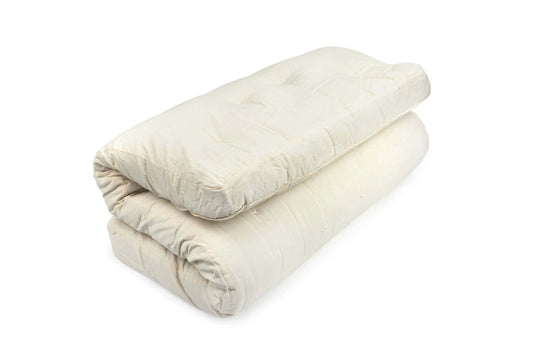
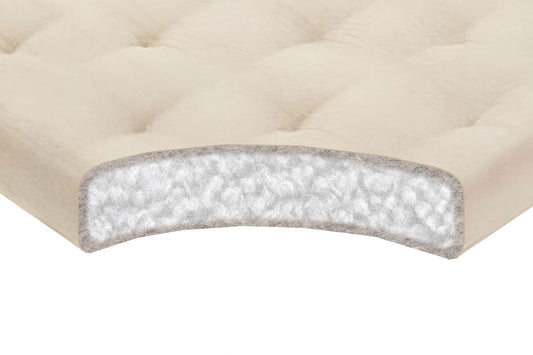
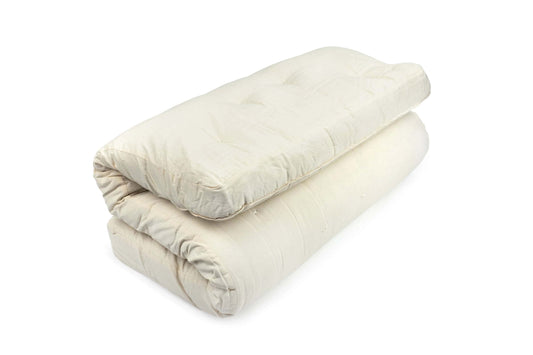
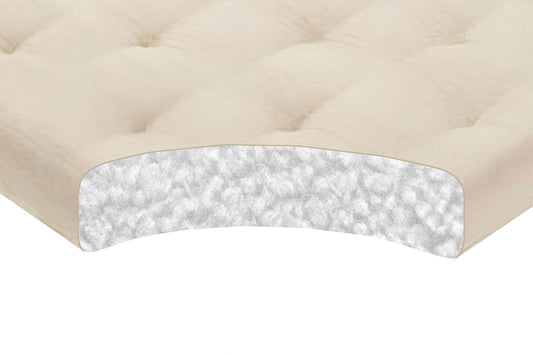
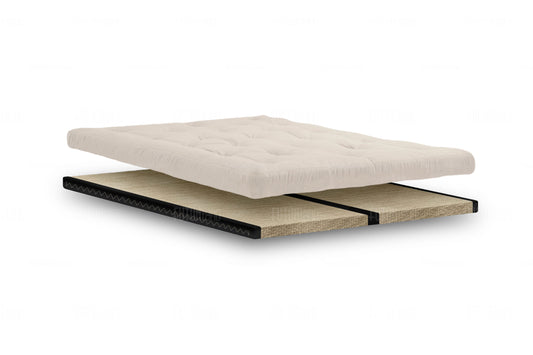
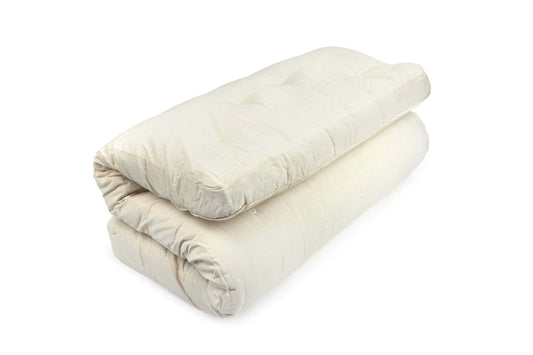
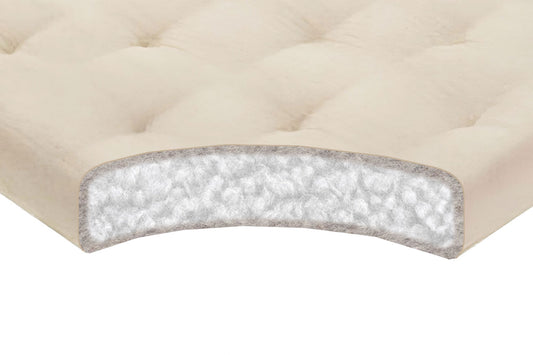
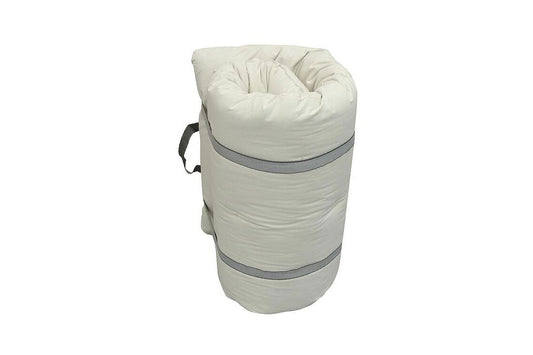
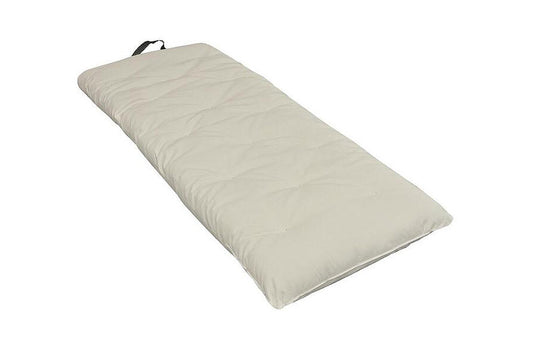
For a product example in a similarly simple build category, Natural Cotton and Wool Japanese-Style Firm Futon Mattress uses cotton and wool instead of latex, with a firm, hand-tufted construction designed for a grounded feel. It's not a latex mattress, but it shows how much the feel and price logic changes when the core material changes.
Comfort Pure Savvy Rest collection is one place where layer structure, component choices, and build details matter more than a broad “latex” label.
How to decode the spec sheet
Ask three things. What is the total latex thickness? What is the support core made of? Is any layer a blend rather than pure natural latex?
That simple reading often explains the gap between a roughly $900 hybrid and a much higher all-latex build. If the mattress doesn't clearly answer those questions, the price is doing more work than the product page.
Density, ILD, Certifications, and Cover Materials
A mattress page can look simple and still hide most of the price difference in four specs: density, ILD, certifications, and the cover. Buyers often focus on “natural latex” as a label, but the cost difference usually sits in the details below it. One model may use more latex, denser latex, a certified cover, and stricter testing, while another keeps the headline the same and trims those inputs.
Density tells you how much latex is packed into the foam. More material usually means better durability, but it also means a higher production cost and more shipping weight. Buying guidance for latex places typical natural latex density around 85 to 95 kg/m³, and Kaneman Sleep latex density guide links higher density with better durability and higher price. That guide also maps D60 to D65 cores to lower retail tiers, D75 to mid-market, D85 to premium, and D95 to luxury pricing, with D95 cores estimated to cost 25% to 40% more in material than comparable D65 cores.
ILD, or Indentation Load Deflection, is different. It describes firmness, not how much latex is inside. Two mattresses can feel equally firm and still cost very different amounts if one uses denser latex or more layers. This is why a product page that only says “firm” leaves out half the story. The firmness answer helps you sleep on it. The density answer helps you judge what the mattress cost is buying.
Certifications add another layer of cost. GOLS applies to organic latex, GOTS covers organic textile fibers such as cotton and wool, and OEKO-TEX Standard 100 tests finished textile products for harmful substances. If a mattress lists several certifications, you are often paying for audits, paperwork, and the materials needed to meet those standards. A natural build from Comfort Pure natural mattresses can show how those labels appear together on real product pages.
The cover matters too. A cotton cover with wool batting is common on natural latex beds, and that combination costs more than a basic knit cover because it uses more fiber and more stitching. Wool can also serve as a chemical-free flame barrier, which lets the maker avoid the same synthetic fire-retardant approach used in lower-cost builds.
| Spec | Budget Range | Mid Range | Premium |
|---|---|---|---|
| Lower density core | Less durable, lower cost | Rare | Uncommon |
| Mid density core | Common entry point | Common | Sometimes used in support layers |
| High density core | Less common | Premium | Luxury |
| Basic knit cover | Lower cost | Common | Less common |
| Wool and organic cotton cover | Higher cost | Common in natural latex | Common in certified builds |
A mattress protector also affects how long the cover stays clean and intact. For shoppers comparing cover care and mattress upkeep, best affordable mattress protectors is a useful reference for spending less on protection than on the mattress itself.
Latex Mattress Cost Over Time and How It Compares to Foam
Sticker price grabs attention, but the question is annual cost. A mattress that lasts longer can cost less per year, even if the checkout total looks high at first.
The math buyers usually skip
A natural latex queen that lasts about 15 years at around $2,000 works out to about $133 per year of ownership. A synthetic latex queen at around $1,400 with an 8-year life comes out to about $175 per year. That is the basic tradeoff buyers miss on product pages, a higher sticker price can still mean a lower annual cost if the mattress holds up longer.
The same logic applies with foam. Latex often lasts longer than polyfoam or memory foam, so the yearly cost can look better even when the upfront price is higher. For a broader durability comparison, see durability of latex vs foam, which helps explain why some buyers choose to spend more once and replace less often.
A simple ownership lens
If you plan to keep one mattress for a decade or more, annual cost matters more than the showroom price. If you replace mattresses often, the math shifts toward the lowest acceptable starting price. Latex is one of the few mattress categories where the more expensive option can make sense on ownership cost, not just on comfort or materials.
That is also why a brand like Comfort Pure organic mattresses can fit a long-view buying approach, where the price has to be justified by build quality, materials, and longevity rather than a short-term sale badge.
Red Flags, Smart Questions, and Ways to Save Without Compromising
The cheapest latex mattress is not always a bad buy, but low prices usually come with visible tradeoffs. The first thing to check is whether the product page explains what is inside. If a listing says “latex over coils” but the latex layer is thinner than one inch, or if it skips density, ILD range, and certification details, treat it as a stripped-down build until the seller proves otherwise.
Claims that deserve skepticism
- “Natural latex” without a percentage: Natural can mean very little if the page never says how much of the foam is natural.
- No density spec: Without density, it is hard to judge whether the core is likely to hold up.
- No certification number or standard: Certification language should be specific enough to verify.
- “All-latex” with no layer breakdown: The mattress may still contain less latex than the label suggests.
- Thin latex over coils: That can be a valid value build, but it is not the same as a true all-latex mattress.
A buyer should ask for the percentage of natural versus synthetic latex, the ILD range for each layer, the total latex height, the certifications on the cover and core, and the return policy in writing. Those details turn a vague product page into something you can compare.
Where you can save
Lower profiles can cut cost without changing the basic material story too much. Dunlop-only builds often cost less than Talalay-heavy designs. A GOTS-certified cover without a GOLS-certified core can also bring the price down if you care more about textile purity than a fully certified latex stack. Seasonal markdowns on floor models from reputable makers can help too, especially when the model differs mainly in color, cover, or display status.

If you are trying to stay close to budget, an 8-inch profile can sometimes deliver the latex feel without the higher cost of thicker builds. That compromise keeps the mattress legitimate while trimming the parts that usually raise the tag.
The Final Verdict and Common Buyer Questions
Latex mattress pricing makes more sense once you read the product page like a spec sheet, not a sticker. Start with clear specs, then check material quality, then look at certification level. Under $1,500, a synthetic or simplified latex build can be reasonable if the cover and core are clearly described. Between $1,500 and $2,500, blended or 100% natural Dunlop with about eight inches of latex over a sturdy base is often the clearest value zone. Above $2,500, the premium should buy verified natural latex, better cover materials, and a build that shows where the money goes.
Latex usually does not need a box spring, but it does need a supportive foundation. It often sleeps cooler than memory foam because its structure is more open, though the cover and layer design still shape the feel. Up front, it can cost more. Over time, that higher price can still make sense if you keep mattresses for years instead of replacing them quickly.
FAQ
Why are latex mattresses so expensive?
The price reflects the latex type, the processing method, how much latex is used, the cover materials, and any certification or delivery costs folded into the total.
Is natural latex worth the premium over blended?
It can be if you want a clearer material story, stronger certification potential, and a build aimed at longer ownership.
How long does a latex mattress last?
A well-made latex mattress is often discussed as a long-wearing product, and some market coverage describes lifespans that can reach 20 years. That is one reason buyers often treat latex as a long-term purchase rather than a quick replacement.
Is Talalay worth more than Dunlop?
Usually, yes, if you want a softer, more uniform comfort layer. Dunlop is often the better value in support sections.
What's the cheapest legitimate latex option?
Usually a synthetic or blended latex build with a simple construction and a plain cover, as long as the page gives clear specs.
Does GOLS certification matter?
It matters if you want organic latex with a verifiable chain of custody. If that priority matters to you, the higher price is tied to a real standard.
Do latex mattresses need special care?
They do better on a stable base, and a good protector helps preserve the cover and reduce surface wear.
Can latex be a smart purchase if I'm on a budget?
Yes, if you focus on a simpler build, avoid vague claims, and compare annual cost instead of only the sticker price.
If you are comparing a few latex listings right now, open the spec sheets side by side and look for percentage of latex, layer thickness, density, ILD, cover fabric, and certification details. If the page cannot answer those questions, keep looking.