
7 Japanese Style Room Dividers to Zone and Calm Your Space
A shoji is the choice for filtering light, a byōbu for movable privacy, a noren for marking a threshold, and a sudare for managing light and airflow. In a studio, use the object that matches the problem, because these Japanese style room dividers don't provide sound insulation.
A bed sits beside a desk. The desk faces the kitchen, storage is visible from the sofa, and every attempt to create separate zones makes the room feel smaller. A lightweight screen can help, but only if it solves the right problem.
Shoji soften daylight through a paper-like panel. Byōbu block sightlines and fold away. Noren create a soft doorway without closing it. Sudare filter sun and breeze through hanging reeds. They share a visual vocabulary, but they aren't interchangeable.
The distinction matters because Western retail often labels all four as Japanese room dividers. Choose by need first, then by size, material, construction, and installation. For related natural interiors, see this guide to styling bonsai for home decor.
The four types at a glance
Shoji and fusuma are different objects. Shoji traditionally refers to a translucent sliding or fixed panel made with a wooden lattice and paper. Fusuma is an opaque sliding door. A modern freestanding “shoji screen” borrows the lattice and translucent appearance, but it isn't automatically a traditional architectural shoji.
Byōbu are also distinct. They're freestanding folding screens, made from connected panels that move and store differently from sliding shoji. Historical references describe byōbu as movable, panel-based furnishings used as temporary interior dividers or outdoor enclosures, while sliding shoji belong to a different architectural system. This overview of traditional Japanese partitions explains that distinction.
Route the divider by need
Start with the nuisance you want to remove. If the afternoon sun lands directly on a desk or bed, choose a shoji-style panel or sudare, depending on whether you need a vertical room plane or a window treatment. Shoji gives a room more structure. Sudare manages light and air with less visual weight.
If you need to hide a bed, open shelving, laundry, or a work setup, choose a byōbu or folding screen. It creates a stronger sightline barrier than translucent shoji. The trade-off is that it can feel more present in the room, especially when opened across a walkway.
A noren works when the boundary should remain intentionally loose. Hang one at a kitchen entrance, closet opening, or passage between living and sleeping areas. It says “separate zone” without pretending to be a wall.
For a studio, placement matters more than decorative pattern:
- Sleeping zone: Put a folding screen beside or at the foot of the bed, leaving a clear route around it.
- Storage: Use opaque or strongly patterned panels if you need to conceal detail. Translucent shoji will blur shelves, not erase them.
- Work corner: Use a screen to control views behind you during calls, but don't expect it to control sound.
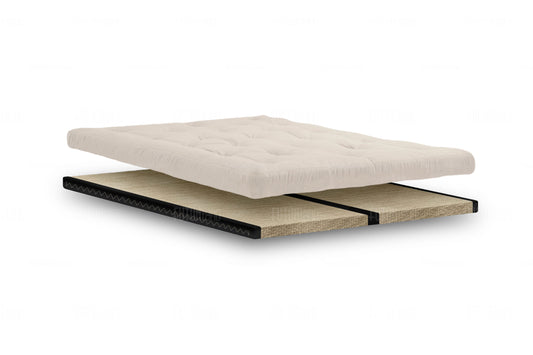
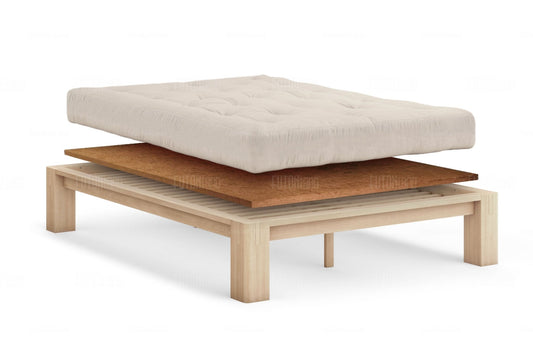
- Tatami area: Pair a low screen with tatami mats or a tatami bed to establish a distinct floor-level zone.
- Airflow: Choose sudare where breeze matters. A solid folding screen can interrupt circulation even though it won't seal a room.
Practical rule: Choose opacity for sightlines, translucency for light, fabric for a threshold, and reeds for airflow.
Shoji in depth
A shoji's recognizable grid comes from kumiko, fine latticework fitted into a wooden frame. It adds structure, not just decoration, by dividing the translucent infill into smaller fields. Regular grids look restrained, while denser patterns create a stronger visual screen.
Traditional panels use washi, Japanese paper made from plant fibers. Modern versions may use laminated paper, synthetic rice-paper material, or Warlon, a durable translucent sheet used by specialist makers. Paper has a delicate surface and can tear. Laminated and synthetic infill is easier to wipe, making it more practical for daily handling.
Translucency controls the room more than color. A bright white panel can still feel visually closed if it diffuses little light. A warmer panel may maintain a softer glow. Judge the detail you need to conceal, the direction of daylight, and whether light will shine through from behind after dark.
Shoji-style dividers usually take three forms:
- Freestanding folding: The simplest renter option. Hinged panels stand without a wall track.
- Sliding: The closest to architectural shoji, but it needs a built opening and a running surface.
- Track-mounted: Suitable for a permanent division. It requires accurate fixing, support for the divider's weight, and a clear installation plan.
Portable retail models show a fairly standardized format. Three-panel versions commonly use a six-foot format, with examples around 70 to 71 inches high and 50 to 53 inches wide, less than an inch deep, and requiring no assembly. The FAQ's Target listing provides a useful reference for this category.
Width can increase without adding much thickness. Four-panel examples measure about 70 inches high by 60 inches wide. An eight-panel version can reach roughly 178 centimeters high by 352 centimeters wide. This Temple & Webster example shows how folding coverage expands while the divider remains a room screen rather than a heavy wall.
Byōbu and folding screens
A byōbu stands on its own. Hinged panels fold into a zigzag, which gives the screen stability when positioned correctly. It's designed to move, not to become a fixed partition.
Panel count affects both coverage and handling. Three panels suit a narrow zone and can be easier to position in a small room. Four panels provide more width without becoming especially complex. Larger screens offer more visual coverage, but they also create more hinge points and require more floor space when opened.
Hinge type changes the screen's flexibility. Two-way hinges let panels fold in either direction, which makes storage and repositioning easier. One-direction hinges can feel more constrained and may force the screen into a specific orientation.
Stability comes from the zigzag, not from the screen standing flat. Opening the panels slightly creates a self-supporting shape. A screen opened completely straight has less resistance to tipping, particularly if a door, vent, pet, or child catches the panels.
Use these checks before buying:
- Base width: Confirm the frame has enough depth to stand in the intended position.
- Hinge movement: Make sure the hinges don't bind or force panels out of alignment.
- Weight balance: A very light frame with a broad visual surface is more vulnerable to movement.
- Traffic: Keep the screen away from areas where shoulders, bags, or vacuum cleaners will catch it.
- Storage: Measure the folded thickness and the closet or wall space where it will live.
Byōbu have a long decorative history. They're thought to have entered Japan from China during the Nara period, and the oldest surviving Japanese byōbu dates to the eighth century, preserved in the Shōsōin Treasure Repository. Multi-paneled byōbu also appeared in the eighth century as furnishings for important imperial court ceremonies, according to this historical overview of byōbu. That history helps explain why a folding screen can function as furniture and artwork, not only as a privacy tool.
Noren and sudare
Noren are fabric hangings placed across an entrance or opening. They're often split into vertical sections, so people can pass through without moving a full curtain. The result is a threshold, not a closed room.
Use noren at the kitchen entrance, between an entryway and living area, or across a shallow storage opening. They're also useful where a rigid screen would interrupt circulation. Their weakness is privacy. Light passes around and through the fabric, and the opening remains easy to see through.
Sudare are reed blinds. They filter light and support airflow, which makes them better suited to windows, balconies, verandas, and breezy transitions than to bedroom privacy. Their slatted construction creates changing shadows as the sun moves, so placement has a direct effect on the room's atmosphere.
Neither object should be marketed as a full room enclosure. Noren don't block sound, and sudare don't stop conversation or conceal detail reliably. They're light-touch tools for changing how a passage, window, or edge feels.
For a small apartment, the pairing can be effective. Use sudare at a bright window, then use a noren at the nearby kitchen opening. The first manages glare and breeze. The second marks the threshold. Neither consumes the floor area required by a folding screen.
Sizing and placement
Measure the actual zone, not just the furniture. A screen may be listed as 70 inches high, but the useful coverage depends on where you place it and what sits behind it. A low bed, floor futon, or storage unit changes the sightline.
Ceiling height matters because a divider that stops well below the ceiling reads as furniture. That can be exactly what you want in a studio. If you want a stronger architectural effect, a sliding or track-mounted shoji can approach the opening's height, but that moves the project beyond renter-friendly furniture.
Panel width determines both coverage and stability. A three-panel screen can conceal a compact desk or the side of a bed. A four-panel screen offers more span for a sleeping zone or storage wall. Don't calculate coverage as a straight line only. Folding screens need to open into an angle to stand safely, so part of their nominal width becomes floor depth.
Leave clearance beneath the panel. A screen should not drag across a rug, catch on a tatami edge, or sit where damp mopping can reach untreated paper. Keep the lower frame away from repeated foot contact.
Low furniture changes the visual balance. A screen behind a floor bed should rise enough to frame the sleeping area without becoming a random tall rectangle. Pairing a screen with floor beds, a futon, or a low tatami table and zaisu seating keeps the room's vertical relationships deliberate.
Renter-friendly installation
Freestanding folding screens are the simplest answer for renters. You can move them, fold them for storage, and test several layouts without drilling. They're also the least permanent option, which means they can shift if the floor is uneven or the panels are opened too flat.
Tension systems can work for lightweight curtains, noren, and some hanging treatments. They need two sound surfaces and careful adjustment. Don't use a tension rod as a substitute for structural support if the divider is heavy or likely to be pulled.
Sliding shoji and track-mounted panels are different. They need a level track, reliable fixing, and enough clearance for the panels to move. Wall or ceiling hardware can damage a rental and may not support the load safely. Ask the landlord before installing anything permanent.
A practical renter sequence is simple:
- Start with a freestanding byōbu or shoji-style folding screen.
- Mark its footprint with painter's tape.
- Live with the position during daylight and evening lighting.
- Check walking paths, outlets, vents, and furniture drawers.
- Only consider track hardware if the separation solves a long-term problem.
Comfort Pure's Shoji Screens collection includes folding room-divider styles intended for movable zoning. For a wider Japanese-influenced room, its Japanese furniture collection can help keep the rest of the room's materials and proportions consistent.
Materials and construction
The frame determines how a divider handles daily use. Solid wood provides visible grain, useful weight, and repair potential. Good joinery helps a hardwood frame withstand ordinary repositioning, though any folding screen can tip or suffer damage if handled roughly.
Inspect the lattice rather than judging the printed motif alone. It may use fitted joints, or be a decorative grid attached to the panel. Check the corners, hinge screws, base rail, and the way the infill fits inside the frame. Cleaner edge transitions and a substantial lower rail usually indicate more careful construction.
A veneer can look convincing in product photos. Repeated grain, thin edges, or a surface layer over composite material become clearer in person. Paper-over-cardboard panels are light and affordable, but they can dent, bow, or lose their shape around moisture.
Shoji infill may be traditional washi, laminated paper, synthetic rice paper, or Warlon. Each choice changes translucency, cleaning, tear resistance, and replacement options. Modern material is not automatically a drawback, provided the description states what you are buying.
Construction also affects the divider's role in a room. A heavier wood frame suits a threshold or a fixed-feeling zone. A lighter panel is easier to reposition, but offers less resistance to knocks and uneven floors. For a custom opening or existing woodwork, confirm measurements, lead time, and installation requirements before ordering.
Light behavior and daily care
A translucent divider redirects light rather than blocking it. Morning sun becomes softer, while a bed or desk stays visually distinct without making the room feel closed. After dark, the effect reverses. A lamp behind the panel can turn it into a glowing surface, so keep the light source off the direct sightline when you want the divider to recede.
Translucency controls the result more than color. A dark motif adds contrast, but the infill determines whether silhouettes blur, daylight spreads, or the room becomes noticeably dimmer. Plain infill is usually easier to coordinate with wood, tatami, low furniture, and patterned textiles.
Daily care depends on the infill. Paper can tear, while Warlon and other durable synthetic materials are generally easier to wipe and less vulnerable to handling. Neither removes routine upkeep. Dust settles in the lattice, hinges loosen, and moving the screen can damage both frame and panel.
Use a soft, dry cloth on the frame and lattice. If the wood needs more cleaning, use a barely damp cloth and keep water away from joints and paper infill. Carry or reposition the divider by its solid frame. Pulling the panel surface stresses the infill and its edges.
Repair options vary by construction. Traditional paper may be patched or replaced by removing the damaged section and applying new material. Some modern paper-style panels require a complete replacement insert. Check whether the maker supplies replacement paper, Warlon, or matching panels before buying.
For frequently handled doors, sliders, and permanent or semi-permanent dividers, durable translucent infill is more practical than delicate decorative paper. A careful choice at purchase reduces repair difficulty later.
Using dividers with low furniture
A tall screen beside tall furniture can make a studio feel crowded. A tall screen beside low furniture can establish a clear vertical edge while keeping the floor plane open. That contrast works particularly well with tatami, a floor bed, a futon, or a low reading area.
Place the screen where it frames an activity. Behind a floor bed, it can separate sleeping from living without forming a complete enclosure. Beside a tatami zone, it can create a visual alcove. Behind a low table, it can give the seating area a backdrop without competing with wall art.
Avoid placing a screen directly against furniture if the furniture blocks the panels or forces the hinges flat. Leave room for the folding angle and for cleaning. A small offset can also keep the screen from rubbing against a bed frame or table corner.
For meditation or yoga, a screen can define a calm visual edge, but it won't solve noise from neighbors or other rooms. A yoga and meditation area benefits from clear floor space first. Add the divider only after the mat, cushion, and movement path work comfortably.
If you're building a broader low-living scheme, connect the divider to the rest of the room through material and height. The Japanese sleep system guide, tatami room guide, minimalist bedroom article, floor beds guide, and studio apartment piece can help with those surrounding choices once available.
Plain answer on sound
Japanese style room dividers don't block sound. Shoji paper, fabric noren, reed sudare, and lightweight folding screens change sightlines and light, but they don't create an acoustic seal.
That matters for studio workers. A screen can hide a desk during a video call and reduce visual distraction behind you. It won't stop a roommate's conversation from reaching the microphone, and it won't make a sleeping area quiet.
Acoustic performance requires mass, absorption, airtight construction, or a purpose-built partition. A decorative screen may slightly alter how sound reflects around a room, but that isn't the same as sound insulation and shouldn't be treated as a performance specification.
Choose the divider for visual zoning. If calls, sleep, or shared-room privacy depend on quieter conditions, address the sound problem separately with room layout, soft furnishings, door seals, or an engineered acoustic product.
What to avoid
Avoid flimsy hinges. They take repeated stress and can make an attractive screen sag or twist. Check that each hinge is fastened to solid frame material, and confirm the panels stay aligned when folded or repositioned.
Panel layout affects stability. A wide screen with little depth can feel precarious, especially on smooth flooring. Open it in a controlled zigzag rather than nearly flat, and check that the feet or end panels sit firmly before placing it near a walkway.
Use printed motifs with restraint. Cherry blossom, plum blossom, and window-pane patterns can work, but a large decorative image may look disconnected when the room has no related materials or details. Plain kumiko-style grids usually suit modern interiors more easily.
The label alone tells you little. “Shoji-style” may describe a hardwood frame with replaceable translucent infill, or a lightweight printed panel over a thin core. Read the construction details, hinge design, dimensions, cleaning instructions, and replacement policy before buying.
Also check the divider against its zoning job. A delicate screen may suit light filtering, while a threshold or privacy boundary needs a frame and infill that tolerate regular handling. For fit-to-space work, custom makers can address unusual openings, tracks, and material choices. That route takes more planning and is less suitable for an urgent quick-ship purchase.
Seven places to shop Japanese style room dividers
1. Oriental Furniture
Oriental Furniture is useful when you want a broad ready-to-ship catalog rather than a custom architectural project. Its selection includes shoji-style folding screens and sliding shoji doors, with options spanning three to eight panels and multiple heights and finishes.
The advantage is comparison. You can assess panel counts, finish, and format in one place. That helps when you're zoning a studio and need to compare a narrow divider with a wider screen before committing.
The trade-off is construction typical of mass-market portable furniture. Lightweight panels are easier to move, but paper-style inserts can tear if you handle them by the infill or catch them on furniture. These screens also aren't custom-sized, so an opening with unusual dimensions may leave awkward gaps.
Choose this retailer for a flexible, non-permanent divider, especially when delivery speed and assortment matter more than bespoke joinery.
2. Legacy Decor
Legacy Decor offers a clear, value-focused line of shoji-style folding screens. The range uses pine frames, classic grid patterns, and configurations from three to eight panels, with many units listed at about 71 inches high. Legacy Decor's room-divider example shows the familiar freestanding format.
This is a practical route for renters who need immediate visual separation. Consistent dimensions can also make it easier to match or replace a panel within the same product family.
The limits are material and customization. Rice-paper inserts need gentle handling, and the collection doesn't offer the same premium wood choices or fit-to-opening control as a custom workshop. Treat it as movable furniture, not a sliding architectural wall.
3. Haiku Designs
Haiku Designs takes a more curated approach to shoji-inspired screens. The selection fits minimalist and Japandi-oriented interiors, with folding screens, printed panels, and shorter options for desks or low partitions. Its catalog also includes compact two- to three-foot formats.
That shorter scale is useful when a full-height divider would dominate the room. Place one behind a desk, beside a reading chair, or around a meditation area where you want a boundary without blocking the whole sightline.
The assortment is smaller than a mass-market specialist's, and the focus is mainly on folding screens rather than custom architectural installations. Choose it when visual restraint and scale matter more than extensive configuration.

4. Miya Shoji
A room with an irregular opening, built-in alcove, or permanent design requirement calls for a different level of service. Miya Shoji is a New York workshop producing handcrafted, made-to-measure shoji partitions, sliding and freestanding dividers, and larger architectural installations.
The strength is fit and craft. Consultation and measurement guidance can help when a standard folding screen would leave gaps or sit awkwardly against an existing structure. Traditional carpentry and material choices also allow the divider to relate to the rest of the room instead of looking like an added object.
Custom work has a clear cost in time and coordination. It isn't the right choice for a renter who needs a screen this week, and an out-of-area project may require separate shipping or installation planning.
5. Shoji Designs Inc.
Shoji Designs Inc. focuses on custom shoji screens, doors, sliders, and room dividers for buyers who care about longevity and material performance. Its work combines traditional lattice patterns with modern translucent options, including Warlon.
That material choice matters in high-use areas. Washable, durable translucent infill is better suited to a frequently handled passage than delicate paper. The company's online pricing estimator also gives buyers a starting framework before a custom conversation.
The compromise is predictable. Custom design takes planning and won't suit an urgent off-the-shelf purchase. It also costs more than a lightweight imported folding screen, but it addresses a different problem, especially when the divider needs to operate as a door or integrated panel.
6. New England Shoji Screens
For projects in the Northeast, New England Shoji Screens offers custom room dividers, doors, and sliding panels designed around real alcoves, doorways, and Western interiors. Its work emphasizes kumiko lattice choices and translucent paper.
Local service can simplify measuring, delivery, and installation compared with coordinating a custom project across the country. It's a sensible option when the divider needs to fit a specific architectural opening or coordinate with existing trim.
The geographic footprint is also the constraint. National delivery or installation may need special coordination, and made-to-order work requires more lead time than a standard folding panel.
7. Shoji Hawaii
Shoji Hawaii builds custom sliding shoji doors and freestanding screens in Oʻahu, with detailed guidance on sizing, design, tracks, and material choices. Its portfolio is helpful when you're considering a permanent or semi-permanent divider rather than a decorative folding screen.
The value is layout advice. A custom maker can help determine how panels should run, where tracks belong, and which infill makes sense for the way the opening will be used. That's especially important when the screen must align with a doorway or separate a sleeping zone every day.
The limitations are clear. It's custom-only, so there aren't quick-ship folding panels, and mainland projects may involve additional freight and coordination.
7-Brand Comparison: Japanese-Style Room Dividers
| Item | Implementation complexity | Resource requirements | Expected outcomes | Ideal use cases | Key advantages |
|---|---|---|---|---|---|
| Oriental Furniture | Low, off‑the‑shelf installation | Ready‑stock inventory, basic tools for setup | Fast delivery; mass‑market build quality | Immediate room dividers, renters, budget projects | Very large selection, many sizes/finishes, free ground shipping |
| Legacy Decor | Low, simple assembly for folding screens | Ready‑to‑ship panels, lightweight materials | Affordable classic look; delicate rice‑paper feel | Budget privacy screens, temporary partitions, small spaces | Clear pricing/dimensions, consistent product line |
| Haiku Designs | Low–medium, simple assembly, curated options | Curated inventory, smaller selection | Modern, minimalist aesthetic; compact sizes available | Minimalist interiors, desk/low partitions, wellness spaces | Clean modern curation, eco‑minded options, compact heights |
| Miya Shoji | High, custom measurements and installation | Consultations, bespoke materials, skilled carpentry | Heirloom, fit‑to‑space authenticity and premium finish | Architectural installs, historic or high‑end residential projects | Traditional craftsmanship, made‑to‑measure solutions |
| Shoji Designs Inc. | High, custom project planning and installation | Consultations, custom materials (Warlon option), estimator tool | Durable, modernized shoji suitable for regular use | Custom doors/sliders, long‑term installations, commercial use | Durable materials, transparent pricing estimator, longevity focus |
| New England Shoji Screens | High, custom build with local delivery | Local measurements, custom kumiko work, regional logistics | Tailored fit with traditional lattice integrated into interiors | Northeast residential/commercial projects needing local service | Local delivery/service, custom sizing, kumiko options |
| Shoji Hawaii | High, custom design and regional coordination | Detailed sizing guidance, island fabrication, skilled joinery | Island‑made, durable custom doors/screens with craft guidance | Permanent partitions in Hawaii or clients wanting island craftsmanship | Strong craft expertise, educational resources, detailed design guidance |
The final verdict
Pick the object by purpose. Shoji is best when you want soft light and a defined plane. Byōbu is the practical choice for movable privacy and hiding storage. Noren marks a doorway without closing it. Sudare manages glare and airflow where a solid divider would be too heavy.
For most renters, a freestanding folding screen is the easiest starting point. Measure its footprint, open the panels into a stable angle, and test the screen in both daylight and evening light. If the paper is likely to face pets, children, or constant handling, choose a more durable infill or budget for replacement.
A custom sliding shoji makes more sense when the opening is permanent, irregular, or central to the room's architecture. It requires more planning, but it also avoids the gaps and visual compromise of forcing a standard screen into the wrong place.
Keep low furniture low. A floor bed, futon, tatami zone, or zaisu setup gives the divider a clear visual relationship and helps the room feel zoned rather than crowded. If you're creating a quieter bedroom, explore the Japanese furniture collection alongside the floor-bed guide.
Comfort Pure's traditional shoji screen is one folding option built with a solid Indonesian mahogany frame, translucent shoji-style paper panels, and two-way hinges. It belongs in the movable-screen category, not the same category as a custom sliding wall.
Don't buy a screen for acoustic privacy. These objects change views and light. They don't block sound. Choose the visual boundary that fits your room, then solve noise separately.
Frequently asked questions
Do room dividers block sound?
No. Shoji, byōbu, noren, and sudare don't provide sound insulation. They can change sightlines and the way a room feels, but conversation and work-call noise will still pass through.
What's the difference between shoji and a folding screen?
Shoji traditionally means a translucent sliding or fixed panel with a wooden lattice and paper infill. A folding screen, or byōbu, is freestanding and made from hinged panels. A modern folding “shoji screen” borrows the appearance of shoji but uses a different mechanism.
Will a screen make a room feel smaller?
It can if it blocks a major path, uses a dark opaque surface, or sits too close to furniture. A translucent shoji-style panel or a shorter screen usually preserves more visual openness.
How tall should a divider be?
Choose height based on the sightline you need to interrupt and the furniture behind it. Standard portable screens are commonly around 70 to 71 inches high, while shorter screens suit desks and low partitions. Retail examples show the typical full-height format.
Can renters install shoji?
Yes, freestanding folding screens need no wall fixing. Sliding and track-mounted shoji require hardware and may need landlord approval, so they're better for permanent installations.
What's shoji paper made of?
Traditional shoji uses washi, a plant-fiber paper. Modern products may use laminated paper, synthetic rice-paper material, or Warlon. Check the product description because durability and care vary.
How do you repair a torn panel?
A paper panel can often be patched or replaced, depending on its construction. Some modern screens use replaceable inserts. Ask the maker whether matching paper or synthetic infill is available before purchase.
How many panels do you need?
Three panels suit a tighter space. Four panels provide broader coverage. More panels increase span but also add hinges and require careful positioning for stability. Measure the zone and account for the folded screen's floor depth.
Choose your divider by the problem it needs to solve, then measure the space before ordering. Browse the Shoji Screens collection, compare the folded footprint with your walking paths, and select a paper or synthetic panel that matches how often you'll move and clean it.