
Feng Shui Bed Placement: A Practical Guide to Bedroom Layout
You've moved the bed twice, but the room still feels exposed, crowded, or oddly unsettled. Start with the commanding position, then prioritize a solid wall behind your head, no direct alignment with the door, and usable space on both sides. These changes respect traditional feng shui while also improving sightlines, access, and everyday comfort.
The Commanding Position and Core Placement Rules
Feng shui is a traditional Chinese practice concerned with how people relate to their built environment. It has been discussed for centuries in Chinese architectural and domestic design traditions, and historical accounts of Chinese beds show how the sleeping area evolved from simple wooden platforms into more elaborate, enclosed, and status-signaling furniture across later dynasties. That long history helps explain why a feng shui bed is treated as more than a furniture choice. The bed marks the room's most important resting zone. (Historical overview of the ancient Chinese bed)
Start with the bed's position
In feng shui, the commanding position places the bed diagonally across from the bedroom door. You can see the entrance while lying down, but your body isn't directly in the doorway's path. Practitioners hold that this arrangement supports a sense of awareness and protection. The practical benefit is easy to verify. A clear sightline lets you monitor movement at the entrance without putting the bed where foot traffic, opening doors, or hallway light points straight at you.
The first priority is the wall behind your head. A solid wall gives the headboard a stable visual and physical anchor, and it can reduce the sense of exposure created by a window, door, or busy circulation route behind the bed. A 2018 university bedroom-layout study associated favorable feng shui arrangements with greater sleep efficiency in young female adults across nightly experiments. It also found that solid support behind the bed performed better than an opened window behind it, making a solid wall a sensible first adjustment when the layout permits. (University study on bedroom layout and Feng Shui)
Next, keep the bed out of direct alignment with the door. In traditional language, feet pointing straight toward the entrance is sometimes called the “coffin position.” Practitioners read it symbolically as an exposed route out of the room. From a design perspective, the concern is more concrete: the bed sits in the main traffic line, so movement, noise, and light reach the sleeper directly.
Practical priority: If you can make only one change, place the head of the bed against the most solid available wall. Then improve the door sightline without placing the mattress directly in front of the entrance.
Finally, preserve access on both sides whenever possible. Feng shui treats balanced access as supportive of harmony, particularly for couples. Interior design reaches the same conclusion for practical reasons. Two usable sides make it easier to get in and out, change bedding, clean beneath the frame, and reach the bed without disturbing the other occupant. Paired nightstands can reinforce visual balance, but they shouldn't force the bed into a poor position.
Bed Placement Rules and Their Practical Rationale
A bed beside a noisy bathroom wall may follow several traditional rules yet sleep poorly. A bed under a beam may feel symbolically undesirable, but moving it could block the only usable walkway. Good feng shui decisions separate practical effects you can observe from symbolic interpretations rooted in tradition. Prioritize sleep quality, safe movement, ventilation, and workable furniture placement, then apply symbolic preferences where the room allows.
Six rules to assess after the foundational layout
The commanding position, solid-wall backing, door alignment, and access on both sides were covered in the previous section. Use those as the foundation rather than repeating them. The following conditions require a closer look:
| Rule | What Feng Shui Holds | Practical Rationale or Symbolic |
|---|---|---|
| Avoid a window behind the headboard | A window is considered less supportive than a solid wall | Practical: outside noise, drafts, changing light, and limited back support can make the position feel less settled |
| Avoid beams above the bed | Overhead beams are traditionally read as oppressive or heavy | Symbolic: the visual weight may make the ceiling feel lower, although the feng shui interpretation is primarily traditional |
| Avoid a sharply sloped ceiling over the bed | Sloping architecture can press downward on the sleeping area | Practical and symbolic: the ceiling may feel physically confining, while practitioners associate the shape with pressure |
| Don't place a mirror facing the bed | A mirror reflecting the sleeper is considered too active for a resting space | Practical and symbolic: reflected movement and light can make the room feel busier at night; the energy interpretation is symbolic |
| Avoid a bathroom wall behind the headboard | Plumbing and bathroom activity are traditionally considered unsuitable behind the sleeping position | Practical and symbolic: water flow, pipes, fans, and door noise may be noticeable, while the traditional concern relates to energetic separation |
| Keep the bed out of the door path | The sleeping area shouldn't interrupt movement through the room | Practical: reducing collisions, glare, and disturbance from people entering or leaving can make the room easier to use |
Start with the issues that affect the senses. If a window brings traffic noise or early sunlight, use a quiet, well-fitted blind, improve insulation where possible, or move the bed if another wall offers better support. If a bathroom wall carries fan or pipe noise, place the headboard on a quieter wall when doing so does not compromise access or ventilation.
Be more selective with beams, sloped ceilings, and mirrors. A beam matters practically when it lowers head clearance, makes the room feel cramped, or complicates lighting. Otherwise, avoiding it is mainly a traditional preference. A sloped ceiling deserves attention if it restricts movement or creates a claustrophobic sleeping position. For a mirror, check whether it reflects light, movement, or the bed from the pillow. Repositioning it or covering it at night addresses the practical concern without treating the traditional interpretation as a proven health rule.
A 2023 systematic review of empirical feng shui research included nine studies involving 5,540 sites and 244 people, with all included studies reporting reliable outcomes. The review does not turn traditional rules into universal laws or establish that feng shui produces health, financial, or sleep outcomes. It supports a careful approach: assess what a placement changes in the room, then decide how much symbolic weight you want to give it.
The practical priority remains clear. Keep the bed stable, preserve a usable route through the room, reduce direct noise and glare, and protect comfortable access. If a beam, mirror, or bathroom wall cannot be changed, treat the traditional concern as a preference rather than sacrificing ventilation, safe movement, or furniture that fits the room.
Headboards, Materials, and Bed Height Choices
The bed itself carries part of the room's visual message. In feng shui, a substantial bed with a stable headboard suggests support. In everyday use, the right construction also affects noise, durability, cleaning, and how easily the furniture works in a small room.

Choose the headboard for the room you have
A solid headboard is the clearest traditional choice. Practitioners read it as a firm boundary behind the sleeper, and it can also provide a comfortable surface for sitting up. Upholstered versions soften sound and touch, but their fabric needs regular vacuuming and careful spot treatment. Wood is easier to wipe down and can last well when the joints are properly constructed and the finish is maintained.
Slatted headboards are more flexible. They allow more visual light through the frame and may support airflow, but feng shui practitioners can interpret the gaps as less protective than a solid panel. A bed without a headboard can still work when the frame is sturdy and the wall is quiet, though the sleeping area may look unfinished and offer less support when you sit up.
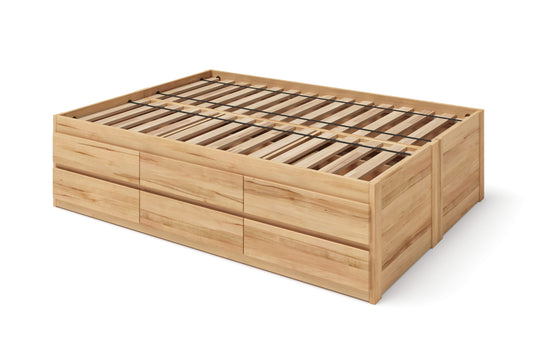
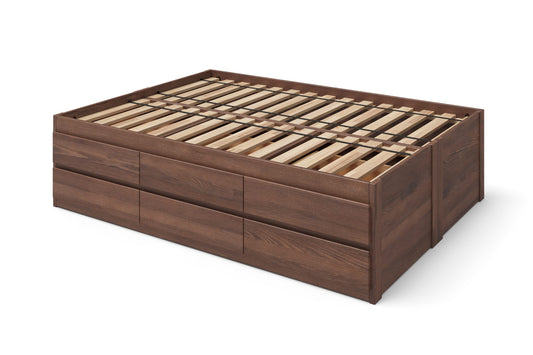
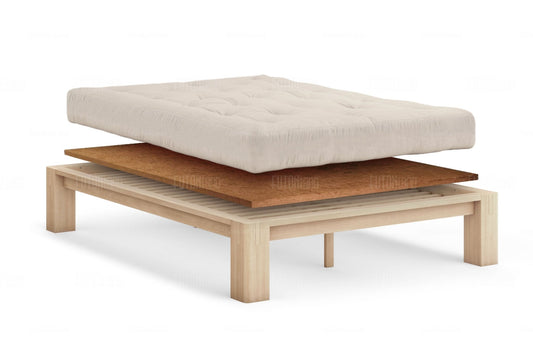
For a lower profile, compare construction details rather than choosing by appearance alone. A platform frame should support the mattress evenly, remain stable when you turn, and allow enough clearance for cleaning. Explore platform bed frames if you're comparing a raised platform with a more traditional frame.
Materials and height involve trade-offs
Feng shui traditionally favors natural wood and textiles because they read as warm, grounded, and connected to the natural world. Solid wood can also be repaired or refinished, though it's heavier and may cost more to move. Metal frames are often slim and durable, but they can look sharper and transmit movement or vibration more readily depending on their construction. Synthetic finishes and fabrics aren't automatically unsuitable, but inspect their odor, surface durability, and care requirements before bringing them into a compact bedroom.
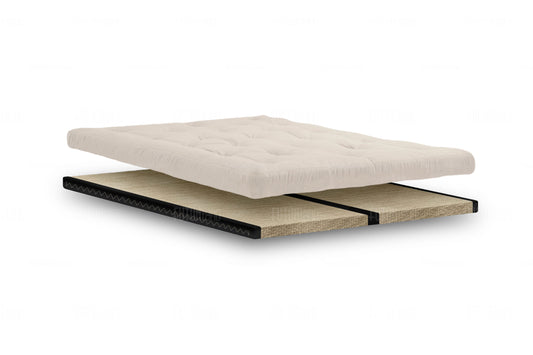
Bed height is flexible within the practice. A raised frame can improve airflow and make cleaning easier. A low platform or floor bed can create a grounded, quiet profile, especially in a minimalist or Japanese-influenced room. The practical costs include more difficult access for some sleepers, greater exposure to floor-level dust, and less storage beneath the frame.
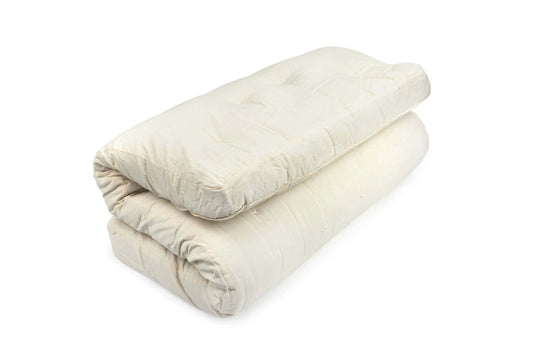
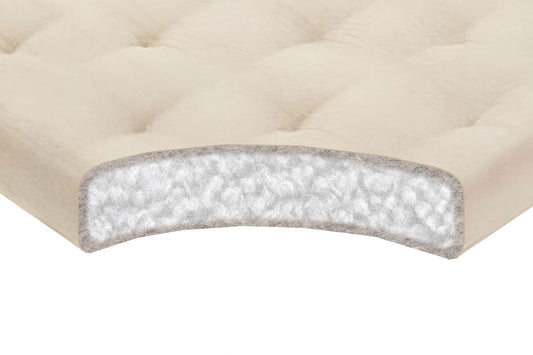
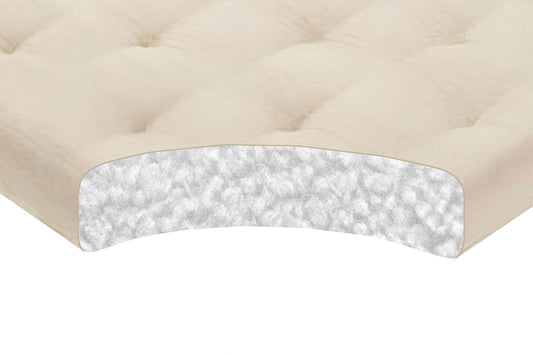
Bedding should support the same calm direction without making unsupported health promises. Breathable cotton, linen, or wool can feel comfortable because they manage moisture and temperature differently from dense, poorly ventilated synthetics. Choose the fabric based on your climate, washing routine, and tactile preference.
Adapting Feng Shui to Small Rooms and Real Constraints
Most bedrooms don't offer a perfect diagonal position. A window occupies the only long wall. The bathroom shares the wall behind the bed. In a studio, the entrance, kitchen, and sleeping area may sit within the same sightline. Feng shui becomes more useful when it helps you rank compromises instead of demanding an impossible layout.
Use a priority order
Protect the fundamentals first:
- Keep a clear path around the bed. A slightly imperfect position is safer and more comfortable than a bed that blocks the doorway.
- Create some backing behind the head. If a full solid wall isn't available, a secure headboard can provide visual separation.
- Improve the entrance sightline. Turn the bed slightly, use a diagonal offset, or position a low divider so you can see the door without lying directly in its path.
- Reduce the specific disturbance. Address drafts, streetlight, bathroom noise, or a visible mirror with a curtain, screen, door, or revised lighting.
An architectural paper identifies the classic principles as solid-wall support and avoiding alignment with the door. Related bedroom-layout research also describes an ideal location as visible to both the door and window. Those goals can conflict in a real apartment, so don't sacrifice a safe walkway just to satisfy a single directional ideal. (Architectural discussion of bedroom layout and Feng Shui)
A narrow room may force one side of the bed against a wall. If that's your only workable arrangement, keep the open side clear, choose a frame with a modest footprint, and avoid adding bulky nightstands that narrow the passage further. A minimalist low-profile frame without a headboard can help preserve visual space when a tall headboard would make the room feel compressed. See low-profile bed frame options.
Handle windows, bathrooms, and multipurpose rooms
If the bed must sit under a window, use a secure headboard that reaches above the mattress, install a lined shade, and manage drafts. If the wall borders a bathroom, place soft furnishings and storage away from shared plumbing where possible, and check whether fans, pipes, or doors create actual noise.
Murphy beds require another layer of judgment. The folded bed changes the room's function, so prioritize safe operation, clear floor space, and a mattress suited to the mechanism. This guide to the top foam mattress for murphy bed can help when the ideal feng shui placement has to coexist with a convertible layout.
Lighting, Mirrors, Clutter, and the Broader Bedroom Environment
A well-placed bed can still feel wrong if the room is bright, cluttered, noisy, or poorly ventilated. Practitioners often describe the bedroom as a place for quieter, more receptive energy. In practical design terms, that means reducing visual activity and controlling the conditions around the mattress.
Make the room visually quiet
A mirror facing the bed is one of the clearest symbolic cautions. In feng shui, practitioners hold that the reflection can bounce energy around the room. The practical issue is simpler. Reflected headlights, changing shadows, and your own movement can make a dark room feel active. Move the mirror to a side wall, place it inside a closet door, or angle it so the mattress isn't reflected.
Use layered lighting rather than relying on a bright ceiling fixture. Current bedroom guidance for 2026 emphasizes warmer light in the 2700K to 3000K range, muted earth tones, and less visual clutter. (Bedroom guidance for 2026) A bedside lamp, dimmer, and shaded overhead light give you control as the evening progresses. For more ideas on reducing glare and creating a softer atmosphere, see this guide to softening room lighting.
Keep air and storage under control
Open space under the bed is the traditional preference. Practitioners associate it with smoother movement of qi, while the practical benefits include easier cleaning and less visual accumulation. If storage is unavoidable, use closed containers for clean bedding rather than work papers, shoes, tools, or objects you rarely inspect.
Electronics add visual clutter and small lights close to the sleeper. Keep phones, laptops, and televisions away from the bed when possible, or at least remove active screens from the immediate sightline. A pair of appropriately sized bedside nightstands can contain chargers, books, and glasses without allowing the mattress area to become a storage surface.
Muted earth tones, natural wood, cotton, linen, and wool create a restrained palette that suits both feng shui preferences and minimalist interiors. Airflow still matters. Don't block a vent with the bed, and leave enough clearance around curtains and radiators for the room to function properly.
Common Questions About Feng Shui Bed Placement
Which direction should the bed face?
There isn't one universal direction. The Eight Mansions, or Kua-number system, uses birth year and sex to calculate one of eight Kua groupings, which correspond to four favorable and four unfavorable directions for sleeping and head placement. (Feng shui bed direction and Kua method) Treat that system as a structured traditional method, not a substitute for a functional layout.
Can a bed go under a window?
Practitioners generally prefer a solid wall behind the headboard. If the window is your only option, use a stable headboard, control drafts and light, and make sure the bed doesn't block ventilation or access.
Does a mirror facing the bed matter?
Symbolically, yes. Practitioners often avoid a reflection of the sleeper. Practically, move it if reflected light or movement makes the room feel restless. (Mirror placement guidance)
What if the room allows only one placement?
Choose the arrangement that keeps the doorway clear, gives the bed some backing, and reduces real disturbances such as noise, glare, and drafts. Traditional rules can be adapted.
Do you need a headboard?
No. Feng shui favors a solid headboard, but a well-built frame against a quiet wall can work. Add a headboard if the bed feels visually unsupported or the wall is exposed.
Is a low bed acceptable?
Yes. Low platforms and floor beds can fit a grounded feng shui interpretation. Check cleaning access, floor-level dust, moisture, and ease of getting up before choosing one. For a Japanese-inspired approach, compare the Japanese sleep system and learn more about floor beds.
Should paired nightstands match exactly?
No. Feng shui values balance more than identical objects. Similar height, weight, and usefulness usually create enough symmetry without making the room look staged.
What should go under the bed?
Open space is preferred. If you need storage, keep it minimal, clean, and limited to sleep-related items.
The final verdict
A practical feng shui bed arrangement starts with the commanding position, but it doesn't end with compass readings or symbolic rules. Put the head of the bed against the strongest available wall, keep it out of the direct door path, preserve access on both sides when possible, and remove mirrors, clutter, glare, and noise that make the room feel active.
Then decide how much you want to follow the traditional layer. A solid wood frame, natural textiles, a low platform, paired nightstands, or open space beneath the bed can support the visual language of feng shui without compromising the way you live. Comfort Pure offers solid-wood beds, including the Eclipse Platform Bed and Azara Platform Bed, as examples of furniture that can suit a calm, grounded bedroom layout. For broader minimalist styling, read this guide to minimalist bedroom design.
Before buying anything, measure the room, mark the door swing, locate windows and vents, and test the bed position for several nights. Move the frame first, then adjust lighting, storage, and mirrors. Choose the arrangement that respects the tradition while giving you a bedroom that feels quiet, accessible, and usable.
[comfortpure_cta]
[comfortpure_cta]