
Best Japanese Futon Mattress: A Real Buying Guide
The popular advice is simple: choose a firm, thin Japanese futon and place it on the floor. That only works when the construction, sleeper, climate, and floor surface all match. The best Japanese futon mattress isn't defined by its label. It's defined by what fills it, how those layers are held together, and whether you can care for it properly.
What a Real Japanese Futon Mattress Actually Is
Many products sold as Japanese futon mattresses are really foam floor mats with a cotton cover. They may fold neatly and look convincing in photographs, but a polyurethane core behaves very differently from layered cotton batting. It has different pressure response, moisture behavior, weight, and care needs.
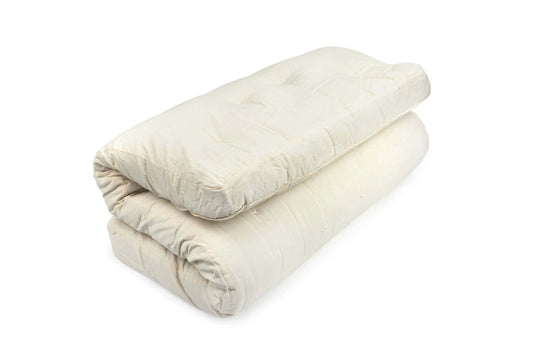
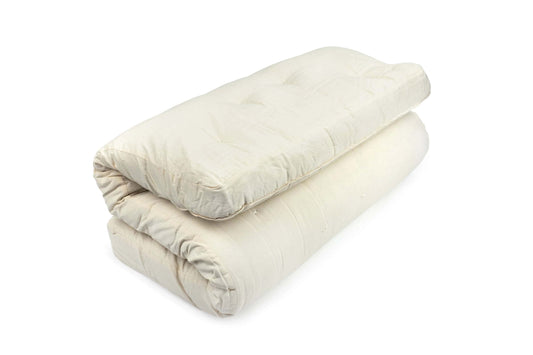
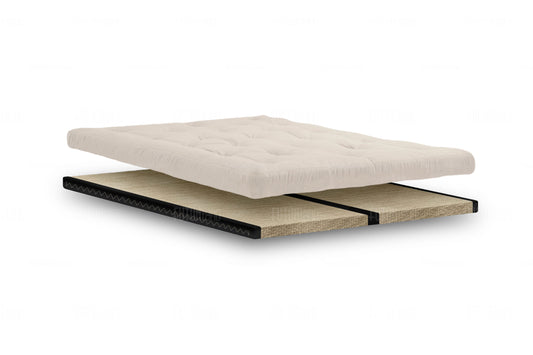
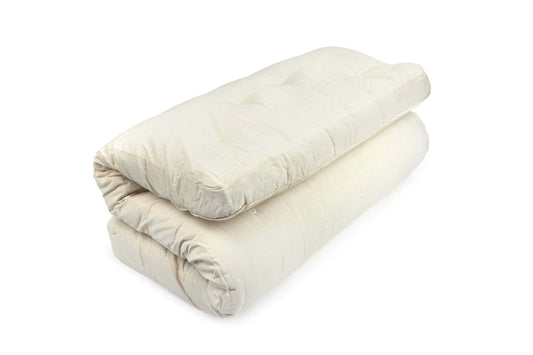
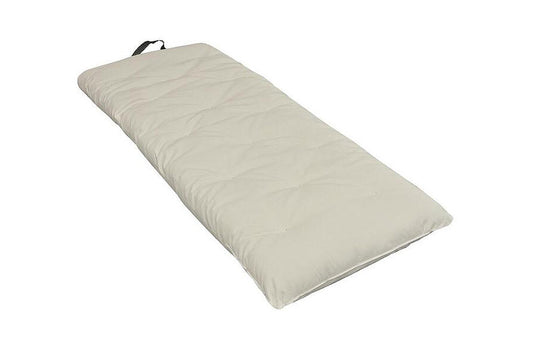
A traditional shikibuton is the bottom sleeping layer in a Japanese bedding system. The kakebuton is the top quilt or duvet. A shikibuton is a rectangular mattress made from compressed layers of cotton or other fill, enclosed in a sewn cover, and secured with stitching or tufting. It's designed to lie on the floor or tatami, then be folded, rolled, aired, or stored when the room has another use.
The word futon has deep historical roots. It entered Japan from China about 1,000 years ago, originally describing a round meditation cushion used by Buddhist priests. It later evolved into bedding during the Azuchi-Momoyama period, 1568 to 1600. Historical accounts also indicate that a full futon set in the late 1800s could cost the modern equivalent of nearly $4,000, so futons were once luxury bedding. By the late 1950s, cotton synthetics had made them affordable to a broader public and helped turn them into a household staple in Japan. Amazon Japan's futon history overview

Four physical clues matter
- Weight: A substantial natural-fill mattress usually has meaningful mass for its size. A very light pad may contain little cotton or a large proportion of synthetic fiber.
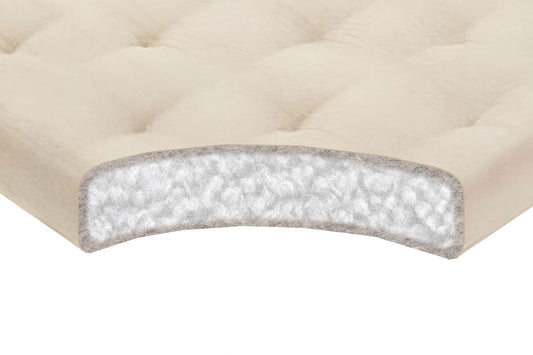
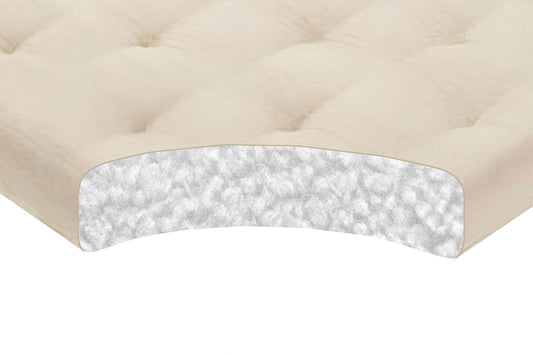
- Tufting: Look for visible knots, ties, or stitch rows that pass through the mattress. These keep batting from migrating.
- Profile: A real shikibuton should show loft when laid flat. It shouldn't look like a thin, uniform pancake.
- Core construction: Read the layers. A bonded foam slab under a cover is a foam mat, even if the listing uses Japanese terminology.
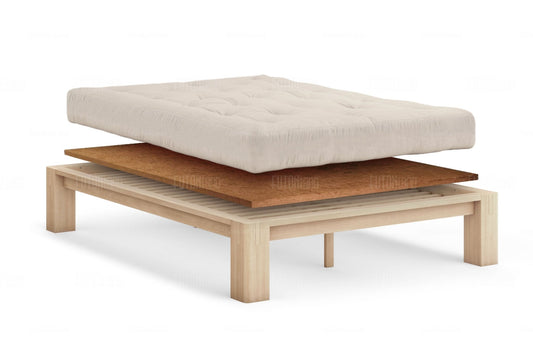
You can compare construction details in the shiki futon collection, but don't rely on appearance alone. The product page should disclose the fill, layer arrangement, weight, thickness, and securing method.
Fill Materials Compared
Fill determines the mattress's basic character. Cotton feels dense and grounded. Wool adds loft and moisture buffering. Latex brings resilience. Coir is rigid and airy. Foam is often the easiest option, but it doesn't act like a traditional textile mattress.
The table below uses qualitative comparisons. Exact weight and lifespan vary with size, fill density, cover fabric, and construction, so a trustworthy maker should publish those specifications rather than hide them behind phrases such as “premium comfort.”
| Fill Material | Firmness | Breathability | Moisture Handling | Weight, Twin | Typical Lifespan |
|---|---|---|---|---|---|
| 100% cotton batting | Firm to very firm | Good when aired | Absorbs moisture, dries slowly | Usually substantial for the size | Can be long-lasting with regular care and possible re-batting |
| Cotton with wool | Firm with more loft | Very good | Wool buffers moisture, still needs airing | Heavier than plain cotton | Long-lasting when kept dry and properly maintained |
| Natural latex core | Medium-firm to responsive | Moderate to good, depending on casing | More resilient than cotton, still needs airflow | Heavy, but often easier to move than dense cotton | Durable, with less re-fluffing than cotton |
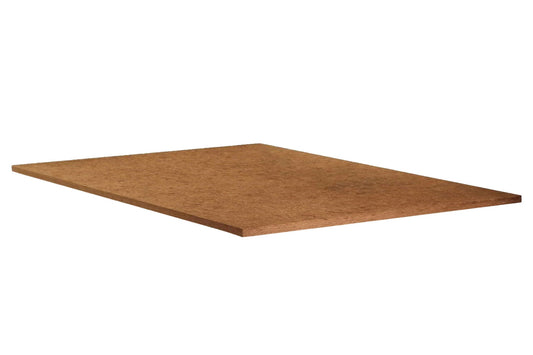
| Coconut coir | Very firm | Excellent | Dries readily when exposed to airflow | Rigid and moderately heavy | Durable if kept dry, but less forgiving |
| Foam | Medium to firm, depending on density | Variable, often less open than fiber | Can trap heat or condensation inside a cover | Often lighter than dense natural fill | Depends heavily on foam quality and compression |
Cotton is the traditional reference point
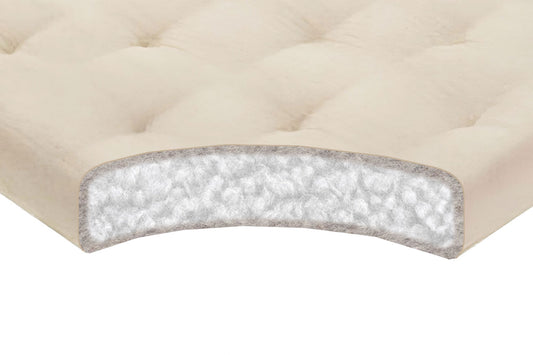
100% cotton batting is dense, breathable, and firm once compressed. It isn't springy, and it won't instantly return to its original shape after body weight is removed. That settling is part of the material's behavior. Cotton also absorbs moisture, so it needs more care than a sealed foam pad.
A cotton and wool blend suits buyers who want a little more loft and a less stark surface. Wool adds resilience and helps buffer moisture, but it can increase both cost and weight. Anyone sensitive to wool should use a suitable barrier or choose another fill.
Natural latex, whether shredded or layered, offers more bounce and easier recovery. It isn't traditional shikibuton construction, but it can be a sensible hybrid for sleepers who want natural materials without daily re-fluffing. Kapok, sometimes used in natural bedding, is light and silky but less resilient over long use. Coir is extremely firm and breathable, though its rigid feel is a niche preference.
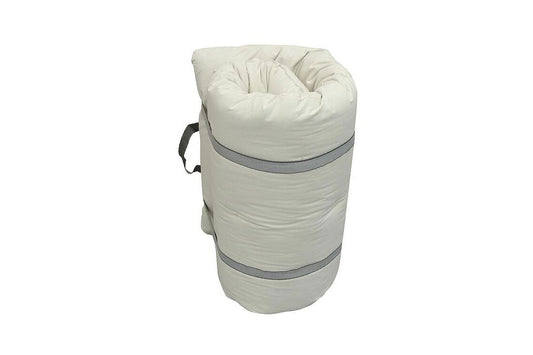
Foam deserves a fair assessment. It's often the right answer for occasional guests, tight budgets, or buyers who can't maintain cotton. It may also be easier to fold and carry. The tradeoff is that foam mats don't provide the same breathable, re-fluffable structure as layered batting.
For a closer look at rigid natural support, see the coconut coir collection. If you'd rather compare finished constructions, review futon mattresses by fill and thickness, not by the word “Japanese.”
Why Construction Matters as Much as Fill
Two mattresses can both claim to contain cotton and still perform differently. The difference is whether the maker has built a stable structure or placed loose material inside a cover.
Hand-tufting uses ties that pass from the top cover through the batting to the underside. Each tie pulls the layers together and limits sideways movement. That matters because cotton compresses where the body rests. Without anchors, the fill can migrate toward the edges, form thin spots, and develop lumps. An untufted cotton mattress may feel acceptable when new, then become uneven after months of repeated use.

Three ways makers hold the fill together
- Hand-tufting gives the strongest mechanical hold. Visible knots or tie points show that the batting is connected across the mattress rather than merely enclosed.
- Channel or panel quilting divides the fill into stitched sections. It improves stability and creates a more uniform surface, although the material can move more than it does in a tufted mattress.
- Glued or bonded layers use adhesive to attach foam sheets or fiber pads. This construction can be neat and inexpensive, but it doesn't provide the same repairable structure as mechanical tufting.
A glued foam mat isn't automatically poor quality. It belongs to a different category. Foam can be practical, especially for guests or buyers who want minimal care. But don't expect it to be re-batted like cotton, and don't assume a cotton-look cover means the interior is natural fiber.
Reading rule: “Layered,” “tufted,” and “channel-stitched” describe construction. “Quilted cover” alone may describe only the outer fabric.
When a listing omits the securing method, treat that omission as useful information. A maker confident in hand-tufting or stitched layers usually names it clearly.
Thickness, Firmness, and the Surface Underneath
Traditional Japanese shikibutons are low-profile by design. A typical version is 2 to 4 inches, about 5 to 10 cm, thick, with 2 to 3 inches commonly cited as the usual range. That profile makes the mattress flexible, rollable, and suitable for direct use on tatami. Detailed shikibuton construction and thickness guide
The same thickness can feel entirely different on tatami, wood slats, plywood, or concrete. Tatami and a breathable coir rug provide some give and airflow. A hard sealed floor provides neither. Slats can help, but wide gaps allow a thin mattress to dip between supports.
| Sleeper Weight | Tatami Mat | Wood Slats, ≤3" gaps | Hard Floor / Plywood |
|---|---|---|---|
| Lighter adult | 2 to 3 inches may work if the firm feel is comfortable | 3 inches may work with closely spaced, even support | Choose more cushioning or an underlay |
| Average adult | 3 to 4 inches gives a more stable surface | 4 inches is a safer starting point | 4 to 5 inches is more realistic |
| Heavier adult | 4 inches or additional support | 4 to 5 inches, with firm bridging support | 5 inches or more, or choose another mattress system |
| Side sleeper or shared setup | More thickness and a yielding base help | Use a supportive platform with minimal flex | A thin shikibuton is likely to feel unforgiving |
A 3-inch mattress can be inadequate for a heavier adult, a side sleeper whose hips and shoulders need more room to settle, or anyone sleeping on hardwood, plywood, or an uneven frame. Thickness doesn't solve every issue. A dense cotton mattress may remain firm even when it's thicker, while wool and latex change the way the surface responds.
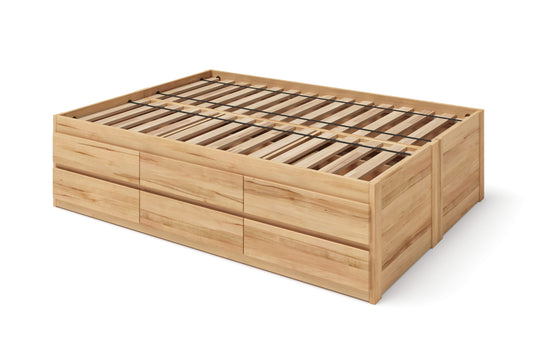
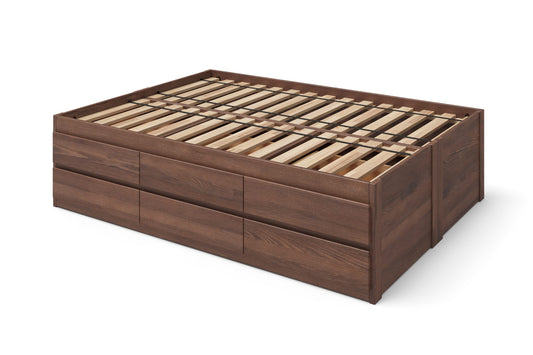
For additional bedding context and visual ideas, Buy Me Japan bedding tips can help you think about the full sleep environment rather than the mattress alone. Then match the base carefully. A tatami mat offers a different foundation from a coir bed rug, and both differ from a raised floor bed.
Firmness also takes adjustment. Many people need an honest two to four weeks to decide whether a firm floor setup suits them, provided the surface isn't causing persistent discomfort. Use that period to assess pressure points, movement, and whether the foundation is doing enough work.
Airing, Moisture, and Daily Care
A shikibuton isn't maintenance-free bedding. Cotton and wool absorb moisture from the sleeping environment, and contact with a cool floor can trap condensation beneath the mattress. In humid rooms, small apartments, and rooms with limited ventilation, that combination can lead to musty odors, clumped fill, and mold.
Folding the mattress during the day helps reclaim floor space, but folding isn't the same as drying. Give the shikibuton a chance to breathe before storing it. Stand it upright, lean it safely against a wall, or hang it where air can reach both sides.

A workable care routine
- Air regularly: Fold, roll, or hang the mattress often enough to release trapped moisture. A buying guide recommends monthly sunlight airing for 2 to 4 hours, while warning that cotton-fill futons generally shouldn't go in a washing machine because the batting can clump. Cotton futon care guidance
- Use airflow underneath: A tatami mat, coir rug, or raised platform creates a better moisture path than direct contact with a sealed floor.
- Spot clean only: Use mild soap and cold water on a cloth. Don't saturate the fill.
- Rotate the mattress: Turn it end to end and change its orientation so the same areas don't carry all the compression.
- Store it correctly: Use a breathable cotton bag or leave it loosely rolled in a dry room. Plastic can hold moisture against the fabric.
A shikibuton folded away for a day is functioning as intended. One left compressed and damp for weeks is not. If you can't build airing into your routine, a foam alternative may be the more responsible purchase.
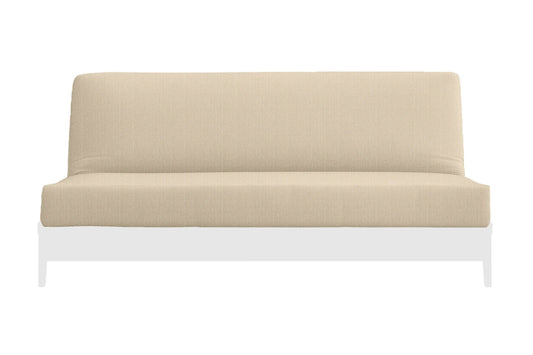
For washable outer layers, look at futon covers. A removable cover won't fix trapped moisture inside the mattress, but it makes ordinary cleaning easier.
Certifications, Sizing, and How to Read a Product Page
Certifications help, but they don't replace construction details. GOTS is the stronger choice when you want organic fiber with supply-chain requirements covering processing and handling. OEKO-TEX Standard 100 focuses on testing textiles for harmful substances. It doesn't mean the fiber was organically farmed. Verify certification claims through the Global Organic Textile Standard and OEKO-TEX information.
Wool deserves separate attention. Ask where it comes from, how it's processed, and whether the maker identifies the fiber content clearly. A vague phrase such as “natural blend” isn't enough if wool allergies or animal-welfare standards matter to you.
Origin and workmanship
Country of origin can tell you something about the intended size and construction, but it isn't a quality guarantee. Japan-made futons often follow Japanese proportions and familiar shikibuton methods. Machine-made products from elsewhere can still be well constructed, while handmade products can vary in dimensions and firmness.
Handmade usually means more visible variation and greater control over filling and tufting. Machine-made production tends to provide more consistent dimensions. Neither label tells you enough without the fill weight and stitch details.
A Japanese single shikibuton is roughly 100 by 210 cm, which doesn't map perfectly to a US twin. Compare the actual measurements with the frame, sheets, and room before ordering. The mattress sizes guide is useful for converting between systems.
The four product-page specifications to find
- Fill type and weight: Look for cotton, wool, latex, coir, or foam, plus the actual fill weight.
- Total thickness: Confirm the finished height, not just the loft of an outer cover.
- Cover fabric: Check whether it's removable, washable, breathable, and compatible with your bedding.
- Layer construction: Look for tufting, quilting, or bonded layers.
Use the mattress weight reference when comparing similarly sized products. Missing information is itself information. If a listing doesn't disclose weight, fill percentage, tufting, or layer count, you can't make a meaningful construction comparison.
A protector adds another decision. Choose one that protects against spills without creating a non-breathable moisture barrier. Make sure sheets fit the actual Japanese dimensions rather than assuming US twin, full, or queen bedding will sit correctly.
Who a Shikibuton Is Wrong For
A traditional shikibuton isn't a universal replacement for a Western mattress. Its compactness and firm, low profile appeal to many buyers, but those same traits become disadvantages when the sleeper needs more contouring, the room stays damp, or daily handling isn't realistic.
Skip a thin cotton shikibuton if you're a heavier side sleeper and don't plan to add an appropriate underlay or thicker construction. A low-profile mattress has limited room to distribute pressure before the sleeper feels the surface underneath. Extra layers can help, but stacking enough material may remove the simplicity and low storage profile that attracted you in the first place.
People with limited mobility should also think carefully. Getting down to the floor, standing up, lifting the mattress, and airing it regularly can become tiring or unsafe. A raised platform with a suitable mattress may preserve the clean look while making daily use easier.
Climate and household habits matter
A persistently damp basement is a poor environment for dense natural bedding unless you can provide reliable ventilation and drying. The same applies to households where the mattress will be left flat on a sealed floor because no one has time to lift it.
A foam futon can be the honest alternative for several buyers:
- Guest rooms: Occasional use reduces the need for a daily airing ritual.
- Tight budgets: Foam products are often less expensive than dense, hand-tufted natural mattresses.
- Limited maintenance capacity: A foam pad may be easier to fold, wipe, and move.
- Preference for a different feel: Foam provides a more uniform surface and may feel less stark than cotton.
Foam isn't a fake solution. It's not the same product. A foam mat can work well when convenience matters more than re-fluffability, natural fiber construction, or long-term repair.
The right choice depends on your body, climate, floor, and habits. A label can't make those decisions for you.
The Final Verdict and Common Questions
The label “Japanese futon” does not tell you enough. For a committed shikibuton buyer, the stronger choice is a transparent, layered, tufted cotton or cotton-wool mattress sized to the sleeper and matched with tatami, coir, or another supportive low platform. Look for stated fill, finished weight, tufting, and construction. A light foam mat may use the same name while offering a different feel and lifespan.
Choose latex when you want more rebound. Choose foam when lower maintenance, occasional use, or a uniform surface matters more than natural batting and re-fluffability.
Budget for the complete setup, not only the mattress. You may also need a breathable base, fitted cover, protector, and storage space. A thin mattress can work on tatami yet feel inadequate on a hard floor or for a heavier sleeper. Check those limits before ordering. Extra fill cannot fully correct a mattress that is too thin for the surface or sleeper.
Frequently asked questions
How thick should a shikibuton be?
Traditional models are commonly 2 to 4 inches, about 5 to 10 cm, thick. Choose closer to the thicker end, or add a supportive underlay, if the sleeper is heavier, the floor is hard, or more cushioning is needed.
How long do Japanese futons last?
A well-made cotton mattress can remain useful for years when aired, rotated, stored properly, and re-batted when necessary. Dampness and repeated compression shorten its useful life, especially when care is neglected.
Can you sleep on one every night?
Yes, provided the firmness, thickness, foundation, and care routine suit you. Nightly use produces regular moisture, so the mattress needs airflow and a drying routine.
Do you need tatami underneath?
No. You need a suitable surface. Tatami adds some give and breathability. Coir, closely spaced slats, or another breathable base can serve a similar practical purpose.
Will a shikibuton get moldy?
It can if moisture stays trapped between the mattress and floor. Improve airflow underneath, air the mattress, and avoid storing it damp or sealed in plastic.
How often should you air it?
Air it regularly, especially after nightly use and during humid conditions. For sunlight airing, the care section above notes a recommendation of 2 to 4 hours monthly.
Can two adults share one?
A standard Japanese single is narrow for two adults. Separate futons usually give each person better control over movement and support. A wider custom size needs more floor space and is heavier to handle.
Are foam Japanese futons any good?
They can be. Foam suits guest rooms, tighter budgets, and buyers who will not maintain natural batting. Compare it as a foam floor mat, though, rather than as a traditional cotton shikibuton. Its uniform feel and simpler handling may be exactly what your household needs.
If a layered shikibuton fits your room and routine, compare the published fill, thickness, weight, and foundation requirements before ordering. Choose the mattress first, then pair it with the right cover, a breathable base, and a care plan you can follow.
The right purchase matches your body, floor, climate, and habits. Product naming comes last.