
How Long Does a Shikibuton Take to Break In (and How to Speed It Up)?
Many people unbox their first shikibuton, lie down, and think, “Wow, this is firm.” That is completely normal. A traditional cotton or cotton-and-wool floor mattress starts out supportive and gradually softens as the fibers compress and conform to your body. The break-in period is where a shikibuton changes from a flat, firm pad into a smooth, gently contoured sleeping surface.
This article explains what “break-in” actually means for a shikibuton, how long it usually takes, what affects the timeline, and—most importantly—how your body adjusts alongside the mattress.
What “Break-In” Really Means for a Shikibuton
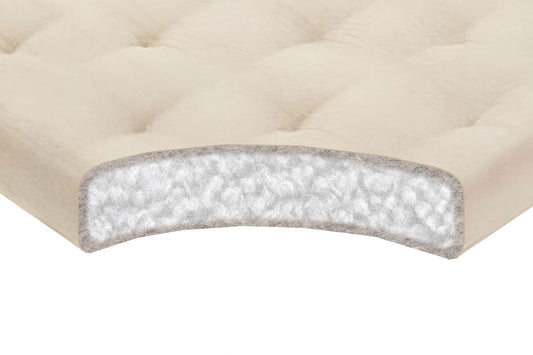
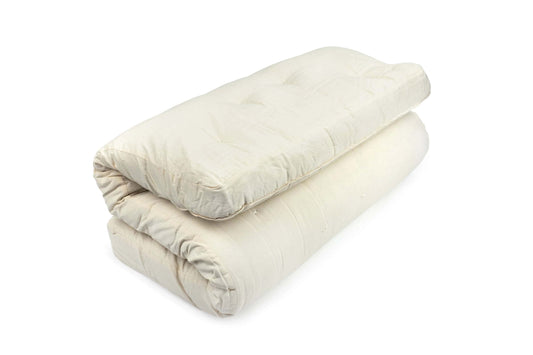
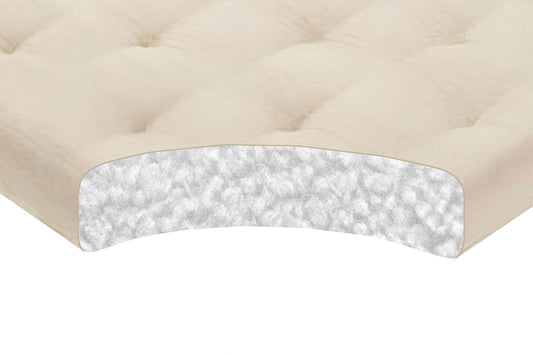
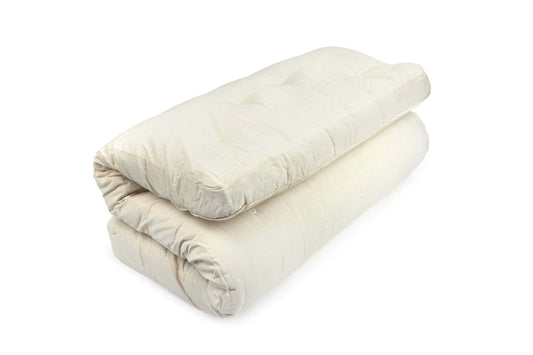
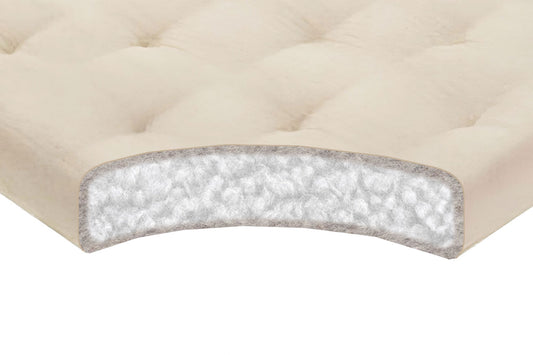
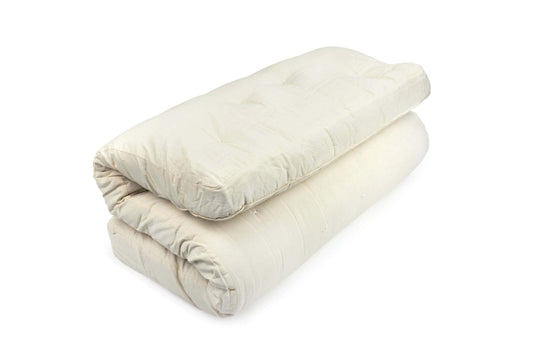
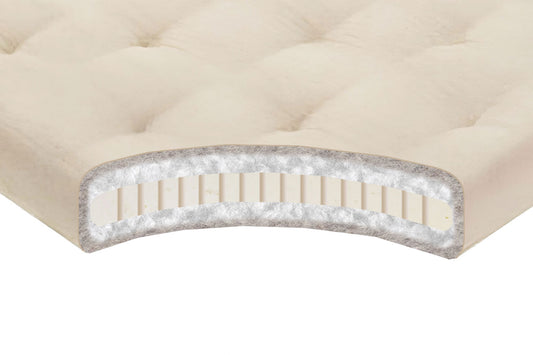
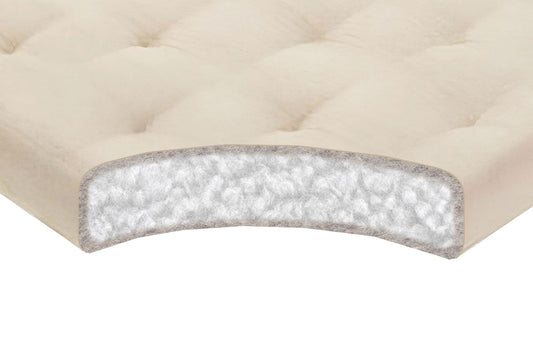
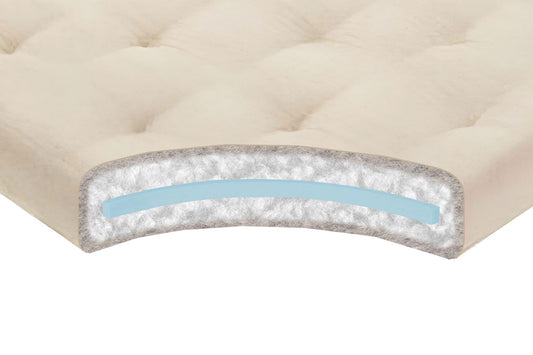
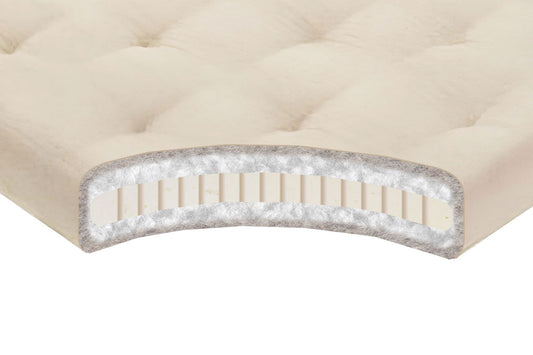
Inside a natural shikibuton, you will usually find layers of cotton, or cotton blended with wool, hand-tufted into a dense, even slab. Those fibers are full of tiny pockets of air and feel relatively springy when new. Over time, a few things happen:
- The cotton fibers slowly compress under your body weight.
- Any wool inside the mattress “blooms” at first, then settles into a stable loft.
- The surface evens out where your shoulders and hips rest, creating a broad, shallow impression rather than a deep sag.
In a well-made mattress, breaking in is not the same as wearing out. A broken-in shikibuton still feels supportive and resilient; it just stops feeling board-stiff. The goal is a smooth, slightly cushioned surface over a firm base.

Typical Break-In Timeline
No two sleepers are alike, but most people experience a similar pattern. You can track this timeline in two ways: what the mattress is doing, and what your body is feeling.
- First week: The Mattress: Feels quite firm and high-loft. The cotton has not yet compressed, so it feels like sleeping on a taut surface. Your Body: You might experience posture soreness or stiffness. This is the "retraining" phase (explained below) where your back muscles release tension held from previous soft beds.
- Weeks 2–4: The Mattress: The fill begins to compress where you sleep most often. The surface remains firm but becomes slightly more forgiving. Your Body: Morning stiffness usually fades. Many people describe this as the point where the mattress starts to feel “like it belongs to me.”
- Months 2–3: The Mattress: The main break-in is done. You should feel a stable, supportive surface with a comfortable contour. Your Body: You should feel fully adjusted, waking up grounded and rested rather than stiff.
- Months 4–6 and beyond: The Mattress: The fibers continue to relax slowly. With good rotation, the mattress stays supportive for years.
Why Your New Floor Mattress Feels So Firm
If you unbox your new shikibuton, lay it on the floor, and feel like you are sleeping on a rock, you are not alone. Many people mistakenly assume a thin, natural mattress provides the same sinking pressure relief as a thick foam bed. The materials don't work that way. Knowing how floor sleeping functions makes the initial shock much easier to handle.
The Floor Is Already Firm
When a Western mattress sits on a bed frame with sprung slats or a box spring, there is mechanical flexibility underneath. That structure absorbs some of your body weight and allows the mattress to contour slightly deeper.
A floor is completely rigid. When you place a thin mattress directly on hardwood or tile, the floor instantly becomes part of the support system. With only three to four inches of material between your joints and the ground, there is very little room for cushioning. That is why even a well-made cotton mattress feels firm as a floor bed.
Thin Mattresses Have Less Cushioning Material
Thickness matters significantly when transitioning to a floor bed. A typical American mattress is often 10 to 14 inches thick. That extra depth lets manufacturers stack multiple layers of varying foam densities to distribute weight and hide pressure points.
A 3-inch or 4-inch shikibuton cannot replicate that experience. Instead, these thinner mattresses prioritize simplicity, breathability, and spinal support. They provide a clean, natural sleeping surface, but they omit the deep cushioning many people are used to.
Cotton Compresses Over Time
Many traditional floor mattresses use natural cotton batting. Cotton is durable, breathable, and sustainable, but it behaves differently than memory foam or steel springs.
When cotton is fresh, it has some initial loft. As you sleep on it night after night, the fibers naturally compress, settle, and pack together under your body weight. This process creates a stable, custom-fit sleeping surface.
This compression also means the mattress gets firmer as it breaks in. A shikibuton that feels somewhat soft on day one will be noticeably denser by month three. For people expecting a permanently plush feel, this hardening can come as an uncomfortable surprise.
Your Sleeping Position Makes a Difference
Your preferred sleeping position dictates how much you feel this firmness during the break-in period.
- Back sleepers often adjust quickly to firmer surfaces because the spine remains straight and weight is distributed evenly.
- Stomach sleepers usually find the compacting cotton supportive, as it stops their hips from sinking and arching the lower back.
- Side sleepers tend to have the hardest time. Side sleepers need deep cushioning to relieve pressure on the sharp points of the shoulders and hips. When those pressure points hit a compressing cotton mattress on a hard floor, discomfort sets in quickly. Side sleepers often need a longer adjustment period or a thicker mattress altogether.
-
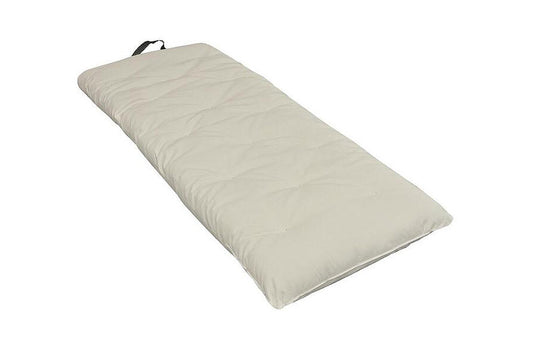
Traditional Japanese Handmade Shikibuton
Regular price From $259.99Regular price Sale price From $259.99 -
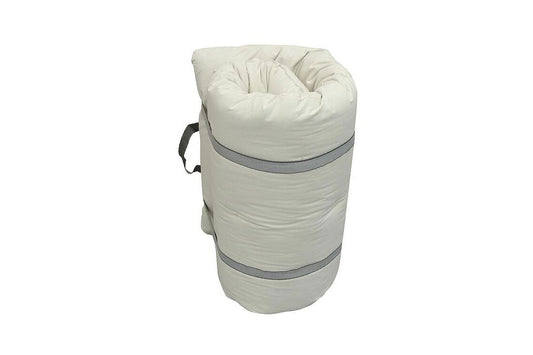
Roll-Away Shikibuton Mattress with Straps
Regular price From $189.99Regular price $289.99 Sale price From $189.99Sale -
Natural Cotton and Wool Shiki Futon Mattress
Regular price From $279.99Regular price $419.99 Sale price From $279.99Sale -
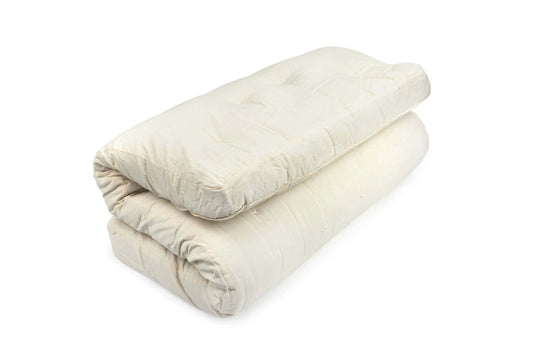
Natural All Cotton Shiki Futon Mattress
Regular price From $199.99Regular price $299.99 Sale price From $199.99Sale -
Organic Cotton and Wool Shiki Futon Mattress
Regular price From $429.00Regular price $859.99 Sale price From $429.00Sale -
Organic Cotton, Wool and Latex Shiki Futon Mattress
Regular price From $1,119.00Regular price $2,239.99 Sale price From $1,119.00Sale -
Organic All Cotton Shiki Futon Mattress
Regular price From $359.00Regular price $719.99 Sale price From $359.00Sale -
Natural Cotton and Wool Japanese-Style Firm Futon Mattress
Regular price From $529.99Regular price $669.99 Sale price From $529.99Sale -
Natural Cotton, Wool and Foam Japanese-Style Medium-Firm Futon Mattress
Regular price From $659.99Regular price $829.99 Sale price From $659.99Sale -
Organic Cotton and Wool Japanese-Style Firm Futon Mattress
Regular price From $909.99Regular price $1,139.99 Sale price From $909.99Sale -
Natural Cotton, Wool and Latex Japanese-Style Medium-Firm Futon Mattress
Regular price From $839.99Regular price $1,049.99 Sale price From $839.99Sale -
Organic Cotton, Wool and Foam Japanese-Style Medium-Firm Futon Mattress
Regular price From $999.99Regular price $1,249.99 Sale price From $999.99Sale




The “Retraining” Phase: Why You Might Feel Sore
If you wake up stiff during the first week, don't panic. You likely didn't buy the wrong mattress; your body is simply going through a realignment period.
The "Yoga Mat" Effect
Moving from a soft foam mattress to a shikibuton is physically similar to moving from a plush sofa to a yoga mat. On a soft mattress, your muscles remain passive because the foam fills in every gap. On a firm surface, your skeletal alignment takes over. Your body has to relearn how to lengthen and relax without a foam crutch.
The "Decompression" Ache
Many people notice soreness in the lower back or between the shoulder blades. This is "decompression pain"—the sensation of your spine lengthening after years of curling into a soft bed. This feeling typically fades after 7 to 10 days as your body adapts to a neutral posture.
Tips to Ease Your Body’s Transition
You can make the transition easier with a few simple adjustments.
- The "Nap" Strategy: Don't feel pressured to sleep a full 8 hours on night one. Try napping on the shikibuton for 2-3 days before committing to a full night's sleep. This lets your muscles test the surface without fatigue.
- The Knee Pillow: If you are a side sleeper, the initial firmness is tough on the hips. Place a small pillow between your knees. This aligns your hips and takes the pressure off the mattress surface while it is at its firmest.
- The "Carpet" Buffer: If you have Tatami mats or a hard floor, consider placing your shikibuton on a rug or carpet for the first week. The slight "give" underneath acts as training wheels before you move to the permanent surface.
What Changes the Break-In Speed?
Several practical factors dictate how fast your shikibuton settles.
Your body weight and sleep habits
More pressure equals faster fiber compression. People with a higher body weight or those who tend to sleep in one position all night will break in a mattress faster than very light sleepers or people who toss and turn. Side sleepers notice the change faster, since their shoulders and hips apply localized pressure.
Materials and thickness
An all-cotton shikibuton feels firmer initially and has a steeper break-in curve than a cotton-and-wool blend. Wool adds natural loft and spring, making the “day one” feel a bit more forgiving. Thicker shikibutons have more fiber to compress, spreading the process out over more time.
The foundation underneath
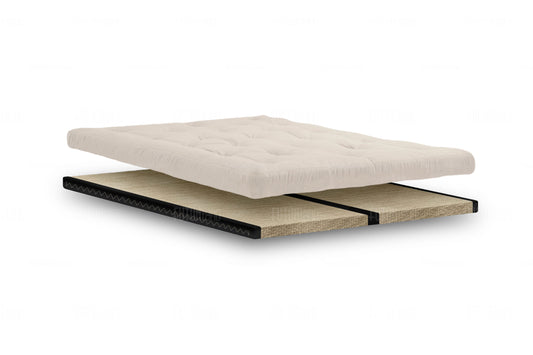
The surface under your mattress matters just as much as the mattress itself. A shikibuton on dense, traditional tatami feels a little firmer than the same mattress on flexible wood slats, and both feel different than one placed directly on a hard floor.

How to Speed Up Shikibuton Break-In (Without Damaging It)
If your shikibuton still feels too firm after a couple of weeks, there are safe ways to encourage the fibers to relax.
Rotate and flip on a schedule
Regular rotation spreads out the pressure pattern so you are not always sleeping in the exact same spot. A simple routine is:
- Every week or two, rotate the shikibuton head-to-foot.
- Every few weeks, flip it over so the underside becomes the top.
Use the “walking” method, gently
Some people speed things along by carefully walking or kneeling on the surface. The goal is to mimic months of sleeping pressure in a shorter time, without crushing the fibers into hard spots. A safe approach is:
- Remove shoes and anything sharp that could puncture the fabric.
- Walk slowly across the mattress with bare feet or soft socks, distributing your weight evenly.
- Spend extra time on areas that feel unusually stiff, but avoid bouncing or stomping.
Sleep on it every night
It sounds obvious, but the fastest way to break in a shikibuton is to use it as your primary bed. Consistent nightly pressure and body warmth reshape the fibers far more effectively than just sitting on it for short periods.
What Not to Do When Breaking In a Shikibuton
Since a shikibuton uses natural fibers, you shouldn't treat it harshly. A few things to avoid:
- Do not bend the mattress sharply over a rail or edge to “crack” it softer.
- Do not compress it under heavy, concentrated weights for days at a time.
- Do not soak or steam the cotton to soften it; trapped moisture causes mold and ruins the fibers.
How to Tell When Your Shikibuton Is Fully Broken In
It can be hard to know whether your mattress is still breaking in or has gone too far. In most cases, a well-cared-for shikibuton that is rotated regularly is simply maturing, not wearing out. Signs that the break-in is done include:
- The surface looks slightly contoured where you sleep, but there are no deep troughs.
- Your body feels evenly supported from shoulders to hips without pressure points or numbness.
- The mattress still springs back when you press down with your hands rather than staying flattened.
More on Materials and Traditional Sleep Systems
If you want to understand why wool changes the break-in curve or how floor beds became a core part of Japanese sleep culture, check out these related resources.
We offer a detailed look at how wool layers affect the feel of shikibutons. For a broader look at how all the components work together, read our guide on building a Japanese-style sleep system.
With realistic expectations, a little patience, and basic rotation, the break-in period stops being a hurdle. It just becomes the time it takes for the mattress to mold to the way you sleep.