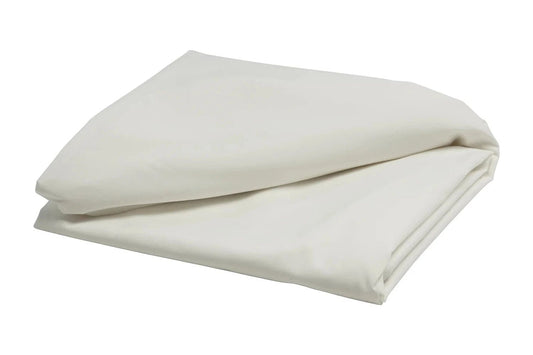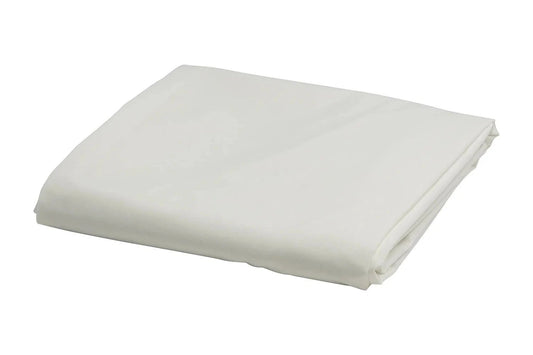

Organic Cotton Muslin Blanket: What Makes the Weave Work and Why Certification Matters
A muslin blanket doesn't announce itself. It's not a weighted blanket, a thermal layer, or a winter duvet. What it is — when made well from organic cotton — is one of the most consistently useful pieces of bedding you can own. Light enough for summer nights. Breathable enough for babies. Soft enough that it improves rather than declines with every wash.
The reason it works comes down to two things: how the fabric is constructed, and what the cotton is made from. An organic cotton muslin blanket gets both of those right in a way that heavier conventional cotton and synthetic alternatives don't.

What Muslin Actually Is
Muslin is not a fiber. It's a weave structure. Most muslin is cotton — specifically cotton woven using a plain weave technique, where a single weft thread passes alternately over and under a single warp thread. That simple, consistent construction creates a fabric with tiny open spaces between the threads, which is what gives muslin its characteristic breathability and light weight.
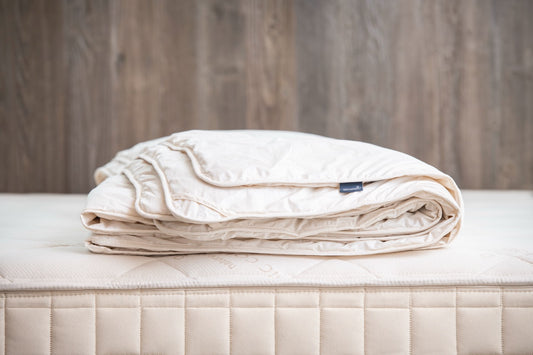
In blanket form, muslin is often used as multiple layers — double or triple gauze, where two or three muslin layers are stitched together. Each additional layer adds softness and a small amount of warmth without closing off the open weave structure. The result is a blanket that breathes freely and softens with every wash rather than becoming stiffer or flatter over time.
That last point matters more than it sounds. Most conventional blankets rely partly on finishing chemistry — softening treatments, coatings, or specific washes applied in manufacturing — to achieve their initial feel. Once those treatments wash away, the fabric often feels noticeably different, sometimes thinner, sometimes harsher. Muslin woven from long-staple organic cotton doesn't depend on surface treatments for its feel. The softness comes from the fiber quality and the weave itself, which is why the blanket gets better with use rather than declining from an artificial early peak.
Why the Open Weave Changes How a Blanket Performs
The open structure of muslin isn't just a texture choice — it's the functional core of what makes this type of blanket work differently from most alternatives.
Heat and moisture accumulate under a blanket in proportion to how well the fabric allows them to escape. A tight, dense weave creates a near-continuous surface that traps warmth against the body. Muslin's open grid allows air to circulate through the fabric rather than being deflected at the surface, which means heat and moisture can dissipate rather than building up.
For hot sleepers, this is the practical difference between waking up overheated and sleeping through the night. For babies, it's the difference between a blanket that contributes to overheating risk and one that doesn't. The American Academy of Pediatrics has long emphasized that overheating is a concern for infant sleep; a breathable, lightweight layer like muslin reduces that risk without sacrificing the comfort of being covered.
Muslin is also one of the few blanket constructions where breathability comes from structure rather than from chemical treatments. Some products marketed as "cooling" use phase-change materials or moisture-wicking finishes that work initially but diminish with washing. Muslin's breathability is built into the weave — it doesn't wash out.
What Organic Cotton Adds
Muslin's open weave performs well in any cotton. Organic cotton changes what's in that cotton before it reaches you.
Conventional cotton is one of the most chemically intensive crops in global agriculture. According to the Environmental Justice Foundation, cotton accounts for approximately 2.4% of the world's cultivated land but is responsible for around 6% of global pesticide use and 16% of global insecticide use. Those chemical inputs don't stop at the farm — they continue through spinning, dyeing, finishing, and manufacturing, each stage introducing potential residues into a fabric that will sit against skin for hours.
Organic cotton grown to GOTS (Global Organic Textile Standard) starts differently and is processed differently. GOTS covers the full production chain:
- At the farm: non-GMO seeds, no synthetic pesticides or herbicides
- In processing: prohibited toxic dyes, no chlorine bleaches, restricted chemical softeners
- In manufacturing: wastewater treatment requirements, banned toxic heavy metals
- In the supply chain: fiber tracking to prevent mixing with non-organic materials
- In labor: fair labor practices based on International Labour Organization standards, safe working conditions, no child labor
For a blanket — something a baby's face may press against, or that sits across a child's hands through the night — the completeness of that standard matters more than a single "organic fiber" claim. GOTS covers what happened to the cotton across its entire journey, not just where it started.

How Muslin Compares to Other Blanket Materials
Understanding where muslin excels means being honest about where it doesn't. It's not the right choice for every situation — but for the situations it's designed for, nothing else quite matches it.
Muslin vs synthetic fleece: Fleece is engineered to trap air and retain heat — which is exactly what makes it useful in cold conditions and exactly what makes it wrong for warm-weather use or for anyone who sleeps hot. It's a synthetic material with no natural moisture management; body heat and humidity build up against the skin rather than dissipating through the fabric. Organic muslin works in the opposite direction: the open weave moves air and moisture away from the body. For regular bedroom use across changing seasons, muslin is substantially more versatile.
Muslin vs conventional cotton blanket: A standard cotton blanket in a flat or tightly woven construction can feel stiff initially, trap more heat than muslin does, and often relies more heavily on finishing chemistry for its initial softness. The openness of muslin's weave creates better airflow than a dense flat cotton, and its softening-over-time behavior is more predictable when the underlying fiber is long-staple organic cotton rather than conventionally processed shorter-fiber cotton.
| Material | Breathability | Feel over time | Best for |
|---|---|---|---|
| Organic muslin | High — open weave allows airflow | Softer with every wash | Hot sleepers, babies, year-round layering |
| Synthetic fleece | Low — traps heat by design | Can pill and flatten | Cold-weather insulation |
| Conventional cotton (dense weave) | Moderate | Can stiffen or pill | General all-purpose use |
Where Muslin Fits in Real Use
Hot sleepers. If you find most blankets too warm but dislike sleeping without coverage, muslin is usually the answer. The open weave means you're covered without being insulated — the blanket registers as comfortable rather than as a heat source. On warm summer nights, a muslin blanket is often the only layer needed.
Year-round layering. In cooler months, muslin works well as the layer directly against the skin, with a heavier quilt or duvet on top. Because it breathes, it prevents the clammy, stuffy feeling that can develop when you're over-insulated — the muslin layer keeps moisture moving away from the body while the top layer provides warmth. This makes it more useful than many seasonal blankets that only work in one temperature range.
Nurseries and children's rooms. Muslin's open weave and light weight make it the default recommendation for parents who want a blanket that won't contribute to overheating. GOTS-certified organic cotton adds the assurance that the fabric itself has no synthetic pesticide residues or chemical finishing agents — important for a textile in frequent contact with a baby's skin. For parents who have already made a careful choice about a natural baby mattress, a muslin blanket is a consistent next step.
Everyday versatility. The muslin blanket is also simply a practical piece for the rest of the home. Draped on a chair or sofa arm, it folds compactly and looks unfussy — the crinkled texture suits minimalist and natural-material rooms without adding visual noise. Its light weight means it gets used rather than stored away between seasons.
-
100% Cotton Terry Zippered Style Futon Mattress Protector (up to 8")
Regular price From $79.99Regular price $119.99 Sale price From $79.99Sale -
Natural 100% Cotton Fabric Futon Mattress Cover - Natural
Regular price From $94.99Regular price $164.99 Sale price From $94.99Sale -
Protective Covers for Shikibutons
Regular price From $99.99Regular price $159.99 Sale price From $99.99Sale -
Organic Wool and Buckwheat Pillow
Regular price From $98.98Regular price $197.96 Sale price From $98.98Sale -
Natural 100% Cotton Fabric Futon Mattress Cover - Dark Graphite
Regular price From $94.99Regular price $164.99 Sale price From $94.99Sale -
Protective Covers for Tatami Daybed Sofa Sleeper
Regular price From $199.99Regular price Sale price From $199.99 -
Essential 100% Cotton Twill Futon Mattress Cover
Regular price $79.99Regular price $129.99 Sale price $79.99Sale -
100% Organic Cotton Sateen Fitted Sheet
Regular price From $65.00Regular price Sale price From $65.00 -
Natural 100% Cotton Fabric Futon Mattress Cover - Light Gray
Regular price From $94.99Regular price $164.99 Sale price From $94.99Sold out -
Organic Cotton Pillow
Regular price From $93.98Regular price $187.96 Sale price From $93.98Sale -
Natural Wool Mattress Topper (3 Inch)
Regular price From $329.99Regular price $659.99 Sale price From $329.99Sale -
Alpaca Wool Comforter (Duvet Insert)
Regular price From $319.00Regular price Sale price From $319.00