
How to Choose a Futon Mattress Based on Your Frame and Setup
Shopping for a futon mattress usually starts with the familiar measurements. You check the dimensions of your room, decide if you prefer a firm or soft feel, and review the materials. While these are logical first steps, they skip over one of the biggest factors in how your new mattress will actually behave: the surface it will rest on.
The term "futon" covers a wide variety of furniture today. It has expanded from traditional Japanese floor bedding into modern convertible sofas, space-saving guest beds, and low-profile platform setups. Because of this variety, a futon mattress reacts directly to its environment. The same mattress can feel and perform very differently when placed on a slatted wooden sofa frame compared to a solid floor or a woven tatami mat.
This is where it helps to plan ahead. You might find a mattress online that sounds like exactly what you need. It has the right organic materials and the preferred thickness. But once it arrives, the base you place it on will influence how it supports your shoulders, how easily it folds along a crease, and how well it breathes in your room.
This guide breaks down how different bases change the feel and function of a futon mattress. If you are still deciding between specific internal materials like cotton, wool, or latex, you may also want to review our mattress comparison guide to help narrow your options.
The Relationship Between the Mattress and the Base
Buying a futon requires you to actively match the mattress to its base. Gravity and your body weight press the mattress down into its foundation. If your foundation is a series of widely spaced wooden slats, your mattress needs enough internal structure to bridge those gaps without sagging. If your foundation is a flat hardwood floor, the mattress takes your direct weight with minimal shock absorption from the base below, which naturally makes the bed feel firmer.
Beyond comfort, the base plays a role in the hygiene of the bed. We naturally release moisture as we sleep. A breathable frame allows this moisture to evaporate into the air beneath it, while a mattress sitting directly on the floor can trap this moisture against the wood or carpet. The foundation you choose influences whether your mattress stays dry and well-ventilated over time.

Quick Overview: Matching the Mattress to the Setup
| Your Setup | Common Use Case | What to Keep in Mind |
|---|---|---|
| Futon Sofa Frame | Living rooms, offices, dual-purpose spaces. | Requires flexibility to fold smoothly; medium thickness works best. |
| Platform Bed / Slats | Everyday sleeping, minimalist bedrooms. | Needs proper slat spacing (under 3 inches) and even support. |
| Tatami Mats | Traditional aesthetics, firm back support. | Pairs well with thin mattresses; provides a highly structured, firm base. |
| Directly on Floor | Temporary guests, highly minimalist living. | Requires a regular routine of lifting and airing out the mattress. |
Setups That Futon Mattresses Are Not Designed For
While futon mattresses are highly versatile, they rely on their foundation for structural integrity. Placing them on the wrong surface can affect their comfort and longevity.

As a general rule, futon mattresses should not be used on:
- Stationary, non-convertible sofas
- Traditional pull-out sofa beds with metal folding mechanisms
- Directly on top of existing standard spring mattresses
- Standard bed frames designed for box springs (which typically only have 3 to 4 widely spaced support slats)
These setups do not provide the firm, even support or the specific flexibility a futon mattress requires. Using a futon on an incompatible base often leads to the internal filling bunching or shifting, improper folding, and a noticeably uneven sleep surface.
If you are unsure whether your current frame or setup is a good match, it is always best to confirm before making your purchase.
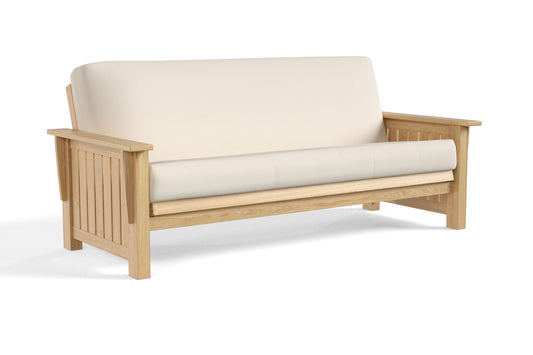
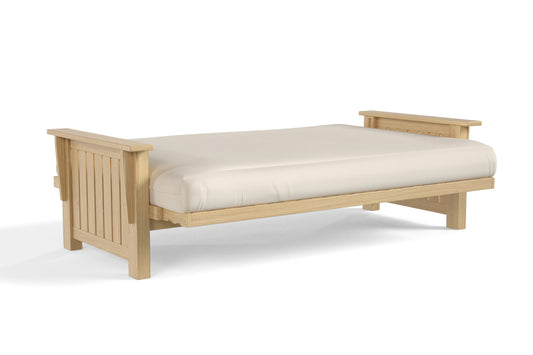
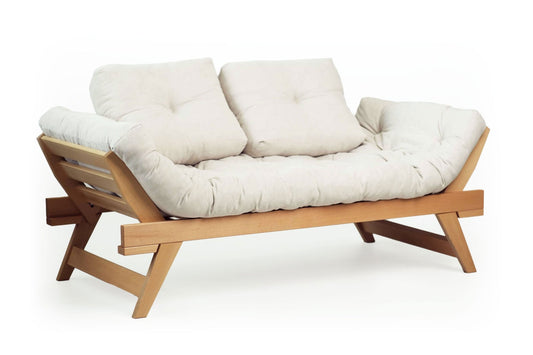
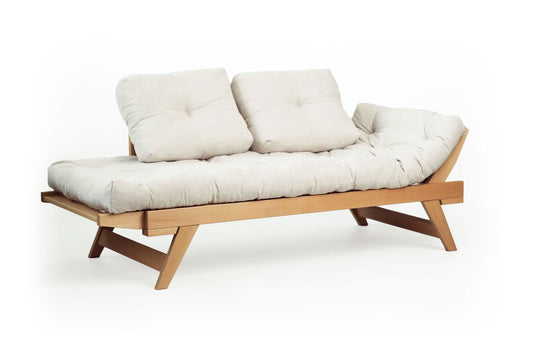
Futon Sofa Frames: Handling the Fold
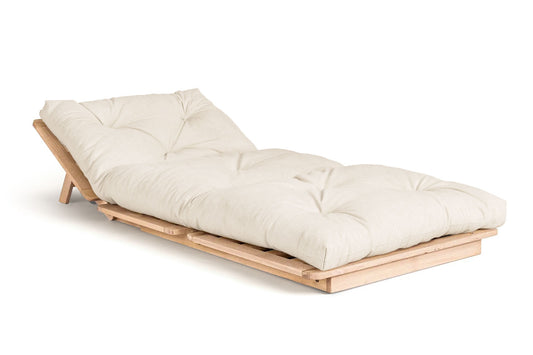
A mattress used on a convertible futon sofa frame serves two purposes. It acts as a seat cushion during the day and a flat bed at night. This means it needs to accommodate the transition between the two positions smoothly. Flexibility is a primary priority here.
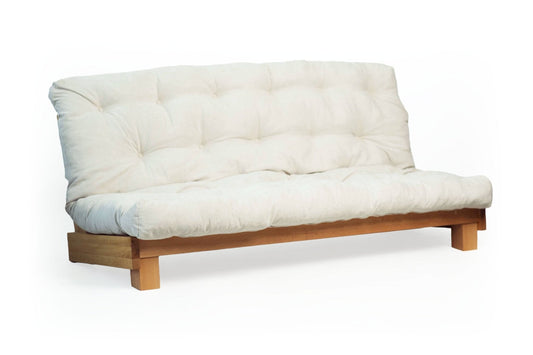
When a futon frame shifts from a bed to an upright sofa, the mattress has to bend to create the seat and the backrest. If you select a mattress that is overly thick or densely packed with rigid materials, it may resist the frame. It might bow outward, creating a rounded seating surface, or slip forward because it naturally wants to remain flat.
It is also helpful to know what kind of frame you are using. Bi-fold frames are the most common. They fold the mattress once down the middle, lengthwise, and generally pair well with standard six-to-eight-inch mattresses made of flexible cotton and foam cores. Tri-fold frames fold the mattress into three sections width-wise. These frames require thinner, highly flexible mattresses. A dense, heavy mattress will usually not function well on a tri-fold frame.
If you want a piece of furniture that transitions regularly, look for mattresses explicitly designed for folding. You can browse complete futon sofas to see examples of pre-matched setups that take the guesswork out of the process.

Platform Beds and Slatted Bases: Support and Airflow
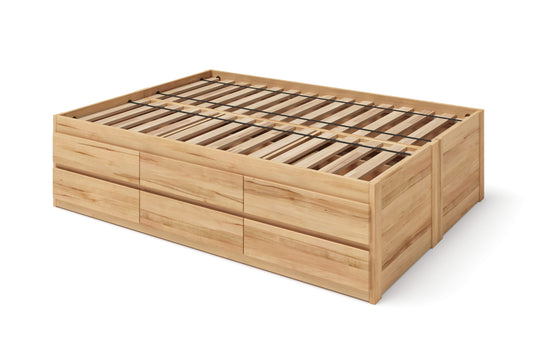
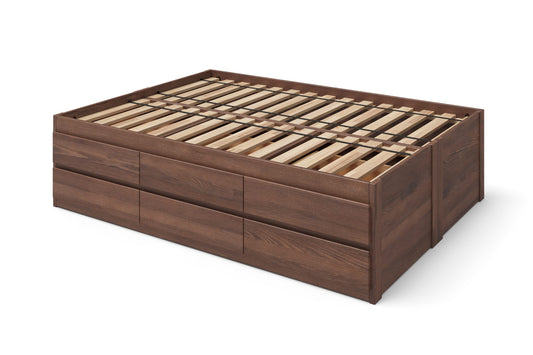
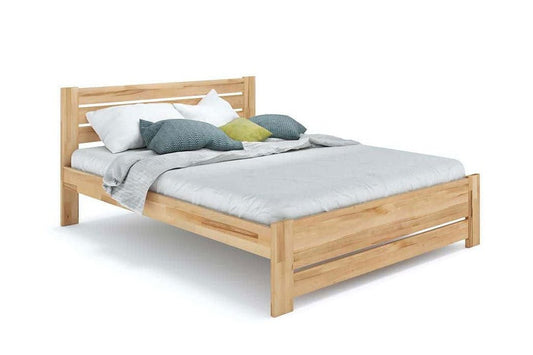
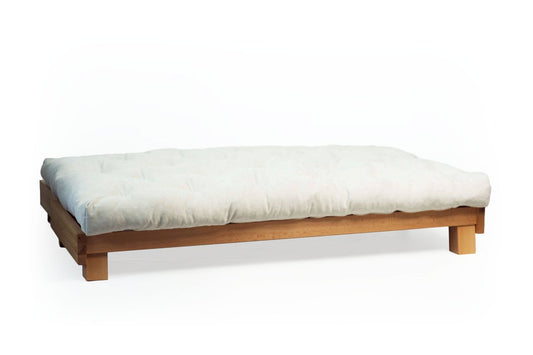
Using a futon mattress on a platform bed simplifies the requirements. Since the mattress will stay flat, you no longer need to worry about creases or folding mechanics. Instead, the focus shifts to even structural support and under-mattress ventilation.
A slatted platform bed is an excellent foundation because it lets air circulate freely beneath the bed. However, you should pay close attention to the spacing of those wooden slats. Futon mattresses, especially those made of natural cotton and wool, are more malleable than stiff innerspring mattresses. If the gaps between your bed slats are wider than two and a half to three inches, the materials can start to press through those spaces over time. This can create an uneven sleeping surface.
When shopping for a platform bed, look for bases with at least 12 solid hardwood slats. If you are buying a Queen or King size, ensure the frame has a rigid center support beam that runs from the head of the bed to the foot, with center legs touching the floor. This prevents the slats from bowing inward over time.
Because you aren't folding the mattress, the platform bed setup gives you the freedom to choose thicker, heavier options if you prefer a plusher feel.
Tatami Mats: The Traditional Approach
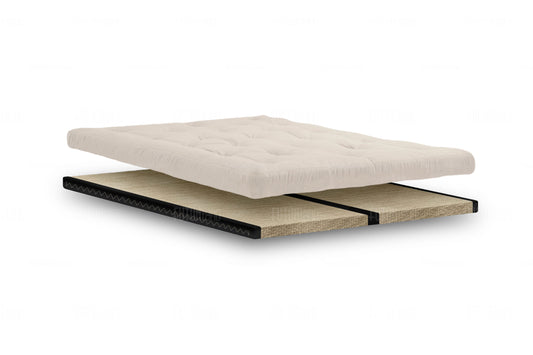
For those who prefer a traditional Japanese interior design or a structured minimalist aesthetic, tatami mats are a classic foundation. Traditional tatami mats are made with a compressed rice straw core, wrapped in woven rush grass called Igusa. Modern versions sometimes use dense foam cores to reduce weight, but the woven surface remains standard.
Placing a traditional, thin shikibuton mattress on a tatami mat creates a distinctly firm sleep experience. The tatami provides a very firm foundation, meaning your body relies mostly on the thin mattress for cushioning. This grounded sensation is often preferred by those who find that firm surfaces help with their sleeping posture.
Tatami mats are also functional. The woven rush grass is porous, which helps to absorb slight ambient humidity from the air and the mattress, releasing it as the room breathes. This can help manage moisture better than a standard bare floor.
From a design perspective, tatami mats give a room clear structure. Rather than resting a mattress on an open floor, a tatami setup intentionally frames the sleeping area. If you like the tatami feel but prefer to be slightly elevated, tatami beds—wooden frames with tatami mats inset into the base—are a great alternative.
-
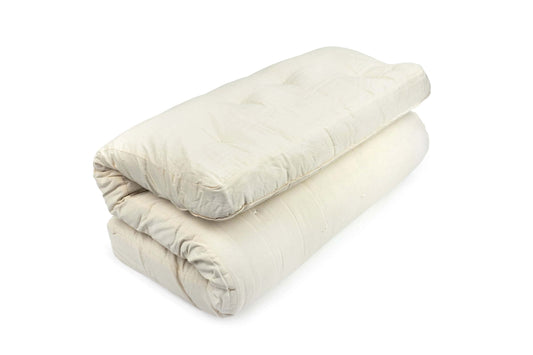
Natural Cotton and Wool Shiki Futon Mattress
Regular price From $279.99Regular price $419.99 Sale price From $279.99Sale -
Natural All Cotton Shiki Futon Mattress
Regular price From $199.99Regular price $299.99 Sale price From $199.99Sale -
Organic Cotton and Wool Shiki Futon Mattress
Regular price From $429.00Regular price $859.99 Sale price From $429.00Sale -
Organic All Cotton Shiki Futon Mattress
Regular price From $359.00Regular price $719.99 Sale price From $359.00Sale -
Natural Cotton and Wool Japanese-Style Firm Futon Mattress
Regular price From $529.99Regular price $669.99 Sale price From $529.99Sale -
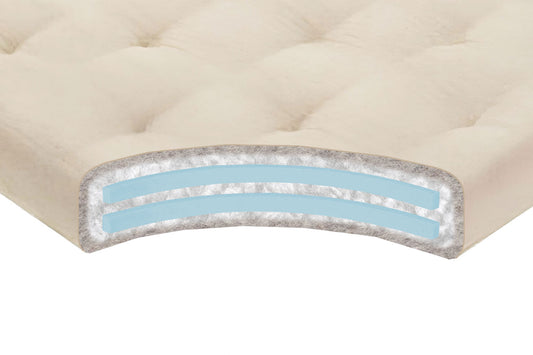
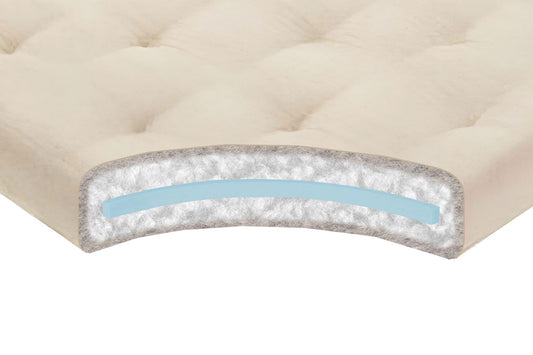
Natural Cotton, Wool and Foam Futon Mattress
Regular price From $469.99Regular price $709.99 Sale price From $469.99Sale -
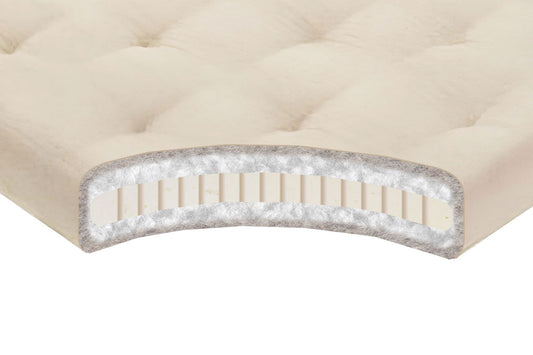
Natural Cotton, Wool and Latex Shiki Futon Mattress
Regular price From $879.00Regular price $1,759.99 Sale price From $879.00Sale -
Organic Cotton and Wool Japanese-Style Firm Futon Mattress
Regular price From $909.99Regular price $1,139.99 Sale price From $909.99Sale -
Natural Cotton, Wool and Foam Japanese-Style Medium-Firm Futon Mattress
Regular price From $659.99Regular price $829.99 Sale price From $659.99Sale -
Natural All Cotton Japanese-Style Firm Futon Mattress
Regular price From $429.99Regular price $539.99 Sale price From $429.99Sale -
Natural Cotton, Wool and Latex Japanese-Style Medium-Firm Futon Mattress
Regular price From $839.99Regular price $1,049.99 Sale price From $839.99Sale -
Organic Latex and Wool Mattress
Regular price From $1,104.98Regular price $1,699.96 Sale price From $1,104.98Sale


Sleeping Directly on the Floor: The Maintenance Reality
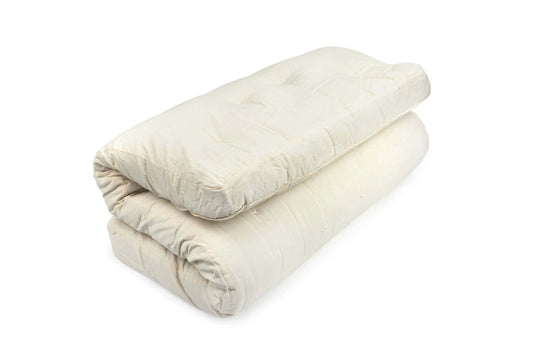
Placing a mattress directly on a hardwood, tile, or carpeted floor is a common choice for minimalists or for temporary guest setups. It is simple and saves space. However, floor sleeping requires more routine maintenance than other setups.
The main consideration is airflow. When you sleep on an elevated frame, your body heat and natural moisture can travel through the mattress fibers and evaporate. When a mattress sits flat against a sealed floor, that moisture can pool between the bottom of the mattress and the floorboards. If left in a warm room without ventilation, this can increase the risk of mildew.
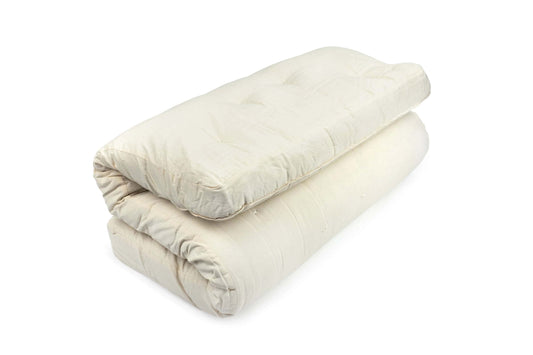
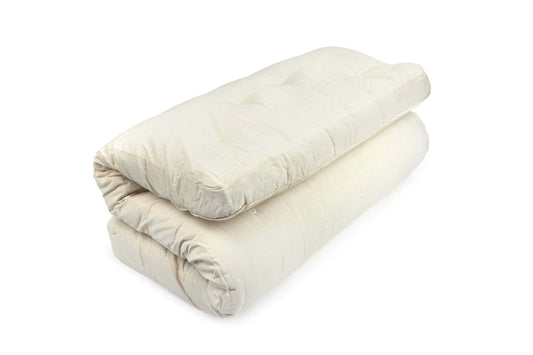
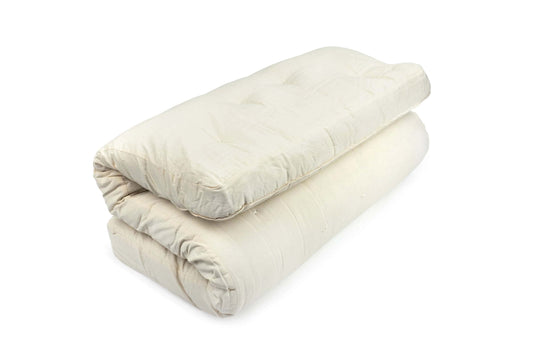
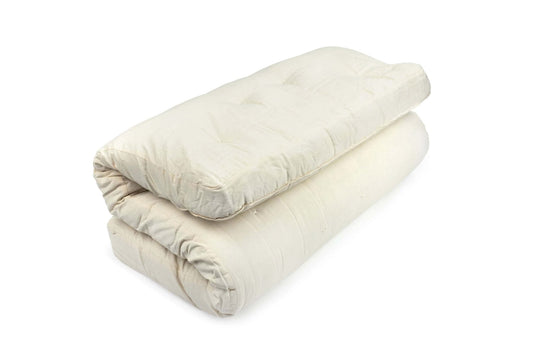
If you choose to sleep directly on the floor, it is important to adopt a regular maintenance routine. You should periodically lift the mattress, lean it against a wall, or fold it up to let the bottom fabric and the floor dry out. Occasionally placing the mattress in a well-ventilated, sunny area can also help keep the inner fibers fresh.
Your local climate plays a role as well. Floor sleepers in dry climates generally have an easier time managing moisture than those in humid, coastal areas. For those dedicated to floor sleeping, lightweight shikibutons are generally easier to handle, while low floor beds can lift the mattress just enough to allow some airflow underneath.
How Different Materials React to Your Setup
Understanding your frame helps you choose the right materials to go inside your mattress. Different fills have distinct physical properties that dictate where they perform best.
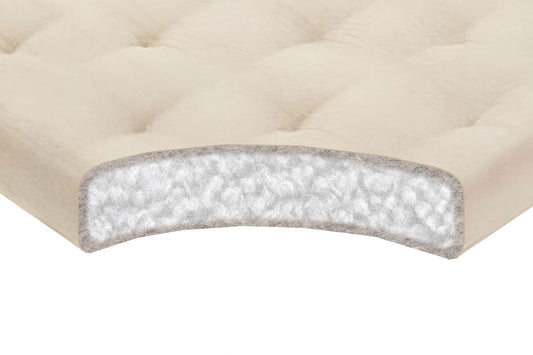
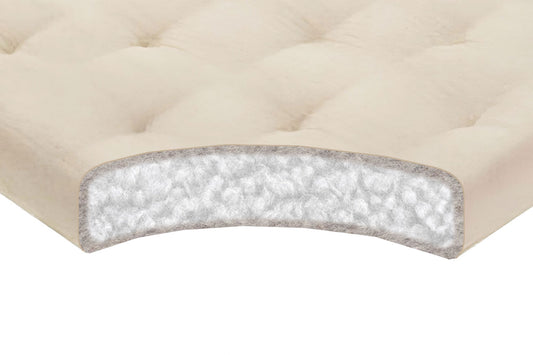
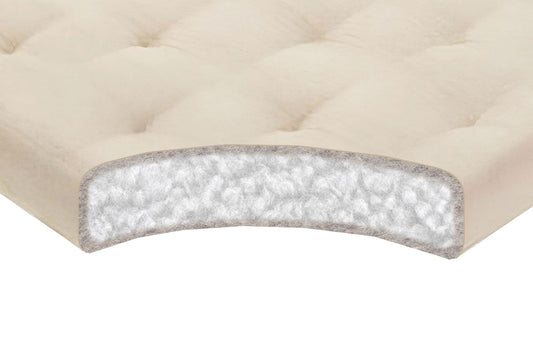
All-cotton and cotton-wool blends are traditional futon fills. They are dense, heavy, and over time, they compress to form a firm sleeping surface. These materials work very well on tatami mats or closely slatted platform beds. They can be more challenging on frequently used futon sofa frames, as pure cotton is heavy to fold daily and can develop a crease if left in a sofa position for extended periods.
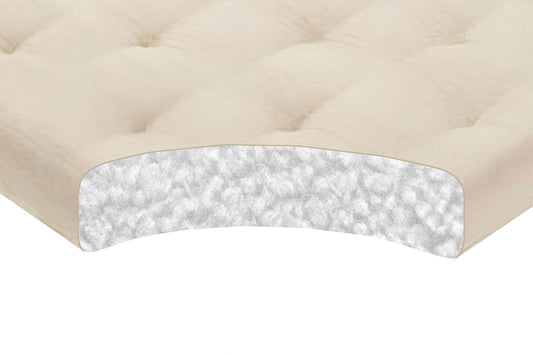
Cotton and foam core combinations are generally much lighter. The foam adds a springy resilience and reduces the overall weight. These are well-suited for futon sofa frames. The foam core makes it easier for the mattress to bend smoothly into a sofa position and helps it return to a flat shape.
Natural latex is incredibly durable and supportive, but it is also quite heavy. A latex futon on a sturdy slatted bed provides great pressure relief and longevity. However, folding a heavy latex mattress from a flat position into a sofa position daily can be difficult, and its weight may strain lighter wooden frames over time.
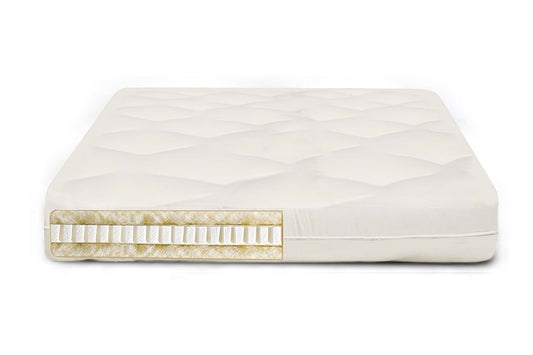
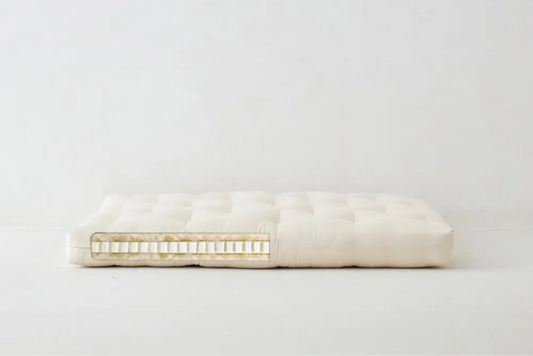
Innerspring futons feature a flexible, low-profile spring system wrapped in foam or cotton to offer a feel closer to a traditional mattress. These generally do best on platform beds where they stay flat, or on heavy-duty bi-fold frames that are rarely converted. They are usually too bulky and heavy to be practical for direct floor sleeping, as they are difficult to roll up and air out.
If you prefer materials that breathe naturally, you can explore our collections of organic mattresses and natural mattresses to see how these fills are layered.

Guest Rooms vs. Primary Bedrooms
How often the mattress gets used can also guide your choice of materials and setup. A bed meant for a guest who visits occasionally does not face the same wear as the bed you sleep on every night.
If the futon is primarily for guests, convenience and space-saving are often the main goals. A medium-thickness cotton and foam mattress on a convertible frame is a practical choice. It functions well as seating most of the time and provides good comfort for a short-term visitor.
If this is your primary bed, consistent support is key. Nightly sleeping puts regular stress on the mattress materials. You will want reliable, flat support, good airflow, and high-quality internal materials like dense foam, latex, or premium wool. A mattress that lacks adequate support on its base may become less comfortable over time with daily use.
Common Questions About Futon Setups
What type of frame or surface do I need for a futon mattress?
For the best support and comfort, you should place your futon mattress on a futon frame, a platform bed with adequate slats (at least 12), tatami mats, or a solid platform or floor.
Can I put a futon mattress on a traditional pull-out couch or a standard bed frame?
No, futon mattresses should not be used on traditional sofa beds with metal mechanisms, stationary sofas, existing standard mattresses, or basic bed frames that only have 3 to 4 support slats. Using these unsupported bases can cause the filling to bunch or shift, prevent the mattress from folding correctly, and lead to a very uneven sleeping surface.
Can I use my old box spring under my new futon mattress?
It is generally not recommended. Traditional box springs are made to work with rigid innerspring mattresses. They often have wide gaps under their fabric covers or use coils that create uneven support. Because futon mattresses are flexible, they can sink into the softer spots of a box spring, which may damage the mattress and reduce support. It is best to stick to rigid slats, tatami, or solid platforms.
My futon mattress keeps sliding off the front of my sofa frame. How do I fix this?
This usually happens for two reasons. First, the mattress might be a bit too thick or stiff for the frame, causing it to push outward. Second, the wooden frame itself might have a smooth finish. You can often resolve this by placing non-slip futon grip pads between the frame and the mattress to help hold it in place.
Is sleeping on the floor actually better for my back?
This depends on your body and your preferred sleep position. Many back and stomach sleepers find that the firm support of a floor setup helps align their posture. However, strict side sleepers may find floor sleeping uncomfortable on their hips and shoulders, as the surface has very little give.
How long does a futon mattress last?
Lifespan depends heavily on the setup and the materials. A well-maintained latex futon on a breathable platform bed can last many years. A basic cotton futon that is folded and unfolded daily on a sofa frame will experience more wear and may need to be replaced sooner. Regular maintenance, especially for floor setups, helps extend the life of the mattress.
Do futon mattresses work on adjustable motorized bed bases?
In many cases, yes. Because most futon mattresses (especially those made of pure cotton, wool, foam, or latex) are designed to bend and flex, they can often adapt well to the angles of motorized adjustable bases.