
Japanese Joinery: A Wabi-Sabi Approach to Strong, Minimal Wood Bed Frames
There is a common assumption in furniture shopping: the more a bed frame does — storage drawers, hydraulic lift, padded headboard, adjustable base — the more substantial it must be. A low platform bed with clean lines and no headboard reads as understated by comparison, maybe even fragile.
In practice it tends to work the other way, and Japanese joinery explains why. Joinery is often described as a woodworking tradition, but it is more accurate to call it a philosophy of building: precision over excess, structure over hardware, longevity over short-term convenience. Make fewer parts, make them fit properly, and let the geometry do the work. The best minimalist solid wood platform beds feel more solid than complicated designs — not because they are heavier or more engineered, but because the parts that are there carry load directly without relying on volume to cover for them.
This guide starts with the aesthetic that draws people to Japanese joinery, moves into the mechanics of how interlocking construction actually creates stability, and finishes with how those ideas are built into Comfort Pure's Tatami Bed frames — heights, recessed slats, headboard options, and tatami compatibility.

The Japanese Aesthetic as a Bedroom Lifestyle
When people search for Japanese joinery, they are usually searching for more than a joint. They are searching for a feeling: calm, minimal, natural, and quiet. The Japanese aesthetic removes the unnecessary so the essential can stand out. Instead of busy decoration, it leans on proportion and negative space. Instead of glossy finishes and sharp contrast, it favors texture — wood grain, woven fibers, soft matte surfaces, and the way natural materials change over time.
Wabi-sabi plays a key role. It is not imperfection on purpose; it is the appreciation of subtle variation and authenticity — small differences in grain, the gentle softening of edges, the way a room looks better lived-in than staged. A wabi-sabi bedroom feels quieter because it is not demanding attention.
Japandi adds practicality. If wabi-sabi is the poetry of simplicity, Japandi is the plan that makes simplicity work day to day. Storage is intentional rather than accidental. Objects are useful rather than decorative. The palette stays warm and restrained. The room stays calm because it is easier to keep calm.
The bed carries most of that weight. It is the largest object in the room, so if it looks heavy and complicated, the room will too. But in a Japanese aesthetic bedroom, minimalism cannot be fragile. A clean design only works if it is structurally confident — which is exactly what joinery is built to achieve.
Japanese Joinery: What It Is and Why It Still Matters
Japanese joinery refers to a broad family of woodworking methods that connect wood without relying on visible metal brackets and fasteners for strength. The tradition developed over centuries through architecture, temple construction, cabinetry, and fine furniture, producing a wide range of joints — some designed to lock, some to flex slightly, some to extend beams, and some to be taken apart and rebuilt.
The point for a modern bedroom is not that your bed frame should mimic a temple. It is that joinery provides a blueprint for building stability into simple forms. Instead of adding layers of reinforcement, you shape parts so they support each other. Instead of depending on hardware to force alignment, you design alignment into the geometry. Instead of treating wood as static, you allow for its natural movement through careful fit and smart contact surfaces.
Why Fewer Parts Means Fewer Failure Points
Most long-term bed frame problems are not caused by wood snapping. They are caused by hardware loosening, brackets shifting, and the cumulative wobble that builds over thousands of small movements. A frame with twenty mechanical connections has twenty places where that process can start. A minimalist platform frame with half that many has half the exposure.
The structural logic runs counter to intuition. A simple platform typically uses wider hardwood rails and tighter corner geometry to resist racking — the side-to-side drift that eventually turns into squeaks and wobble. A well-engineered minimalist frame puts material where load actually travels: the rails, the corner joints, the slat deck. Nothing hides behind extra brackets or secondary supports, which means the joints that are there need to be fitted properly, and usually are.
Larger sizes like kings generally require a central support beam for span integrity, but a well-designed minimalist frame also minimizes ground contact points so the bed settles firmly and evenly rather than rocking on an uneven floor.
The Technology Behind Joinery: Interlocking Mechanisms
Strip Japanese joinery down to its practical essence and you get a principle directly relevant to bed frames: interlocking mechanisms. An interlocking joint uses shape and contact surfaces to keep parts aligned under load. The bed becomes stable not because metal hardware is pulling everything together, but because the parts are designed to hold each other in place.
In a modern interlocking frame this looks like rails that slot into legs, shoulders that prevent twisting, and a structure that tightens naturally as weight is applied. Good interlocking design distributes force across surfaces rather than concentrating it at a handful of bolt points. That matters because a bed is constantly experiencing small movements — sitting on the edge, shifting during sleep, getting in and out, changing bedding.
Many common bed noises come from micro-movements where hardware meets wood or where components loosen and rub. Interlocking structures reduce those friction points and reduce the need for maintenance tightening. When the geometry is doing the work, the bed feels more like a single object than a kit of parts.

How It Compares to Other Frame Types
The trade-offs between frame architectures are worth understanding before buying, particularly for a bedroom that sees daily use.
| Frame type | Structural advantage | Where it tends to fail | Best suited for |
|---|---|---|---|
| Solid hardwood platform (minimalist) | Direct load paths; high torsional rigidity; surface is repairable | Requires precise assembly; no padding if you sit up to read | Long-term ownership; small rooms; allergy-sensitive bedrooms |
| Upholstered composite frame | Acoustic dampening; soft edges; visual warmth | Fabric degrades over time; internal structure (usually plywood) is hidden and hard to inspect | Master suites where lounging in bed is a priority over longevity |
| Storage base (drawers or hydraulic) | Efficient use of dead space | Moving parts wear or fail; restricts mattress airflow | Studios or rooms with severe storage constraints |
| Standard metal frame | High strength-to-weight ratio; portable | Joint loosening leads to squeaking; metal fatigue at weld points | Guest rooms; temporary setups; budget-focused purchases |
Solid Wood vs. Everything Marketed as Wood
"Real wood" gets used loosely in furniture listings, but the distinction matters for a bed frame. A solid hardwood frame behaves differently than engineered panels or thin veneers — not just aesthetically but mechanically. Hardwood resists fastener pull-out better, so screws and bolts stay tight longer. It also has natural resilience: small impacts and vibrations do not degrade the structure the way they do with particleboard.
Wood is an engineering material with direction-dependent properties — mechanical performance varies with species, grain orientation, and how the piece was cut and dried. The USDA Forest Service Wood Handbook covers this in detail. The practical upshot: a solid hardwood frame with well-fitted joints stays quieter over time because the core structure does not change. You notice it in the middle of the night when you shift positions — no creak, no give.
A minimalist design makes this difference more apparent, not less. There is no padding or extra structure to mask movement. The material is either good enough or it is not.
-
Columbus Natural Platform Bed
Regular price From $469.99Regular price $799.99 Sale price From $469.99Sale -
Lakewood Natural Platform Bed
Regular price From $679.99Regular price $899.99 Sale price From $679.99Sale -
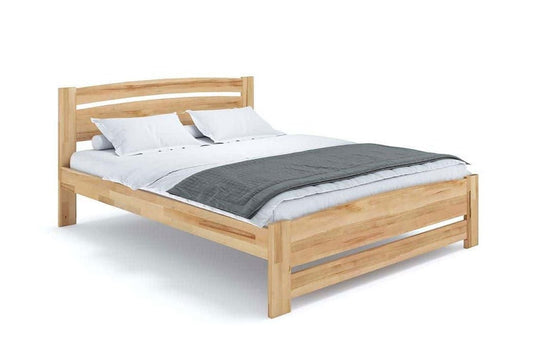
Sacramento Natural Platform Bed
Regular price From $599.99Regular price $829.99 Sale price From $599.99Sale -
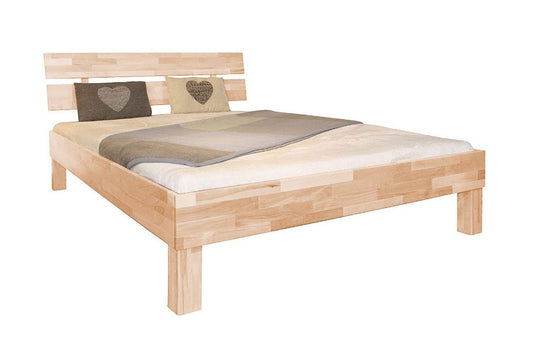
Plainfield Natural Platform Bed
Regular price From $409.99Regular price $739.99 Sale price From $409.99Sale -

 Sale
SaleKanso Tatami Bed
Regular price From $749.99Regular price $899.99 Sale price From $749.99Sale -
Anchorage Platform Bed
Regular price From $549.99Regular price $799.99 Sale price From $549.99Sale -
Japanese Tatami Platform Bed
Regular price From $729.99Regular price $929.99 Sale price From $729.99Sale -
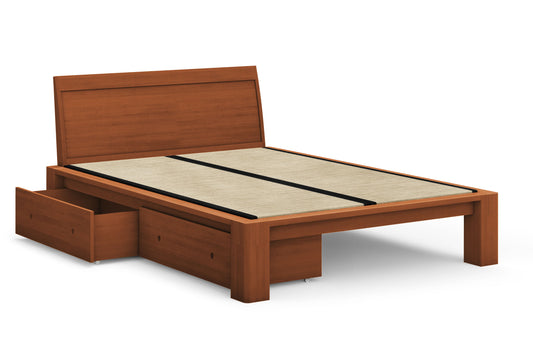
Japanese Tatami Platform Bed with Solid Headboard
Regular price From $929.99Regular price $1,129.99 Sale price From $929.99Sale -
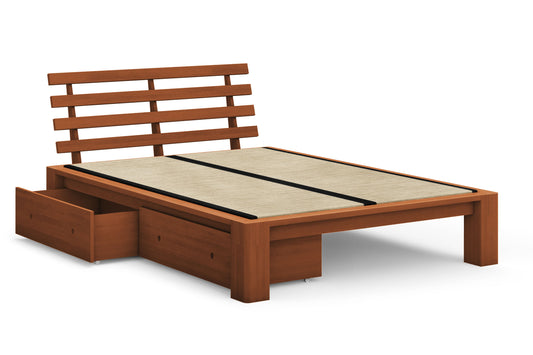
Japanese Tatami Platform Bed with Slatted Headboard
Regular price From $819.99Regular price $1,019.99 Sale price From $819.99Sale -
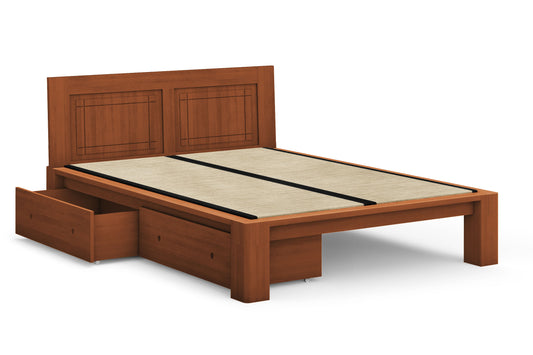
Japanese Tatami Platform Bed with Grooved Headboard
Regular price From $899.99Regular price $1,099.99 Sale price From $899.99Sale -
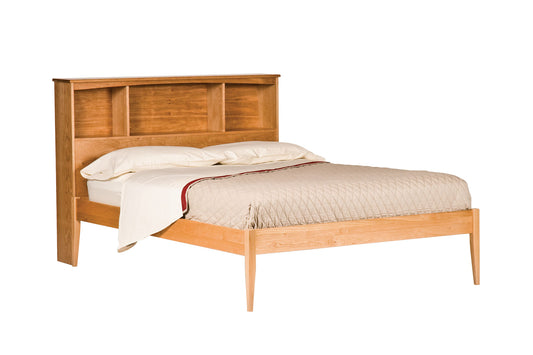 Sale
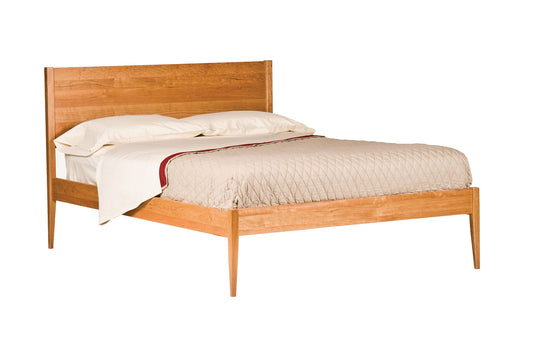
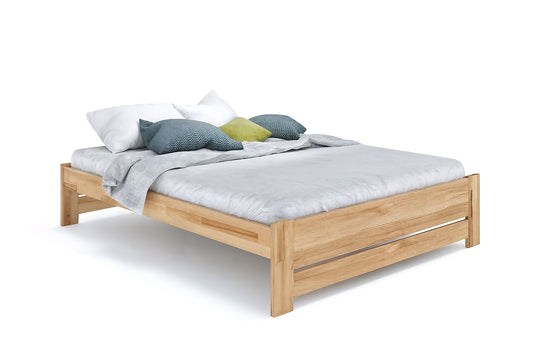
SaleBasic Platform Bed
Regular price From $799.99Regular price $999.99 Sale price From $799.99Sale -
 Sale
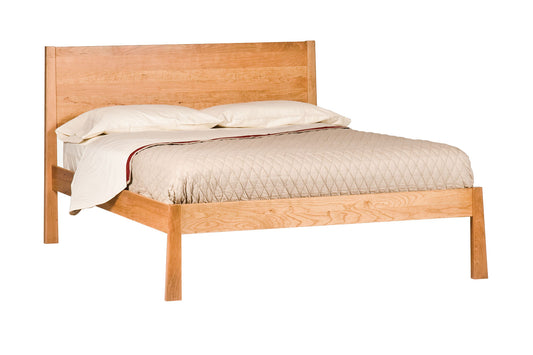
SaleEclipse Platform Bed
Regular price From $1,149.99Regular price $1,439.99 Sale price From $1,149.99Sale









Low Profile Is a Structural Choice, Not Just an Aesthetic One
A lower bed sits with its center of gravity closer to the floor, which reduces leverage on the joints when the frame moves. Less leverage means less sway under a restless sleeper and fewer squeaks over time. The physics work against a tall frame every time someone sits down on the edge — there is simply more moment arm for the structure to fight.
Low profile also changes how the room reads. Sleeping closer to the ground creates a grounded, calm visual effect, opens more wall space, and makes ceilings feel taller. But it raises the stakes on construction: when the bed is close to the floor, the platform is more noticeable. If the frame flexes, you will feel it. If the joints shift, you may hear it. Low profile design demands better engineering, which is precisely where joinery earns its place.

The Case for No Headboard
A headboard is often the most visually dominant element in a bedroom, and also one of the least structurally necessary. Removing it solves problems a headboard creates: attic rooms with sloped ceilings, beds positioned in front of windows, or small rooms where a large vertical panel blocks light and closes the space in.
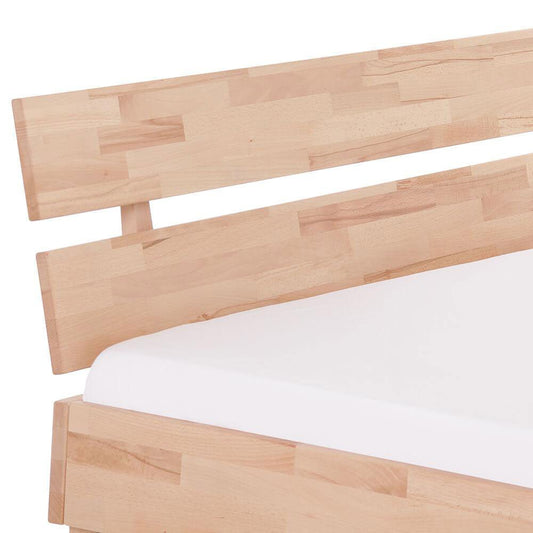
Without a headboard, the frame itself becomes the focal point — the rails, the corner joinery, the wood grain. This is why low-profile frames without headboards lean toward woods with distinctive character: cherry with its warm undertone that deepens over years, beech with its tight, consistent grain. The wood does the decorative work a fabric panel would otherwise cover up.
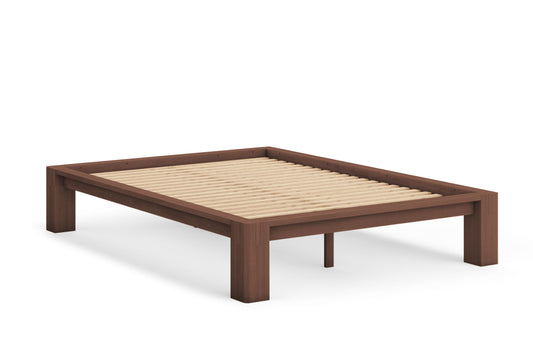
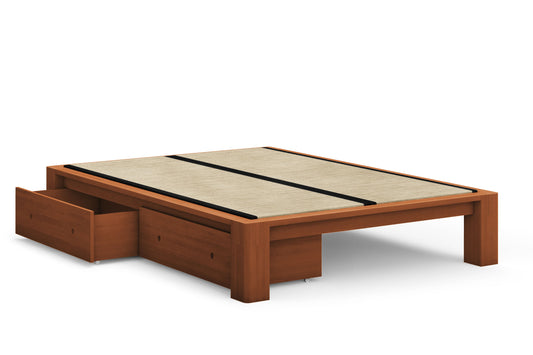
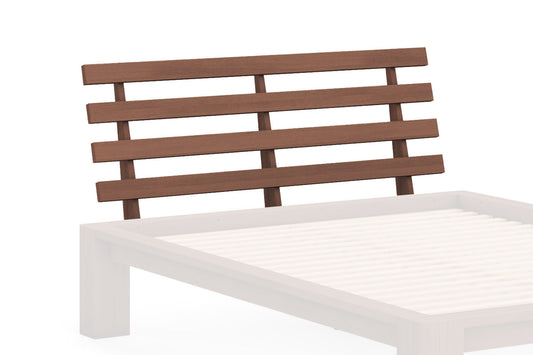
That said, minimal does not mean the same thing in every room. Comfort Pure's Tatami Bed frames are available without a headboard or with three wooden headboards. In a wabi-sabi space, leaving the wall open usually feels most natural — textured plaster, limewash, or a single piece of art, with the bed staying unobtrusive. In a Japandi space, a wooden headboard adds structure, anchors the bed visually, and supports the practical reality that many people sit up in bed to read.
Slats, Recessed Platforms, and Why the Deck Matters
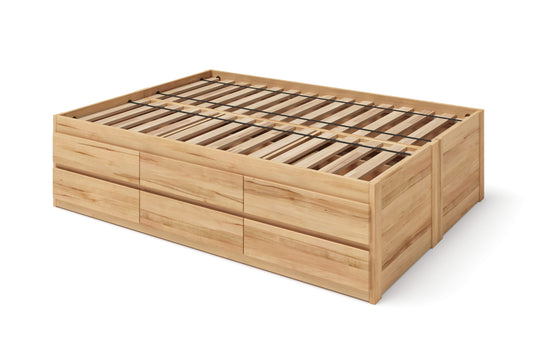
All Comfort Pure platform beds use a slatted base, and that is an advantage rather than a limitation. Slats provide airflow underneath the mattress, which matters for temperature regulation and moisture management — particularly with a denser natural mattress like a cotton futon or wool fill. A slatted platform is also adaptable in a way a solid base is not: the mattress can sit directly on the slats for maximum airflow, or an intermediate layer can be added to adjust firmness and weight distribution without replacing the frame.
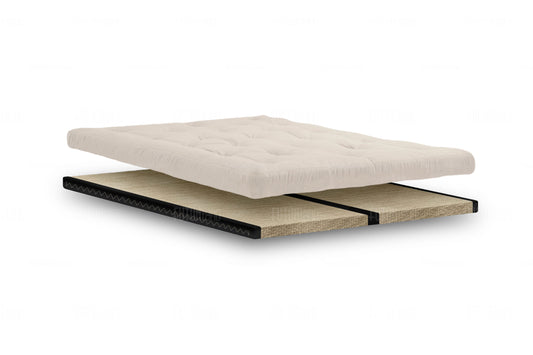
On the Tatami Bed frames, the slats are set about 2 inches beneath the bed surface, creating a recessed platform — almost like a tray — so the sleep surface sits within the frame rather than perching on top of it. That does two things. It reduces the stacked appearance that happens when multiple layers sit visibly above the rails. And it creates a proper home for tatami mats, which sit flush and stable instead of reading as an add-on layer.
Tatami Mats: Completing the System
Tatami is associated with Japanese interiors, but in a modern platform bed it is also practical: natural fibers, breathability, and a firm, grounded feel. Used with a platform bed, it acts as a functional intermediary between mattress and slats, creating a more even surface and supporting airflow.
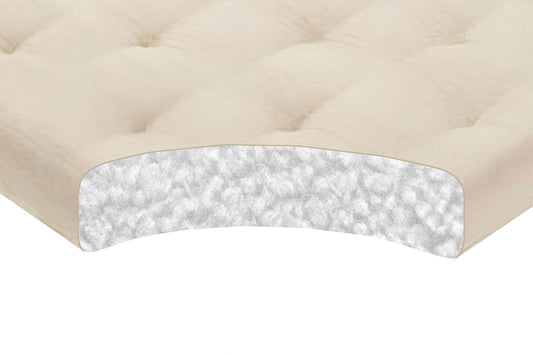
Comfort Pure's tatami mats are sized to match the platform and complement the recessed slat design. They are built from traditional materials — a woven rush grass surface over a dense rice straw core — producing a firm, breathable layer that pairs especially well with futon-style and latex mattresses, while still working under many modern mattress types.
Be clear about what tatami does, though. A mattress can sit directly on wood slats, and for some mattress types that works well. Tatami earns its place when you want a more integrated platform feel, a firmer and more traditional sleep surface, or a breathable layer that complements a natural mattress.
-
Japanese Tatami Platform Bed
Regular price From $729.99Regular price $929.99 Sale price From $729.99Sale -
Japanese Tatami Platform Bed with Solid Headboard
Regular price From $929.99Regular price $1,129.99 Sale price From $929.99Sale -
Japanese Tatami Platform Bed with Grooved Headboard
Regular price From $899.99Regular price $1,099.99 Sale price From $899.99Sale -
Sale
Kanso Tatami Bed
Regular price From $749.99Regular price $899.99 Sale price From $749.99Sale -
Japanese Daichi Tatami Platform Bed
Regular price From $499.99Regular price Sale price From $499.99 -
Japanese Tatami Platform Bed with Slatted Headboard
Regular price From $819.99Regular price $1,019.99 Sale price From $819.99Sale -
Japanese Zen Platform Bed
Regular price From $869.99Regular price $1,049.99 Sale price From $869.99Sale -
Headboard for a Tatami Bed
Regular price From $159.99Regular price Sale price From $159.99 -
Headboard for Kanso Tatami Bed
Regular price From $209.99Regular price Sale price From $209.99


Heights: Low Profile, Custom, and Storage-Friendly
The 8-inch low profile option provides 3.25 inches of clearance — a true low platform presence that reads almost architectural, while still allowing airflow beneath the frame and easier cleaning access. For most people building a Japandi or wabi-sabi bedroom, this is the sweet spot: the bed reads as part of the room's floor-level composition rather than a tall piece of furniture dominating it.
Beyond that option, Comfort Pure allows custom heights from 7 inches up to 16 inches, so the bed can match a comfortable sitting height, align with your nightstands, or clear enough space for storage underneath.
The 16-inch standard models provide 11.25 inches of clearance, which fits the matching underbed drawers designed for the Tatami Bed system. Minimalist bedrooms succeed when storage is integrated rather than added as an afterthought, so a taller configuration can be just as Japandi as a low one — if it is done cleanly.

Three Frames Worth Knowing
Japanese Tatami Bed Frame — Mahogany
Built to accommodate tatami mats at the right height, with proportions drawn from Japanese floor furniture rather than Western platform conventions. The broad, flat silhouette anchors a room without pushing into vertical space, and mahogany's density makes it one of the more structurally stable options in the collection. This is the frame where the interlocking construction is most visible.
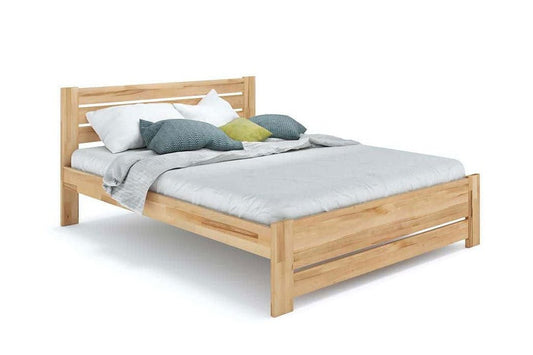
Plainfield Natural Platform Bed — Beech
Beech is denser and more shock-resistant than most softwoods, and the Plainfield keeps its profile flat and low — no taper, no decorative rail profile, nothing competing with the grain. A good choice if you want a frame that reads as quiet in the room rather than making a statement. Works particularly well in Japandi interiors where the goal is to subtract rather than add.
Basic Platform Bed — Cherry
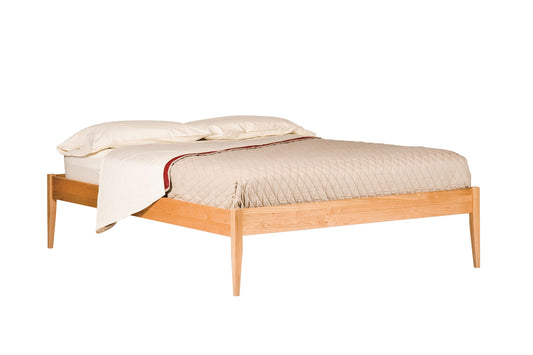
Cherry starts with a warm reddish-brown tone and darkens with light exposure over years — a frame that looks better at five years than it did at one. The Basic keeps the silhouette clean so the wood does the visual work. For anyone who wants joinery they can see and a material that improves with age, this is the direct choice.
What Makes a Minimalist Frame Last
A minimalist platform bed lasts because there is nothing in it that does not need to be. The hardwood rails carry load directly to the floor. The joints stay square because they are fitted to the geometry of the frame, not held by hardware that can back out over time. The slats spread weight rather than concentrating it. Take away any of those elements and something has to compensate, which is exactly how more complicated frames get themselves into trouble.
Because "Japanese joinery" is a popular phrase, it also gets used loosely. The useful test is not the label but how confidently the frame holds its shape under real use. When you sit on the edge, does it feel stable? When you shift your weight, does the structure feel unified? Does the platform support the mattress evenly? A joinery-inspired frame should feel designed around fit rather than around hiding hardware.
Frequently Asked Questions
Are minimalist platform bed frames less sturdy than bulkier designs?
Usually not, and often the reverse is true. A well-built minimalist frame has fewer mechanical connections, which gives hardware fewer opportunities to loosen over time. The structural work is done by the wood geometry and the joints, not by mass or volume. That said, the quality of the hardwood and the precision of the joinery matter more in a minimal frame than in a complicated one, since there is nothing else carrying the load if either is poor.
What wood species is best for a minimalist bed frame?
Beech and mahogany are both strong choices — beech for its density and shock resistance, mahogany for its dimensional stability, since it moves less with seasonal humidity changes than most domestic species. Cherry is slightly softer but develops a richer color over years of use, which suits a frame where the wood is the main visual element. Pine is sometimes sold as solid wood and technically is, but it is a softwood that dents and compresses under daily load.
Do I need a box spring with a platform bed?
No, and adding one usually causes problems. Box springs were designed as a support layer for metal frames that have no deck of their own. On a slatted wood platform, a box spring sits between the mattress and a rigid surface it was never intended for, and the flex introduces movement the slats do not, which can create noise and accelerate mattress wear. The slats are the foundation; the mattress goes directly on them.
How far apart should slats be on a platform bed?
Three inches is about the practical maximum for most mattresses. Beyond that, a denser fill — latex, tightly packed cotton, or wool — can begin to deform into the gaps under repeated load, which shortens mattress life and reduces support. Closer spacing distributes weight more evenly. On natural-fill futons and shikibutons especially, tighter slat spacing makes a noticeable difference in how the mattress holds up over years.
Can a minimalist platform bed work with a tatami mat?
Yes, but frame height needs to account for the mat thickness, typically 2 to 3 inches. A standard platform bed designed for a mattress alone ends up higher than intended once tatami is added on top. The Japanese Tatami Bed Frame is specifically proportioned for this combination, with the slats recessed about 2 inches beneath the bed surface so the finished height stays reasonable rather than defeating the low-profile point of the setup.
Japanese joinery stays compelling because it solves a modern problem: how to build furniture that is minimal but not fragile, simple but not disposable, clean but not hollow. The best joinery-inspired designs do not just borrow the aesthetic — they apply the underlying logic. Interlocking mechanisms create stability through fit and geometry. Solid hardwood provides mass and structure. Recessed platforms and well-planned slats support the sleep surface properly. If you want to go deeper on the mechanics of interlocking construction, our guide to why low-profile interlocking frames work covers it in detail, and the Wood Bed Frame Guide covers density, durability, and how different hardwoods age.