
Heavy Mats? 4 Portable Alternatives to Traditional Tatami
Tatami mats have been a staple of Japanese interiors for centuries, valued for their durability, natural scent, and firm support. While traditional hon-tatami (full-sized mats) are ideal for permanent flooring and platform beds, they are notoriously heavy, difficult to ship, and challenging to maneuver through standard Western hallways.
Fortunately, modern adaptations allow you to enjoy the benefits of tatami without the logistical headache. Whether you need a permanent bed base, a stow-away guest solution, or a simple breathable layer, there is a portable option available.
This guide compares four practical alternatives: Split Tatami, Folding Mats, Goza Mats, and Coconut Coir Rugs.
1. Split Tatami Mats: The Permanent Foundation
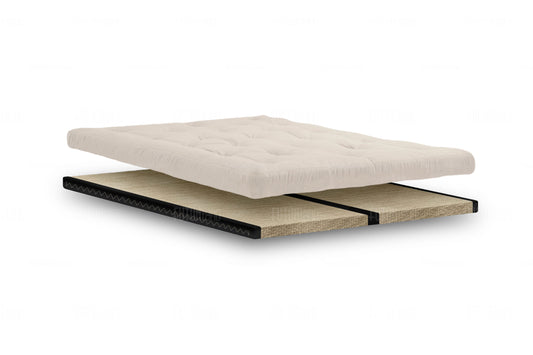
If your goal is to create a permanent bed platform or a fixed flooring area, Split Tatami Mats are the closest equivalent to traditional mats, optimized for shipping.
What they are: High-quality mats made from a compressed rice straw core, cut into smaller panels (usually 2 or 4) that sit side-by-side to form standard mattress sizes (Twin, Queen, King, etc.).
Best for: Underneath shikibutons or Western mattresses as a breathable foundation.
Why Choose Split Mats?
Traditional mats often require expensive freight shipping. Split mats are designed to fit within standard ground shipping limits (like FedEx or UPS), significantly reducing delivery costs. Because the panels are smaller, they are also easier for one person to carry up stairs or around tight corners.
Specs & Considerations
- Stability: Excellent. They are heavy enough to stay in place, especially when framed or weighed down by a mattress.
- Seams: You will see a visible seam where the panels meet.
- Assembly: Panels are placed next to each other; they are not hinged or connected.

Split Tatami Size Guide
| Mattress Size | Panel Count | Dimensions (Per Panel) |
|---|---|---|
| Twin | 2 | 39" x 37.5" |
| Full | 4 | 27" x 37.5" |
| Queen | 4 | 30" x 40" |
| King | 4 | 38" x 40" |
2. Folding Tatami Mats: The Stow-Away Solution
For multi-purpose rooms or temporary sleeping arrangements, the Folding Tatami Mat offers maximum flexibility.
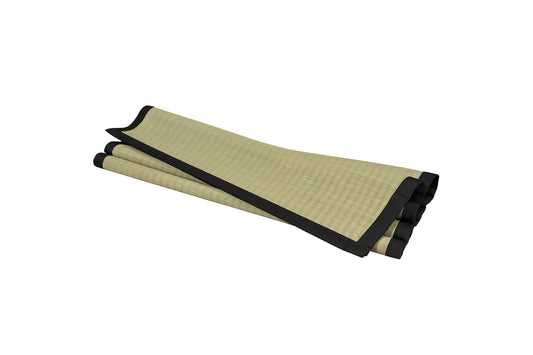
What it is: A lightweight mat consisting of 3 to 4 connected panels. It folds up like an accordion, making it easy to stash in a closet or trunk.
Best for:
- Small apartments where the bedroom is also the living room.
- Hosting guests (pairs perfectly with a folding shikibuton).
- Yoga, meditation, or tea ceremonies where the floor needs to be cleared afterward.

Unlike the heavy split mats, folding mats are designed to be moved daily. They are generally thinner (approx. 0.5" to 1") than permanent mats, offering a firm surface that can be deployed in seconds.
3. Goza Mats: The Authentic Top Layer
If you already have a carpet or rug but miss the scent and texture of tatami, the Goza Mat is the simplest solution.
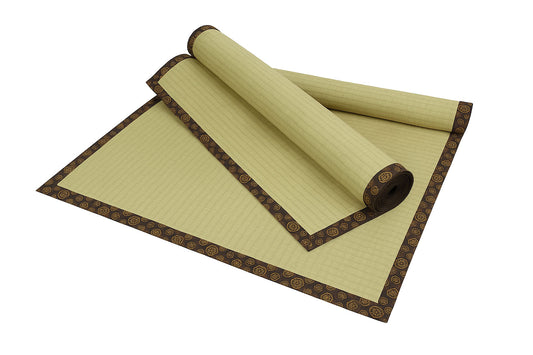
What it is: Essentially the "skin" of a tatami mat. It is a thin, woven rush grass sheet without the heavy compressed straw core.
Best for:
- Aesthetics & Aromatherapy: Placing over an existing rug to add the calming scent of Igusa grass.
- Beach & Travel: It rolls up like a yoga mat and is extremely lightweight.
- Summer Sleeping: Used as a topper on a mattress to provide a cool, sweat-wicking surface during hot months.

Note: Because Goza mats lack a thick core, they do not offer structural support or cushioning on their own. They are strictly a surface layer.
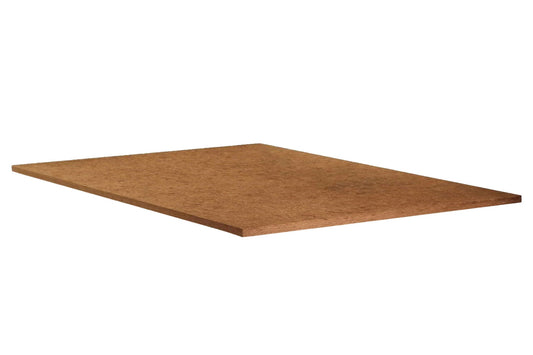
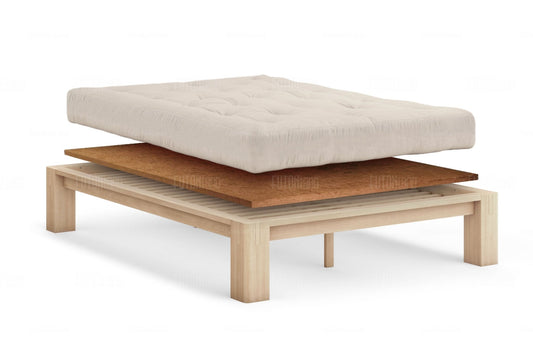
4. Coconut Coir Bed Rugs: The High-Airflow Alternative
While not a traditional Japanese tatami, the Coconut Coir Bed Rug serves the exact same functional purpose: providing a breathable base for floor sleeping.
What it is: A porous mat made from coconut fibers bound with natural latex. It is springy, fibrous, and incredibly breathable.
Best for:
- Mold Prevention: The open structure allows massive airflow under a mattress, which is critical for preventing mold on shikibutons.
- Humid Climates: Outperforms standard tatami in very damp environments as coir is naturally resistant to moisture.
- Added "Spring": Unlike the rock-hard feel of tatami, coir has a slight bounce/give, adding comfort to a thin futon.

Summary: Which Base is Right for You?
Choosing the right foundation depends on how often you plan to move your setup.
- Choose Split Tatami if: You want a permanent, traditional look and solid support for a daily bed.
- Choose Folding Tatami if: You need to reclaim floor space during the day or are hosting guests.
- Choose Goza Mats if: You want the tatami texture and scent without the weight, or need a portable travel mat.
- Choose Coconut Coir if: Airflow is your #1 priority, or you want a foundation with a bit more "give" than straw.
-
 Sale
SaleCoconut Coir Bed Rug
Regular price From $209.99Regular price $329.99 Sale price From $209.99Sale -

 Sale
SaleTatami Mat
Regular price From $169.99Regular price $219.99 Sale price From $169.99Sale -

 Sale
SaleFolding Tatami Mat
Regular price From $179.99Regular price $269.99 Sale price From $179.99Sale -
 Sale
SaleGoza Tatami Mat
Regular price $79.99Regular price $129.99 Sale price $79.99Sale -
Tatami Floor Room Kit
Regular price From $779.99Regular price $1,289.99 Sale price From $779.99Sale