
Crunchy vs. Cloud: Is a Buckwheat Hull Pillow Right for Your Sleep Style?
Most people grow up with soft, cloud-like pillows and only hear about buckwheat when they start looking for more natural, supportive options. Then the questions start: Are buckwheat pillows actually comfortable? Are they too firm? Too noisy? The reality is that buckwheat pillows feel very different from conventional ones, and that difference can be a huge upgrade for the right sleeper.
What Makes a Buckwheat Pillow Feel So Different?
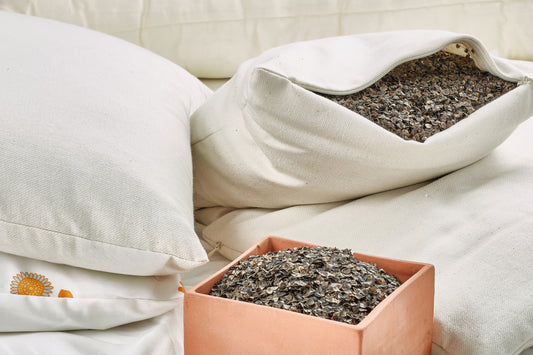
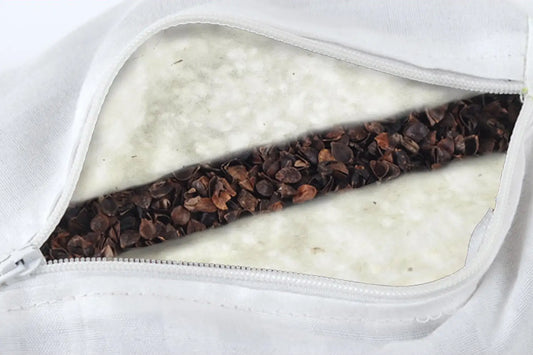
Instead of foam or polyester, these pillows are filled with thousands of small buckwheat hulls. Each hull is a tiny shell that interlocks with its neighbors, so the filling behaves more like a malleable beanbag than a squishy cushion. When you lie down, the hulls shift around your head and neck, then lock into place to hold that shape.
This creates a combination that is hard to find in a conventional pillow: very stable support with fine-grained adjustability. You can nudge the hulls under your neck, carve out space for your ear, or tap the side of the pillow to lower the height by a few millimeters. If you want to see a deeper comparison, you can always cross-check with a detailed guide to buckwheat versus latex pillows.

The Key Benefits: Support, Cooling, and Adjustability
For the right sleeper, a buckwheat pillow solves three common issues at once: neck strain, overheating, and lack of adjustability.
- Stable support for your neck. The hulls don’t collapse the way foam and down do, so your head doesn’t slowly sink during the night. Once you’ve shaped the pillow, it tends to stay there, helping keep your neck at a consistent angle.
- Built-in airflow. Air moves between the hulls instead of getting trapped in solid foam. Many people who run hot at night notice that these pillows feel noticeably cooler and less clammy, especially in warmer climates.
- Fine-tuned height. You can remove hulls to lower the loft, add more to raise it, and shift them around to support exactly where you need it. That makes buckwheat especially appealing for side sleepers who need a specific pillow height.
If you’re already using a natural mattress and organic bedding, buckwheat pillows often feel like the missing piece that brings the whole sleep system into balance.
The Downsides: Noise, Weight, and Learning Curve
There are trade-offs, and it’s better to be honest about them before you commit.
First, the sound. When you move, the hulls rustle softly. Most people adjust and stop noticing after a few nights, but if you’re extremely sensitive to sound, it can be a factor. Second, the weight. A full-size buckwheat pillow is heavier than a down or foam pillow, which makes it feel very grounded but less “fluffy” to move around.
The biggest adjustment, though, is psychological. If you’re used to sinking into something soft, a supportive pillow can feel “too firm” at first, even if your neck likes it. Giving yourself a few nights to adapt—and spending some time shaping the pillow when you first lie down—makes a big difference.

Who Is a Buckwheat Pillow Best For?
Buckwheat pillows aren’t for everyone, but they are a great match for some very common sleep patterns.
- Side sleepers who need a specific height under the neck and are tired of flattening their pillow overnight.
- Back sleepers who want stable support without a big, puffy cushion pushing their head too far forward.
- Hot sleepers who run warm on foam and want a cooler, more breathable option that fits into a natural bedroom.
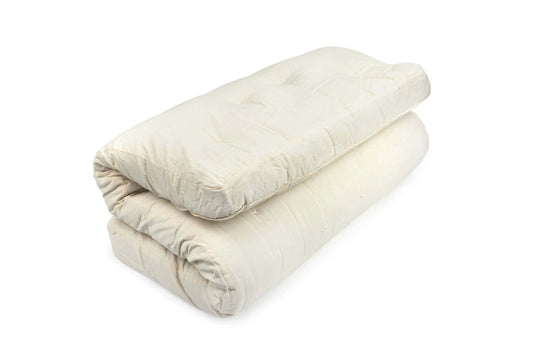
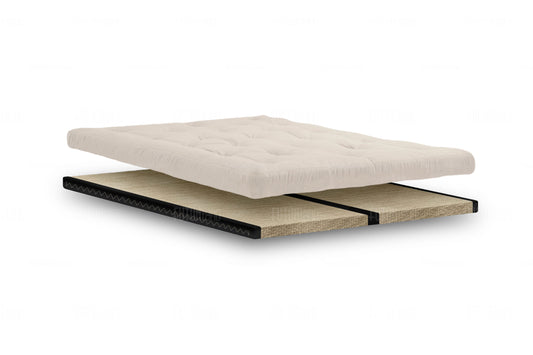
- People with a minimalist or Japanese-inspired setup who are already interested in shikibutons and may be exploring a floor-bed sleep system.
If you prefer to hug and squish your pillow, or you like the feeling of sinking into a very plush surface, you may be happier mixing buckwheat with softer materials instead of going 100% hulls.
Filling Choices: Buckwheat with Wool vs Buckwheat with Cotton
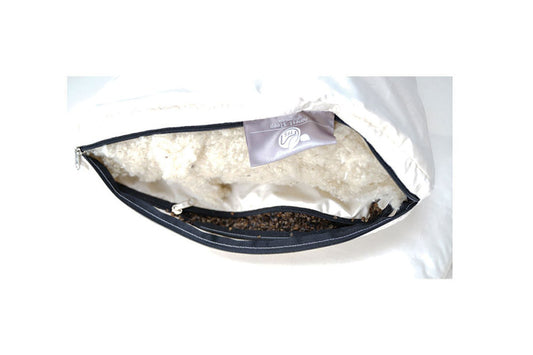
The type of material blended with the hulls changes how the pillow behaves. For example, a design that pairs buckwheat with a layer of wool creates a slightly softer, more cushioned surface against your skin while keeping the hull support underneath. A cotton-and-buckwheat combination leans a bit closer to the classic buckwheat feel with a crisp, breathable shell.
If you want a touch more loft and a gentler surface, you might gravitate toward an option like the organic wool and buckwheat pillow. If you’d rather stay closer to the traditional feel with a simple, breathable cover, an organic cotton and buckwheat pillow will keep things firmer and more structured.
-
Buckwheat Pillow
Regular price From $33.00Regular price Sale price From $33.00 -
Organic Wool and Buckwheat Pillow
Regular price From $98.98Regular price $197.96 Sale price From $98.98Sale -
Organic Cotton and Buckwheat Pillow
Regular price From $93.98Regular price $187.96 Sale price From $93.98Sale -
Organic Cotton Pillow
Regular price From $93.98Regular price $187.96 Sale price From $93.98Sale -

 Sale
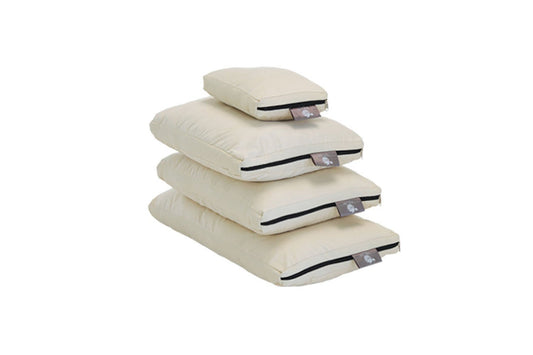
SaleOrganic Wool Pillow
Regular price From $118.98Regular price $237.96 Sale price From $118.98Sale -
 Sale
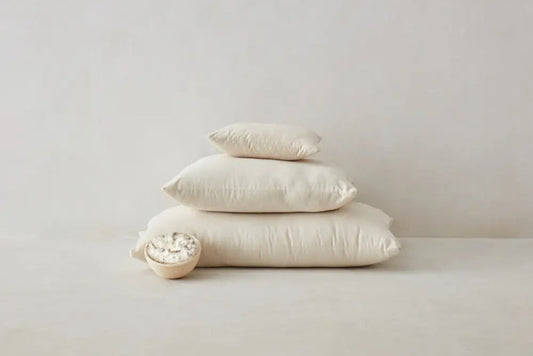
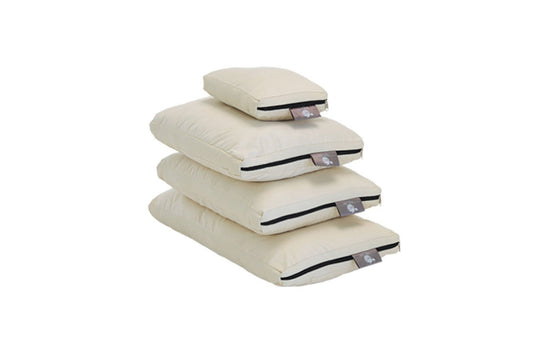
SaleNatural Wool Pillow
Regular price From $103.98Regular price $207.96 Sale price From $103.98Sale -
 Sale
SaleNatural Kapok Pillow
Regular price From $103.98Regular price $207.96 Sale price From $103.98Sale -
Natural Shredded Latex Pillow
Regular price From $103.98Regular price $207.96 Sale price From $103.98Sale -
myMerino® Pillow
Regular price From $159.00Regular price Sale price From $159.00 -
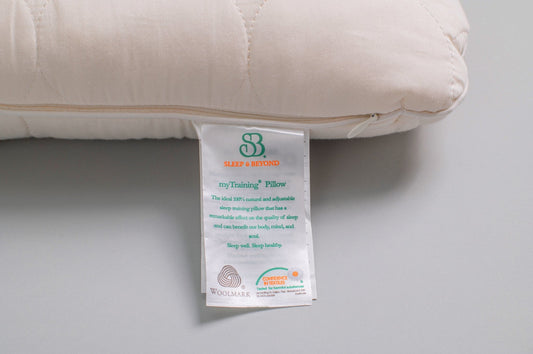
myTraining™ Pillow
Regular price $159.00Regular price Sale price $159.00 -
Organic Kapok Pillow
Regular price From $145.00Regular price Sale price From $145.00 -
Natural Wool and Latex Pillow
Regular price From $175.00Regular price Sale price From $175.00